Wine Sourcing: How to Balance Story, Sustainability and the Bottom Line
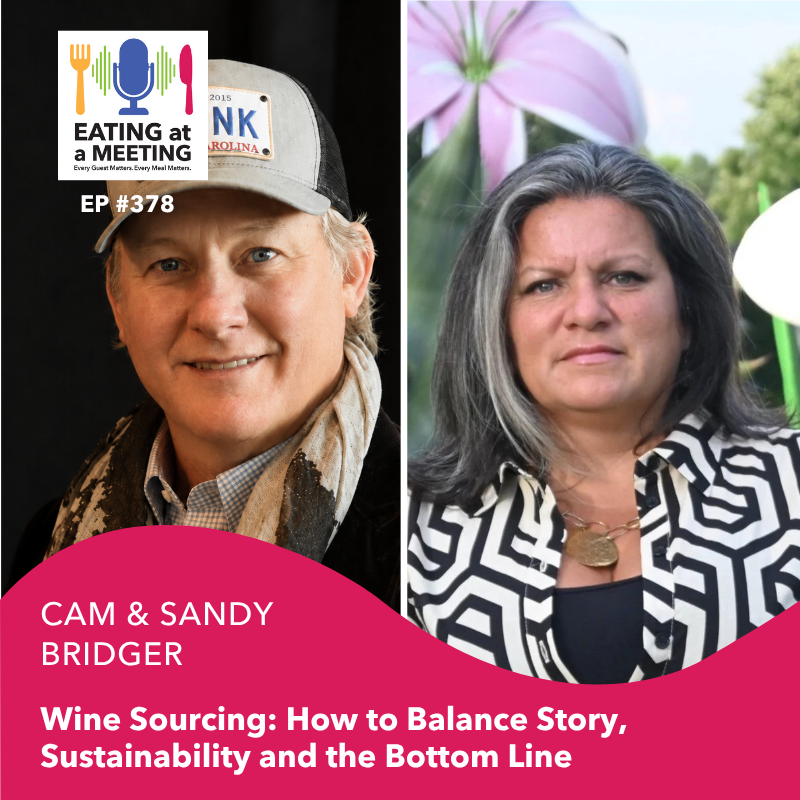
Searching for practical ideas on sustainable wine sourcing for events? In this episode, I unpack how to balance sourcing wines with a great story, a commitment to sustainability, and a mindful approach to budgets. With real examples from expert curators, you’ll discover how choosing the right bottles can elevate your attendee experience and support responsible producers.


Choosing wines for events shouldn’t be about just grabbing the most familiar Cabernet or Chardonnay off the shelf. Sustainable wine sourcing means understanding who’s behind the bottle, what makes their story compelling, and how their farming and production practices shape the wine’s impact on the planet. In this conversation, I talk with Raleigh wine shop owners Sandy Bridger and Cameron Bridger about the nitty-gritty decisions they make every day to source from small, responsible producers—and how this approach benefits both guests and budgets.
We dig into details that planners can use—why small producers who practice organic and biodynamic methods often produce wines with more interesting flavors and fewer additives, how to spot mass-produced wines that don’t deliver the same experience, and the real role of the wine’s origin and grape variety in menu planning. Sustainable wine sourcing isn’t just about the environment; it’s about connecting guests to the story and passion of the winemaker, while protecting the bottom line through thoughtful choices, price negotiation, and strong supplier relationships.
FAQ
How can I select sustainable wines for my event without going over budget?
Sustainable wine sourcing is possible at many price points. Sandy Bridger recommends looking at small producers from regions like South Africa, Chile, or Argentina, where you can find responsibly made wines that offer excellent quality and story, often at lower wholesale prices than more familiar brands 27:24.
Are all wines labeled as sustainable or organic actually better for events?
Not every wine with a "sustainable" or "organic" label guarantees a better experience. Sandy Bridger explained that mass-produced wines often focus on consistency and may contain more additives, while truly sustainable producers are more transparent about their farming and winemaking practices 08:35, 25:53.
Does sustainable wine sourcing mean sacrificing guest preferences for familiar grapes or styles?
No—planners can still meet attendee expectations. Cameron Bridger points out that wines from different regions (even familiar ones like Chardonnay or Cabernet) can offer both sustainability and recognizable taste profiles 27:47.
How should event planners handle wine service when food isn’t served?
If serving wine without food, choose lower-alcohol wines—often from European regions—so guests aren’t quickly over-served, and always offer plenty of water and non-alcoholic options 26:48, 28:50.
How do I ask my venue or caterer about sourcing wines from small or sustainable producers?
Be transparent about your goals and price points. Sandy Bridger suggests engaging your venue’s beverage director in advance—they often welcome special requests, can suggest sustainable options, and may be able to special order wines through their distributors 31:49, 36:05.
Heard on the Episode
“You want people to drink with curiosity and to travel the world in their glass.”
~Sandy Bridger 03:05
“If you’re drinking wine for the effect, don’t. Go for the experience.”
~Cameron Bridger 18:52
“We wanted to promote other small family businesses...once they make it to grocery stores, we celebrate them, but clear their space for another small production wine.”
~Sandy Bridger 20:14
“What grows together goes together. If you’re eating Italian, pick a wine from that region; it’s hard to mess that up.”
~Cameron Bridger 30:05
Key Topics Discussed
Navigating Wine Selection as an Event Ingredient
-
Treating wine as a core aspect of the menu
-
How technical and adventurous palates can collaborate
Sustainability & Community Impact
-
Sourcing from small producers, supporting local economies
-
How climate and large-scale production affect wine quality, taste, and health
Pairing Principles & Food Menu Integration
-
Matching wine and food for harmony, not just tradition
-
Real-world wine pairing examples (barbecue, pizza, fried chicken)
Managing Wine Lists for Events
-
Working with beverage directors to request specific, small-lot wines
-
Dealing with distribution and state-by-state restrictions
Non-Alcoholic Inclusivity
-
Curating thoughtful non-alcoholic options for sober guests
Storytelling, Experience & Guest Engagement
-
Why stories behind wine matter to guest connection and fundraising
Key Takeaways
-
Wine is an extension of the meal—don’t make it an afterthought.
-
Small producers bring unique flavors, stories, and sustainability; prioritize their wines to boost local impact.
-
Engage your beverage director or sommelier—ask about small lots, intentional pairings, and sourcing options.
-
High-alcohol, mass-produced wines can create problems at receptions without food; prioritize lower-alcohol, well-structured options.
-
Wine tells a story, connects guests, and can elevate the entire mood and generosity at events.
Tips
-
Collaborate Early: Involve your beverage director or suppliers from the start to explore unique, sustainable wine options.
-
Pair Intentionally: Match regions and wine styles to the food—and don’t be afraid to ask for ideas and tastes.
-
Watch the ABV: For receptions without food, favor lower-alcohol selections to keep guests comfortable.
-
Celebrate Variety: Mix technical, classic wines with adventurous, curiosity-driven bottles for dual appeal.
-
Non-Alcoholic Matters: Provide crafted, non-alcoholic options that get the same attention as wine and cocktails.
-
Share Stories: Give guests a way to connect with what’s in their glass—every bottle has a narrative.
Like what you heard? Subscribe to our newsletter for more episodes and insider content delivered right to your inbox!
Tracy Stuckrath [00:00:06]:
Hey everybody, and welcome to another episode of Eating at a Meeting. If you've followed me for any length of time, you know I've been beating the drum for non-alcoholic options at our events. One, because I don't drink and I want something besides club soda, but we all need them. But at the same time, there are still people who do drink alcohol and wine and beer. And I really want to dive in today.
Sandy Bridger [00:00:29]:
Hi, everybody.
Tracy Stuckrath [00:00:31]:
to talk about the wine market and introduce you to my 2 friends, newly introduced friends, Sandy and Cameron Bridger. They are the co-owners of Drink in Raleigh, and it is a small wine shop on Glenwood Avenue, very cute. And they call themselves the Somm, which is Sandy, and the Mom. And Sandy runs a nonprofit by day and Drink by night, curating the relationships with growers, the whole experience side. She comes at wine through food, the people, and what makes the table feel good. And then Cameron, the sommier, is the sommelier, the one that who can tell you exactly what's happening in your glass and why wine does what it does with food. I'm so excited to bring you 2 here to the show. Welcome.
Cameron Bridger [00:01:19]:
Welcome, Tracy.
Sandy Bridger [00:01:20]:
Thank you for having us. We're excited to share all of our wine.
Tracy Stuckrath [00:01:24]:
Exactly. You have lots of it behind you, and I'm excited that my friend, our friend Kelly's wine is somewhere on the shelf behind you as well from California. Okay. So you're the somm and the mom. So Cam, that's the technical side, the sommelier side. And Sandy, you're like about the community and the food. When you're choosing wine together, where do the two of you most often see it differently? And how does that push and pull actually make the final pick better?
Cameron Bridger [00:01:54]:
Most often, most or always. So no, we, uh, we have different tastes. I, uh, I always go back to the adage where she's got the— she has the better palate and the nose. I like the pairings in there better, but she, she has a tendency to go one direction. I have a tendency to go the other. And after some time, we kind of meet in the middle on some of the wines. It's specifically the food though. We, we go through the food, look at the foods and say, okay, what's going on? She'll try, she'll put this.
Cameron Bridger [00:02:23]:
I said, well, I like that. And then I'll put something. She goes, well, I like that. And And then we finally figured out a wine that kind of is in the middle.
Sandy Bridger [00:02:30]:
And our reps also know who they're tasting with, so they'll bring certain wines. Cam's more old world traditional style. He really wants a very well-structured wine, whereas I'm more adventurous and I like when you're doing cool kid stuff.
Cameron Bridger [00:02:45]:
She wants chewy wine.
Sandy Bridger [00:02:46]:
I do not want chewy wines. I want wines that you're doing something interesting. Maybe you're finishing it in an amphora or concrete as opposed to a traditional wood barrel. Maybe you're using a grape that there's only a handful of vineyards around the world still producing wine from these grapes. I want people to drink with curiosity and to travel the world in their glass. So if I can put a really interesting grape or a story or a technique in your glass and it tastes good, that thing, that's the one thing we both agree on. It has to taste good because every wine in our shop we've tasted, we've agreed on it, or at least one of us has liked it. And that way we're able to put out, this is a really well-constructed wine.
Sandy Bridger [00:03:30]:
You're going to be pleased with it. And if you're not, bring it back and we'll take it home and drink it ourselves because we know we like it.
Tracy Stuckrath [00:03:37]:
Okay. So there is so much that I want to impact or unpack in what the two of you just said, because I don't drink wine. And I've told you that I'm like, I know they come from grapes and there's white grapes and red grapes, but you just said there's all— emphasize that there's all kinds of different kinds of grapes. That thing that wine is produced from. So can you get into a little bit of that for the novice person like me? What does that mean?
Cameron Bridger [00:04:01]:
So the, the wine is made between the 30th and the 50th parallel on both sides of the equator, uh, in that range.
Sandy Bridger [00:04:07]:
Okay.
Cameron Bridger [00:04:08]:
So it means everybody has grapes. All 50 states in the US make grapes, make wine. It just depends on what's local to that area. Like here, uh, up in the mountains, we have an AVA here. which is an area, a viticultural area, that they grow wines that are current to North Carolina and Muscat. Uh, and they have, uh, other wines up there, Pinotage they make up there. But to get a Cab or a strong Pinot to grow in North Carolina, it just doesn't do it. It's not made for here.
Cameron Bridger [00:04:39]:
So every region has their own grapes. And if you go to South America or you even go to like in Argentina or, or, or Brazil, You're going to get different grapes down there that don't— like Malbec out of South America is different tasting than Malbec out of France. It's just the, the terroir and the environment that brings out the grape, the, uh, characteristics of the grape.
Sandy Bridger [00:05:02]:
And if you want to talk about a lot of grapes, Italy in and of itself has over 10,000 varietals. So that's 10,000 different grapes. That's just Italy. So we always laugh when you're looking at an Italian wine and we're like, hey, what variety is it? And they'll be like something we've never heard of.
Cameron Bridger [00:05:20]:
They just made that grape up yesterday because that wasn't— that's a grape in Italy.
Tracy Stuckrath [00:05:25]:
And are people like merging grapes like they're merging poodles and doodle, you know, making doodles?
Cameron Bridger [00:05:31]:
Yes, you'll get, you'll get clones. If you're, if you're going down that route, you can bring in clones. So we'll, they'll have clones of Burgundy wines in California, uh, and they'll use those vines. But yes.
Sandy Bridger [00:05:44]:
But there's always the, what if you want to see the ultimate doodle, that would be Sauvignon Blanc. I mean, Cabernet Sauvignon, because its father was Cab Franc and its mom, or it could go either way, was Sauvignon Blanc.
Tracy Stuckrath [00:05:58]:
And they blended that.
Sandy Bridger [00:05:59]:
They merged them together to form the great Sauvignon Blanc.
Cameron Bridger [00:06:03]:
Cabernet Sauvignon.
Sandy Bridger [00:06:04]:
Yeah.
Cameron Bridger [00:06:05]:
It's Cab Franc.
Sandy Bridger [00:06:06]:
Yeah. See, I'll get the story right and he'll get the grape right. That's why it worked out.
Cameron Bridger [00:06:11]:
So it changes, it changes as they, as the grapes come over, like you have, uh, Zinfandel in California. Everybody's heard of Zinfandel in California. Well, if you go to Italy and then from there in Croatia, was it Tribidrap?
Sandy Bridger [00:06:26]:
And that was the mother of all of it.
Cameron Bridger [00:06:28]:
That was the mother where it started. And we, we, you know, we, we get that. Weird. That's a long, like I said, the rabbit hole goes as deep as you want to go on all of them.
Tracy Stuckrath [00:06:38]:
Well, okay. And then, yeah, I don't know where I want to go with it all. It's, it's so interesting. And I know the terroir, the soil, because I can't say that word correctly, but the soil, terroir, thank you. The soil in South America compared to North Carolina or Virginia or California and France, It's all different. I mean, what people are putting into the soils to help the grapes grow or the weather conditions, et cetera.
Cameron Bridger [00:07:07]:
It's that they try. So most of the winemakers try to not add to the soil. They try to, they use the soil like you get the clay or you get the chalk, those items that are characteristics for that area. You don't want to take away from that and you don't want to add to it. What you basically want to do on your grapes to get the— is almost kill them. You want to starve them so much that just enough to barely keep them on life support so they go deep, they pull the nutrients out, they go for that water. And you don't want them to ripen too fast or too slow. You have to find that happy medium.
Cameron Bridger [00:07:43]:
It's kind of like putting your car on autopilot. You, you get there, but other things change. You gotta change them.
Sandy Bridger [00:07:49]:
And I think I'm going to clarify when Cam talks about this, it's winemakers that we work with that are small producers that have that, that have that ability. When we're talking about a lot of the wine producers you see on your, on your big restaurant lists that are making 3 million cases, they don't have the luxury of showcasing a terroir or a region or an area. They are going after consistency. However they get there, you're never gonna find— Grapes for 3 million cases in one area. It's just not going to happen. Okay. When we're talking about people that cultivate within the vineyard, a lot of the winemaking is done during the growing season. There's a lot of decisions that are made.
Sandy Bridger [00:08:36]:
How much leaf, how much of the leaf cover do you pull off? How many grapes do you drop? How intense are we going to get the, the juice in the grape? When are we going to pick it?
Cameron Bridger [00:08:45]:
How—
Sandy Bridger [00:08:45]:
sweet will we let it get? Those are decisions that are made before it ever gets into the crush room. And that will change how your, how your wine comes out.
Tracy Stuckrath [00:08:56]:
It's, there's a real science behind it all, which I didn't think, but yeah, big time.
Sandy Bridger [00:09:01]:
Yeah.
Tracy Stuckrath [00:09:02]:
And then Sandy, you mentioned something about cement versus barrel, you know?
Sandy Bridger [00:09:08]:
So wine has been around since before biblical times. They just, when they just found an amphora, a jar of it, and it still had, it was a little dry, but they were able to get wine out of it. And so wine has always been—
Cameron Bridger [00:09:25]:
10,000 BC.
Sandy Bridger [00:09:26]:
Yeah. Part of our culture. And it's something that, you know, many years water was not safe to drink. So you would ferment water. I mean, you would ferment beer and wine, and that would be what you used to drink because it didn't have bacteria in it. So this has always been a cultural thing through humanity.
Cameron Bridger [00:09:46]:
That goes back to the, uh, the weather. In wine, there is wisdom. In, uh, beer, there is truth. In water, there is bacteria.
Sandy Bridger [00:09:54]:
So thinking of it that way, he's pulled it up. What was I talking about? Wine culture.
Tracy Stuckrath [00:10:02]:
The, the, you mentioned the bacteria, but it worked.
Cameron Bridger [00:10:05]:
How, how it changes.
Tracy Stuckrath [00:10:06]:
The traditions.
Sandy Bridger [00:10:07]:
Yeah. The traditions change. So we have, there are so many different ways that you can finish a wine. And in different places in the world, they may not have, like, say if we were doing Greek wine, they may not have the trees that you would have had in a French forest or an English forest. So they would make, they would make amphoras out of stone or out of clay. And that's how the big barrels that you would see out in The Mediterranean, and that's how they were finishing. And obviously wine, as it's aging, it's leaching certain things out of the material it's held in. So that's where you're getting the roundness or the toasty notes from an oak barrel, or you're getting more minerality if it's being put in a stone vessel.
Sandy Bridger [00:10:55]:
Uh, it changes how the wine performs. It also changes the oxidation rate. that goes between when it's fermenting between a barrel that may be more porous than say a glass-lined amphora where there is not very much change. And then a lot of people do stainless because you can get big vats of it and it doesn't change. You're getting true. What would you say, Cam?
Cameron Bridger [00:11:21]:
You got this.
Sandy Bridger [00:11:22]:
I got this. Yeah. But I personally generally do not like things finished in stainless and Cam will tell me, cuz I'll be like, I taste the stain. I taste a penny. I taste something in it when we're tasting it. Uh, he's a little bit more generous with it.
Cameron Bridger [00:11:38]:
Okay.
Tracy Stuckrath [00:11:38]:
So since we're going very technical there, Cam, pairing, and Sandy, you mentioned something to me the other day, pairing to mask a flavor, pairing, pairing wines with food, you know, what's actually happening in the glass in each case. When you're thinking about pairing it with something. Does that, did I make sense in that? I mean, walk us through a real example of a wine you use to soften a dish or one you can use to amplify it.
Cameron Bridger [00:12:08]:
So for soft, for amplifying—
Tracy Stuckrath [00:12:09]:
That's a soft question, right?
Cameron Bridger [00:12:10]:
Yeah. So for amplifying a dish, I mean, it's really not so much amplifying it, is it? You just want it, think of a, you have a dish and you have a wine and it's a symphony. Tuning up. They sound good, they're good, they're both good together, but when they're all in unison at that, when they open the act, it just flows. And that's what you— that's what we try to go through with the wines specifically. You don't want to pair the wrong wine with the food. You don't want red wine and fish, which you can. I mean, you can actually have red wine and tuna.
Cameron Bridger [00:12:43]:
It's a Pinot and a tuna is magnificent, but you don't want to put a big heavy cab with a piece of fish. Unless it has some sauce that just requires it. There are things that are like that. There are, there's a way to pair Chardonnay with steak and it's a beautiful pairing.
Tracy Stuckrath [00:12:59]:
Okay. Now, why, why is that? Why don't I want to put red wine with fish?
Cameron Bridger [00:13:05]:
So the tannins will counteract with the enzymes in the fish and it doesn't taste pleasant. Have you ever heard of the adage everybody likes? And again, there's always the one-offers, you know, the fringe. Everybody wants Valentine's Day chocolate and red wine, and everybody wants chocolate and Cabernet. They're not— for me personally, they're not good together because they take— they make the, uh, the wine taste metallic, and that's not a good flavor.
Sandy Bridger [00:13:31]:
Okay.
Cameron Bridger [00:13:31]:
Some people prefer it, and that's fine. For me, I'm not that way. I would go with something— if you're eating something sweet, you want it to be equally sweet. Uh, if you're, uh— so if you're having a, you know, a piece of pie or cake or something of that nature, you want something Uh, with a sweetness to it, uh, off-dry Riesling or a Sauternes or something like that, just depending on— you don't want to be oversweet or undersweet. You want it to be just— it's hard to do that. And you'll fail more times starting out than you'll get it right.
Sandy Bridger [00:14:03]:
What's your favorite pairing right now?
Cameron Bridger [00:14:06]:
My favorite pairing? Well, it's summertime, so anything on the barbecue and Zinfandel. I mean, that's just— it's the barbecue wine. I mean, it's got the cherry notes, it's got those deep, rich notes in there, or good heavy Pinot with the cherry and barbecue. It's just— they go— there's— in North Carolina, they make barbecue with Cheerwine. I don't like Cheerwine, but when you put it with barbecue, there's no better pairing because it has the right qualities that goes with the smoked meats. Same things with the wine.
Tracy Stuckrath [00:14:35]:
And don't mix Cheerwine with Fresca and tell me that's a mocktail, because that's just so— somebody did do— and somebody did that and said, here's our mocktail. I'm like, no.
Sandy Bridger [00:14:46]:
I think, I think that you don't have to have alcohol to have a lovely mocktail. I think that's just a lazy way to go. I think that making non-alcoholic beverages, you've seen some of the stuff we actually do carry here because we have products that are living the sober life. I think that you should be just as thoughtful with what you're handing someone that's choosing not to indulge in alcohol as you would a beautiful bottle of wine.
Tracy Stuckrath [00:15:13]:
I 100% agree. Now I wanna go back to the grill because you could have a, a Big Green Egg. You could have a, what, Char-Broil, which is what we have cuz it's just 2 of us here. And that make, cuz then, or you're gonna, so you've got charcoal, you've got gas, you've got, there's all kinds of things that could also impact what you're cooking. And then that would, that impact what kind of wine you wanna put with it too.
Cameron Bridger [00:15:37]:
Most definitely. Most definitely.
Sandy Bridger [00:15:39]:
And he, he won't say it, but he's got every one of them. He loves to grow. So we've got the big bed. We make pizzas on it. He can talk about what he likes to pair with pizza because most people want a Lambrusca. They're like, here, it's Italian. Let's do a Lambrusca with pizza. That's a really easy pairing.
Sandy Bridger [00:15:58]:
But what would you say would be?
Cameron Bridger [00:15:59]:
It's a layup. It's, uh, it depends. It depends on what kind of pizza you're having. You know, I like I like the, what was that? Uh, the Sangiovese we have, a white Sangiovese with pizza. It just depends on what type you are having, a white pizza or you having a heavy meat pizza.
Sandy Bridger [00:16:15]:
Tomato sauce and the acids. Yeah.
Cameron Bridger [00:16:16]:
I mean, Lambrusco is, is a layup. It's like the old adage, you know, within the sommelier, if you don't know what to pair with something, champagne. That's the cheat code. Champagne goes with everything. Okay.
Sandy Bridger [00:16:28]:
Which I was going to say champagne and the glazed potato chips are my favorite pairing right now.
Cameron Bridger [00:16:32]:
Champagne and fried chicken's awesome.
Sandy Bridger [00:16:34]:
Yeah. It doesn't always have to be an eyebrow food to go with a really nice bottle.
Tracy Stuckrath [00:16:41]:
Okay. That's good to know. I mean, cause when you're, and one of the things that you said to me as well, Sandy, was that, and I think I promoted the com— the session on it, is that it's, it should be, and Cam, you alluded to this too. It's, it's an aspect of the menu. It's not something that should just be discarded and say, hey, I'm going to put this wine out. You know, it's part, it's another ingredient in that experience, in that meal. And if I would—
Sandy Bridger [00:17:09]:
go ahead. No, no, absolutely. I think that so many people think of wine as an alcoholic beverage and not as something that should be on your grocery list. You shouldn't cook with a wine that you wouldn't drink. A lot of people are like, I don't like this wine. Let's pour it in my sauce. You don't like it in your glass. Why do you think if you cook it down, And make the flavors more intense that you're going to suddenly fall in love with it.
Sandy Bridger [00:17:34]:
You're not. That's a good point. I think that teaching our children from a young age that wine is to be enjoyed among friends and savored and not to engage in binge drinking, I think seeing that at home really showcases them the responsible way to deal with alcohol as they get older. banger, you know, $200, $300 bottle to make the night special. You can make the night special as long as it's thoughtfully curated with a $20 to $30 bottle and sharing it amongst your friends and deciding, having a conversation. Do you like what this is? How it tastes? What are you pulling out? It's a fun game to play. And it, I think it's more fun to talk about ideas than people or events. I think it, it's always nice.
Cameron Bridger [00:18:52]:
If you're going— if you're drinking wine for the effect, don't. I go for the experience. If I want the effect, I get a martini because I get it twice as fast for half as much. Yeah. So for me, it's the food. It's just another item on the table. That way you can experiment. You pull 3 or 4 wines out and everybody try them and learn.
Cameron Bridger [00:19:08]:
That's the best way to learn. The best— uh, I have people come here and say, how do you learn about wine? I say, get a wine till it stops. Start popping corks and learn. Taste.
Sandy Bridger [00:19:18]:
Yeah.
Tracy Stuckrath [00:19:19]:
Okay. Now, okay, so let's just pop in and talk about the wines that are behind you because you, the two of you focus really on the story. And this is the headline or the title of this thing, the story, the sustainability, and the bottom line, because you want those small producers to succeed. You want to succeed, but how do you bring in the story and the sustainability in the way that you're choosing your wines and small producers?
Cameron Bridger [00:19:47]:
Okay. I'm gonna let— this is where my wife comes in. She's the storyteller. She remembers everything. I mean, she, when I say she remembers everything, she's the Google. So we go and meet the winemakers and they tell the stories and then she can recite them. So, uh, that, and that's generally what we want with the small people. We taste the wine so we know if they're good or not.
Cameron Bridger [00:20:07]:
Uh, we don't just bring them in because it's got a fancy label. We actually listen to the story.
Sandy Bridger [00:20:12]:
And what they're doing in the vineyard. Cameron and I, when we started our business 8 years ago, we made a conscious decision to, as we are a small family business, we wanted to promote other small family businesses because they're the ones that show up in your community time and time again. They're the ones that are giving to your, your local food banks. They're the ones that are taking their kids to the dance classes. They're part of the community. And having said that, there have been wines that started off on our shelves and their dreams were to get big and get into the grocery stores. And we applaud them because that's their dream. But once they make that, we just clear their space off.
Sandy Bridger [00:20:54]:
We'll drink their wine still, but we'll clear it off for another small production wine that we have to hand sell. And because of having to hand sell it, we're completely invested in every story or every bottle that's on the back of our shelf. We, of course, like many of us, we all have our favorites. A lot of ours come— we have one favorite that's out of Italy, Nicola Boscardo. We love him. We love his wines. Every time he's in town, we're hanging out, talking. We have favorite winemakers in California and Oregon.
Sandy Bridger [00:21:27]:
A lot of them you'll see us do events with, like Mikey Kobler and Tony Lombardi. Tony and I really linked up together on both of us being mental health advocates. And we choose— that's what you'll see. We choose to use our platform in wine and food to continue the conversation about mental health, especially around our young people. They were heavily affected, and it's not a conversation that most people want to have until you have it. So continuing that conversation.
Tracy Stuckrath [00:21:58]:
Right.
Sandy Bridger [00:21:58]:
But in having these friendships that we have really—
Cameron Bridger [00:22:04]:
we've gone, it's gone beyond wine.
Sandy Bridger [00:22:06]:
Yeah. I mean, you know, and life experiences and stuff and having that, we know how they make their wines, what's important to them, what they're doing that's exciting. And we are able to translate what they tell us over dinner to our customers. So if you're pouring a bottle of, let me say, Pax, who I love Pax. Pax Mahl. I go, I went and visited him in California. He's another one of my favorites, but you're pouring a bottle and you're like, yes, he is a really great winemaker, but he's also one of the first American winemakers to get a 100-point Syrah. And that was a huge deal when it happened because that's what France is known for.
Sandy Bridger [00:22:45]:
And so to be able to put winemakers on the same level, even though their wine should not taste the same because they're from completely different areas and they're doing different things. I mean, that was like, hey, we're up in the big leagues now. So I love telling those stories. So when I'm telling my customers about it, when they bring a wine to it as a gift or to a table, they have the backstory. So it sticks in your mind and you don't just know, hey, here's a Pinot Noir from California. It's really yummy. I don't know anything about it. Yeah, I think that's what makes the difference is the stories, because stories connect us as people to our food.
Sandy Bridger [00:23:21]:
to our communities and to each other.
Tracy Stuckrath [00:23:23]:
One sustainability question that I think I sent to you all this morning too is that I saw an inquiry about how the fires are impacting wine vineyards and things. Have you seen that impact and how global warming in general, I mean, how is that impacting? Does the wine, do the fires change the texture of the taste of the wine? Great.
Sandy Bridger [00:23:47]:
Well, they, they shouldn't, because if they're, if they're tainted, they should be dropped.
Cameron Bridger [00:23:51]:
So here's— and so again, we, we deal with a lot of the smaller batches and the smaller vineyards, so they don't make a lot of it. And a lot of the ones we get, especially out of California, they're ageable. And the problem is, is if you put it in smoke taint, you may not see it there, but 10 years down the road, you give a bottle to somebody that's aged 10 years, they get a pop, and this is horrible because it's got the smoke taint in it. Now, You've marred the name. So a lot of these winemakers will just drop it or they'll, you know, produce, what was it, the rosés? Because they won't spend a lot of time and you can risk it, uh, that it won't have smoke tannin or they just sell off their fruit to, to whatever is to be made into, uh, what is it? Mass-produced wines that are full of sugar and they send them out there, drank, you know, within the year.
Sandy Bridger [00:24:38]:
And that's where I think we touched on it earlier when you had the mass-produced wines. They are able, they do a lot more to the wines that can mask it. They strip a lot of the things that they find undesirable and then add back in.
Cameron Bridger [00:24:53]:
Mega purple.
Sandy Bridger [00:24:54]:
Mega purple, mega red, caramel yellow to get your buttery color.
Cameron Bridger [00:24:59]:
And chappalization.
Sandy Bridger [00:25:00]:
Which is the addition of sugar. Everybody says wine has sugar. Some do, some do, some have natural fruit sugar. Others have really a lot of sugar because We as Americans, or we as people, we love the taste of sugar. And you give a big sugary wine and they're like, oh, this tastes so good. And then the next day you wake up and you have a horrible hangover. Your head hurts. Your stomach is sour.
Sandy Bridger [00:25:23]:
We've actually gotten to the point, if we drink one of those, even a couple of sips of it, we can tell what's been done to it. So as we start feeling bad, you get a headache really pretty quick. Yeah.
Cameron Bridger [00:25:33]:
You can go to the grocery stores or you can go places, you can buy the mass-produced wines. It tastes good. It tastes great, but you're going to pay for it as you get, and as you get older.
Tracy Stuckrath [00:25:43]:
Pain and headaches.
Cameron Bridger [00:25:46]:
Yeah. Oh, and not just that, but I mean, not great for your system overall. The impurities that go into it are not good for you.
Sandy Bridger [00:25:53]:
It's chemicals. I mean, that's why Cameron and I focus a lot on small producers that have regenerative growth, biodynamic, organic, all of these. If you don't want it in your food, why would you want it in your wine?
Tracy Stuckrath [00:26:07]:
Right. Okay. That, it's so, there's so much behind this. This is so much fun.
Cameron Bridger [00:26:14]:
Clear as mud.
Sandy Bridger [00:26:15]:
Exactly.
Tracy Stuckrath [00:26:16]:
Clear as mud, for sure. Okay. So talking about what if you're not serving food at an event? So my listeners are, are event professionals, right? They could be event planners or they could be hoteliers. If I'm not going to serve food at my reception, which you should because people need to consume, make sure that they're consuming some food while they're drinking. But what makes a wine like that would be— which style should a planner be careful about pouring at a reception with no food attached?
Sandy Bridger [00:26:48]:
High alcohol.
Cameron Bridger [00:26:49]:
High alcohol. Yeah, I would stay more on— and it's more expensive, but I would stay the low alcohol, mostly overseas. You can find some here, but like in France. Their range is much lower, set lower than our ranges here. We'll have stuff like a, a high alcohol here could be of 16%, 15.5%, 16%, where their high rank is like 13%, you know, and, and 11 to 13% is a good range for a French wine. I mean, they range higher than that, of course, but that's a good high-end range for them.
Sandy Bridger [00:27:24]:
And I think if you're looking for a budget wine, For an event, especially if you're not tied to a wine list that's already existing, you can find a lot of budget-friendly options in South Africa, in your world, in, in Chile, Argentina. There are producers that are making Chardonnays, Cabernets, Sauvignons, names that people recognize. I think that's the other thing that you, that you run into is that people were going to always say, I want a Cab. I want a Sauvignon Blanc and I want a rosé. Right. Most people have a misconstrued idea of what Chardonnay is supposed to taste like. They think it's like a big butter bomb or a big oak board.
Cameron Bridger [00:28:06]:
Depends on where it's from.
Sandy Bridger [00:28:07]:
And that can be very true. That was our grandparents' Chardonnay from the '70s. But the Chardonnays from all around the world are much more subtle and well-crafted because they showed the terroir of where they're growing. A Chablis from Burgundy is a beautiful thing, as is— what are the other burgundies? I love burgundies. I love California and Burgundy.
Cameron Bridger [00:28:31]:
Yeah. So you also have to look at the time of you're doing an event. I mean, you don't want a big heavy red wine in the summer. I mean, you can, you just gotta chill it to make a drink. But yeah, in the wintertime, you don't, you know, the lighter wines in the wintertime are not always the best. So it just depends on what, it depends on where your event is and what you're doing. And then make sure you serve lots of water.
Tracy Stuckrath [00:28:53]:
Because if you're looking for a higher alcohol wine than you do, you need to make sure you've got non-alcoholic. Yeah, you need to stay hydrated for sure. Okay. So when you're— how a lot of people are going, when you go to a hotel, you've got a curated wine list already. How do you— and for somebody who doesn't drink, me, and I don't know, I need to come and learn a lot more from you all. How am I picking that wine to go with that? Because majority of— now I'm trying to think of looking at menus, hotel catering menus and convention center catering menus. I'm like, I don't really see pairings shown with those dishes, right? It's on separate pages, like 5 pages apart. How do I pick that? And especially looking at it from the perspective that you all bring to the table of these global, you know, locally drink globally, buy locally.
Tracy Stuckrath [00:29:44]:
Like, if I'm looking for a small producer, how do I know that? And how can I talk to a beverage director about that? So that was a lot in one question.
Cameron Bridger [00:29:54]:
No, no, I got you. And, and that's one of the things that we really look at a lot. I have a few techniques for that that I do personally. If I don't know the wines, you know, you don't know all the wines, you know the areas. So, uh, depending on what restaurant you're eating at, my first rule always is what grows together goes together. So if you're looking for an Italian, you're an Italian restaurant, you know, you want a red or white depending on what you're having. Uh, but a good point is take the median entree, and this is what I do. Take the median entree price of that, double it, and then look for a wine in the varietal that you like in that range.
Cameron Bridger [00:30:36]:
And they pretty much pair up. And sometimes you, you know, you're way off and sometimes you're right on. Uh, but if you get the region and the food you're going with, it's hard to mess it up.
Sandy Bridger [00:30:47]:
And if you're not doing like a big catering, a lot of times beverage directors are very open to bringing in new wines that they are not able to have on their list, their daily list, because a lot of times they have a challenge of people having a rank, a name recognition. I mean, we all, right? Crawford. We all know Srefetha. We all know Josh. And when people go to restaurants and they see the wines over and over again, they just assume that they're really good quality wine because everyone's choosing them.
Cameron Bridger [00:31:22]:
Oh, and, uh, one other thing that you can always do and never feel embarrassed whatsoever— this is how you learn— ask the beverage director. When, uh, that there's somebody's bringing those wines in, ask them. And sometimes you might luck out and actually have a Salm depending on the, on the restaurant that have done, and they want to talk, they want to teach you, you know, you tell them what you're ordering and they'll say, well, I would go with these 3, uh, or these 2, try those out. And, and, and you can ask for a taste.
Sandy Bridger [00:31:49]:
And if you're doing an event and you're talking to you and you're making the plans, talk to your beverage director. They may have wines that they would have loved to have brought in at a good price point. It just didn't align with what they were current. They thought that they could sell night after night. And they're always able to bring in wines. And always be very honest about what your price point is. If you know that you can only afford for this event to spend on average between $6 and $10 a bottle wholesale, let them know because that way they can, they can look at their numbers and see what they have that they can put in that slot.
Cameron Bridger [00:32:27]:
And there's beautiful, beautiful South African wines. That hit that price point.
Sandy Bridger [00:32:31]:
We keep them because we do a lot of private charity events and we keep this wine for our people that are like, hey, we're doing this talk. Can you hit this level? Yes, we have wines that are perfect for banquet, but we wouldn't really necessarily keep on our shelves at all the time. So yeah.
Tracy Stuckrath [00:32:51]:
Okay. So that's good to know because, and I think a lot of planners, and I'm going to throw myself in there. It's like, okay, here's my beverage list that's on this 25-page menu, right? I can only assume that I can bring in those, but we have to have those conversations and bring that beverage director into that to say, hey, and maybe you do have a sommelier on property that can talk about it and bring that, add another flavor. So yeah, I really wish they would pair, like show the pairings of what would I serve with these different wines? these different dishes that I'm offering you, right?
Cameron Bridger [00:33:28]:
There. So for learning, and I, and I don't know if we can, if we're supposed to plug people or not, but when I was coming in learning this stuff, I had a dear friend of mine, uh, at the Angus Barn that brought me over and said, you, if you're going to open up a wine shop, you need to come to my class. And so I went to his class, started out for there about 6 months, and then moved on to the SOM network. But There was a book out there. Do we have it here?
Sandy Bridger [00:33:54]:
That's one.
Cameron Bridger [00:33:55]:
Madeline. Yeah. So when you're looking for something easy, it's right there on that third shelf. If you're looking for something to read, to intro, it's very simple to read. Madeline Puckett, The Wine File.
Sandy Bridger [00:34:08]:
Okay.
Cameron Bridger [00:34:09]:
Is if you're going to start, I mean, you can, you can see all the notes that I have. She describes it. Very easy. And you can go through and she tells you about all the areas and the blends. This, for most people, is really all you need to— and once you dive into that, you can go further. You can, you can springboard off there into something else and, and learn and learn. I mean, you can go all the way up the chain, you know, it's Raleigh, uh, Winters of the World. And then go, if you decide you really, you just, you want to geek out and love it, you can go get the Wine Bible, which I use it to go to sleep because I get a little paired up.
Cameron Bridger [00:34:48]:
It's hard. It's this, but if you can master that, you're up there with the masters.
Sandy Bridger [00:34:52]:
And we keep all of these books on our shelves over here so our clients can come and look and educate themselves. They can pull them off, look through them while they're having a glass of wine. Yeah, we really want people to be curious about wine.
Cameron Bridger [00:35:06]:
It's fun.
Tracy Stuckrath [00:35:07]:
Well, yeah, and I think it can be because based on all the types of grapes and where it comes from in the world. I think that's so intriguing. The, I wanna go back to you saying that your beverage director can get something in. Does it also depend on distributors? Like, can everybody, 'cause you have to like North Carolina versus Maryland and the different kinds of distributors you have in each state. Yeah.
Sandy Bridger [00:35:31]:
North Carolina is a triple-tier state. It's so much fun.
Cameron Bridger [00:35:35]:
Yes. She'll give you 20 minutes on that one. Yes, but some of our distributors have places like North Carolina and South Carolina. So special orders, if they have stuff coming, you can get things that you normally couldn't get. But if you, like I said, if you have a beverage director or anybody and you want to just tell them you want to taste the wines, you want to go through them, don't make me pick, bring me some wines in, let me taste them. And they're usually more than happy to help you out just to make the sales.
Sandy Bridger [00:36:05]:
And Tracy, I'm happy to step in. For you since you do not drink. And I'll just show Prime off for you. Okay.
Tracy Stuckrath [00:36:12]:
No, I appreciate that.
Sandy Bridger [00:36:15]:
Each, most, most restaurants and most venues have established relationships with distributors or who they get their wines from. And so they have longstanding relationships so they can get you what you want. Maybe not the brand. Like if you're looking for a very specific brand, not everything is distributed. North Carolina. I'm speaking about North Carolina. We have, we have friends that are a wine— one of our favorite winemakers in Oregon, Will Hamilton. He only distributes outside of Oregon to Colorado and North Carolina.
Sandy Bridger [00:36:48]:
So you really have to go there to eat his wines or come here. But there's so many different varietals across the board that if you can say, I want a Taval, you can probably get 50 different kinds of Taval in North Carolina alone. Wow.
Tracy Stuckrath [00:37:03]:
Okay. So if you're, if the small producers, they're, they might be picky and pick and choose which, where they're going to go, what states, like you just said, Colorado and North Carolina, because they're not mass distributing it to like the Publix and the whole food, you know.
Sandy Bridger [00:37:19]:
Yeah. We talk about small producers. Some of our, Will Hamilton, the one I just spoke about, he's a violin. He has 50 cases of wine.
Tracy Stuckrath [00:37:28]:
Okay.
Sandy Bridger [00:37:28]:
So we're talking small production and poor Lauren Hill, right? He's another one that does very small production like that.
Cameron Bridger [00:37:36]:
And, and probably with your grocery store, now think about your grocery stores like Publix and Wegmans and all that. They have federal licenses so they can get it. They can get everything from everywhere and it's all out of New York. So we, we don't have that. As Sandy will say, we have the triple tier. We are, we're allowed, we're allowed to buy what they'll tell us we can Okay.
Tracy Stuckrath [00:37:55]:
All right. Now, I want to get— you mentioned, we were talking about pairing with foods and, and Sandy, you mentioned that you really support mental health. And so you have an event called your Foundation of Hope tasting during Mental Health Awareness Week, and you do some, a lot of other fundraisers. How do you work with those organizations to pair the food and the wine to make those events Stand out and get people to give more money. Oh, well, I create that community.
Sandy Bridger [00:38:25]:
We do our events separate because a lot of the foundations we work with, like Kolinsky's Hope and Foundation of Hope, they have so many things going on that when we're, we're just trying to get the message out and we come together as an advocate. So, and they come in to talk about what they want. Uh, we've done the dinners. We worked with a chef that we're very familiar. She does a lot of our wine dinners and mental health is important to her. So we talked through the wines. Whenever we do a wine dinner, we start off with the wine because that's what we want to showcase. And then we do the tasting and say, what do we want? I think I said this when I'm tasting wine, what do I want to eat with this? What does this make me want a big plate of? And that's how we go down the path.
Sandy Bridger [00:39:10]:
We don't pair— our wine dinners are very unique. Whether it's for a nonprofit or just for bringing people to the table, we do not pair with what's on the menu. I know a lot of people, a lot of restaurants, when they do a wine dinner, they're like, these are the wines we're bringing in and we're going to pair it with whatever's there. And we're just going to say they go together. There might not be as much thought put into it. After one of our last, the dinner we did with Mikey Kobler, He loved the little ravioli that Margie made to go with his Verwerksdemeanor, and he's asked for the recipe to go in his winery's cookbook. That's the type of— oh, wow. That's the type of thought that goes into how we pair stuff.
Sandy Bridger [00:39:57]:
So it's very—
Tracy Stuckrath [00:39:58]:
you're doing it the opposite way that most people do it.
Sandy Bridger [00:40:01]:
Yeah. Most people do it, hey, we're at a restaurant. What do you have? Let's see what slots in there. That's not what we're going to do because we really want you to think about why they're paired together and what plays well together. Like, and what's a surprising pairing? We love surprise pairings.
Cameron Bridger [00:40:17]:
I will tell you this real quick that we don't do this for the money. We do it because we love it. I mean, the money's nice, but it's a lot of fun to do this. And you ever heard the term, you got a bee in your bonnet? That's, that's what happened to us. back in our 20s when we went to a restaurant and we actually both asked, okay, how do we pair this? And we were told by the restaurant, oh, just do what I tell you to do. Don't worry about it. I know what I'm doing. I'm like, that's not what I wanted to know.
Cameron Bridger [00:40:46]:
I want to know how you're doing this. And they kind of, that kind of set us off like, okay, we'll go figure it ourselves. And that's, that, that started the path.
Sandy Bridger [00:40:54]:
Yeah. I mean, I think that there was a lot of time in the '70s and '80s when America, when America was first getting into the wine and we were getting, playing on a broader field, we had the Robert Parker point system that told us these are really good wines and these are what you're looking for.
Tracy Stuckrath [00:41:10]:
Okay.
Cameron Bridger [00:41:11]:
Don't get us in trouble. Robert Parker, they are, they were right, but that's not all there is.
Sandy Bridger [00:41:15]:
But it's almost how when the Protestant church broke from the Catholic church because they got tired of people telling them how to think and that they needed a, a voice to God. We kind of feel like we don't need to have our voice, someone telling us what to like in the bottle. We want to discover that ourselves. We want to, we want to have the conversation where I taste. We have a wine that we tried once that had a camphor note in it. A lot of eucalyptus, a lot of Australian wines. I said, it tastes like Vicks VapoRub. It smells like Vicks.
Sandy Bridger [00:41:51]:
vapor up. And someone said, that's wrong. That's camphor. And we were so lucky because we were in our early 30s, a wine sommelier who is also one of our reps, but he wasn't then because we were still babies in the wine industry. And he goes, you're right. It doesn't matter what words you put with it. Wine and smells, they go up and they unlock.
Cameron Bridger [00:42:15]:
They meet the individual.
Sandy Bridger [00:42:16]:
They unlock your memory. Cabernet Sauvignon. And I tasted it, I smelled it and tasted it. And it took me back to being 9 years old at my grandparents' farm, their house in New Hampshire. And they had a wild blackberry bush and that's what us children would eat. We'd go pull off the warm blackberries and gobble them. And that particular Cabernet Sauvignon had those notes. And it took me back to that moment as a child.
Cameron Bridger [00:43:10]:
Did you chase the chickens there too?
Sandy Bridger [00:43:11]:
Wow. We thought that. He's got stories. He thinks I have all the stories. He's telling all the hidden stories. But I mean, and I think that's what wine and food can do. It can take you back to a core memory or a core place.
Cameron Bridger [00:43:24]:
Like I said, it's about, it's about the experience, not the effect.
Tracy Stuckrath [00:43:27]:
No, I like that. I like that. And I think I want to end on that, but I do have some rapid fire questions for you.
Sandy Bridger [00:43:33]:
All right.
Tracy Stuckrath [00:43:34]:
One wine everyone should try at least once, the Psalm's pick and the mom's Pick one wine that everyone should try at least once.
Cameron Bridger [00:43:42]:
That's— I can— Penfolds Grange.
Tracy Stuckrath [00:43:46]:
Okay.
Cameron Bridger [00:43:46]:
Yeah, Penfolds Grange.
Tracy Stuckrath [00:43:47]:
Can we get it at your shop?
Cameron Bridger [00:43:49]:
Yes, you can.
Sandy Bridger [00:43:51]:
And it is— it's—
Cameron Bridger [00:43:52]:
it— you only— for me, it's a bucket list. Uh, a friend of mine introduced me to it. You got to put some age on it, but it is— I could have 100 glasses of red wine, I could smell them all, I would have no idea what most of them were, but if I smelled that one, I was like, That's Penfolds Grange. I know that. It's a, just a—
Sandy Bridger [00:44:08]:
Okay. Sandy. And mine, mine's gonna be the one, the one in your next glass, because I think you should never limit yourself to any one wine.
Tracy Stuckrath [00:44:17]:
Okay. I like that. His facial expression.
Sandy Bridger [00:44:21]:
No, no.
Cameron Bridger [00:44:21]:
I mean, she, she, it's, it's, but that's, that's a question we always get. What's your favorite wines? Like the one that's in my glass, 'cause I'm experiencing, I was so—
Sandy Bridger [00:44:29]:
But we all have our comfort wines. For me, if I'm really, really stressed out, I will tell you, if I get some upsetting news or a friend gets upsetting news, my go-to in the winter was always Pax's Alta Noregamae. That, because it felt like a warm, it feels like a warm hug in your glass. That was my go-to sad wine. It could be a happy one, but it makes you feel better. I love a Lombardi Chardy. I think—
Cameron Bridger [00:44:54]:
Pax sees this, he's going to send you flowers.
Sandy Bridger [00:44:56]:
He is not going to send me flowers. He's going to be like, that's right. That's right. Pax is I say anybody flowers. Pax is Pax. He is very unique. But I love a Lombardi Chardy and I love, uh, Coe Blue's Revert's Demeter. Those are my favorite.
Sandy Bridger [00:45:11]:
And Will Hamilton's, I really love his First Man Rosé. There's very little of it made. When we are able to get it, I take it. And I love Samantha Sheehan, anything Samantha Sheehan and Jennifer Duck Darter does. I mean, this is why I say it's gotta be the next class, 'cause I can go down the path.
Tracy Stuckrath [00:45:30]:
Now I want to, before I go into my other rapid-fire questions, you just intrigued me because you were mentioning a bunch of gentlemen, men who are doing wine, and then you jumped to 2 women. And then I know Kelly and we both know Kelly. So what is the breakdown? Is there an influx of women in winemaking?
Sandy Bridger [00:45:49]:
And we have a ton of them on our show. Yeah.
Tracy Stuckrath [00:45:50]:
What is the breakdown?
Sandy Bridger [00:45:52]:
Uh, well, when I first started, when we started 8 years ago, less than 10% of wine professionals were women. We're talking marketing, winemakers, brand managers. That was what the breakdown was. Wine traditionally has been a very patriarchal field. Now, having said that, I know I didn't mention a lot of female winemakers because every— I guess I just get used to everybody knowing that drink is very female forward. We love our female winemakers. We love Samantha Sheehan, Jennifer Reinhardt, uh, Samantha Torres out of Ventos, Anna Perrant. You could walk down our shelves.
Sandy Bridger [00:46:34]:
At the beginning, we had little pearl necklaces on our winemakers and I'd make them by hand so we could say at a glance you would see them. But then we ended up getting so many female winemakers in here that They were all pretty much with girls. So we stopped making, and I wanted to make that not a, not like a niche thing. We also got beyond not showcasing women winemakers during Women's History Month or African American winemakers. We want people on our shelves all year round and we want them there because their wines are good and for what they're doing, not because of gender or race or anything else. Our unifying thing that I would say is it has to be good. So yeah, but I do think the numbers are going up, which is a good thing.
Tracy Stuckrath [00:47:25]:
Okay, perfect. Chill the red, yes or no?
Sandy Bridger [00:47:29]:
Yes. Okay.
Tracy Stuckrath [00:47:33]:
Corkscrew or screw cap?
Sandy Bridger [00:47:35]:
Yeah.
Cameron Bridger [00:47:36]:
Yeah, both. So yes, the strides they've made for sealing up bottles now, Don't just, don't poo-poo a wine because it's got a screw top. There are excellent wines with screw tops. They're not the most aging. They are, they can age, but if you want a good wine that's going to age, you know, 10, 15, 20 years, I still go with the cork just because it's traditional. But the, the, uh, what is that, the glass tops that they have now?
Sandy Bridger [00:48:03]:
But we also have seen a lot of people going away from corks because they don't want to risk contamination. Contamination. A corked bottle of wine. I think it was a lot easier when you could say—
Cameron Bridger [00:48:16]:
The TCO?
Sandy Bridger [00:48:17]:
Uh, the, yeah, that you could say, oh, if it's a corkscrew bottle, it's a cheaper bottle. But it's also, you've got your recycling aspect of it. Nowadays, when you have the tops that are screw top, you can pull them off and you can recycle them. I think people are being more thoughtful about what our resources are.
Tracy Stuckrath [00:48:36]:
I love that. Thank you. All right, finish this sentence: every meal should—
Cameron Bridger [00:48:42]:
Have a wine. Uh, the wine— again, wine is not— wine is not just for the, the effect. I mean, uh, you know, in, in France and other places, they have wines at every meal. You're not, you know, going for the effect. It's just it enhances the meal.
Sandy Bridger [00:48:57]:
Every meal should be shared. Fancy.
Tracy Stuckrath [00:49:00]:
Love that.
Sandy Bridger [00:49:01]:
If you're able to share your meal, then I think that's what brings an extra level to what you're doing.
Tracy Stuckrath [00:49:08]:
Love that. Thank you both. I'm so excited to have you on the show. How does everybody get in touch with you?
Sandy Bridger [00:49:14]:
Oh, we're on Instagram. We have a website.
Cameron Bridger [00:49:17]:
Drink Raleigh. Just type in Drink Raleigh and it will pop up.
Sandy Bridger [00:49:21]:
Okay. Okay. Awesome.
Tracy Stuckrath [00:49:24]:
Well, and if you're coming through, if you're coming through Raleigh, stop by and they're downtown Raleigh.
Cameron Bridger [00:49:30]:
Look for the building with the big peacock painted on it.
Sandy Bridger [00:49:32]:
That is us.
Tracy Stuckrath [00:49:34]:
Yes, I noticed that the other day. Yes, that was very pretty. Well, thank you both so much for joining me today. I learned a lot and there's so much more to learn about wine. And Cam, thank you for going through the sommelier program to be able to do that. And Sandy, I love your approach of why wine bring— helps us bring us all together. So thank you so much for that. Everybody, thank you so much for tuning in.
Tracy Stuckrath [00:49:56]:
Let me know what you learned. Tell me what your worst wine that you've ever had or your best wine is, and maybe Cam can give you— and Sandy can give you an alternative to that. So until next time, stay safe and eat well.
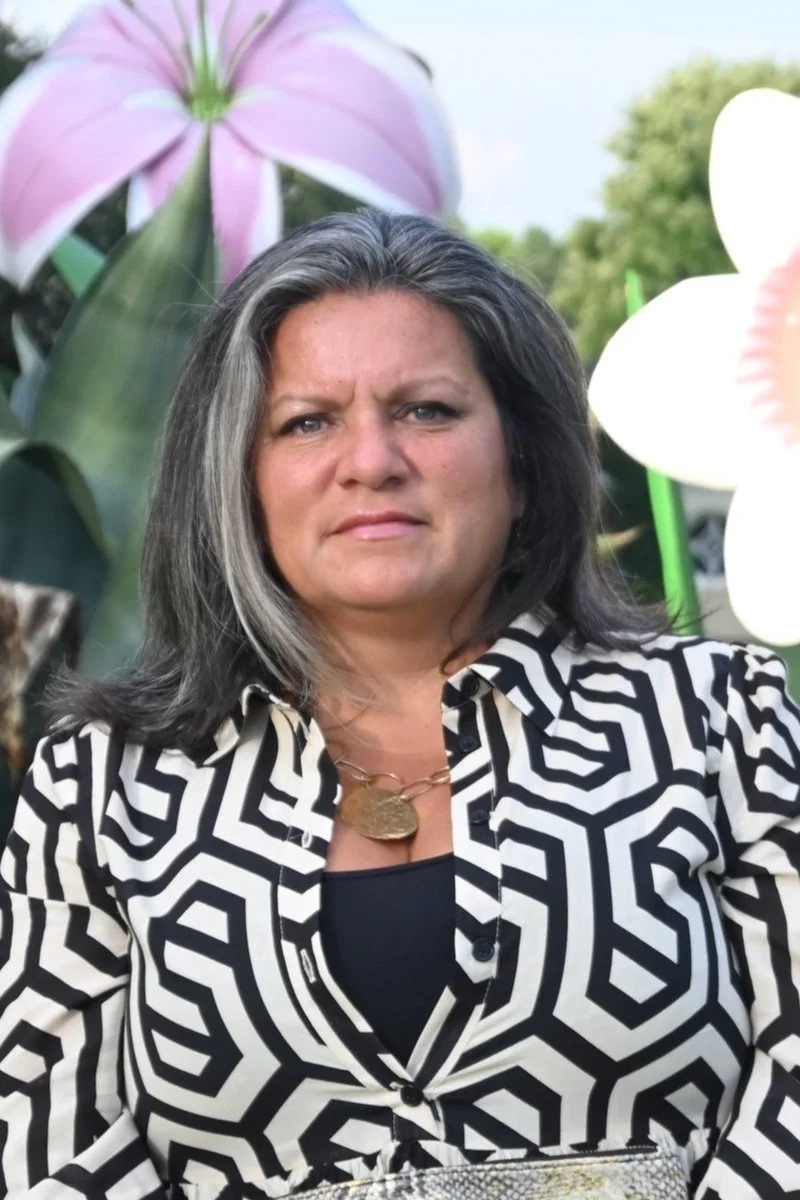
Founder / Owner
Sandy Bridger is passionate about wines that tell a story. Rather than settling for the typical, Sandy seeks out bottles finished in amphora or concrete, or crafted from rare grapes found in only a few vineyards worldwide. Sandy wants people to drink with curiosity, exploring new regions and flavors from their own glass. For Sandy, every bottle in the shop must spark intrigue and, above all, taste good—a standard upheld through personal tasting and agreement. Through this approach, Sandy ensures every wine offered is not only interesting but also exceptionally well-made.
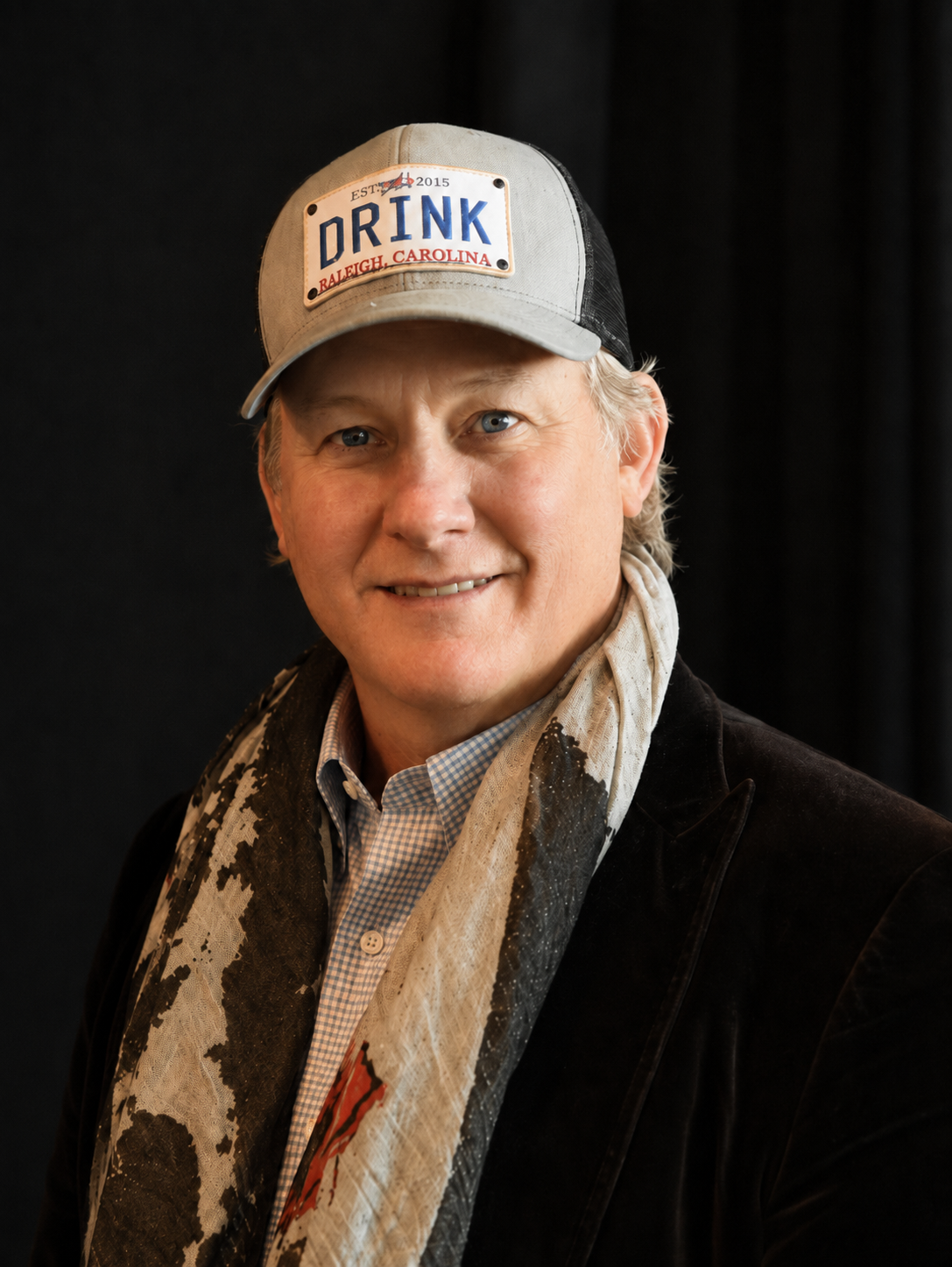
Founder / Owner / Sommelier
Cameron Bridger is someone who embraces differences, especially when it comes to tastes in wine and food. While his companion often has the sharper palate and nose, Cameron finds himself drawn toward different choices. Despite their varying preferences, they enjoy coming together, exploring foods and wine pairings, and eventually finding common ground. For Cameron, the experience centers around discovering new flavors and forging a connection through shared culinary adventures.