Designing Allergy-Friendly Menus Everyone Will love w/ Chef Karen O'Connor

Practical Strategies for Safer, Inclusive Catering—From Menu Design to Kitchen SOPs
Ever wondered how top caterers seamlessly deliver allergy-friendly menus that make everyone feel included? Executive Chef Karen O’Connor reveals the behind-the-scenes systems and philosophy driving one of Toronto’s most celebrated catering teams, Daniel et Daniel Catering & Events. From nut-free kitchens to detailed signage and collaborative menu design, discover the culinary and operational secrets that can prevent anxiety, save money, and make every guest feel like a VIP—without sacrificing flavor or style.


Heard on the Episode
“If I can design food that solves your problems before you’ve even told me about them, then I’m happy, very happy and in good shape.”
~Karen O'Connor 11:01
“For people that have multiple allergens or contact allergens, we then ask…we need to talk to that person. Tell me what you will feel comfortable eating, and then that way I can make that and assign somebody in the kitchen to make it.”
~Karen O'Connor 21:08
“We have educated [our sales team] enough…they wouldn’t have an entire menu with just—that’s unedible for a huge portion of our guest count.”
~Karen O'Connor 26:26
Key Topics Discussed
- Allergy-Friendly Menu Design
-
Building menus that address top allergens up front
-
Strategies for cross-contact prevention (e.g., nut-free kitchens, gluten-free stations)
- Multicultural & Dietary Diversity
-
Navigating halal, kosher, vegan, vegetarian, keto, diabetic, and more in a multicultural city
- Team Collaboration & Culture
-
Leadership’s role in evolving kitchen culture
-
Menu development as a team process, twice yearly
- Detailed Communication & SOPs
-
Transparent guest communications and signage
-
SOPs for handling contact allergies (dedicated staff, ingredient transparency)
-
Recipe management and staff training
- Operational Impact & Business Benefits
-
Streamlining menus for efficiency, client satisfaction, and cost control
-
Educating sales and front-of-house for seamless guest experience
Key Takeaways
-
Start with the Menu: Build inclusivity into foundational menu design, making top allergen accommodations automatic—not afterthoughts.
-
Transparency Is Trust: Use clear signage and proactive communication to earn guest trust and reduce anxiety.
-
Collaborate Cross-Functionally: Involve sales, culinary, and operations in ongoing education and improvement for best results.
-
Document & Enforce: Recipes and procedures must be followed—no improvising in production when allergens are a risk.
-
Simplify, Don’t Isolate: Streamlined menu options that suit many restrictions benefit guests, staff, and the bottom line.
Tips
-
Always Ask Early: Proactively reach out to guests with multiple or complex restrictions; let them specify what feels safest.
-
Design for Diversity: Offer at least one vegan, one gluten-free, and one dairy-free appetizer (or more!) at every event.
-
Standardize Signage: Clearly label not just what’s absent, but what is present (e.g., “contains soy, contains sesame”).
-
Dedicate Staff for Contact Allergens: Assign one chef and one server to guests with severe contact allergies.
-
Practice Menu Ruthlessness: Regularly update and streamline your menu—remove outdated or redundant dishes to keep training, procurement, and ops efficient.
Like what you heard? Subscribe to our newsletter for more episodes and insider content delivered right to your inbox!
Tracy Stuckrath [00:00:06]:
Hey everybody, and welcome to day four of Food Allergy Awareness Week. I'm your host Tracy Stuckrath with Eating in A Meeting and you are here to talk about food allergies. And I'm here to introduce you to Chef Karen. Executive chef Karen o' Connor, who I met at Cater Source. We can't figure out what year it was a handful of years ago. And she's the executive chef at Daniel Danielle Catering and Events, one of Toronto's most celebrated catering companies. She's been with the company 26, 27 years and has over 30 years of hospitality experience. But when I met her at Cater stores, she was teaching a, a class on how to create allergy friendly menus.
Tracy Stuckrath [00:00:52]:
So you, I'm going to say this so you don't drive yourself batty in trying to figure out all the different dietary needs. They're based out of Canada, Toronto. And she is a Katy Chef of the Year recipient, past president of the International Caterers association and a featured educator at Cater Source and the Art of Catering Food, which is where I met her. Karen, thank you so much for joining me.
Karen O'Connor [00:01:17]:
Oh, my pleasure. This is a topic that's near and dear to my heart, so I'm very happy to be here.
Tracy Stuckrath [00:01:22]:
Well, thank you so much. Like I said just a few minutes ago, actually I was kind of really blown away to walk into the session. I was excited. Blown away, like, hey, there's a class on how to do this and what prompted you and why is it near and dear to your heart, like you just said, to make sure that we have menus that meet the dietary needs of our attendees.
Karen O'Connor [00:01:47]:
Well, I mean, first and foremost, my sister is celiac and she also has anaphylactic allergies to nuts and to shellfish. So I am very cognizant of, of that fact that and, and how severe those things are and how they hamper her life. And so if I can help people navigate that, I want to do that. The other thing is just, I mean, Toronto is a big city and we have a very multicultural population. So not only do we have, there are lots of allergens, like there are lots of people come to our events with allergies. We also do have to deal with the number of different diets in terms of like, so halal and kosher. We're not kosher, so we can't, but we can do kosher style. And then we also, you know, get, you get the request for diabetic low sodium keto, all of those types of functions as well.
Karen O'Connor [00:02:49]:
So at the End of the day, it really is about a. I mean, we have to remember we are, we are caterers. We are catering to our guests. We want our guests to have an amazing experience. But I also want my chefs to have an amazing experience too. So if I can figure out how to accommodate allergens with a, with designing my menus. So it is, so it's not, it's not a stretch when someone comes and says to me, hey, I'm gluten free. I'm like, no problem.
Karen O'Connor [00:03:20]:
We have X, Y and Z. You know, we can handle that. And we don't really get our allergens way far in advance. So it is kind of nice to design your menus so that you are already accommodating various top allergens from the get go. So that then when you get them you're like, yep, no problem. We're, we already got that covered. I mean you still will then have the, you know, now we're you. Then you go from the allergens, the anaphylactic allergens to intolerances.
Karen O'Connor [00:03:54]:
Lots and lots of. No onion and garlic right now.
Tracy Stuckrath [00:03:57]:
I know.
Karen O'Connor [00:03:57]:
Yeah. Mushrooms are often big. So. And I'm originally soy and sesame weren't on our top. You know, we had the top seven. Now soy and sesame are on those. So. So that's what we, that's why I do it.
Karen O'Connor [00:04:12]:
I mean to eight make my life easier. But also, Chris, I really, I want to create a great guest experience and I want people to feel safe and comfortable when they're at my event.
Tracy Stuckrath [00:04:23]:
Well, and there's so many things that I want to unpack in there because even like one, I was chatting with somebody earlier today and, and she's a person with celiac disease. And when you say, oh well, we've got you covered. And depending on how that phrase is presented also opens up a wide variety of anxiety or like, oh, okay, you've got me covered, but what does that mean? And the transparency of that. And so you could walk those people through what you did.
Karen O'Connor [00:05:00]:
I could. And, and as I said, so I've tried, I try to, to design my menu. So for a sit down menu, we most often will have choices. You know, it's going to be a beef and a fish and a vegetarian or a vegan. And the vegetarians, the poor vegetarians are the one that are sort of, they are now have to, to for the most part they get vegan food. But most vegetarians are fine with that. They don't feel too excluded. And if it's A problem we have.
Karen O'Connor [00:05:30]:
We can do something that's vegetarian and not vegan. But so that means that if I have two choices, one of my starches is going to be gluten free and it's going to be prepared in such a way that I don't have to worry about cross contamination in the kitchen. It's just, you know, it's going to be roast fingerling potatoes that are cut on a clean table with someone who's not, you know, and. And in my kitchen, in the pastry in the savory side, there isn't. There's not. We're not using a lot of gluten in terms of flour and stuff. So we do use roux to thicken starch, but that's done in a separate place. So that's what I mean.
Karen O'Connor [00:06:11]:
So I have that choice available to the person and I have taken the care in the kitchen to prepare it in such a way that it won't be cross contaminated. The same thing with the sauces. So if one sauce is thickened with a roux or then the next, the other sauce will be a salsa or a chimichurri or a relish. And I will say that even as we go down this road and because gluten and celiacs very. It's big in Toronto. There's huge. Like I will have every event. I'm going to have at least 10 people that are.
Karen O'Connor [00:06:41]:
So we tend to say, do we have to put gluten in this dish? Can I do more? So I am doing more salsas and, and gastris and vegetable based sauces as opposed to the old fashioned ones with flour and butter and cream. And so that's what we do.
Tracy Stuckrath [00:07:00]:
The French culinary school probably have a conniption.
Karen O'Connor [00:07:04]:
They probably, you know what. But even people are eating differently now than when, you know, like, things change, trends change. It's the same with my orders. You know, I tell my guys as well, we develop things like, you can have something with all the fields. You know, you can make something with cheese and cream and butter and flour, you can have that. But for everyone that you do with all the feels, let's make one without any of the feels. And, and then, you know, in some, like, let's have. Make sure we have some gluten free ones.
Karen O'Connor [00:07:32]:
Let's make sure that we have vegan hors d'. Oeuvres. Let's make sure that I have dairy free hors d' oeuvres that still have, um. Because that's the other thing. Like, I think that in like the, you know, in order to make our lives easier, we come kind of went through a period where we just really simplified things. And so either you had everything or you're vegan. And you know what, over the course of the years, I mean, I've been, you know, you are instructed by your clientele in a way, lots of ways. We had a president of one of the boards of a concert hall that we do a lot of work in.
Karen O'Connor [00:08:07]:
He was celiac and he said, I'm not vegan. I'm not vegan. I want my meat, I want that beef, but I can't have the, you know, I don't, I don't want the mash or not mashed, but I can't have that flour based sauce. So, you know, and so then you're like, oh, it makes you think, okay, the hors d', oh, I can have a dessert that is, or, sorry, an hors d' oeuvre that is meat based, but it's gluten free. You know, you can, you can work that through. We make a lovely little hors d' oeuvre that, that has a potato cup and it has bray short rib and it's got a pickled carrot top and it's beautiful and it's tasty and it's gluten free and it's dairy free, you know, and so those two things are taken care of. But it's not vegan. I have vegan options for the vegans.
Tracy Stuckrath [00:08:53]:
Well, in just go ahead.
Karen O'Connor [00:08:56]:
So that means when my sales team are creating their menus, I have given them lots of options. So that even if you don't have the dietary needs for that particular party, you are going in with a, with a menu that is already covering those things. I have really great vegan options that's covered. I have gluten free options for my mains and my starches and my vegetables. My appetizers, My appetizers generally tend to be plant based. That just makes everybody's life easier and everyone, you know what, we're all eating lighter and healthier. So I have, I rarely get a pushback on that. And I try to make sure that any allergens I put.
Karen O'Connor [00:09:46]:
Because, you know, I, I love cheese on my salad. Like, I love it. But I can have cheese on a salad that is very easy to not put on the salad. It's going on at the last minute, I don't have to put it on. And then I have a vegan salad.
Tracy Stuckrath [00:10:02]:
So it, it sounds, so, I mean, I say it sounds so easy. But it's not, I know you had, it took a lot of time to get there because you're like, oh, this gentleman said, well, I want my steak. Which I hear a lot of stuff from vegans because the standard of giving everybody in the allergy thing, here's the one dish that you can get and like, going next week, I, I'm there for Sunday through Friday. I have three receptions with all the same people. And when there's only one option that's gluten free, dairy free, I can't order that same thing three nights in a row.
Karen O'Connor [00:10:37]:
No, no, no, you can't. And that's, and why would you, you know, and why would they want you to? And I, I, I'm making it sound simple, and it's true. It is a process, but I would rather have solutions for you beforehand than have to make a solution for you five days out, you know? Right. So if I can design food that solves your problems before you've even told me about them, then I'm, then I'm happy, Very happy and in good shape. And it's, yeah. And I know what I'm doing. My team knows how to make those items. We have tested them, we have recipes for them.
Karen O'Connor [00:11:22]:
And, you know, so rather than trying to do something on the fly, which tends to happen if you don't have planning like this, it just leaves too much room for error. And it also leaves too much room for producing a mediocre product.
Tracy Stuckrath [00:11:39]:
Yeah. Because in the end, I mean, you want to produce, I mean, food is the topic of conversation at a lot of events, no matter what you, what event it is and bad or good. And you want it to be the good side. Because, and Jay and I talked about this, and he said when I produce a wedding for 200 people, he's like, there's 198 people that could be a new client of mine.
Karen O'Connor [00:12:02]:
Like, exactly. For sure.
Tracy Stuckrath [00:12:04]:
And I told him 200. Because you want that bride and groom to rehire you, you know, but yeah,
Karen O'Connor [00:12:11]:
yeah, no, that's, that's something we talk about here. Like, we, we have been in business for 45 years. And, and, you know, so there's issues in, when you've been around for 45 years, that's a great thing. But it's also like the brides and grooms, you know, now we're trying to get the brides and grooms whose grandparents had us do their wedding.
Tracy Stuckrath [00:12:33]:
That's awesome.
Karen O'Connor [00:12:34]:
With this, you know, we're doing a lot of 90th birthday parties right now, but we want those. And so we are fighting against a little bit that, like, oh, I don't want to go to my grandmother's caterer. So we have to make sure that we are staying on trend and on top of things and that we. Because it's true. At that wedding, you could have. You can have lifelong clients. That's what you want, right?
Tracy Stuckrath [00:12:56]:
Yeah, that. That. I love that. You should find a story around all of that. That is so cool. I mean it. Okay, so let's just go back there, because you said you were. You started with the company as Danielle's assistant back in the 80s, and then.
Karen O'Connor [00:13:14]:
No, actually. Sorry, sorry. I'm sorry. When I first started, I was. I was a lowly prep cook.
Tracy Stuckrath [00:13:20]:
Oh, okay. Okay. So you were a prep. You're a Garman Shay. Back in the 80s.
Karen O'Connor [00:13:24]:
Yes.
Tracy Stuckrath [00:13:25]:
And then now you're the executive chef. That's.
Karen O'Connor [00:13:28]:
Yeah.
Tracy Stuckrath [00:13:29]:
30, 50 years ago. Right.
Karen O'Connor [00:13:31]:
It's a journey.
Tracy Stuckrath [00:13:33]:
Yeah. How has that changed from, like. Did you even talk about allergens when you were in the 80s?
Karen O'Connor [00:13:39]:
Really? Didn't you? Really, didn't you? I don't even. I mean. And it's weird because my sister had them. She was. Hadn't been diagnosed with celiac back then, but she was like. I remember because, you know, when you work in catering, you're always like, hey, we're short of waiter. Can you come and give us a hand? Can you work a food station? And she came to one event where we were serving lobster, and she didn't eat it, but she left. And she was like.
Karen O'Connor [00:14:11]:
Like, her arms. Oh, wow. Rashes up her arms. I mean, you're like, wow. Like, you better not go in rooms with lobster ever again. But really, I don't remember it being. It wasn't. It was just not something that was talked about.
Tracy Stuckrath [00:14:28]:
Right.
Karen O'Connor [00:14:28]:
Or, you know, I mean, very rarely. Certainly not. I mean, and I would say even, like, I would think the huge sort of concentration or that, like, it has been the last maybe 15 years.
Tracy Stuckrath [00:14:47]:
Okay.
Karen O'Connor [00:14:48]:
Where we've really made a conscious effort about allergens. Yeah.
Tracy Stuckrath [00:14:52]:
And how. And has a lot of the team been there the same length of time as you have?
Karen O'Connor [00:14:58]:
A fair number of them have, yes. But we, I mean, you know, it's kitchen. So we also have some. Some great, wonderful young people, too, who bring us some vibrancy and energy, and it's awesome as well.
Tracy Stuckrath [00:15:11]:
So how was. How do you. And I asked Jay this question. How do you build a kitchen that maybe was. They did they came to you having Been trained under, you know, French, this is classically trained French kitchen, you know, to this environment. How and how do you build that culture of, hey, we want to do this for you? Like, this is how we do our business?
Karen O'Connor [00:15:34]:
I think to a certain extent, I think because we're caterers, I think there's a big difference. I think you see a lot less ego in a catering kitchen than you would say. And, and it makes sense, right? In a restaurant, that is you, that is the chef that is on display at that restaurant. You are coming to that restaurant to taste his food. But in a catering company, I am catering your wedding. This event is. Shouldn't be about me. This event is about you.
Karen O'Connor [00:16:04]:
And so you are much more. You are already in the mindset of like, we want to make this good for you as opposed to. And, you know, and in catering this again, you can't. You know, we're already walking that line where we want to make wonderful food that tastes great. But, but I also have to serve 100 people in 12 minutes. So I, I am, I'm not going to have the same. I am, I am more prepared to compromise certain things in order to, to make that happen and to make it be a wonderful experience. So when I compromise, I don't want to compromise on quality of ingredients or flavor of the food.
Karen O'Connor [00:16:49]:
But perhaps the presentation is not going to have 15 little dots on your plate. You're going to have your sauce and your garnish and your meat and your veg. Like, it's going to be beautiful, but it's not going to be, you know, like in a fine dining.
Tracy Stuckrath [00:17:04]:
Right. Michelin. Yeah.
Karen O'Connor [00:17:06]:
So I, Yeah, so I think that we are already in the mind, like, okay, how can we make this wonderful and beautiful, but also make it safe and good for. And you know what? It has been a journey. I mean, I do remember, forget allergens, just vegetarians and oh, vegetarians could have like, oh, you get a pasta. Here you go. You get a pasta. We don't put any thought into, you know, not much thought was put into the vegetarian entrees. And now my vegetarian entrees, I will hold them right up next to any entree I serve the, the other. Every.
Karen O'Connor [00:17:40]:
Anybody else. They are complex and interesting and delicious and, and beautiful and, and so it is, it is a journey and it's. Kitchens have evolved. But, you know, you just have to, as a leader, you have to, you sometimes you insist on that evolution. Right. This isn't something. If you're not interested in evolving, then, But I, I Do think in the catering kitchen, people are much more. You want to make your guests happy, right? Yeah.
Tracy Stuckrath [00:18:11]:
So is there a moment in there and like, somebody from your team that, like, was, aha. Oh, my God, look what I just made. This is mind blowing that I didn't know that I could do.
Karen O'Connor [00:18:21]:
I. We have that. I mean, I have, you know, we do a new menu twice a year. Fall, winter, spring, summer. And I have, you know, it's taken me a while, but I have a team. Young. Some are young, some are older. They've been with us for a long time, but we have about six people that generally work on new menu items.
Karen O'Connor [00:18:45]:
And so they're often like, oh, my God, look what I did. Like, look what I. I came up with. And it's. And, you know, and it was. At one time, it was me who was doing all of that by myself. And it's, you know, again, there's pros and cons to everything. When it was me doing it, it was a very, like, it was my vision and it was my.
Karen O'Connor [00:19:03]:
My. So that it was maybe easy for me to make everything work together. Now I have six visions, and we have to make sure that we are able to all make ourselves work together. But it is a wonderful thing. It is amazing to be working with people who are excited and interested and this. And. And this team is where that whole, you know, like, we have to. So we're thoughtful about it, we're sitting down, we're designing these menu items together.
Karen O'Connor [00:19:30]:
And separately, you know, like, we have the meeting and then we separate and we come up with our dishes and we come back to the table. We're going forward with the, like, one has to be vegan, One has to be gluten free. We, like, do we have to put gluten in this? I mean, something in our kitchen, we have now become a nut free. My savory kitchens are not free.
Tracy Stuckrath [00:19:51]:
Okay?
Karen O'Connor [00:19:52]:
It just became something that was. The risks were too great. And, you know, so. And the rewards, you know, at a certain point, you're like, no, I. The reward of having nuts and things is not worth the risk I'm taking, because that is something that's. They're small, they spread, they're. You know, you can touch a nut and then forget that you touch the nut and go and make something else. And it was just, you know, when you would have an anaphylactic allergy, it would just be a stress point that finally we're like, no, let's just take this off the table.
Karen O'Connor [00:20:23]:
We do still use them in our pastry department because, you know, pastries, you know, certain things you just can't have without nuts. But they, we are lucky that they have their own separate space. And so that means my, my cold, cold kitchen and my hot kitchen, I do not have to worry about nuts anymore. And, and I can tell you that not only is it great for the client, but it is such a relief for me. It is a pain point or a stressor that I don't have anymore.
Tracy Stuckrath [00:20:55]:
Yeah, yeah. Because one thing that I thought this was amazing that Jay said the other day, like in the sop process of it, he said, if we have somebody that is a contact allergen, like they're going to. From touch, right? He goes, I assign one server and I assign one kitchen staff person to make. They're only responsible for that one item because of what you just said, because of the risk of forgetting to change your gloves or forgetting to take your apron off or whatever. And I'm like, that seems simple, but it's something that you don't think through all the time.
Karen O'Connor [00:21:34]:
Right? And I mean, and then something too, like contact allergens. They are scary. So we really. Well, we, we do very similar. We also though, if for people that have multiple allergens or contact allergens, we then ask the planner or the salesperson, like, we need to talk to that person. We find out what it is that we can make for them. Because sometimes you get a list of 10 things and you're like, rather than me try to cobble something together from what we're making, why don't you just tell me, tell me what you will feel comfortable eating and then that way I can make that and I can assign somebody in the kitchen to make it so that I don't have to. So I know that person has front to back, like top to bottom.
Karen O'Connor [00:22:27]:
They have worked on that item. So I know they have paid very close attention to making sure that they have not cross contaminated. They haven't put a piece of chicken on a grill that just cooked salmon. They have washed their knives and they're. They're using fresh knives and spoons and everything to make it so that they can very comfortably say, this, this is good. This is good for this person. And then someone on site is in charge of making sure it gets heated. And, and because we recently had somebody who was celiac and she said, I can't even have food that is heated in the same oven as.
Karen O'Connor [00:23:04]:
Wow. I know. And she actually did not tell us that till the event night. So that was a little bit of a challenge, but we figured it out. And then, and then, of course, yes, you're making sure that the, the server is going with the right, that plate that's handed to that person and. Or hors d'. Oeuvres. The same thing with hors d'.
Tracy Stuckrath [00:23:24]:
Oeuvres.
Karen O'Connor [00:23:25]:
If. And it's trickier. It's much trickier. I will tell you if I'm at a small party with an anaphylactic allergen, I try to get the salespeople to leave that off their menu. So if I'm at a party for 20 people and there's somebody with a, an anaphylactic shellfish allergen, I say let's no shrimp. Let's, you know, no clams, no, no, no mussels, no scallops. Let's leave that off here. Because in a 20 person party, I'm not, I'm not necessarily.
Karen O'Connor [00:23:53]:
I don't have one server to dedicate to serving the shrimp order. Right. That person has to serve a bunch of other hors d' oeuvres so that if that person has to. Every time, you know, you can dedicate a trade of the shrimp, but the service still has to go and wash their hands, take off the gloves and wash their hands and put on some gloves and go and train another 12 shrimp and then, and you know, that's, it's not practical. So that is what I try to do. But yeah,
Tracy Stuckrath [00:24:22]:
I, I'm like, I want to come eat all of your food, but the opportunity, like, and you said streamline too, so I want to get to that. I mean, it's not having a bunch of different things. Like, you know, so you're not doing it like, the streamlining has probably saved you money. It's gotten you new clients. Can you talk a little bit about, like, how it has actually helped you, like, reduce your costs? If it, I mean, I'm assuming it
Karen O'Connor [00:24:52]:
has, you know, I will say it because we are so big. I don't know, honestly, my menus are too big. This, doing two new menus every year. And then, you know, the problem is people love the old menu. So now I have a new menu and I have the old menu and I've been in business for 45 years and I do try to be ruthless about getting rid of stuff. So. But it, it does mean that, I mean, yes, if, when I can get my sales team to kind of come together and, and it does make it a lot easier, but it just means as well that, like, I don't have to make special menus like I have. Here's my orders.
Karen O'Connor [00:25:32]:
There are 30 hors d' oeuvres here, so 12 of them are gluten free. Wow. So when you're making a menu, you're going to put some of those gluten free orders on your menu. You are going to put. I have, you know, I'll have 12 vegan hors d', oeuvres, I have maybe six meat hors d' oeuvres that don't have dairy in them. So you have the option to make that menu very allergen friendly to begin with. So that's much more seamless than you coming to me having put dairy and wheat on every single hors d' oeuvre and coming to me a week beforehand and saying, okay, well now can you make these hors d' oeuvres wheat and dairy free. That's where it really saves me time and money because I can say no, I cannot.
Karen O'Connor [00:26:20]:
But you can have one of these over here or two of these over here.
Tracy Stuckrath [00:26:24]:
Right.
Karen O'Connor [00:26:25]:
So a bit. And, and I think that we have educated them enough too that they wouldn't ever do that anymore. They wouldn't have an entire menu with just, you know, that that's unedible for a huge portion of our, our guest count.
Tracy Stuckrath [00:26:41]:
Oh, let me, I could count the stories and give you so many stories. But it, it, but again it's, it's a lot of, it's not coming from a, a catering kitchen, it's coming from a mass food service, let's call it food service kitchen. That. But at the same time they're, they're feeding the same amount of people. I mean, you may not be feeding 17,000 people, but you could still provide that same experience for 17,000 people. You know, if you thought through with what you just described, you know.
Karen O'Connor [00:27:13]:
Right. And they could too.
Tracy Stuckrath [00:27:14]:
Yeah.
Karen O'Connor [00:27:15]:
And it kind of surprises me that they don't, you know, because they are serving, you know, they are serving the same clientele I'm serving. So they must have the same pain points that I have. If you're serving 17,000 people, you absolutely have gluten free free people in that group.
Tracy Stuckrath [00:27:37]:
Right.
Karen O'Connor [00:27:37]:
A huge percentage you have vegans and you have, you. So you, you, I mean, if you're not prepared for that, it seems, it seems short sighted. And I mean, I would think in hotels too, like we do actually do a number of multiple day events. So that's, it is important that I have, that's why I want to have like those six or eight of things, you know that I mean everything we do, we think about that we have breakfast items that are vegan. Now when I do, you know, when I do food stations and this is something like we, the food stations was our sort of our last bastion where we weren't thinking about it. One of, and one of the owners came to me and said, you know, how about when you do a food station you make sure you design a vegan component. And that is also one of the places where you might, if you can't have the main one, even though you're not vegan, your option is going to be the, the, the vegan option for that station. But so if I make a.
Karen O'Connor [00:28:39]:
So we have a jerk chicken station and that jerk chicken station now has jerk tempeh.
Tracy Stuckrath [00:28:45]:
Okay.
Karen O'Connor [00:28:45]:
And, and again, so now my staff are pretty. So it's on that jerk chicken. They do rice and they do rice and peas. So the rice and peas are the starch and the veg. So again that is now that even the jerk chicken is very friendly to lactose free to gluten free, no nuts. So we try. So that's, we do things like that. And if other people aren't doing that, I kind of say why, why aren't you doing that? Because it's so simple for me.
Karen O'Connor [00:29:17]:
I don't have to rack my brains. I'm like, here you go, here's a very beautiful station. And I've thought, I've really thought of everybody.
Tracy Stuckrath [00:29:26]:
Well, yeah, I could send you some menus. I mean and actually I was been looking at one the other day and I, the, the cold or d'.
Karen O'Connor [00:29:33]:
Oeuvres.
Tracy Stuckrath [00:29:34]:
I think there were probably, there's probably 12 or 15 on the list and there was probably four that were gluten free, dairy free, four or five. But I looked at the hot and not a single one was gluten free, dairy free. And there's like 15 listed there. And I'm like, what am I? You know, this is what I'm left with. Yeah. And why. Yeah.
Karen O'Connor [00:29:54]:
And it's. Yeah, yeah, yeah. I don't know. I honestly. Because it's not. It really. Once you start thinking about it, it's not hard.
Tracy Stuckrath [00:30:04]:
Right? Yeah.
Karen O'Connor [00:30:05]:
They could even just do satays, you know, like meat on a stick that also with an, a salsa or with a aioli or. But there are lots of, you know, like, I think it's just a matter of like, I know, you know, wheat's a good binder, but there are others. There's so many. And that's, you Know, the world's evolving, so they're going to have to evolve too. Like there are so many products that are available. Like gluten free breadcrumbs are available. There are gluten free, really good gluten free flour mixes that have been designed to work really well in pastries and in your sauce. It was like, you know, you don't have to use flour to bread your fish.
Karen O'Connor [00:30:49]:
You can use potato starch or you can use rice flour, depending on what kind of result you want.
Tracy Stuckrath [00:30:55]:
Right.
Karen O'Connor [00:30:56]:
There's just no reason. It's, it's. I'm sure that, I'm sure perhaps like large corporations take a little bit longer, but they're going to have to, yeah. Start being more inclusive of. Well, and I think clients are, they're
Tracy Stuckrath [00:31:12]:
insisting and for me, like a hotel, I'm like, this is an opportunity for you to get heads in beds. You as a caterer, it's an opportunity to get another wedding or a corporate event. But it's more people to get ahead in a bed. In your hotel especially. I mean, it's not necessarily your restaurants, but maybe they're going to bring their next event to you, you know, so it's kind of, it boggles my mind as well. Yeah, yeah, yeah. So I want to go back to something that you said at the very, very beginning. And you said Toronto's like this very cultural city, right.
Tracy Stuckrath [00:31:47]:
Like lots of different cuisines, et cetera. So how do you honor that while also honoring somebody who is, you know, has a dietary restriction at the same time? I mean, those are two things that are, are super important to potentially mesh together in your menu design.
Karen O'Connor [00:32:09]:
So I would say first of all, depending on how authentic they want me to be, I will often partner with somebody to do a certain cuisine. And so then that becomes that caterer's problem, not mine. But it is really not that hard. And a lot of different cuisines don't use like the Indian, Indian food is. There's a whole subsection of it. Like they are, a lot of them are vegetarian. So that is. And they don't use, they use butter, but then they also use G, which they, and they, they have a vegetarian G that you can use so that you don't have to put butter in it.
Karen O'Connor [00:32:57]:
They don't tend to use a lot of like. And they use like chickpea flour a lot more than they use. So some of the cuisines, it's really not even that hard. Again, Asian cuisines are not that hard until if it's a soy allergy then you have a bit more of a problem and you have to figure out how to, how to work that through. But even like we have developed here a vegan fish sauce so that we can have that, but it still has soy in it. It has soy and then it has mushrooms as to get that Unami flavor.
Tracy Stuckrath [00:33:32]:
Right.
Karen O'Connor [00:33:32]:
Which can create other problems because mushrooms are not generally an anaphylactic allergy, but an allergy for people. So I mean it's really those, the different cuisines, you know, where it's hard things like Italian and you know, it is gluten free. Pasta is, it's just, it's just not as good as regular pasta. But at the same time I do think like that's what I say, you know, to my hardcore Italian cooks that gluten free, you know, they, they, they have, they have made that compromise in their life that they understand this is what, this is where we're at. And some of them are very good. They're just not quite the same.
Tracy Stuckrath [00:34:18]:
Right. Yeah.
Karen O'Connor [00:34:21]:
So, you know, they are, they are still very happy to have, to be able to have it. Even if it's not quite what you think really good pasta should be. I would say it is the one cuisine that is, that's the harder one. For me that kind of is a little bit tricky, but for the most part I think it just means you just have to be a little bit creative about what ingredients you're going to put in so that you can accommodate.
Tracy Stuckrath [00:34:45]:
Yeah. How do you. Okay, so you've got your culinary team. How does the front of the house staff do you all. I mean you've been together for 45 years. The company's been around. I mean in some instances there's a clash between the front of the house and the back of the house and sales. But it sounds like you work very well with your sales team.
Tracy Stuckrath [00:35:06]:
But how do your servers like, how do you train them and where do they like, do they feel like they're part of this entire process?
Karen O'Connor [00:35:19]:
I'm not sure we use, to be fair, you know, we use. In Toronto we're a little bit different. We have three, four, maybe four really good staffing agencies and most caterers do not have their own.
Tracy Stuckrath [00:35:34]:
Oh, okay.
Karen O'Connor [00:35:35]:
It's just one level again, one more pain point. It's very hard to have enough work to sustain a full time staff and, or to manage the churn of people who, because, you know, who are your, who are you going to work as your servers? Generally it's students or actors and artists and people who have feast and famine in their lives. My son, who, who is a writer and a comedian and so he, he is a waiter for one of these companies. So it is hard to manage that. So we have these companies that manage it and do it very well and they have access to all the caterers in Toronto so they can get enough work for their teams. But what we have developed is our signage system and we have to, we are very specific on our signs. So our signs, not only here's, here's something that we could talk about for hours probably too is we do use the terms nut free and gluten free and dairy free. But really legally we should be saying made without.
Karen O'Connor [00:36:49]:
Dairy, made without. Because those things exist in my kitchen. So I still have to say to people, I am not an allergen free kitchen. But so we tell you what's not in our products and then we tell you what is in our product. So we say this is nut free but contains wheat, contains soy, contains sesame. Generally, as I said, I like to try and make menus that are as inclusive as possible. But once I only get my allergens about seven days out, okay, so they're going to be things where I haven't, you know, you can't, you just, you can't. So if I can, you know, I will remove the allergen from an item, but if I feel I can't, then I will also put on the signage.
Karen O'Connor [00:37:36]:
So now I have a mushroom allergy in this party. So all the odors that have mushrooms on the sign, it will say contains mushrooms. And then our waiters, even though they are most. For they are excellent, they are excellent. And they, you know, at the beginning of the event you have a little meeting and you say, this is what's in this, this is what's not in this. It's on the sign. If you get a question, make sure that you refer to the sign. If you don't remember and if it's something you're really not sure about, you come back and ask someone in the kitchen before you give an answer to the client.
Karen O'Connor [00:38:12]:
So that's, that's kind of how we manage it on site to make sure. And I also for anaphylactic things or for the top nine, you know, so I, there are very few things that I'll let you put nuts in. If you haven't put the nuts somewhere where people can see them. Macarons are one of them. Where it's like, that's not possible. But right. For the most part, if there are Nuts in it, then the nuts should be on top. Because I want, even to the very last second, I want that person bringing it to their mouths.
Karen O'Connor [00:38:43]:
Go up. Oh, no. And put it down. Sesame. If there's sesame in it, I try to make sure we sprinkle sesame somewhere as a garnish, like on the top or around the plate, like here, Sesame here. Alert, alert. So that's something else that I try to do. So the signage.
Tracy Stuckrath [00:39:02]:
That's amazing.
Karen O'Connor [00:39:04]:
And the other thing that I will talk about, if I may for a second is also the thing that's really, really important is recipe. We have a recipe software program. It's like Kitchen Management Talk, but our recipes are in there. And it is really important that your staff get trained to follow those recipes. They are not to go offline and add things in or take things out. They must follow the recipe. Because when we are working with the sales team to make sure that we know what's going on, that is what I am referring to. So if my recipe says no garlic, and for some bizarre reason, you decide today that it should have garlic, that's a no.
Karen O'Connor [00:39:49]:
That's a no. Because it's very likely that I'm going to go to a client and say, this is safe for you to eat. There's no garlic here, so you can't just add it. You must follow those recipes. And that's something. That was something. That was a big change for our kitchen.
Tracy Stuckrath [00:40:02]:
I bet.
Karen O'Connor [00:40:03]:
Yeah, years. You know, and I think you talk to any kitchen, they'll be like, oh, the recipes are all here. And that's. No, they can't be here. They have to be on paper.
Tracy Stuckrath [00:40:15]:
Well, yeah, because if you get sick and don't show up to work or, you know, what's. And then what's the historical of your. Your business? What do you have left of your business if it's all up here?
Karen O'Connor [00:40:24]:
Yeah, yeah, yeah. No, yeah, yeah, exactly. There's lots of reasons why it's good to have it on paper or not. But. But managing allergens has been one of the. I mean that, you know, rather than having to go around to each person who makes something and say, did you put this in there? Is this in there? I can just go to the computer and I can go. Yep. No, you're good, you're good, you're good.
Karen O'Connor [00:40:46]:
Oh, we're going to have to work on this recipe. If we want to remove it, then we have to change it, you know.
Tracy Stuckrath [00:40:52]:
Right, yeah. Because you have to think through all the textures and the amounts of everything. You know, of how that's going to give a different flavor or different texture. Yeah, no. Oh, my gosh. This is just so amazing. Thank you so much for how you do all of this.
Karen O'Connor [00:41:08]:
Oh, you're very welcome.
Tracy Stuckrath [00:41:12]:
It makes people in this world that manage dietary restrictions feel so much more comfortable being able to go to a place and have a meal and not feel othered because they don't eat something and. Or can't eat something.
Karen O'Connor [00:41:29]:
I know. And that's my sister. I mean, for years she would just like, she's, she's very, you know, self effacing and she wouldn't want to be a problem to anyone and she just wouldn't eat. Like if she was going to invite. She was invited to a wedding, she would eat beforehand and she just wouldn't eat. And. And you know, it's like, we don't want that for you. We want you to be able to go and to have a meal and to enjoy just as everyone else does.
Karen O'Connor [00:41:54]:
And even, I mean, even we go to restaurants and. And sometimes she won't. And so I. But if I'm with her, I speak up. I'm like, Melissa, you have to speak up. Tell them. Yeah, even if you think you're ordering something without that allergen in it, you should tell them so that they know to take care.
Tracy Stuckrath [00:42:09]:
Right.
Karen O'Connor [00:42:09]:
You know, otherwise they might not.
Tracy Stuckrath [00:42:11]:
Right? Yeah, yeah, exactly. Okay, I have a couple of rapid fire questions for you.
Karen O'Connor [00:42:15]:
Is that.
Tracy Stuckrath [00:42:16]:
Are you good?
Karen O'Connor [00:42:16]:
Okay. I'm good.
Tracy Stuckrath [00:42:18]:
All right. The one ingredient that every event menu should feature more of and one that you just want to get rid of.
Karen O'Connor [00:42:27]:
Well, you know what I mean? Every event is different to me, so I can't. I'll tell you what's really big right now. Dill. Dill and pick. Having a moment.
Tracy Stuckrath [00:42:36]:
Okay.
Karen O'Connor [00:42:37]:
Yeah. I mean, they are here. Even. Even. I mean, it's the moment so big. The grocery store like dill pickle hummus.
Tracy Stuckrath [00:42:44]:
Oh, wow.
Karen O'Connor [00:42:44]:
Still pickle salad dressings. Dill's having the. It's having a moment and I love dill, so we're good with that in this kitchen. I'll tell you the thing that I would love to hear less of is Elevated and vip. I think it's not an item, but my son and I and actually we were having a conversation about. And he's like, well, how do you handle it when it's vip? And I said, you know, I actually handle it the same way. I handle it for everybody because I want to serve everybody really and great, amazing food. And the same with elevated.
Karen O'Connor [00:43:20]:
Elevated means very different things to different people. So just tell me what you want. I, I, I, you know, sometimes elevated just means a small hamburger. If that's what you mean by elevated, then just tell me. I want a mini hamburger. Because to me, to me, elevated means lobster and caviar. Right. You know, so I would prefer people who are just a little bit more like, this is what we want.
Karen O'Connor [00:43:46]:
This is what an elevated experience is for me.
Tracy Stuckrath [00:43:50]:
I would love an. Well, I had an elevated burger without a bun at a restaurant in Greenville, South Carolina. The, the chef took an iceberg lettuce, head of iceberg lettuce, and chopped off the top, chopped off an edge of it, and put the rounded piece as the top of the hamburger as my top hamburger bun, and then took the next slice and put it as the bottom. I'm like, that's the best, like, presentation. Yeah. Because otherwise it's just a piece of meat on the plate. Yeah, yeah.
Karen O'Connor [00:44:22]:
Like crunchy lettuce, the burger. That'd be delicious.
Tracy Stuckrath [00:44:25]:
Yeah, yeah. And that's my elevated in that burger situation.
Karen O'Connor [00:44:29]:
Right. And yet someone else might never even think of that. So, you know, when you're going to a restaurant, it's different, but when you're doing a catering function, like to tell me what you want, what your, what experience you want to have. Right. And I will do my very best to make sure you get that experience.
Tracy Stuckrath [00:44:47]:
Okay, Love that. Okay. You're catering a dinner for 10 friends tonight. What's a, what's on the menu and what's your non. A non negotiable dish.
Karen O'Connor [00:44:57]:
Okay, so I will. I am a carnivore. I am. Yeah, you don't know it, but anyway, I'm, I am an unrepentant carnivore. So probably it would either be steak or chicken. I really love a beautiful steak. I love flank steak. So if I was having 10 people, I would probably grill a flank steak or two and then some sort of greens would be non negotiable for me.
Karen O'Connor [00:45:23]:
My husband does. He gets tired of broccoli sometimes and be like, please, no more broccoli. But I could eat broccoli every night of the week and I'd be perfectly happy. But anything like s of something green and crunchy would have to be a non negotiable. And then, you know, depending if it's cold, then we'll do a roast potato or we could do. I would love to do green salads. You know, generally I love wheat berry. But again, depending on who's coming to dinner.
Karen O'Connor [00:45:52]:
I might do something with quinoa or sorghum. Sorghum is kind of. It's kind of like a wheat berry texture, but gluten free. So then that. I love a wheat I'm grate salad, but I love, like, roasted potatoes as well. Beautiful roasted potato.
Tracy Stuckrath [00:46:08]:
One of the things that I used to eat a lot when I lived in Atlanta because I could get it at the market, was buckwheat grouts. And I would eat it, toast it, and it was like grape nuts, right?
Karen O'Connor [00:46:20]:
Yeah.
Tracy Stuckrath [00:46:21]:
And even though it says wheat in it, buckwheat is gluten free.
Karen O'Connor [00:46:24]:
It's gluten free. And that's just it. There's so many things out there there that you can use that you should not have a problem being accommodating.
Tracy Stuckrath [00:46:35]:
Right? Exactly. Okay. What is the first memory that made you think, I want to do this for a living?
Karen O'Connor [00:46:44]:
You know, I. I don't know really when, because I actually really, really wanted to be a ballerina for most of my young life, so. But I also love to eat. And I. My grandmother was a wonderful cook. So I remember, like, she would make a beautiful roast dinner with the Yorkshire pudding. And even though she was English, roast beef was. Was perfectly medium rare and delicious and succulent and.
Karen O'Connor [00:47:11]:
And, you know, and she didn't scrimp on ingredients. It's nothing but the best for my grandma. So that's one thing. And my mom had. My mom had these cookbooks that were like. They were one of the magazines, like Good Housekeeping or Better Home Gardens. There was a whole series of them. And I do remember one of them was like a cocktail party cookbook.
Karen O'Connor [00:47:34]:
And I would pour over that book and I would be like, oh, it just. It seemed so magical to me. And I would think, like, one day I'm gonna have. I'm gonna have cocktail parties and I'm gonna serve all these beautiful little. Oh, that's awesome. So I just. I've always loved food, and I always love cooking. And when I finally realized that ballerina wasn't going to work out for me, it was pretty.
Karen O'Connor [00:48:00]:
It was pretty easy. Pivot. Yeah.
Tracy Stuckrath [00:48:02]:
That's awesome. I love that story. The. Okay, my final question is. Finish this sentence. Every meal should.
Karen O'Connor [00:48:14]:
Oh, I don't know. Every meal should make you feel like you're just delighted to have eaten it. You know, like, you're just like, oh, every meal should just be satisfying and delicious and. And like just the thing you need it. I mean, I guess. I don't know. Like, I just we do Sunday dinners, even though it's only three of us. I have just one child, and three of us do dinner, and it's, you know, Monday, we start planning what Sunday dinner is going to be.
Karen O'Connor [00:48:44]:
And it's just, you know, it should be good company and good conversation and delicious food. And it should just be a moment of coming together with people and enjoying their company and having wonderful food. Yeah, I love that.
Tracy Stuckrath [00:49:00]:
Thank you. I so appreciate your time today.
Karen O'Connor [00:49:04]:
Oh, my pleasure. I hopefully enjoyed this. It was the first time I've ever been on a podcast.
Tracy Stuckrath [00:49:10]:
Oh, yay. Oh, I'm so excited. Thank you. I feel honored.
Karen O'Connor [00:49:15]:
It's a lot of fun. Good. You was so easy.
Tracy Stuckrath [00:49:19]:
I tried it.
Karen O'Connor [00:49:20]:
Really easy.
Tracy Stuckrath [00:49:20]:
I try to do that.
Karen O'Connor [00:49:21]:
Yeah.
Tracy Stuckrath [00:49:22]:
Okay, so how does somebody hire you? Where do they get in touch with you?
Karen O'Connor [00:49:27]:
Danielle and Danielle. You call Danielle and Danielle. Do you want numbers? 416-9689? We're in the, you know, Danielle and Danielle catering in Toronto.
Tracy Stuckrath [00:49:38]:
In Toronto.
Karen O'Connor [00:49:39]:
We are on. We're online. Yeah. Okay. Just Google us. You Google it. My son's always saying, mom, you have. You have.
Karen O'Connor [00:49:48]:
You have a computer in your hand. Why are you asking me?
Tracy Stuckrath [00:49:51]:
Google us. Okay. All right, well, fantastic. Thank you so much, and I hope to see you in Savannah, you know, for sense.
Karen O'Connor [00:49:59]:
I hope so. I think I. Yes, yes, I'll be there.
Tracy Stuckrath [00:50:02]:
Okay, me too. Well, thank you, everybody, and stay safe and eat well and enjoy your food allergy awareness week. Thanks for listening to the Eating at a Meeting podcast where every meal matters. I'm Tracy Stuckrath, your food and beverage inclusion expert. Call me and let's get started right now on creating safe and inclusive food and beverage experiences for your customers, your employees, and your communities. Share the podcast with your friends and colleagues at our Eating at a Meeting Facebook page and on all podcast platforms. To learn more about me and receive valuable information, go to tracystuckrath.com and if you'd like more information on how to feed engagement, nourish inclusion, and bolster your bottom line, then visit eating@ameeting.com.
Karen O'Connor [00:51:01]:
Sa.
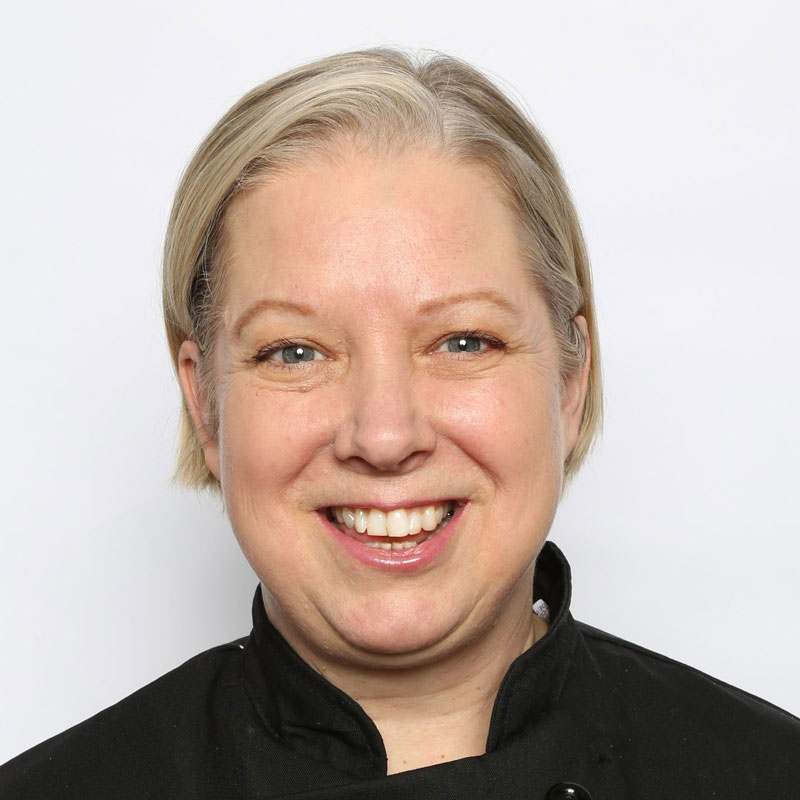
Executive Chef
Karen leads Daniel et Daniel’s culinary team, overseeing menu development and facilitating the ongoing creative process that consistently delivers unique dining experiences for our clients. A recipient of the CATIE Chef of the Year Award, Karen O’Connor is one of the top Catering Chefs in North America, and is currently co-chair of the Culinary Council at the International Caterers Association.