Feeding Gluten-free — How the Events Industry Can Support Gluten-free Food Equity

If your food pantry’s shelves don’t reflect the needs of 21 million gluten-free Americans—or you assume guests will ‘just figure it out’—it’s time for a reality check. This episode reveals why transparency, education, and intentional sourcing are the keys to serving every member of your community safely and affordably.
Carla Carter, Director of Education & Programs at the National Celiac Association, shares practical insights from decades on the front lines of gluten-free advocacy. Discover the hidden challenges of feeding gluten-free—at home, at events, and in food pantries—why communication trumps good intentions, and what it really takes for both families and organizations to bridge the affordability gap. Learn how one well-intentioned restaurant got it wrong, what food pantries need to know before donating, and how a national movement for equitable access is gaining momentum.


Heard on the Episode
"If the ingredients can be listed, if people know how it was prepared, they're going to feel comfortable and it will change their outlook on life. One experience can make someone completely filled with hope—or otherwise." —Carla Carter 18:16
"You're putting 100% of your control in the hands of somebody else. That is huge." —Carla Carter 39:57
"We coordinate... but we also purchase food so we have to have the ability to purchase that wholesale. And then pay for shipping and in some cases offer gift cards when we can." —Carla Carter 43:46
"There's the basic human need of eating, but then the psychological and emotional toll that it takes on a person." —Carla Carter 48:21
Key Topics Discussed
Gluten-Free Food Insecurity & Affordability
- Why gluten-free groceries cost more and are often unavailable in food pantries.
- NCA's Feeding Gluten Free program: matching resources and donations with real need—during COVID and beyond.
- Unique challenges for mixed households, children, and seniors left behind by "one size fits all" pantry solutions.
Hospitality, Trust & Emotional Labor
- The invisible labor of reading every label—and the anxiety of eating food someone else prepared.
- The emotional toll of a bad restaurant, event, or pantry experience.
- Transparent communication as the foundation of safe dining experiences.
Menu Labeling & Event Catering
- The business and ethical responsibilities of event planners, caterers, and chefs.
- Strategies for accurate allergen labeling and proactive guest engagement.
- How proactive education—not just good intentions—protects guests.
Disaster Relief & Community Solutions
- Systems and logistical hurdles in getting safe foods to those affected by disasters.
- Strategic partnerships between organizations, donors, and the hospitality industry.
- Creative, adaptable support for food-insecure gluten-free individuals.
Key Takeaways
- Communication Builds Trust: Transparency about ingredients and preparation makes a night out or a pantry visit safe, not stressful—one good (or bad) experience can shape a person's confidence for years.
- Affordability Is an Access Issue: Gluten-free isn't a luxury. Medically required diets worsen food insecurity, and programs like NCA's Feeding Gluten Free are working to close both cost and supply chain gaps—but more help is needed.
- Every Touchpoint Matters: A single mislabeled, poorly handled plate can mean lost trust or illness. Getting it right requires detailed planning, not guesswork.
- Education Empowers: Teaching families, pantries, and food service teams to identify, cook, and shop for affordable, naturally gluten-free foods is as crucial as providing specialty products.
- Foodservice Leaders Set the Tone: Proper training, labeling, and honesty—especially about what can and cannot be provided—matter more than empty promises.
Tips
- Label, Label, Label: Provide clear, detailed ingredient and allergen disclosures on buffets, prepared foods, and pantry donations.
- Don't Be Afraid to Say No: If you can't guarantee safety for gluten-free guests, communicate this early and honestly.
- Prioritize Communication: Proactively connect with guests about dietary needs well in advance so they feel seen, not burdensome.
- Leverage Community Resources: Share NCA's Complete Guide to Gluten-Free Living and Thrifty Gluten-Free Cookbook with families, food service teams, and pantries—and collaborate with dietitians to ensure full nutritional needs are met.
- Plan for Disaster Relief: Have a protocol for gluten-free food sourcing and distribution in emergencies, and streamline pantry processes with organizations like NCA to match offerings to actual demand.
Like what you heard? Subscribe to our newsletter for more episodes and insider content delivered right to your inbox!
Tracy Stuckrath [00:00:00]:
Hey, everybody, and welcome to another episode of Eating at a Meeting. I know last week I've been really focused on Food Allergy Awareness Week, but May is also Celiac Disease Awareness Month, and there are 21 million Americans who need to eat gluten free, and many of them can't afford to do it. And that's the reason I'm so excited for this conversation with Carla Carter. She is the Director of Education and Programs at the National Celiac Association. She herself has been living gluten free for over 25 years and has dedicated her career to making sure others can do the same safely and affordably. As the Director of Education and Programs at the National Celiac association, she is a force to be reckoned with to make sure that people across the state or across the country get safe foods in our food pantries. So welcome to the show, Carla.
Carla Carter [00:00:59]:
Thank you so much, Tracy. I really appreciate the invitation.
Tracy Stuckrath [00:01:02]:
You're welcome. And thanks to our friend Margaret who introduced us.
Carla Carter [00:01:06]:
Yes, Margaret Clegg.
Tracy Stuckrath [00:01:08]:
Margaret Clegg, Michigan. My gluten free gal. I love her. So give us a little bit of background about you and NCA and tell us how your diagnosis fits with the work that you do. How long have you actually been there now?
Carla Carter [00:01:26]:
20 years.
Tracy Stuckrath [00:01:27]:
Oh, really? Wow. Okay.
Carla Carter [00:01:29]:
Yeah. So I actually started volunteering with this organization 20 years ago and was a board member, as you know, at any rate, so. And then in 2017, ironically, I got quite burnt out with my professional clinical career as an occupational therapist and left that world. But the occupational therapy in me is. Is still there. And I joined the National Celiac association because it was a smaller local to New England organization, but then went national in 2017. So I joined the staff then. So it's nine years that I've been a staff member.
Tracy Stuckrath [00:02:09]:
Gotcha. Okay. And tell us what NCA does.
Carla Carter [00:02:14]:
Yeah. So NCA exists to help people live every day with celiac disease and related conditions. So we are interested in supporting the cure and for advocacy and legislative process. However, we literally are there for the person from pediatrics, adults and aging individuals. So for every age, we really want people to be able to thrive. And basically, until there's a cure, there's. NCA is kind of one of our mottos.
Tracy Stuckrath [00:02:49]:
Well, what you just said triggered something in my brain. You know, you said from any age. And I can think of Dylan Dreyer on the Today show, whose son Charlie, I think, got diagnosed when he was 6 or something, and nobody else in the family. And then I know I've heard a story like Somebody the family figured out they all had Celiac disease after their mother passed away from not knowing in all the complications that celiac caused that nobody get or nobody diagnosed. Not guessed.
Carla Carter [00:03:19]:
Yeah, yeah, that's, that's quite common. But it's, you know, it's a complicated disease and there's a lot of education and awareness that the medical community as well as ourselves are trying to do. We do host webinars with the Harvard Medical School Celiac Research and Education program as well as our own to try and increase that education as well. So we are very, very education focused. We pride ourselves on offering science based information. We know there's a lot of misinformation out there, so we do our best to offer what we can that is backed by science to date that we know of. Right. As it's still always progressing.
Tracy Stuckrath [00:03:57]:
Right, exactly. So you were diagnosed 25 years ago. And I've been gluten free for almost the same. Not with celiac, but the same. But I mean it was before gluten free, I'm going to say before, you know, it was really on a large radar. Right. What was at that time, including a lot of doctors have never heard of it before. So how has it changed in that 25 years? And I know the number that was the one in 133, is that still a viable number that we go by, that 1 in 133 people have celiac disease?
Carla Carter [00:04:38]:
Yeah. So it's when you work it out Statistically it's like 1 in 100, like 1% of the population. So that. Okay, it's from the study, it's about 1 in 133. But 1 in 100 is really, it depends on which statistic and metric you use. But.
Tracy Stuckrath [00:04:53]:
Right.
Carla Carter [00:04:53]:
Yeah.
Tracy Stuckrath [00:04:54]:
So I mean in that 25 years, I mean the knowledge about Celiac has changed and when and with what you all are doing, has that. How has it evolved in that 25, in the 20 years that you've been there with the association, volunteering and on staff, how has it changed?
Carla Carter [00:05:14]:
That's, that's an interesting question. So I think there's definitely certain things that haven't changed, but the things that have changed, I would say primarily was this huge boom of gluten free food awareness because other people started eating gluten free for other reasons. So obviously what's now available on the shelves is very different from when I was in the grocery store, you know, looking at bottles of ketchup and really still considering distilled vinegar a problem because we didn't Know that the distillation process removed gluten. So, you know, there's a lot that's changed in awareness of food at the same time. Not enough, because our labeling system is not doing enough to keep individuals safe and to make it easy to read a label. And then as far as research is concerned, there's this huge boom in trying to find a cure or a treatment. I should say treatment outside the gluten free diet. Because the gluten free diet is not perfect.
Carla Carter [00:06:25]:
Studies are showing, you know, even though sometimes when we do our best, gluten does slip through the cracks. And that's not to make anybody scared. It's just we do our best and then what the main focus of today is affordability. So there's a lot that's changed as far as awareness. We have a long way to go. So. Yeah.
Tracy Stuckrath [00:06:51]:
Yeah. And you know, using your thinking through. Because you're director of education as well as, you know, the program, the how has your clinical background helped you change the way you think about celiac disease and the way you communicate about it to people who don't live it? Because I think that's the hardest part is like people who don't live it don't get. You have to read labels every single time. You don't know what hidden ingredients are because it's, it's hidden in, you know, what is that flavoring. Right. Et cetera.
Carla Carter [00:07:25]:
Yeah. So for those of you who don't know what occupational therapy is, it's basically skills for the job of living. And in my clinical career doing short and long term rehab, I was exposed to a lot of diagnoses and things to help people succeed. And it's kind of a similar thing with what we do at nca. It's making people as independent as possible. So OT is a unique profession and that views the whole person and how their condition can affect them in a host of ways. So it's a different understanding from the physiological standpoint, you know, understanding the disease process, which is huge and something I definitely want to talk about because the disease process, I like separating celiac disease as an autoimmune disease and it seriousness from the diet because people only see the diet and then have a skewed viewpoint of what celiac disease is because of the gluten free diet. So we.
Carla Carter [00:08:26]:
It's important to separate them and realize that. But at any rate, so from a functional standpoint, how significant the diet changes on almost every aspect of a person's life. So that's. I love my profession and it definitely gives me that unique viewpoint. So.
Tracy Stuckrath [00:08:44]:
Well, and okay, I want to go back to Dylan Dreyer because, you know, they, they changed their whole life. They did. All decided, I think they all decided to go gluten free in the household to make it easier. But if your household is not that, what you just described is separating the disease, you know, the diet from the everyday living, you're looking at new pots and pans, you're looking at an extra toaster, you're looking at the mental capacity to manage all of that.
Carla Carter [00:09:11]:
So complicated. There's so much to think about, but there's, but at the same time, there's hope and there's easy ways to do certain things. It's just you have to do what's right for you and your family, depending on the needs, the personalities and how people interact with each other and, you know, what do you have available in your kitchen space? So, and also economically, we do talk with a lot of families who are newly diagnosed and financially struggling, and they've gone completely gluten free for the whole household when it's not always necessary. It's important to meet with a registered dietitian because the gluten free diet is not a healthier diet. And so there's that misconception as well. So it's important that all family members are getting the required vitamins and minerals that they also need. So I know, I'm like digressing a little bit.
Tracy Stuckrath [00:10:02]:
No, I love it. Yeah.
Carla Carter [00:10:03]:
But there's just a lot of basic education that we provide that also a lot of people don't get. A lot of people do, but a lot of people are also told to go Google it. And then that's all they're given for health care after they're done.
Tracy Stuckrath [00:10:22]:
Well, it reminds me of when I, I mean, Alice Best from, you know, I, I listened to her and she runs another celiac association, but I listened to her at a, at a keynote speech or after a keynote speech. And she was telling this that she went to an airport and was trying to get food and was expl. Asking all of these questions to the cashier at the airport, which is a busy place. But there was one of the gastroenterologists behind her who said, oh my God, I didn't know that this is what you deal with. Once I diagnose you and say, go Google it and figure it out on your own. I say, hey, you have celiac. And then do this. And, and that's the reality.
Carla Carter [00:11:05]:
Yeah. And you know, we've worked really closely with A lot of celiac experts and professionals through the many years. And I will. Dr. Alessio Pasano, he, he gave up gluten for Lent one year so that he could experience what other people who he treats experiences. So it's definitely a unique viewpoint to try and put yourself in our shoes.
Tracy Stuckrath [00:11:34]:
Yeah, well, and I tried one of those. I tried to get people to do a challenge. Let's do a challenge. Like let's eat like our attendees. Right. So you understand what it is. Right. And I need to probably implement that.
Tracy Stuckrath [00:11:46]:
I mean just for two days, three days, not for like a month or for the entire length of length. But it is a different reality. So you described a dining experience to me where the restaurant owner engaged directly with you, walked you through exactly how your food would be prepared and checked through it in a meal. And then, and then there's the flip side of that, right. Like they don't do the prep work, explain the, the, the, the mental capacity and, and, and how you manage both of those experiences. And my guest yesterday was doing the same thing with her food allergies. But what do you want food service professionals and event planners who are ordering the food from you, you know, to understand what kind of experience that actually costs a person, you know, those different types of. Does that make sense?
Carla Carter [00:12:40]:
Yeah. So I also will make note. I. We have three different dietary issues in our family. Okay. My daughter without. So I have celiac disease, 25 years. Our 14 year old was diagnosed at the age of 2.
Carla Carter [00:12:56]:
And then I have my husband and our other older daughter, she has Trina allergies to two different tree nuts and I have tree in the allergies to two other ones.
Tracy Stuckrath [00:13:06]:
Wow.
Carla Carter [00:13:07]:
So when we dine out, it's, it's just like trying to think of all the different things. So when we have a great experience and this was only a couple of weeks ago where the, the restaurant owner and he was a people person for sure and he was just out there talking to everybody about the menu. He was very engaged person and it is relieving and exciting to have that experience. He was communicative about the cross contact prevention which is just transparency and communication is so important I think. And especially as a parent when you're responsible for not just yourself but another human being. And for her, her reactions are quite volatile and well, not life altering and she will heal. It's, it's traumatic for her. So we have that additional heightened awareness in our family.
Carla Carter [00:14:05]:
So when we have that communication and you don't have to ask like, and they Don't. When you ask extra questions and they tolerate it and engage and almost enjoy the conversation, that's a sigh of relief. And I know you spoke a moment ago about your interview yesterday when that person appreciated and would want people to know that. If people can't do it, please tell me that's also equally important because another experience is being yes to death. And we understand the gluten free diet without transparency of how they work on cross contact on the back end. And then you get a plate that's covered in bread. And when you ask for a new meal to be made and you get the same plate back with the bread obviously removed, that completely shuts a person's confidence down. For a lot of our community,
Tracy Stuckrath [00:15:13]:
it
Carla Carter [00:15:13]:
can cost a person a lot, depending on where they are in their process. And especially if someone is newly diagnosed, it takes a great deal of courage to put yourself out there, to do a lot of work, to do the research ahead of time, to call ahead of time, to communicate at the table. And then imagine you're doing this for work. You have to do this in front of your colleagues. You really have to be comfortable putting yourself out there. And a lot of people just are not. There's a lot of courageous people who are. And I have to say, sometimes I'm not either.
Carla Carter [00:15:51]:
Oh, yeah, you know what I mean? It's not. And we recently did a social media post on how healing isn't linear. And we had a great talk from one of our Harvard experts about the healing process. And it's almost like going through the stages of grieving, but it's, it's this mountainous process. You know, you have valleys and you have hills and when you go, you know, let's say you've got a wedding to go to and something even, despite your best efforts happens. You can go down in that, in that valley and suffer those emotional consequences. Some people stay down there for a longer time and it really affects their ability to go back out and enjoy life. And we really want to focus on, it's okay to have those feelings and emotions.
Carla Carter [00:16:41]:
Just make sure you're getting yourself help so that they don't stay with you and affect your whole life. Because celiac disease should not keep you at home.
Tracy Stuckrath [00:16:52]:
Oh, you make me want to cry. Because it's so. It's true. I mean, it's. And you know, it's hard to get out of those things and to make sure that, hey, I'm okay and I can stand up for myself. And actually I'm managing menus for two events next week. And my colleague Colleen said that one of the attendees is like, I usually don't. She reached out and said, hey, we're here to help you eat well at this conference.
Tracy Stuckrath [00:17:21]:
You're paying money to be here.
Carla Carter [00:17:22]:
Right.
Tracy Stuckrath [00:17:22]:
We want to make sure. And that's what my team is there to do. And she's like, I really usually don't tell people. I just try to manage it on my own. And. But how do you know when you. There's nothing. We're working on making sure the labels are correct and accurate or whatever, but we don't want you to die or we don't want you to spend the whole week in bed or in the john.
Tracy Stuckrath [00:17:45]:
Right. Because you got sick.
Carla Carter [00:17:48]:
Yeah, totally jumping around. But like from a catering, a hosting perspective, hospitality perspective, probably one of the best experiences I had. I talked with the catering manager multiple times before an event last summer and she. It's again, getting back to communication and transparency and she had everything labeled. And you know, when I got there, I connected with her at the event. And if the ingredients can be listed, if people know they're going to feel comfortable. If they know the ingredients, if they know how it was prepared, they're going to feel comfortable and it will change their outlook on it can change their outlook on life first. One experience can make someone completely filled with hope or otherwise.
Carla Carter [00:18:42]:
And again, it's all dependent on their process, how sick they've been. For some people, they don't care about cross contact and that's how they manage their disease. Some people, a lot of people statistically were learning cheat, and that's their choice. And there's no judgment on that. It's just I do want to recognize that for some people it's not as big of a deal. Right. But for others, when they do face it, it can have some significant emotional consequences one way or the other.
Tracy Stuckrath [00:19:15]:
Right. All right, so I want to get into feeding gluten free, but I also want to talk about, I want to go back to one of that, one of the stories that you shared with me before we did. And it's the guest did all the right prep work, confirmed safety in advance, you know, asked the questions and the owner and the person was given the wrong food. Can you share that story?
Carla Carter [00:19:41]:
Yes. And I did get permission, we run a support group meeting every month nationally and I got permission to share this story in the hopes that it would help. She did all the right work, as you said, and she was traveling with her spouse first time out and did a ton of prep Work has been uneasy since her diagnosis to begin with. So this again for her took a lot of courage and was reassured on multiple levels that her meals would be okay. But she had ordered three different dishes, all of which, well, the first two of which there were issues with, that she had to send it back and then still didn't quite get a resolution. And then she just sat there while her husband ate and he offered to leave, but she felt uncomfortable leaving. Because then you're faced with that decision that you have to make. Do we stay? Do we go? She felt uncomfortable leaving.
Carla Carter [00:20:39]:
He just ate her meal for her. And then she, a couple days later, really felt the need to communicate with the owner about it, the experience, because apparently they pride themselves on providing safe options and got quite a negative response. It was almost a blaming response. And then it honestly just sounds more like of an issue with the restaurant and how they manage. And they ultimately. She blamed it on the server and ultimately fired the server and then texted this person, but that was the result. She felt horrible and felt she took the onus on that as the patron, which is not. It's obviously terrible practice as an owner to do that to a patron, but to do that to someone who's obviously struggling to dine out safely took it to a whole other level.
Tracy Stuckrath [00:21:47]:
Yeah, for sure. I mean, educate, like reprimand and educate. Don't fire. I mean, unless it was a blatant like, hey, you did this on purpose. Right. But yeah, wow.
Carla Carter [00:21:59]:
Be honest. It was not the servers issue. It was the chef's issue, who was the husband of the owner. So there was clearly some things going on, but we also don't know were there other things that were going on with the server. But that's nothing that should be put on the patron. Right. So all around, not a great experience for this person who for one of the first times really tried to get up the courage to do right thing. Yeah.
Carla Carter [00:22:32]:
But those experiences happen and you can't, you can't let them keep you down. That's right. Just always have to think of them.
Tracy Stuckrath [00:22:41]:
Right, Exactly. What did I learn from this and what can I do going forward? Right.
Carla Carter [00:22:45]:
Yes. Yeah.
Tracy Stuckrath [00:22:46]:
Okay. So one of the big things and one that I wanted to talk to you about is you're feeding gluten free and you've said it a couple of times about the cost. And I. Kraft macaroni. Right. And cheese. And, and, and I'm only bringing this up cause I went to the store and they, they have, they have gluten free Kraft macaroni. And cheese, if you didn't know that now.
Tracy Stuckrath [00:23:08]:
And it's got a big green thing on it. But it was very blatant the prices and it was like a dollar 79 for the regular and 3 plus for the gluten free. And so talk about, I guess let's talk about the pricing, but let's talk about what the feeding gluten free is as well. Can you incorporate both of those into that?
Carla Carter [00:23:38]:
Sure. I'll touch briefly on pricing and give the couple of reasons. Because people ask why it's more gluten free grains. We usually require more of them, more types in order to replace the gluten containing one or two grains. Right. So you're not only using more product and then, you know, stabilizers as needed and whatever else to make the product palatable and not fall apart. So it takes more products numerically, quantity wise, but also then the safety policies and procedures that they have to put in place as well as potentially third party certification that costs more money. So there are actual tangible reasons that some.
Carla Carter [00:24:25]:
That gluten free food is higher percentage wise. I have, I don't, I don't know.
Tracy Stuckrath [00:24:32]:
Right.
Carla Carter [00:24:32]:
Percentage wise. If the need is there to bring it that high. I would, I would venture to guess no. But there are certain realities to the food service industry. So I don't want to completely throw them under the table. Right. So our feeding gluten free program, where do we start? This is such a huge topic.
Tracy Stuckrath [00:24:52]:
So. Okay, so okay, let's even just, let's even talk. I'll bring it back to Covid because I know that's kind of where it started. So we're in Covid and maybe even now, right. With what's happening, people have lost their jobs. This gluten free food costs a lot more money. And then, but at the same time you're, you have the need to go to a food pantry. Right.
Tracy Stuckrath [00:25:12]:
And you can't. The food pantry food doesn't. Isn't separated by gluten free options and things like that. So how, how do, how does somebody who needs those resources get the food that they need if, if it's not available and it's so expensive.
Carla Carter [00:25:31]:
Yeah. So I will start also by saying that we're a national organization, but we're small and mighty. Right. So we do the best we can with the resources that we have. You know, we used to have a brick and mortar gluten free food bank in the greater Boston area for years before COVID Excellent program, great foundation for expanding nationally. And that was our Hope prior to Covid. And so we had gotten outreach from individuals throughout New England as well as nationally to address this very topic that you just asked. How do people.
Carla Carter [00:26:07]:
How. Right. What do people do? And so really it started with grassroots efforts of matching donations of gluten free food to where the known need was. Truthfully, it had to do with a supply pallet's worth of gluten free snacks that were meant for an airline that had been grounded due to Covid. And so they didn't want them to go to waste and they knew they were gluten free. And so they were like, where do we send this to where people, this is the million dollar question, how to match the food with the need. Because, you know, one in six people with celiac disease face food insecurity and that does not mention people who have non celiac gluten sensitive gluten and wheat sensitivity or who avoid it for other reasons such as fodmaps or whatever other reason. So.
Carla Carter [00:27:04]:
But still, compared with the general population of need, it's sometimes a smaller bit. Right. A smaller needle in a haystack. And then to have the food pantry individuals know who those people are is another part of the process. So it's quite a convoluted process. So we really just hit the ground running with grassroots efforts. Making phone calls, sending emails, and then you add the shipping industry into it. It's just a logistical nightmare.
Carla Carter [00:27:34]:
I'm telling you. I had two truckloads of protein bars that were donated. You have to be able to find a food bank which essentially operate as distribution hubs to be able to take truckloads. And it has to sometimes be within a particular zip code. Sometimes it has to be a local pickup. Yeah. So it's a logistical process in every part of the country. And then to find the people who actually need it, it's really, it's been fun.
Tracy Stuckrath [00:28:10]:
So it's an opportunity. Yeah.
Carla Carter [00:28:13]:
Yeah. So honestly, we were literally. I don't like pavement, so I hate saying this, but we are literally paving the way around the nation. I say I don't like pavement because I don't like taking down trees.
Tracy Stuckrath [00:28:27]:
Oh, okay.
Carla Carter [00:28:28]:
Sorry, Totally off topic. So we were literally paving the way for this process to happen. And we did know of some dedicated gluten free food banks and pantries that we could connect with. And so through the years, we do have an online map. It doesn't list all of the food banks and pantries on there who we've connected with because a lot of them don't want to be listed. They are concerned about being inundated with requests that they aren't going to be able to fulfill. So. Okay.
Carla Carter [00:29:04]:
Which we don't normally see, by the way, but I totally understand the concern.
Tracy Stuckrath [00:29:10]:
Right, yeah. Because you never know. I mean, the fact that who knows how many of their constituents have that need, and then if it's over what they can get, then they don't want anybody to miss out.
Carla Carter [00:29:26]:
Yes, for sure. So it's been a state of organized chaos given where food donations are. So we coordinate. We're the coordinators of these donations. Right.
Tracy Stuckrath [00:29:40]:
Okay.
Carla Carter [00:29:40]:
But we also purchase food, so we have to have the ability to purchase that wholesale. That's challenging throughout the years as well, and then pay for shipping and in some cases offer gift cards when we can. So there's a lot of different opportunities that we've kind of made this program into being able to offer the community. And so. Yeah, Yeah.
Tracy Stuckrath [00:30:08]:
I mean, it's a necessary evil, if that's the right way to say it. I don't know if it's actually the right way to say it, because I don't like evil. But it's a necessary thing that we have to figure out. And even with just talking about dietary restrictions and managing dietary restrictions. And my chef, Jay Varga, said the other day, he's a caterer out of central Pennsylvania, and he's like, these people are coming to the events, and I'm feeding them, and I'm going to feed them because they deserve to eat. And, you know, and they. We need to make it happen. And.
Tracy Stuckrath [00:30:43]:
And I think it's a. It's a business opportunity. I mean, and I don't necessarily think that a food bank is looking at it as a business opportunity, but at the same time, they have those constituents that are coming that they're only walking out with one or two items.
Carla Carter [00:30:59]:
Yeah. Or they're being. They're asked how many people in their family they're being given a bag for that number of people. And they basically have to either give away the rest of the food after they take out their one or two items, or some people toss it because they don't know what to do with it.
Tracy Stuckrath [00:31:16]:
Right.
Carla Carter [00:31:17]:
So, yeah, yeah, it's. So there's. There's a lot to the program. We do a lot of education with food banks. I will say one thing that's changed since the inception of feeding gluten free is that we had to do all the digging and the work now at this point since last year, and I can talk as to the Reason for that. But since last year, we now have food pantries reaching out to us.
Tracy Stuckrath [00:31:51]:
Oh, that's awesome.
Carla Carter [00:31:52]:
Yes, it's awesome. We have a wait list and we've really streamlined our system to ordering for a certain number of pantries quarterly. And there are certain parameters that have to be met. You have to communicate with me. We need to know generally how many people need gluten free food, which is actually one of the hardest things for them to gauge is to get the data. But the data drives donations and budgets in order to know how much food to send. We can't meet the needs of all of them all the time. Quarter, you know, and when I say quarterly ordering, I mean that's not.
Carla Carter [00:32:32]:
Yeah, but, but it's not even meeting the need of that one particular pantry if we're only sending one order every three months at best.
Tracy Stuckrath [00:32:40]:
Right.
Carla Carter [00:32:40]:
You know, but yeah, again, we're doing what we can. Right. And we're hopefully providing education and recipes and videos and thrifty gluten free cookbook and other ways that the pantries can help these individuals recognize naturally gluten free foods. We have a PDF budget guide that, you know, here are some other ways instead of bread. And people deserve bread. I don't want to say don't, but it's about recognizing the priorities of the family. What do they need and what are some corners to cut, which I've done myself. Right, right.
Tracy Stuckrath [00:33:15]:
So even like going back to that bag and something that you said earlier that like not everybody in the family needs to be eating gluten free just because one person is in the family, that is there. But when you go and get that box or that bag and the whole family can eat the whole bag and the one person can only eat that one item in there, that's a challenge. Another challenge. Right. Because what is that person getting their full nutrients and things that they're needing for the week or the, you know, however often.
Carla Carter [00:33:46]:
Yeah. It's hard. And then you have the emotional capacity, let's say, of a child who sees the rest of their family members eating a loaf of bread that they get from the pantry, but there's no loaf of bread for that child.
Tracy Stuckrath [00:34:01]:
Right.
Carla Carter [00:34:02]:
And so that, that's.
Tracy Stuckrath [00:34:04]:
And I, I'm gonna say it doesn't even have to be a child that's annoyed by that.
Carla Carter [00:34:07]:
Oh, for sure. Yeah, for sure. Yeah, yeah. There's a lot of. There's the basic human need of eating, but then the psychological and emotional toll that it takes on a person. So it's a Big problem. And then I don't mean to focus solely on children. Surely there are a lot of aging individuals and seniors who are homebound have to rely on Meals on Wheels, which is not in many cases safe either.
Carla Carter [00:34:41]:
And so there's every age, right. We has unique challenges. But, you know, we had a two year old when she was diagnosed and our daughter was four. The old, our older daughter was four. And we were trying to do a mixed gluten, Gluten free household. And it was so stressful and we were, you know, I hate to say this, but just getting mad at our 4 year old for leaving crumbs, but I'm like. And then we just had to have like a, a stop moment of she's four. Like, we gotta take a deep breath.
Carla Carter [00:35:13]:
And what can we do differently in our house? And ultimately we did go gluten free for the most part in the house for everybody, until we kind of passed that safety issue threshold. But so again, different families have to do different things, but ultimately within the capacity of what's economically available as well, because it is certainly possible to have a shared kitchen space. We have lots of tools for that. So.
Tracy Stuckrath [00:35:41]:
Okay, that's awesome. Before I forget, where do they get those tools?
Carla Carter [00:35:47]:
Nationalceliac.org and at the top of our resource bar, there's actually on the drop down, there's a Feeding Gluten Free tab. Then there's a food pantry tab. They take you to the same place. And so we have. So that's the Feeding Gluten Free page. But our entire website focuses on education. We have a free download called the Complete Guide to Gluten Free Living. And it talks about steps, you know, to setting up a gluten free kitchen.
Carla Carter [00:36:19]:
And that when you download that, you can also get the Thrifty Gluten Free Cookbook for free.
Tracy Stuckrath [00:36:24]:
Okay.
Carla Carter [00:36:26]:
And there's some great recipes in there that we also have quick TikTok videos on, so.
Tracy Stuckrath [00:36:30]:
Right, that's good. You're reaching a different market with those TikTok videos. That's important.
Carla Carter [00:36:36]:
Yeah.
Tracy Stuckrath [00:36:37]:
So, okay, when you said now you've got a wait list. But I also want to talk about, like, in the events industry, we overproduce a lot of food to make sure that we don't run out of food. And so, like, I am working with the Omni Nashville next week to make sure that we're donating local food to the local mission. And that's not going to be canned food or boxed food. That's going to be food that was prepared. But Unserved. Do any of these parenters that you work with take that food? And then what would they need to know? I mean, I want them to label it. I want them to label it when it goes out, just like they're labeling it for me to put on the buffet.
Carla Carter [00:37:16]:
Yes.
Tracy Stuckrath [00:37:16]:
Right. So are there any practices? Do you have information on that on your website as well? Or do you work with the food banks to manage that? And do any of these food banks actually take that kind of food?
Carla Carter [00:37:27]:
That's a great question. Each food bank and food pantry operates differently and they have, you know, so there's, you know, Feeding America branches, there's United Way branches, there's independent, independent branches. So they all kind of have their different standards. So for sure, yes, I would say there's a huge grouping of them who operate and would accept that food. I think, again, getting back to communication. Labeling, labeling, labeling. We do have food safety service guidelines. I literally have it on our agenda to talk about today with the staff because we just updated visually the PDF for food service.
Carla Carter [00:38:02]:
Oh, okay. So that's a new document we have to put up, so I can send that to you later.
Tracy Stuckrath [00:38:07]:
But that'd be awesome.
Carla Carter [00:38:09]:
Yeah. So I think it's just thinking about allergen protocols and that's what you want to follow and how that would go out, because, you know, this is all good. Not manufacturing processes, but good allergen protocols in general. Keeping things separate, having things clearly labeled and clearly marked. But then when it's bagged up, also identifying that and keeping that separate. And, you know, I do the same thing when we're making donations to the food pantry. I have everything labeled. I put it in the bag, I, you know, have it closed, and I say gluten free, gluten free all over the place.
Carla Carter [00:38:44]:
Sometimes I'll add a brochure, education. But at any rate, communication. And it's just having that conversation with wherever it's being donated.
Tracy Stuckrath [00:38:59]:
Right. And the theme across the board, and I'm going to say this for 366 episodes as well, is communication. I mean, it is. And transparency. Right. I mean, every guest that I talk to, it is. And that's communication. And I, when I do presentations, it's like, here's the event food chain, it's the diner, it's the event planner, it's the hotel salesperson or, you know, and all of the people all the way to the server.
Tracy Stuckrath [00:39:27]:
And then in the end, the diner right back. I mean, and. And somebody said to me the other day, well, isn't it just the diner's responsibility to manage this. And I'm like, not when they're coming to an event or paying money. You know, I'm like, you as the meeting planner are placing the order for them.
Carla Carter [00:39:43]:
Right.
Tracy Stuckrath [00:39:44]:
They're putting their life in your hands. Right. And, and you have a duty of care and a freaking, you know, ethical care duty of care.
Carla Carter [00:39:57]:
Yes. And they're really, by coming out to that event, they are putting 100% of the control in the hands of somebody else. They are relinquishing control. That's, you know, we do a lot supporting celiac seniors that the program and we're working very hard for continuous care retirement communities. This is a huge area of lack of knowledge and awareness. People have nowhere to live as they age. And we're work, we're trying to compile a list of places that are even remotely able to serve people. But it's a huge challenge.
Carla Carter [00:40:38]:
These people are literally taking all of their control from living in their home of 60 years and their kitchen and their food prep and they're putting it in the hands of somebody else and relying on that person to be able to serve them three meals and three snacks a day safely. That's a, that's huge.
Tracy Stuckrath [00:40:57]:
That's a lot. Yeah, that is huge. It reminds me of going to my grandmother's retirement community and we were standing in line for shelf for the seafood, this shrimp buffet. And it was a one sided buffet because so these older ladies were complaining about that and I'm like, I'm an event planner and I don't like this at all. And they're like, well, will you go back into the kitchen also tell them to pot, stop putting salt on our food and do they give us better food options? And I mean, but you're right, I mean it is a hundred percent. And especially when some of them aren't able to communicate to the, to their point of not not being able to communicate. And if they didn't have a full time caregiver like my grandmother did, how are they getting that information across?
Carla Carter [00:41:37]:
Right, right. And it's, it's very scary. I can tell you it's scary for myself. I mean I worked in a short and long term care facility. So you know, I know mistakes happen despite the best of intentions. But again, even for a single event, that person, that diner is hoping to be able to focus on the communications they're having on the floor, enjoy them, you know, for whatever reason they're there for, they want to be able to think about that. Right. Because Everybody else can, but they are not given that privilege.
Carla Carter [00:42:16]:
So at any rate.
Tracy Stuckrath [00:42:19]:
Right. Yeah. Okay.
Carla Carter [00:42:22]:
I do want to make one more comment just so it's on the radar, if anybody is disaster relief efforts, which is we've addressed for many years, but officially launched our disaster relief application form last year. I'm not. So we are prepared in the event of a disaster to try to help people, but that's been also a logistical nightmare. So something to think about for food service is in light of disaster situations, how to be able to connect with community. Because I know a lot of people want to help during those times. And so there's also equal opportunity to assist logistically with that if they can.
Tracy Stuckrath [00:43:03]:
Yeah. When Hurricane or Helen. Helene. Helen hit western North Carolina, I mean that was a big conversation. I know Wendy Pat here in North Carolina, we were trying to figure out how to get food there and we have to have organizations like you that can collect it and get it and distribute it the right way because it's. I mean we can still get it there, but it's also nice to have a concerted effort together.
Carla Carter [00:43:30]:
Yes. And I have to say we did so for Boone, North Carolina that was affected. We out of that horrendous event forged a relationship with the Hunger and Health Coalition in Boone, North Carolina. And they're wonderful. And we had raised restricted funds for that area, that pantry only. And so we've actually been able to get them consistent food for an extended period of time from those raised funds.
Tracy Stuckrath [00:44:03]:
So. Wow, that's awesome. I have a couple of other people that La Damcia Scoffier North Carolina chapter donated to that I can connect you with too. Yeah, that would be great. Okay. Is there anything else that we need to know about feeding gluten free program?
Carla Carter [00:44:20]:
You know, we again, we do the best we can and we are not the be all end all answers. So think about the education. I know we talk about. Well, I don't know we talk about a lot. But education is really the biggest piece of taking advantage of naturally gluten free foods, teaching people how to cook and use recipes and use the other things in their the other resources. If a pantry doesn't have food, gluten free food or otherwise, do they have toilet paper? Do they have paper towels? Are there other resources that you can get from the community so that it can free up your budget elsewhere so you can buy a loaf of bread at the store? So it's just trying to be open minded and flexible in your thinking to have that problem solving ability. Because sometimes when we get stuck in a rut. And we think there's only one possibility that becomes the truth.
Carla Carter [00:45:12]:
But there it's. It's tough times today. And the reason I say this cautiously and guardedly is that it. There's not a long term solution all the time. So that's why you have to think creatively outside of the box a little bit in order to thrive and succeed.
Tracy Stuckrath [00:45:32]:
So. And that's your occupational therapist's background right there. I see it right there. That's awesome. I love that you can apply it, you know, and helping what you're in, in your job. I mean, I probably. You probably never thought that that was something that you could take from that degree and use it for, you know, when you originally started.
Carla Carter [00:45:52]:
Oh, no. Yeah. I mean it's such a. It's a diverse background and you know, it's community, healthcare, education. But then the perspective for sure helps through everything.
Tracy Stuckrath [00:46:03]:
Okay, I have five random rapid fire questions for you.
Carla Carter [00:46:07]:
Sure.
Tracy Stuckrath [00:46:08]:
A grocery store confession. What's the gluten free product you're irrationally loyal to?
Carla Carter [00:46:13]:
I don't know if it's irrational, but Tinquillada pasta. It's been with me since the beginning.
Tracy Stuckrath [00:46:18]:
What's the brand?
Carla Carter [00:46:20]:
Tinchiata.
Tracy Stuckrath [00:46:21]:
Okay. Never heard.
Carla Carter [00:46:22]:
Never heard of it. Yep. Y, A D A. It's been around a long time.
Tracy Stuckrath [00:46:30]:
Really? Okay. I will definitely look them up. You're at a conference buffet.
Carla Carter [00:46:35]:
The first thing you look for a manager to talk with.
Tracy Stuckrath [00:46:40]:
Okay.
Carla Carter [00:46:41]:
Truthfully?
Tracy Stuckrath [00:46:42]:
Yeah, for sure. Best city you've ever traveled to for eating gluten free.
Carla Carter [00:46:47]:
I'm gonna say Portland, Oregon.
Tracy Stuckrath [00:46:51]:
Okay.
Carla Carter [00:46:51]:
That is like a gluten free mecca. And we've also done an eating tour of New York City. So between New York City and Portland, Oregon, we've actually like planned a trip and we've done this like, like, okay, we're gonna have breakfast here and then walk around and lunch here and then walk around.
Tracy Stuckrath [00:47:10]:
That's awesome. There's. Now I'm gonna forget the name of the restaurant off the top of my head, but there's a story that they, this family plans their family vacation based on finding those restaurant. That specific restaurant wherever they are, because they know and they eat there every single night and for all meals because they know they do it.
Carla Carter [00:47:28]:
Right. Yeah. We plan a lot of road trips around fun places to go and try. It's like.
Tracy Stuckrath [00:47:32]:
Yeah, exactly. All right. Someone hands you a mystery dish and says, don't worry, it's gluten free. What's your face?
Carla Carter [00:47:41]:
As polite as possible. Because you always want the experience to go somewhat swimmingly. And so, like, a slightly humorous expression, but like. Oh, hopeful. But like. Okay, let's talk about it.
Tracy Stuckrath [00:47:56]:
All right. And then finish the sentence. Every meal should.
Carla Carter [00:48:03]:
Every meal should be safe and yummy. Right? Like, I want to eat good food and not worry, so worry free and yummy. We're foodies in our house, and we
Tracy Stuckrath [00:48:21]:
love food, so you just can't eat specific food.
Carla Carter [00:48:25]:
Yeah, yeah. There's plenty of alternatives, but we just. Yeah, okay.
Tracy Stuckrath [00:48:31]:
I love that. All right, now remind everybody where they can find you.
Carla Carter [00:48:35]:
Nationalceliac.org and there's a wealth of information and webinars. And it's Celiac Awareness Month, so we've got some giveaways going on, so lots of opportunities to get yourself something. And you can email us if you need anything. So we just. We. We literally exist to help serve people, so make sure you use our resources.
Tracy Stuckrath [00:49:02]:
Thank you, Carla. Thank you. I really appreciate. I really appreciate you spending the time with us today and with me and the audience and everybody. Again, it's Celiac Disease Awareness Month, so please learn something new today. Hopefully you learned something new here. But also go check out the. Their resources.
Tracy Stuckrath [00:49:18]:
And we have another episode next week, and so that will be the last one for the month and for the month of May. And until then, stay safe and eat well. Thanks.
Carla Carter [00:49:28]:
Thank you, Sam.
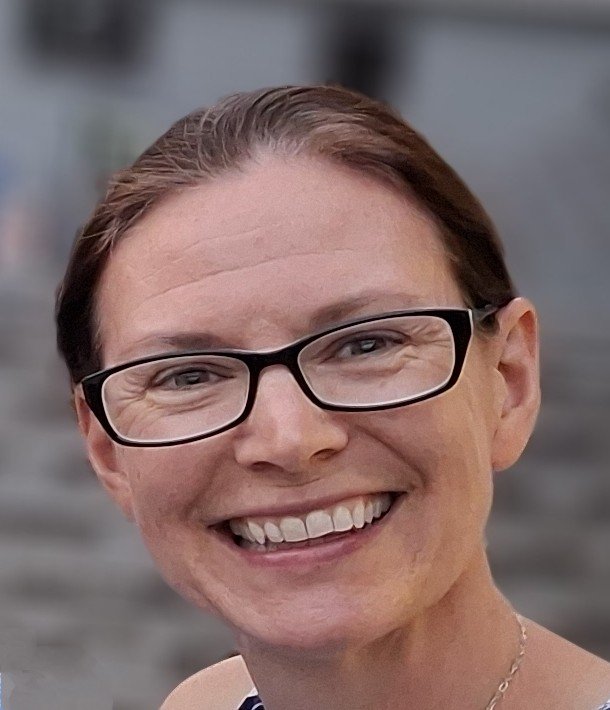
Director of Education and Programs
Carla Carter is the Director of Education and Programs with the National Celiac Association. She was diagnosed with celiac disease over 25 years ago while completing her Bachelor’s of Science in occupational therapy from the University of New Hampshire. She worked for over 15 years in the clinical setting, treating adults and seniors with diverse medical diagnoses, specializing in neurology, specifically Parkinson’s disease and stroke recovery. Carla transitioned to working at NCA in 2017 where, among other things, she oversees the development and running of the organization’s programs including Feeding Gluten Free which improves access to gluten-free food for people around the nation experiencing food insecurity.