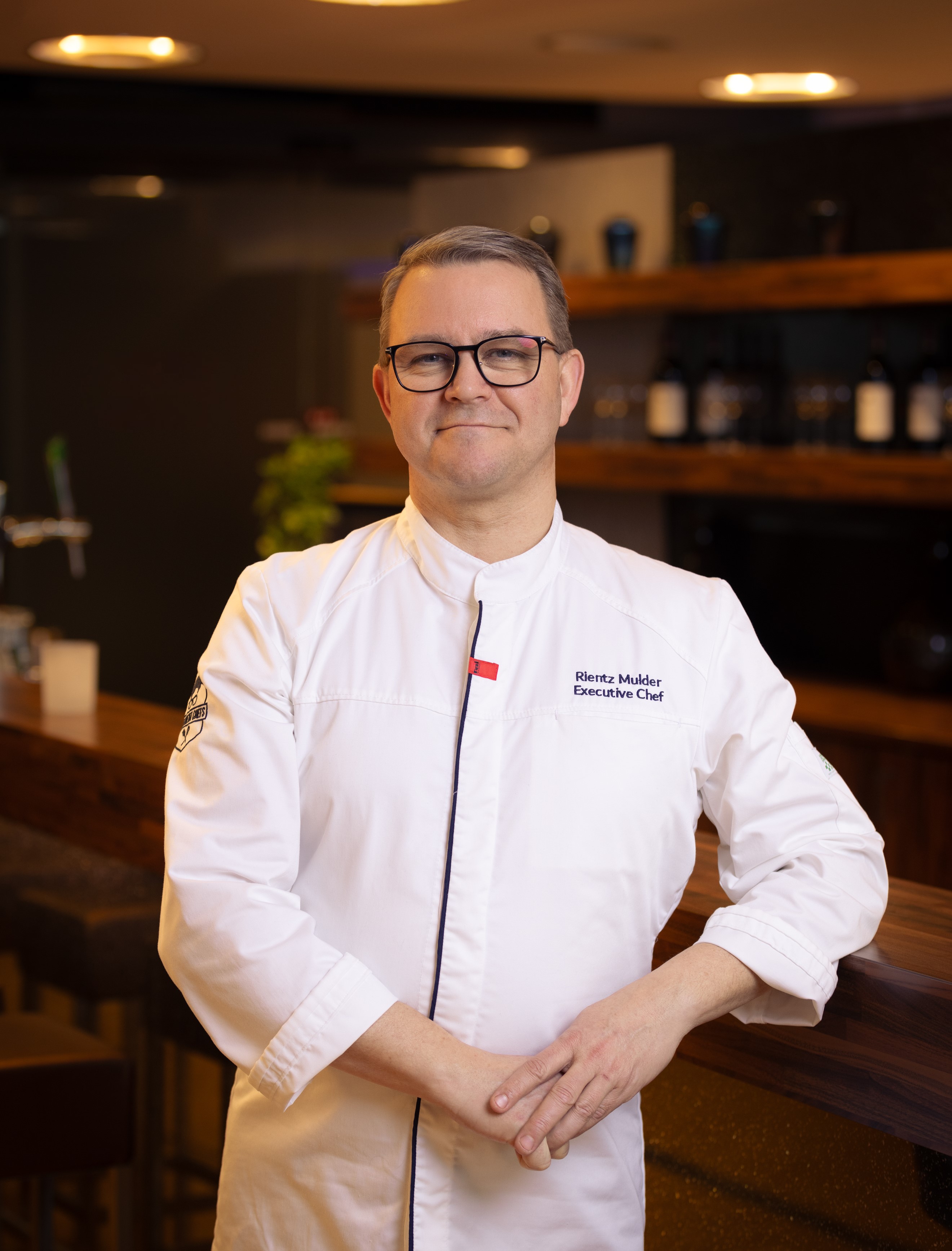
Tracy Stuckrath [00:00:00]:Foreign. Hey everybody and welcome to another episode of Eating at a Meeting. I am in my home office back in North Carolina and I'm so excited to bring to you a friend from. I'm calling you a friend, Chef. I just met you officially like five minutes ago, but I am calling my. My friend from Amsterdam. Let's do my finger this correctly. Executive Chef Ryan Mulder.Tracy Stuckrath [00:00:29]:Hopefully I said that right. He is the executive chef at Rye Amsterdam which is the convention center and he leads the kitchen department within operations. I love that his motto is only the unthinkable is impossible. Just do it. And it reflects his hands on mentality and passion for collaboration, innovation and results driven work in this meeting, this event environment. So welcome to the show, Chef.Rientz Mulder [00:00:57]:Thank you very much, Tracy for the invitation. It's great to be in a podcast with my new American friend on this side.Tracy Stuckrath [00:01:06]:Yes. I'm so excited to have you here. This is Brianna and I have been working on this for a while. So I'm excited to talk to you. And I mean you've been at the convention center for 30 years. That's amazing. What have, how has the role of food at events evolved over those 30 years?Rientz Mulder [00:01:30]:Oh that, that's, that's immense. We always say we went from, from feeding people at events, you know, to being a structural part of the event in most of the time these days in close collaboration with, with the event organizer in. And that's even when I'm not starting to talk about the importance of sustainability and about everything that has changed in the last few years. Yeah, we are, I think that food and beverage has become one of the key important things next to the exhibit, exhibition cell itself for the, the way people experience your event.Tracy Stuckrath [00:02:23]:Yeah, I mean people complain about the food. Right. They love it or hate it. And that's probably one of the things that planners get a lot of, right.Rientz Mulder [00:02:30]:Well, we're lucky that we don't get a lot of complaints about the food. We're lucky that most of the time we are very positive reactions on everything we're doing here. But that's one of the biggest reasons of course, is that here at RAI Amsterdam we are not a caterer or an in house caterer. We are part of RAI Amsterdam. So we are dedicated on creating food for exhibitions or conferences. And I'm working for what you say three decades now here at RAI Amsterdam, but it was long before I came here. So we have a long history on making dedication on FMB for conventions and conferences.Tracy Stuckrath [00:03:19]:That's fantastic. I mean, and it is, it's a big part of our events. As, as you said, let's. I want to go back to your motto real quick. The only the unthinkable is impossible. Just do it. How does that philosophy help shape how you lead your kitchen team and innovate for events? And on that note, has anybody been at the convention center with you for 30 years as well?Rientz Mulder [00:03:43]:Oh, I have a lot of colleagues here at Rye who work for a long, long time here at RAI Amsterdam, working in Incomevention center. Of course. It's, it's very special. It's, it's, it's. It's the ultimate dynamic. I always say because we're living in different worlds every week. Again, we are here at RI, we host more than 400 events a year from national public events to big international business events. They are all, they all have their own feel.Rientz Mulder [00:04:13]:They all have their create their own environment. And it's that, that dynamic is. That's what I love to be in. It gives you. That means that we are always changing and always growing and always developing. And that's something I strive for. And when you're asking me about why is one of my mottos is only the unthinkable is not doable or whatever is impossible. Is that because I always go with my team that it always starts with yes.Rientz Mulder [00:04:52]:Every question, the answer to every question we start with yes. Maybe there is a but maybe there is something else in the end as a result. But always start the question with yes and then try to find out what's the. What is the. Why is this question asked us? Why is it so important that maybe an organizer wants to go 100% plant based? Why is it so important that an event has to be not free? Why is it important that because if you start with no, then in the end maybe the result is the same but the way to the result is a difficult one. So and innovation and new ideas start with a healthy conversation. So and then sometimes the impossible is possible just by finding out the way to go. So we did that when the new in Europe, the new sup so single use plastic law came in.Rientz Mulder [00:05:56]:Everybody well put up a big fight and here at Rye we said okay, but what if we just went all in and what would happen if we would go disposable free and then we then that was one of the perfect answers for that question. And, and we did it and within one year we, we just, we had 100% disposable free event in our, in our possibility. So, so it. It. So that is Impossible. And mind you, it still gives a lot of headaches for how can we for that not all problems are solved within that same project, but it gives you a great starting point for solving the problems ahead.Tracy Stuckrath [00:06:46]:So you. You're now completely just no more disposables in the, in the convention center. Or is it was that just for one event?Rientz Mulder [00:06:55]:No, no, no, it's. It's for. Of course we have, we have still disposables but then again if we use disposables we 100% recyclable or sustainability sustainable one. But if, if a big company or a big has an event here, we can do it 100 disposable free. Now we have it in house. We have sourced it. We have created our own disposable free line in cups, plates, sources, coffee cups, everything.Tracy Stuckrath [00:07:29]:Oh wow.Rientz Mulder [00:07:30]:And we made it reusable and one of the biggest things that this year we had two new washing machines in house. So we can make it in house washable and reusable to save transport and logistics. So yeah, we have our own line. We have more than 300,000 of spoons, forks.Tracy Stuckrath [00:08:00]:Wow.Rientz Mulder [00:08:01]:Knives. Yeah, yeah, yeah.Tracy Stuckrath [00:08:04]:You don't think about the volume of how many you have when you're thinking about just your event. But you have multiple events going on at one time possibly. So you need that many spoons, right? Yeah, yeah.Rientz Mulder [00:08:15]:And of course when it, when it's a small event we can just do it on regular porcelain and glassware and stuff like that. But when you have a big business event during a day and all fruit food is free, that would. That's our new, our newest thing. Then then people have to grab food, eat it, put it away, take something else somewhere and. And then that's all on reusable plates and saucers.Tracy Stuckrath [00:08:43]:Wow, that's amazing. Now going back to the just do it thing one and you mentioning that when one of your clients wants this too, you also created 100% plant based restaurant. Can you talk about that and how has that influenced the rest of your work?Rientz Mulder [00:09:02]:Well, during COVID we already started by. We were looking at trends and okay. And we had, we. And then we had some time and we created our new food and beverage menus. How we call them here for our different groups that we of course we working with the organizers but we also work with the exhibitors and the physicists visitors and we had. And everybody has their own menus. And then we said okay. But we the plant based for us it was the same way again a step up from.Rientz Mulder [00:09:36]:Instead of Going to dietary instead of going to vegetarian and make it as a special diet, let's go to plant based and cover all those areas of dietary including of course the milk and things like that. And then one and a half years ago the Green Tech, which is one of our own exhibitions names who's traveling all over the world again, said how cool would it be if we could do all of our catering fully vegan as a statement during our GreenTech event. And that started it all because we already started talking about the idea to make our food and beverage also include vegan options which we prefer to call plant based. Because with vegan people think of a diet and we want to make it mandatory within our assortment. So we call it plant based. And then it gave us the opportunity to work together on the id. And last year, last event we executed it and it was a very positive experience to not put it there as like say a dietary thing as a fully stand on their own restaurant 100% the same. Not telling it in the form of it was need to telling.Rientz Mulder [00:11:16]:We skipped the need of telling it. It was just everything was perfect standalone quality without animal protein. So but that it was just that. And people sometimes they just reminded it when they were asked and not because before they just make their choice, they just get their meal and their lunch. Of course it was, it was more like a grab and go restaurant style, not, not an a la carte style. And it went perfect. Yeah, yeah, we're really proud of that one.Tracy Stuckrath [00:11:55]:Yeah. And. And people were loving it. The attendees were right.Rientz Mulder [00:11:59]:Yeah.Tracy Stuckrath [00:11:59]:Yep. I read.Rientz Mulder [00:12:00]:Yes, of course. Because it was the first time it was also a pilot for us and it was also a pilot for a green tech organization. So we also did the questionnairing on, on the guests on a subtle way mind you not, not everybody has to fill out a form. It was more like like a questionnaire for certain people. And, and, and 100 perfect score on satisfaction. And people who were really amazed about that it was a 100 plant based outlet during the event. So that was great.Tracy Stuckrath [00:12:42]:Yeah. So okay. I, I'm really curious about the menu. Like how many menu items did you have on there? And what. Because when, when we asked for plant based. When I've seen plant based get, you know attendees get. It's a plate of broccoli or some fettuccine. Right.Tracy Stuckrath [00:12:59]:With some sauce on it. This is how many days was it open and how many items were on that menu that it gave people a variety and, and would. Did it help your chefs become really think like be creative with what they were doing.Rientz Mulder [00:13:16]:Okay, let's start with question number one. It Green tech is of course it's a conference, an exhibition, a big exhibition and it's for four days. And, and, and we had a full restaurant menu so.Tracy Stuckrath [00:13:30]:Oh wow.Rientz Mulder [00:13:31]:So, so you could get, you could get a coffee. Coffee with something sweet. And we had, we had our traditional apple pie but then it was plant based in the details. We had, we, so we had sweets, we had our banana bread, we had stuff like that, everything. We had salads, we had, we had our mains. And in our mains there were seven different main courses.Tracy Stuckrath [00:13:58]:Awesome. Yeah.Rientz Mulder [00:14:00]:But none of them were meat substitute kinds of dishes. They are all standalone vegetable based international tastes. I like to source from the tastes that are already plant based worldwide. Of course we're thinking here in Holland we're thinking with our European way of eating. And in America I think everybody thinks in the American way and how to substitute that. But in big parts of the world, meat is for celebrations. You know, meat is not mandatory every day in every meal. And they eat the most fantastic food which we pay thousands of euros or dollars to travel to.Rientz Mulder [00:14:50]:But we can also create it here during our events. And that's what we are looking, we're looking for those tastes to incorporate with typ typical Dutch or Dutch produce and recreate and recreate it in our style of food.Tracy Stuckrath [00:15:08]:That's amazing. Now so talking about going touching on that too. So the Dutch vegetables and things like that, you have a really passion and commitment to circular economy at the conference convention center. So can you talk about, you know, your local sourcing and if you're serving people that many people at one time, do all of your local suppliers have that much quantity to provide enough for all the meals that you have to create?Rientz Mulder [00:15:40]:Well, we start with the honest answer and that's it's never 100% local. It's not, of course it's not possible to create everything 100 local. But, but we can, we can get damn close to that number, providing it's not the 15,000 people, three days surplus all day, all included. Because then of course you have to add stuff like candy bars and snacks and things like that and then it's just not possible to source everything local but local again. We created our own local textures. And because by European law, local is 600 miles across the center where you're living. And in America, 600 miles is drive to family member. Here in Holland, 600 miles is way above our country boundaries.Tracy Stuckrath [00:16:41]:Right.Rientz Mulder [00:16:42]:So we said, okay, for us, local sourcing is 60 miles in the boundaries. So the region of Amsterdam, but if possible within the country boundary. So it's Dutch produce first to steal a little one liner from your American heroes. So Dutch produce first is one of our taglines we try to use and then the possibilities are endless because as everybody knows in the world, Holland is an exporting country of vegetables and food. So we have a lot of producers here in Holland. And when you're really getting into local producers, for us it was surprisingly how many producers there are within the range of 60 km around the city of Amsterdam. And that's where our project Heartwarming Amsterdam started. Because it was just because we're a small country and the local producers are UNESCO heritage grounds and stuff like that.Rientz Mulder [00:17:51]:So they cannot expand. So they are daycare farms or they are special project farms, stuff like that, with people with distance from the labor force or people from, who are working there with mental problems and stuff. And, and their produce is not their main source of income.Tracy Stuckrath [00:18:13]:Okay.Rientz Mulder [00:18:13]:So they, so they have their produce at a very high level of quality, but also it's mainly biological. It's, it's, it's free of any substitutes and everything because they have to work with people there instead of creating more and more produce.Tracy Stuckrath [00:18:33]:Right.Rientz Mulder [00:18:34]:And we found a lot of them. We found a lot of them and, and, and they are working all together.Tracy Stuckrath [00:18:38]:So that's awesome.Rientz Mulder [00:18:39]:It's very hard in, in the beginning it was very hard because we thinking from our problem, how can we find 3,000 kilos of something. But when we start looking from the possibilities, it was just if we could, if we can take the information on time and talk with them. Okay, we need 3,000 kilos within three, four months. What are. Then the possibilities came rolling in and, and there was much more. But then again, sometimes we have to get it. They cannot bring it when they are real small producers. We have to get it.Rientz Mulder [00:19:19]:But for me and my team, that also gives us more energy. You know, we go to where the produce is harvested or we go to. And we, and we just get it. And so I had, I had events that my, my car was stuck to, to the top filled with Dutch cheese just to have enough during the event. So yeah, yeah, that's, that's the things you have to change the way how. But everything is possible. Sometimes you just have to bring a little bit more energy to it. But it also gives you a lot of energy.Rientz Mulder [00:19:55]:But it's possible.Tracy Stuckrath [00:19:57]:Was there just from that, was there pushback from anybody that you got To. To moving.Rientz Mulder [00:20:03]:Yeah, of course. Yeah, of course. There's always pushback and change. But then again, we started it more than 11 years ago, maybe 12 years ago already. We started real small. And then we didn't start from a sustainability angle, but from. I was born and raised in Amsterdam. I'm talking English now.Rientz Mulder [00:20:26]:When I'm talking Dutch, I cannot hide that. And one of the things of. Well, in Amsterdam, the traditional Amsterdam, we are food nomads. You know, everybody has their own bakery. And when the bakery from your childhood, when. Yeah, well, you will go there, the big part of your life. And that's very normal. You have your fish stove or something.Rientz Mulder [00:20:52]:You go for your pickles somewhere else. We have too keshe baker pickle or a layu pickle. And it could be. Could be talked about in celebrations. But then you go there and you stay there. You're stuck there. That's typical of Dutch of Amsterdam food life. And I wanted to introduce that to our international venue.Rientz Mulder [00:21:14]:And we, of course, at Ramsalam, we are focused on big international events. So the most of our guests will come to Amsterdam to be at an event. And in the past it would be, you have to have rice if people come from Asia, you have to have pasta. When people come from Italy, you have to have burgers when the Americans are coming. And I said, let's stop that and let's give them a taste of Amsterdam and let's give them a taste of Holland, because when they come here, maybe they don't have the time to really visit the country. And then they are back home. And everybody asked them, how did you. How was it? And they said, well, the rye is a very nice place to stay and the hotel was very nice and Schiphol was a great airport.Rientz Mulder [00:22:05]:And that's. That's where they went. So when they're coming to the RAI Amsterdam, let's try to give them a taste of Amsterdam somewhere during. During their event. And then we said, why. Why not give them, let's say, a strobe waffle at. For the coffee instead of just a cookie so we can talk. Because so.Rientz Mulder [00:22:25]:And then we can add the story of the strobe waffle and why we're giving them that during for the coffee and stuff like that. And that's how we started with the project of heartwarming Amsterdam and storytelling on Dutch cheese instead of French and Italian and all those fancy cheeses we had in our assortment. And we changed that to three types of Dutch cheese with the story behind it, why you should taste this one because we, we selected the best of our farm cheeses here and it's only eight miles from the Rye. It's one of the award winning cheese farms of the region.Tracy Stuckrath [00:23:09]:Wow.Rientz Mulder [00:23:09]:And, and, and, and, and we present three types of Dutch cheese with pride and that's what we try to add to it. And don't make it complicated, don't over complicate it, make it simple and tell the story about the cheeses. And we, and we already knew from the day one that we did that, that our international guests love it because they, of course when you come to Holland, you go into all the tourist trap pieces and but here at Rye, we can serve you the real traditional Dutch farm cheese on the quality that we are real proud to present to you. Without nuts, without crackers, without everything, you get extra just to tell the story of the local produce.Tracy Stuckrath [00:24:01]:That's awesome.Rientz Mulder [00:24:02]:And that is a real simple things that we changed. So it's a big change, but it's a simple change.Tracy Stuckrath [00:24:12]:Well, and it's funny that you say that because I was at IMAX last week in Las Vegas and I was asked somebody, I was asking the question, where in the world with all these destinations at imax, where in the world do you want to eat first? And it was early morning and this guy goes, well, I want to go to Colombia to get my coffee. And then the guy standing next to him is like, well no, you got to get your coffee from Puerto Rico. And then later on that day, somebody hand me a bag from, from coffee from Singapore. Right. And so I love the fact that you are taking that level of hey, this is our cheese from, from our country here. And we want to showcase this. And it doesn't have to be, it doesn't have to travel, you know, a thousand kilometers or whatever it is to get there, you know, by boat and train and horse and all that.Rientz Mulder [00:25:01]:Of course. Yeah, yeah, yeah, we, we don't have Dutch coffee. So that's why I say it will never be 100 local. We, some things you just can and we don't. There are no pineapples growing in Holland. So that's. And, but that's what we try to, it's not mandatory in our standard menus, so we try to keep it as local as possible, but we are not fixed on our menu. We are always working with our organizers to create a special moment if they want to and we can make it as sustainable as they want to.Rientz Mulder [00:25:37]:And we, we can go both ways or more local or more plant based and then from that we can, we can create their menu for their event and for their visitors. We have it all over in our, in our, in our outlets. It's there is always something plant based, there is always something local. That's always something within the assortments that we're surfing everywhere. So, and then, and, but the funny thing that what you say, that's what I strive for is to get the pride into the products. If you serve it, you must be proud of it. If you serve it. It's not just about feeding anymore.Rientz Mulder [00:26:21]:It's about giving people an experience on food and beverage. And that experience doesn't have to be glamorous, it doesn't have to be gold plated caviar. It can and be a simple cookie. But you have thought about why you want to serve this simple cookie with a coffee and how can people react to the story that you're telling so then we can create that smile on their face.Tracy Stuckrath [00:26:48]:Right.Rientz Mulder [00:26:48]:It's as simple as that.Tracy Stuckrath [00:26:50]:That right there is the epitome of what all of our event food and beverage should be around the world. Right. I mean that should, it should not just be this cookie cutter. Here's the Mexican, here's the deli platter, here's this, you know, choose one a day, right. And offering that it has to come with some thought and, and love.Rientz Mulder [00:27:11]:Yeah, yeah. Because, well, one of the, one of the titles of Rise, our house is your home. And that's, that's one of the, our marketing. So. And when you, when you're at home you want to feel comfortable and when you're at home you want to feel safe. So that's what we try to do also with food and beverage. Make you feel comfortable, make you feel safe. Safe to eat, safe to be.Rientz Mulder [00:27:37]:So it's inclusive. We try to avoid dieteries, we try to avoid specialties. But if it's really important to that one, two or three persons, then we try to give them a special treat of and take care of them. You know, it's about people. Our business is about people. And one of the things that I try to tell to my team is always that immediate. Imagine it was you traveling all across the world to a place you don't know exactly where you are. You heard great stories, but you're not really safe.Rientz Mulder [00:28:16]:Maybe you heard real bad stories about Amsterdam. Could be. So you're not really safe and then you have to go into a big place like Rye, try to find your way. It's, it's, it's, it's the easiest thing you can Give is a smile and can give them the trust. They can be themselves, but they can also eat the way they want and not to be treated like a diet. So plant based is a solution for a big part of that. And during big corporate events, we also have nutritionist in our operational team for special needs. And we.Rientz Mulder [00:28:58]:And we incorporate our. In our big corporate events, we always incorporate all you can eat. So there is always a place where you can go if you know that you have special needs and then you are treated like our best client and not like our worst diet problem. And then we have chefs there and we have a nutritionist there, and they take care of you. And that's what we try to incorporate. Of course, we cannot do that on every show in everywhere. But in a big corporate defense, it's all about the food. Everybody gets great treatment in food, and if everybody gets straight treatment in food, then we try to.Rientz Mulder [00:29:47]:No, we're not trying. We are doing our best to incorporate everybody in that, and that's what we do different here.Tracy Stuckrath [00:29:53]:Yeah, no, I. That sounds fantastic. I want to jump on a plane and come over there.Rientz Mulder [00:29:59]:Yeah, we don't have. We don't have a big event right now, but next week we have.Tracy Stuckrath [00:30:05]:Okay, all right, I will do that. Yeah, I need to talk to Brianna. Okay. So on the, on the title here, how the Basement Chefs are revolutionizing how we experience food and beverage at events. So talk. Tell the audience what the Basement Chefs are. And I think you've talked a little bit about that, but about dietary needs aspects. But I also think it's a lot of your sustainability efforts.Tracy Stuckrath [00:30:28]:So there are additional sustainability efforts outside of sourcing locally.Rientz Mulder [00:30:34]:Yeah, yeah, yeah. That's what I mentioned earlier. It's. Well, it's. Now it's a program. It started as let's source more local because I'm proud to be from Amsterdam. And let's, let's. Let's try to give everybody a little taste of Amsterdam while they're here at RAI Amsterdam.Rientz Mulder [00:30:53]:It grew out into. Also, it's more about the community. It started with the local farmers, but now it's way more a community thing. So for. So the food that's left over, of course, I'm the executive chef of a kitchen team, and I know my team is working real hard every week, every event, to create all those. All that food. And food should never be waste. That's one of my.Rientz Mulder [00:31:27]:Or an animal lived for it or died for it, or a producer worked hard to create the food that we're serving. And when I was talking to people. I came in contact with the Salvation army for over eight years ago. And then that was a great way to say we have plenty of food. Because in our line of work an organizer is saying, okay, we have 2000 people coming, but if 1600 people are coming to their first day event, then always there is a lot of food. And of course we have different ways of working with that. But in the last few years we created a system so we can preserve that food. It doesn't have to be food waste by law, because mind you, the law is creating the biggest percentage of food waste.Rientz Mulder [00:32:26]:Not us. And we created. No, we started with storytelling to organizers also. So because we always say it's not our food waste, it's not the food waste of the kitchen. We don't want to throw it away. You ordered it, you created the amount. But we are trying for you our best to keep it preventing to be to get waste before that. And we have now we're working with the Salvation army, we're working with Dinamo Care projects, we're working with the.Rientz Mulder [00:33:01]:The Rainbow Project and the Food bank of Amsterdam. And a small group of which is called Blaibura Happy neighbors. And they are real happy with us nowadays. And, and we, we can serve those ways. So the food that we created and produced, when we have leftover, it always gets a second, what we call a second chance in our own community of Amsterdam. Through one of those channels. And through those channels, we adopted three regular projects every week because we started with one one so. But after more than one year, I said I can, I, I can think we can keep our promises.Rientz Mulder [00:33:47]:So we can. We have a regular stream and I have a team who is. They are the best. So they can create a continuous. Because we can put that isn't heated up, we can freeze and if we freeze it, we can serve it next week. We can give it to you next week instead of this week. And I'm luckily that here at rai, I also get support from our leadership. So we have freezers, we have storage ways, we have vacuum ways to store food longer.Rientz Mulder [00:34:20]:So we can give it a second chance. Within our own region of Amsterdam with the South Asian army for more than eight years. We do regularly, every Wednesday, the soup bus. I think that's something that's all over the world. The South Asian army is serving soup cities to homeless. But on the Wednesday they make so today and I just wave to him goodbye. The Salvation army picks up here 200 meals served on four different locations in Amsterdam. Two homeless people in Amsterdam.Rientz Mulder [00:34:57]:And on Tuesday, we have adopted a project. It's here from Dinamo. It's in the community center. And we. We are donating a free meal, two course meal for two for 30 people every week for them to reach out to those who cannot have. Who don't have the money for their own. Normally they ask two and a half euros for something like that, but of course there are people who are, well, desperate or cannot afford that €2. And we, as Rai, we adopted those programs by giving money and giving them their food every Tuesday.Rientz Mulder [00:35:40]:So on Tuesday, we do 30 people in a community center every week together with their volunteers.Tracy Stuckrath [00:35:46]:Right.Rientz Mulder [00:35:48]:On Wednesday, we do the Salvation army with the soup bus drive through Amsterdam and serve 200 simple meals. For us, it's simple for those who need. It's amazing. And on Thursday, we have adopted a project with the Salvation army in Amsterdam, in the north of Amsterdam. And we provide. Provide them with lunch produce for about 50 people every week. So do we do that for more than eight years now? So we serve more than 200,000 meals through our organizers in the region of Amsterdam. And that's something we're real proud of because it's also coming from my team.Rientz Mulder [00:36:29]:In my team, there are volunteers working on those projects together. Okay, what do we have? What can we create? What can we make? They don't order anything for it. It's coming out of our production or our.Tracy Stuckrath [00:36:41]:Wow.Rientz Mulder [00:36:42]:The resources we have left. Or it comes back from events and stuff like croissants and. And. And breads and stuff like that goes through Blaybura. They. We can call them up and they be here within an hour, and they take them out and they bring them all over the place to people in need to give them food. And again, it takes a lot of energy from my team to put into, but it breaks our heart to throw food away knowing that there are so many people who are desperate for food and we can provide them. And the law is a big thing in that.Rientz Mulder [00:37:26]:But that's one of the things that we try to manage by keeping things cool, having registrations in order and stuff like that to prevent it must be that, right? But now, I thought your question was tell us about the story of the basement chefs.Tracy Stuckrath [00:37:44]:Well, yeah, I want to know about them too.Rientz Mulder [00:37:48]:Yeah, yeah, well, well, that started from our international project from Rye. Of course not. Of course, but I know I'm in the business for a long time, but kitchens are usually tucked away in cellars or behind the scenes way back. And during our last big remodeling, here at RAI Amsterdam, where we did the big upgrade on our central production kitchen.Tracy Stuckrath [00:38:21]:Okay.Rientz Mulder [00:38:22]:We try to keep in touch with all of our staff, our flex staff, of course, we're working with big flex. And then we started the Facebook page, which was called. Basement Remodeling Ride. But Calder is basement in Dutch. And it was a huge success. So everybody could follow the changes where the rebuild and stuff like that. And that was in the early days of Facebook. So everybody was joining in, but also family members of people who worked here, but also colleagues from different departments.Rientz Mulder [00:38:59]:And before we know it, we had about 300 followers on that Facebook page. And we posted every day on what was happening today with all the remodeling. And of course, after a good nine months, remodeling was done and we had a big opening here. And. And we had a big come up because we did a shout out through Facebook and we had a lot of. And everybody was really enthusiastic about it. And then we said, okay, let's, let's keep it up. But then the international strategy from RAI Amsterdam get a rollout.Rientz Mulder [00:39:31]:And one of the things was that every department has to think about, okay, what can we do for international, more international rollout of the strategy of Rye Amsterdam. And we said, okay. And then we said, okay, let's change our name Calder to Basement. And we're the chefs, so we are the Basement Chefs. So we changed our name on social media to Basement Chefs. And it was strictly started as a social media platform for a behind the scenes look on the things that we are doing. So it's not from rye marketing, it's not from anything. It's the team of the kitchen posting the simple stuff, like a chef who was working for 10 years with us or is going on pension to behind the scenes of great events, tastings that we do, meetups with organizers, stuff like that.Rientz Mulder [00:40:23]:And it now involves in it's almost 2000 followers and a real big crowd who was and what I'm most proud of that kids and grandchildren of my staff can see what grandpa is doing during his way, during his days, because they can follow us on Facebook and Instagram. And then we started to put out all of our sustainability things. When we go to the cheese farm, when we go to the goat farm, we started posting stuff like that. And then the sustainability part of Heartwarming Amsterdam and Basement Chefs, well, they entangled in social media and from one thing comes another. And now we're doing it for so many years that we as a team of kitchen are real proud of our Our own name. Because basement Chefs isn't part of rye strategy. It's. It's.Rientz Mulder [00:41:23]:It's. It's just who you are. The kitchen is. And. And they get the pride out of that. And they. And we put that in our sustainability project. So that's.Rientz Mulder [00:41:34]:That's how it became the thing that it is.Tracy Stuckrath [00:41:38]:And.Rientz Mulder [00:41:38]:And we are real proud of the everybody who is giving us. As you did. Revolutionizing. We're not seeing it as revolutionizing. We're seeing it as doing what we love to do in the way we love to do it and incorporate that in our food and beverage strategy or vision. So that's what.Tracy Stuckrath [00:41:58]:No, that's awesome.Rientz Mulder [00:41:59]:That's how it started.Tracy Stuckrath [00:42:00]:There we go. I just put it up here, and let's take it. And I'll move it down here so that everybody can find it. Chef, stop. Basement on Facebook. No, I love it. And I'm seeing basement. They're out in the crowd.Tracy Stuckrath [00:42:15]:They're on. You know, they look on a bus. You're on a boat. It looks really a lot of fun. So that's. I love that because you're giving your team their own voice versus being stuck in the basement, you know, cooking. Right? Yeah.Rientz Mulder [00:42:29]:Yes, yes, yes, yes. We put. We put them on stage by storytelling. If we have to tell the story, we have to be on stage. So we. To come out of the basement in front of. To tell the story, but also get the reaction from our guests and also get the energy from that. And it's also about having be proud at what you do, but also have fun while doing it.Rientz Mulder [00:42:59]:It's one of our main objectives. Have having fun together, and then Basement Chefs is just a platform for doing that together. Right now, working. Working in our environment is. It's. It's. It's. It's.Rientz Mulder [00:43:12]:It's a tough life. It's a hard work. Hard work.Tracy Stuckrath [00:43:15]:Yeah. You're on your feet a lot. You're there early in the morning, you're there late at night. Yeah. It's a lot of work.Rientz Mulder [00:43:24]:Crews are getting bigger and bigger.Tracy Stuckrath [00:43:28]:Yeah.Rientz Mulder [00:43:29]:And everybody has to eat. Yeah, yeah. And of course, we are here for every event. So one event starts, the other event ends, and it's continuous way. So it's very dynamic. And so the team has to also re. Energize on something.Tracy Stuckrath [00:43:48]:Right? No, I love that. Okay. So if you could give advice to chefs, planners, venues outside of Europe who want to make plant forward and local sourcing work at scale, what advice would you give them now?Rientz Mulder [00:44:04]:Start small and start by what you know and start by what you believe in. You don't, don't start by having your goal on. We have to be 100% plan based or don't start with 100%. What I say is we're working already more than nearly 12 years with our project and we still cannot guarantee it because you never know what, what is the next question, you know. But start small. And when you start small, the network of producers, they are really connected with each other so they can help you. They can tell you whatever you, you need, what your needs are and then try to achieve it. So just do it.Rientz Mulder [00:44:51]:Is one of the. Of course the drivers for. If you. Yeah, of course. It's not easy. Everybody, your, your resource team will say it's not possible. They, we don't have a contract with them and stuff like that. And then you have to.Rientz Mulder [00:45:04]:Yeah. Take them with you on your journey. By creating what. What can we do? How is, what is possible? Can we make a small some. Can we introduce our internal team by doing it for our internal team as, as something to inspire or something like that. But I, unless you're living in a desert, there are a lot of opportunities around you and there are always producers of food. There's. There are always producers of food somewhere.Rientz Mulder [00:45:37]:Maybe there is a great taco guy and you can work together with his produce. You never know.Tracy Stuckrath [00:45:44]:That's. That is so true. I mean because you. There's a chef in Atlanta that was at a convention center, now he's at a university. But he helped one farmer be one of the ones that you had to go get the food from. Right. By ordering from him. He now has his own truck and he's got more clients because of it.Tracy Stuckrath [00:46:04]:And so you're helping those small producers grow by giving.Rientz Mulder [00:46:08]:Yeah, we started with a very, very small mushroom creator here in Amsterdam who created Japanese mushrooms here in Amsterdam. And of course we want to. We started with him when he was working from yet he was on an. In an harbor district in a very small location and now he's one of the biggest specialty mushroom growers in Holland creating all kinds of specialty mushrooms because yeah, we started working. It's not that because we started with him, but we could give him the kilos he needed to make it the next step. And now we have our, our Dutch bitter balls, our vegan gluten free Dutch bitter balls. With his stalks from his mushrooms we created a recipe of that. So they are 100 plant based vegan, but also gluten free.Rientz Mulder [00:47:10]:And we did it with him because that's the story we want to tell. It's about using everything, but also use all possibilities that are available. And if they are not available, how can you create them? And now we are in a big network and we are in a few weeks now. We have five nominations in the sustainability award here from the Amsterdam south us. That's our main district here. And three of them are with collaborations and collaborations on our circular banana bread is one of them. And it's the same. The project started with all good intentions but.Rientz Mulder [00:47:55]:But not enough work to keep every. All the people to give them a full days of work. And we started with okay, we, we have a lot of bananas. We want banana bread. Can you make with your project our banana? You pick up our bananas and you bring us back banana bread. And we sell our own banana bread. With your project as a circular banana bread as. Because when you bring the banana breads, we have the bananas ready for you from our event.Rientz Mulder [00:48:21]:Because of course bananas are. They have a real short fresh because when they are, when, when the first brown spots appear, food lovers love them, but the main people don't want to eat them if they have a spot on it.Tracy Stuckrath [00:48:35]:Right.Rientz Mulder [00:48:36]:And now, and now, now they go to our producers, Berait Mezor. So it's, it's. It's cooking with care. It's. I think that's. And they're all people from different ways getting into the, the working ethos and they work together with chefs in the kitchen and they create our banana bread. And we buy the banana bread back. So it's not a way of giving, but it's a way of.Rientz Mulder [00:49:03]:It's. We buy it back. Of course we have our, our price is the producing price, cost of the banana bread and, and we have it in our assortment again as a circular banana bread to tell the story about the project that we source it from. But we also do it with. For this year there's a big, big celebration of Amsterdam. 750 years. The city of Amsterdam is 750 celebration. And for that the.Rientz Mulder [00:49:32]:The bud of an Amstel. The farmers of Amstel, they, they created a traditional Dutch cheese for that celebration to give it back to the city of Amsterdam. And they, they, but they, they sell a lot of sliced meats of cheese slices. But when you slice cheese you have a lot of leftovers. So together with them we created the cheese croquette. Croquette is typical Dutch snack. And we created a cheese croquette which we serve here at Rye Amsterdam as a local Cheese croquette in cooperation with the farmers of Amstel. And that's what we do now.Rientz Mulder [00:50:11]:So we are part of a network of possibilities. And of course, when, when I buy cheese crockets, I don't buy 10, so I buy enough to get the project started. And when the product use is right, then it will take off. And sometimes it doesn't, but most of the time it will. And then they have their first 200 boxes covered. So the costs are covered for the project to start and we can sell them with the story to our international guests. And that's the easy way. It doesn't cost anybody extra, etc, but it gives everybody the energy they need for making sure that our sustainability projects grow in our region within our own community.Tracy Stuckrath [00:51:04]:Wow. That's amazing. I love all those stories. Okay, so we have been talking for 51 minutes. I'm, I'm, it's like it was just five minutes. So I've got a couple of rapid fire questions for you. Okay. What is your favorite plant based ingredient to cook with?Rientz Mulder [00:51:25]:I think it's the potato.Tracy Stuckrath [00:51:28]:Okay.Rientz Mulder [00:51:28]:It's versatile. It can go anyway, it's from, from let's say Dutch traditional home comfort style food to exclusive style food. It's very versatile.Tracy Stuckrath [00:51:39]:And is that, but I mean, and then there's sweet potatoes and then there's yellow potatoes. Yeah, all kinds of potatoes.Rientz Mulder [00:51:46]:And you can make potato, of course, you can make French fries out of them also for your comfort Sunday. But you can also make something with it with, with truffle or stuff like that. So it's, it's a, it's a base of all kinds of food.Tracy Stuckrath [00:52:00]:I love that. What is the most underrated Dutch ingredient?Rientz Mulder [00:52:07]:That must be the Dutch asparagus. Asparagus for Americans are. I know it's almost like cursing sometimes, but the tradition, the great thing about Dutch asparagus and for everybody who's listening. Yeah, yeah, Google it. The Dutch, because they are, they are succulent, they are white asparagus. They are at where we. The Dutch asparagus is only from half of April to half of June. And everybody in Holland is looking forward to that period.Rientz Mulder [00:52:34]:And I don't think it's an export produce because. But everybody in Holland is doing something with it and creating their special food moment with it. But they don't realize that that's something from the Dutch heritage which we as Dutch are real proud of. Our Dutch asparagus. And after half of June, it's, it's, it's, it stops. So everybody is running and making, or they're making it traditional with ham and, and, and, and, and, and potatoes and, and, and, or making great, the most great family dinners with it. But it always gives something special to your family dinner when it's asparagus time.Tracy Stuckrath [00:53:17]:Nice. Well, that means planners should, like, schedule their meetings between mid April and mid June to get that, to get that experience.Rientz Mulder [00:53:25]:If you, if you want that, if you wanted the best Dutch asparagus in place. Yeah, yeah. Then, then you have to be here. They are not available beyond those periods. And I think maybe it's one of the few left vegetables in the world that are kept within their season. Everything is all seasonal, Bill, or is all gone for. So it's, it's, it's 100 sustainable. It's only grown in full ground here in Holland.Tracy Stuckrath [00:53:55]:Okay. All right. One dish that always makes guests smile.Rientz Mulder [00:53:59]:I'm such a lucky chef. We have a lot of dishes that make a lot of people smile, but I, it's not, it's plant based. It's. It's the gyozas. Plant based gyozas with a yellow curry and an eggplant. It's a dish makes everybody smile when they taste it. They don't realize all the complexity in it. But I always say that one of the things that makes me smile, and that's my standard is we make a ragu of local beef beef Waterlon beef Waterland is the area around Amsterdam and Waterlon Beef resource from daycare farming.Rientz Mulder [00:54:41]:And we make an Italian ragu with it to go with pasta. If, if you, if you taste that, if you're in Holland, I hope we can share a nice plate together. It's everything you want. It's comfort, it's. It's quality. It's. It's you. You can taste everything in it.Rientz Mulder [00:54:57]:And we make it with, with 80% reclaimed resources. So the tomatoes come from reclaimed resources and, and, and the beef comes from local source. It's dairy cow. So it's not beef cow. So yeah, so it's that. But it always brings a smile on my face and I always know that's, that's my compass to go to.Tracy Stuckrath [00:55:23]:Okay, awesome. All right, last question. Finish this sentence. Every meal should.Rientz Mulder [00:55:31]:Bring a smile to your face.Tracy Stuckrath [00:55:33]:Okay, awesome. Well, Chef, this has been fantastic. I love what you're doing. Sustainability wise, inclusion wise, you know, culturally wise. Introducing. Making sure that everybody is so familiar with what the culture. Food culture is of Holland and Amsterdam. I just, that's just beautiful.Tracy Stuckrath [00:55:55]:So I wanted to say, let's say connect with Chef, I wanted to put this on here. You can connect with him on LinkedIn. And the website is r. The. Com. The we. The Conference center website is R A I NL NL okay, so if you want to check out the conference center, do that. But it has been such a pleasure to chat with you.Tracy Stuckrath [00:56:18]:Thank you so much for joining me. Me.Rientz Mulder [00:56:22]:Thank you for making me feel comfortable because. Okay, I like to talk, but it's not. This is not normal for me. But I. I really appreciate it.Tracy Stuckrath [00:56:30]:You did fantastic. I. I so appreciate you being here. All right, everybody, thank you so much for tuning in. Be I'll be back here next Wednesday, same time, same bat channel, and I look forward to seeing you. Until then, stay safe and eat well. Well, thanks for listening to the Eating at a Meeting podcast where every meal matters. I'm Tracy Stuckrath, your food and beverage inclusion expert.Tracy Stuckrath [00:56:58]:Call me and let's get started right now on creating safe and inclusive food and beverage experiences for your customers, your employees, and your communities. Share the podcast with your friends and colleagues at our Eating at a Meeting Facebook page and on all podcast platforms. To learn more about me and receive valuable information, go to tracystuckrath.com and if you'd like more information on how to feed engagement, nourish inclusion, and bolster your bottom line, then visit eating@ameeting.com. Sam.