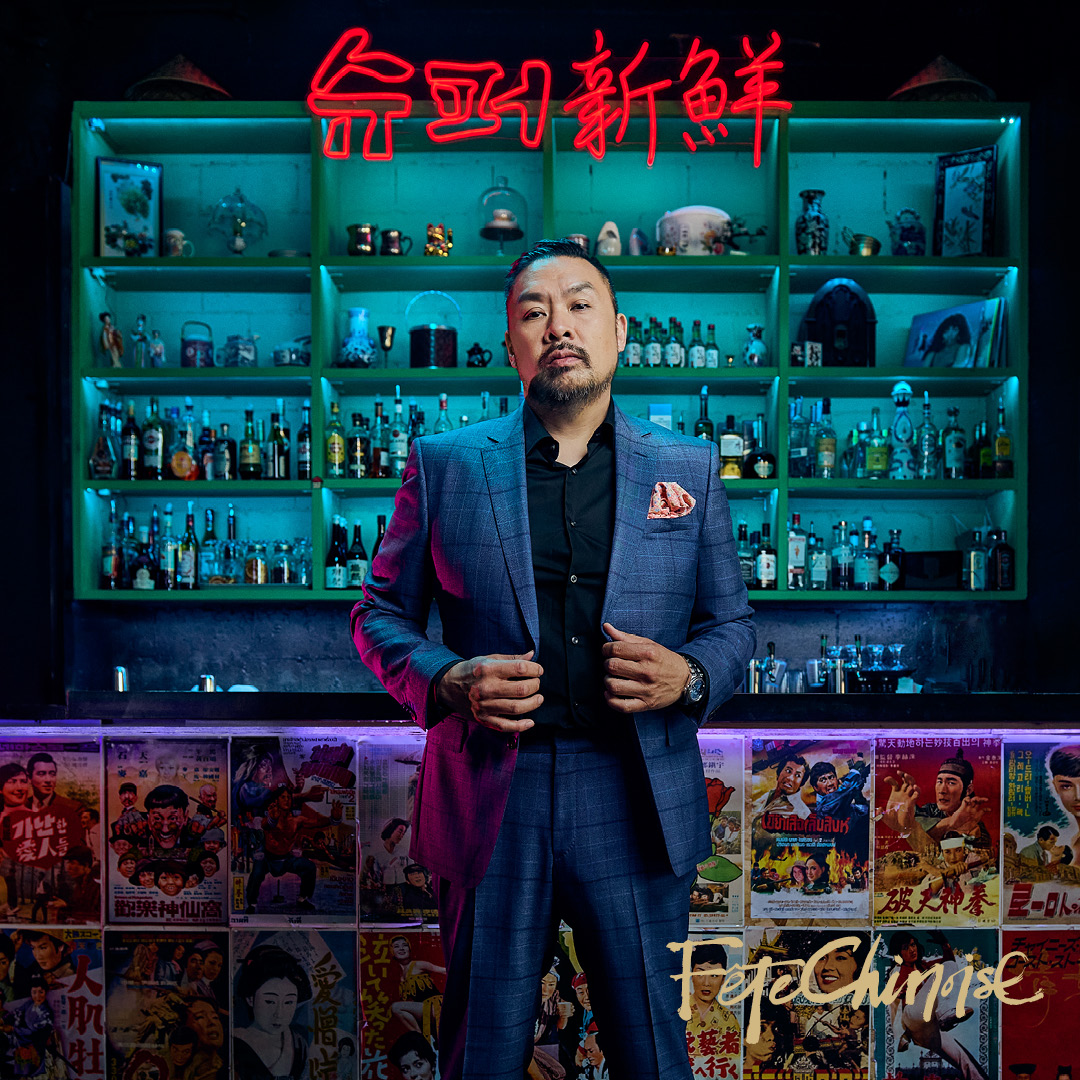
Tracy Stuckrath [00:00:06]:So, hello, this is Trevor Liu, who is the founder and CEO of High Bell Hospitality Group out of Toronto and he is the current chair for Destination Toronto. And so we're going to talk about, as the screen says below, why event planners should look to Toronto for food and beverage inspiration.Trevor Liu [00:00:25]:I like that.Tracy Stuckrath [00:00:26]:Yeah, I like that a lot. So let's talk about you first. Really quickly. What is your. I know you're also an author and you're chef. And I remember walking. What was that venue? I walked. You walked me in the back of the house.Trevor Liu [00:00:39]:Oh, that was when I was working corporate. The International center convention in the country. Yeah.Tracy Stuckrath [00:00:43]:And you show me the biggest sous vide I've ever seen in my life.Trevor Liu [00:00:46]:Yeah, we had some big stuff there. Yeah, I bought a lot of toys when I was there for my chef. Yeah.Tracy Stuckrath [00:00:51]:Okay.Trevor Liu [00:00:51]:That was fun.Tracy Stuckrath [00:00:51]:Yeah, that was. It was.Trevor Liu [00:00:53]:I don't have budgets like that anymore.Tracy Stuckrath [00:00:54]:No, no, we're entrepreneurs.Trevor Liu [00:00:56]:When you're self employed, you have budgets like that.Tracy Stuckrath [00:00:58]:Exactly. Okay, so tell us a little bit about what High Bell Hospitality Group is, your cookbook and what you do.Trevor Liu [00:01:05]:So we essentially we do three main things. One is we have restaurants.Tracy Stuckrath [00:01:09]:Okay.Trevor Liu [00:01:10]:Second, which is the core of our business is we have a catering business. So we cater into about 20 plus venues in the city, core of Toronto, a lot of unique third space venues. And then we have really ramped into festival and event design for events. So we've been doing quite a bit of that this summer, mostly with a lens on the food and beverage and now getting a little bit more into music as well.Tracy Stuckrath [00:01:33]:Oh, okay.Trevor Liu [00:01:34]:And then I wrote a book a few years back and we still talked about that every now and then. I still got a few copies hanging around.Tracy Stuckrath [00:01:40]:Okay. All right, well. And it's a cookbook too.Trevor Liu [00:01:43]:It's a cookbook.Tracy Stuckrath [00:01:43]:And it was like based on family recipes too.Trevor Liu [00:01:45]:Yeah, it was. It was more almost like a family journal of our journey of food in Canada. Nice. Being I'm a first generation Canadian. My parents are from Hong Kong and my family's from southern China. And so, you know, we can talk about Chinese food forever, but like, if you talk about North American Chinese food, which landed here almost 300 years ago, a lot of that food is inspired from southern China, Cantonese cuisine.Tracy Stuckrath [00:02:08]:Okay.Trevor Liu [00:02:08]:Which is where my family's from.Tracy Stuckrath [00:02:09]:Okay. All right, awesome. And I lived the other side, other side of Canada for the Olympics in 2010. And there was a lot of Chinese there.Trevor Liu [00:02:18]:Yeah. I mean, I'm actually going to be in Richmond in one week.Tracy Stuckrath [00:02:22]:Okay.Trevor Liu [00:02:22]:And Richmond is probably the most dynamic Chinese community in all of Canada.Tracy Stuckrath [00:02:26]:Really.Trevor Liu [00:02:27]:There's roots of the Chinese community exceeding 200 plus years there because that's where many of the Chinese landed obviously on the coast of America and Canada. They had a hand in working the mines for all the railroads that were built.Tracy Stuckrath [00:02:41]:Okay.Trevor Liu [00:02:42]:And they worked in the gold mining up in the mining fields.Tracy Stuckrath [00:02:45]:Okay.Trevor Liu [00:02:46]:So many of the people that were sent into the caves in the mountains that were blown up were Chinese workers. So. Yeah. And that's, that's the birthplace of Chinese food because that was food that was made for the workers and that eventually was adapted to also serve Western palate that worked on the line. So. Yeah.Tracy Stuckrath [00:03:06]:Okay, so then let's jump. We're going to go all the way across the country then to Toronto. And, and how did that. I mean, there's a lot of different provinces and I don't even know how many provinces going across.Trevor Liu [00:03:19]:Yeah.Tracy Stuckrath [00:03:20]:How did that Chinese influence when it got to Toronto? Just kind of like that thing when you're talking on a string, right?Trevor Liu [00:03:26]:Yeah.Tracy Stuckrath [00:03:26]:Did it change?Trevor Liu [00:03:27]:Well, you know, Toronto is the largest city, fourth largest in North America, not just the largest in Canada. So as an economic hub, it was also one of the few cities that a lot of Chinese migrants chose to go to. Montreal was one, Calgary was one, but Toronto was a mainstay, particularly in the 50s and 60s, and my parents came in the 60s and so it's a fairly large Chinese community.Tracy Stuckrath [00:03:51]:Okay.Trevor Liu [00:03:52]:And it's like with any mass migration from any city, some people choose communities where they can go and feel that there's ethnic enclaves, that they can feel part of a community and, and, and intertwine and still have a little bit of home and a little bit of new. Right. And that's really how the Chinese community became what it is today.Tracy Stuckrath [00:04:10]:So. And actually there was a guy I need to introduce you to that I introduced that I interviewed during the pandemic who started a destination for older people who wanted to share their food culture. And it was a. And I have. His name's Len. I'll introduce you to him.Trevor Liu [00:04:27]:Love to.Tracy Stuckrath [00:04:28]:So let's talk about Toronto and the diversity because. So you're Asian or Chinese Canadian. Yeah, Chinese Canadian. And then what other kinds of. What other cultures are in Canada? I mean, somebody said to me, oh well, is he going to talk French to you? And I'm like, I don't know if he speaks French.Trevor Liu [00:04:47]:Yeah, that's about it.Tracy Stuckrath [00:04:48]:Yeah, that's all I know.Trevor Liu [00:04:50]:My French is horrible.Tracy Stuckrath [00:04:51]:But what other what's the diversity of Toronto food, and why is it a destiny? I mean, I'm just bringing it right there.Trevor Liu [00:04:57]:So we. We. We speak over 200 languages in Toronto. Yeah. Over 60% of our population is born in another country. And so when it comes to the diversity of food, it matches to the diversity of our multiculturalism. So you can get anything from Ethiopian cuisine to Loetian cuisine to East African to regional Chinese and regional Japanese to regional Italian. You name it, we have it in Toronto.Trevor Liu [00:05:25]:And that's one thing we love about our cuisine. I think, as a city, what we've been able to do is we've been able to translate foods from our communities into the mainstream for visitors when they come to the city. It's very accessible. And when I say accessible, it's also accessible to the point where we want to be able to demonstrate those communities, those flavors when it comes to event food as well.Tracy Stuckrath [00:05:46]:Right.Trevor Liu [00:05:47]:We want people to really see what our city's about.Tracy Stuckrath [00:05:50]:So how do you. When you're designing those events that you're doing that you mentioned earlier, how do you bring that in? Is that different kinds of food trucks? Is that. And are you designing also, like, comfort food that has different flavors from all those different 60 dialects? You know, how does that.Trevor Liu [00:06:06]:I think, first and foremost, authenticity is really, really important. So one of the things we do is we try our best to enlist assistance or guidance from people within those communities.Tracy Stuckrath [00:06:16]:Okay, makes sense.Trevor Liu [00:06:18]:Certainly easiest thing is you can go on Google and search anything these days.Tracy Stuckrath [00:06:21]:Right.Trevor Liu [00:06:21]:But I don't believe that actually pays tribute to the food.Tracy Stuckrath [00:06:25]:Right.Trevor Liu [00:06:25]:And so if we really want to focus and hone in on something that is true to a community and true to a culture, we try to find a ways to have discussions with people to bring their food to the table with their expertise. And I think that's really important. I think. I think we should do more of that, is understanding that there are people within communities that don't have voices like we do.Tracy Stuckrath [00:06:44]:Right.Trevor Liu [00:06:44]:And food is an opportunity to use as a voice in a vessel. It is to talk to people about what their fabric of a city is when they come to that community, and that they're just as Canadian as I am, just as the young Irish kid or the young Italian kid or the. Or the young Caribbean kid. We all have our own intrinsic story about being Canadian, and I think that's a really big part of how we want to put food on the plate.Tracy Stuckrath [00:07:07]:Okay.Trevor Liu [00:07:07]:Right. So if I want to do South Indian like we did recently, we had an event that we curated, it was an open fire festival. It was all about traditionally, we call it barbecue.Tracy Stuckrath [00:07:16]:Right.Trevor Liu [00:07:16]:Do you think about open fire cooking? Open fire cooking is indigenous to many cultures around the world. Particularly if you talk about Canada. The indigenous community was built on open fire cooking and foraging. But my culinary director is of South Asian descent. And what I really wanted to do is I wanted to work with her to say, how do we get South Asian flavors on a plate by open fire barbecue style? And so we did it. Yeah, right.Tracy Stuckrath [00:07:43]:What did you eat?Trevor Liu [00:07:44]:We did because we worked with pork, we did a pork belly skewer, but the work we did was really into the flavors and the marinade in it. So we took a really South Indian Malabar inspired coastal blend of spices, like our own curry blend, and we marinated the meat in this spice of two days.Tracy Stuckrath [00:08:00]:Wow.Trevor Liu [00:08:01]:And then we grilled it on open fire.Tracy Stuckrath [00:08:03]:Wow.Trevor Liu [00:08:04]:And then we served it with a coconut rice and some Indian pickles and a green chutney. So we didn't stray from the beauty of some of those Indian components, but we also charted in a Western way on the grill.Tracy Stuckrath [00:08:18]:Right, right.Trevor Liu [00:08:19]:So it was trying to do both, really, like a Canadian fusion way of bringing community flavors. Right.Tracy Stuckrath [00:08:26]:And it's all about community flavors. Yeah. Yes. Okay, so I'm going to pull this up because there is a. I think I have my quote, my question for you somewhere in here. So you also said, you've said before and I've. You and I have talked about this and he and I actually are going to be on a keynote stage. Right.Trevor Liu [00:08:42]:12 o', clock, 12:05 West Coast Time today.Tracy Stuckrath [00:08:44]:West coast time, yes. So we'll be on a conversation talking about this a little bit more as well. But you said diversity doesn't automatically mean inclusion. How can event planners go beyond representation to create authentic inclusion through food?Trevor Liu [00:08:59]:I think being thoughtful and being, you know, we talked about authenticity is really important.Tracy Stuckrath [00:09:02]:Right.Trevor Liu [00:09:03]:I, I can speak from a Toronto lens. You know, we, we've been known by many to be one of the most diverse cities on the globe.Tracy Stuckrath [00:09:12]:Okay.Trevor Liu [00:09:12]:But one of the things we talk about is not diversity because you can have many diverse communities and flavors, but do you have a sense of inclusion? Do you make it accessible for everyone? I think that's the most important part. Right, right. So we really try to work on about accessibility to food, accessibility to people and things that we feel. We want everyone to feel comfortable and welcome. And I think that's a very important thing because if I'm moving into a foreign environment that I'm not very familiar with.Tracy Stuckrath [00:09:39]:Right.Trevor Liu [00:09:40]:It's sometimes overwhelming.Tracy Stuckrath [00:09:42]:It is.Trevor Liu [00:09:43]:Right. And that is with cuisine as well.Tracy Stuckrath [00:09:45]:Right.Trevor Liu [00:09:45]:If you bring someone into a certain ethnic restaurant they've never been before, they know nothing about it. You can't expect someone just to navigate it. Right. And so we have to find methods and different strategies of how to make things more integrative and more inclusive and more welcoming for people.Tracy Stuckrath [00:10:01]:Okay, so this is jumping back. Let's see. I'm. This was 1982, and I moved to Okinawa, Japan. I was 14 years old. I didn't eat sushi until I went to college.Trevor Liu [00:10:12]:Wow. And Okinawa is known for. What is their most common. They have great seafood there, for sure.Tracy Stuckrath [00:10:19]:Great seafood. I mean, it's a little island off of Japan, so sushi and just fresh Japanese seafood and food. And I don't. I. I remember going into a Dunkin Donuts, and they had. I thought I was eating a jelly donut. It was a bean donut, which was disgusting. But we stayed on base a lot.Tracy Stuckrath [00:10:36]:Right. So we ate our normal food. I don't remember really exploring outside with my parents.Trevor Liu [00:10:42]:And, of course, sushi in North American terms is not necessarily sushi in Japanese terms either.Tracy Stuckrath [00:10:46]:Right? Yeah.Trevor Liu [00:10:47]:Right. A lot of sushi that was created for Western palate was lots of rice, use of mayo, use of fried goods.Tracy Stuckrath [00:10:53]:Right.Trevor Liu [00:10:54]:Use of aioli and all those other things. That's more savory. But if you take a look at the true Japanese sushi style, it's the rice.Tracy Stuckrath [00:11:03]:Right.Trevor Liu [00:11:04]:Made properly with the rice, level of vinegar, and good, clean fish.Tracy Stuckrath [00:11:10]:Yeah.Trevor Liu [00:11:11]:Right. And a lot of times, you're not supposed to dunk it in soy, and that's what's dunkin wasabi. You're supposed to eat it the way chef intends you to eat it.Tracy Stuckrath [00:11:18]:Right? Yeah. And when I was 14 or 15, I'm like, no, no. But I was like, first time I ever had a bento box was like, when I was 15.Trevor Liu [00:11:26]:Do you remember what was in that bento box?Tracy Stuckrath [00:11:27]:I don't, but my friend Allison probably could tell you.Trevor Liu [00:11:30]:Amazing.Tracy Stuckrath [00:11:31]:Yeah. So, I mean. But that's something. I mean, I lived in Japan for three years, and people were like, do you speak Japanese? I'm like, no. I took. I took Spanish in class because I was at a department of school. But so. But it would be really nice to have been.Tracy Stuckrath [00:11:44]:Have my parents. And I'm not blaming my parents for anything, to be immersed into that food culture, you know, a little bit more.Trevor Liu [00:11:50]:And you've been back since?Tracy Stuckrath [00:11:51]:No. And I need to go.Trevor Liu [00:11:53]:Would you like to go back? I sort of. Yeah. So I'm going to Hong Kong in about five weeks, but I'm going for the first time with both my parents. My parents are fairly elder now.Tracy Stuckrath [00:12:02]:Right.Trevor Liu [00:12:02]:My sister and her family, my wife and my family. So we're doing a family trip and the goal here is to be able to trace back some of our steps in our hometown of Hong Kong.Tracy Stuckrath [00:12:11]:So nice.Trevor Liu [00:12:12]:Of course, it's not really a town, but.Tracy Stuckrath [00:12:13]:Right. No, it's a very. I went when I was 15 and then I went back about 10 years ago and. Yeah, it's very cool.Trevor Liu [00:12:21]:Quite a metropolis.Tracy Stuckrath [00:12:22]:Yes, it is. It is. And then unfortunately, hopefully they're recovered from the water flood, the flooding. Okay. As the board. We're going to go back to Toronto here. As the board chair of Destination Toronto, what role do you see food and beverage playing in attracting and retaining major events? I mean, how do you use food and beverage as a tool or a method to bring. I don't know what the word is.Tracy Stuckrath [00:12:47]:I'm trying to say to bring people, to entice people to come to Toronto, because we're looking at heads and beds.Trevor Liu [00:12:53]:Yeah. So if I were to speak honestly, if you're talking about a citywide convention of 10,000 people, I'm not necessarily sure if type of cuisine is going to be the slam dunk for you.Tracy Stuckrath [00:13:05]:Right? Yep.Trevor Liu [00:13:07]:But if you take a look at culinary tourism.Tracy Stuckrath [00:13:10]:Right.Trevor Liu [00:13:10]:As a method of attracting people to visit Toronto.Tracy Stuckrath [00:13:14]:Right.Trevor Liu [00:13:14]:Then it's huge.Tracy Stuckrath [00:13:15]:Okay.Trevor Liu [00:13:16]:Right. So you take a look at our strategy on our Michelin Guy, and you take a look at our strategy on attracting Bravo's Top Chef. Not regional. Top Chef. The Top Chef.Tracy Stuckrath [00:13:26]:Wow.Trevor Liu [00:13:26]:Which we shot in Toronto and other parts of Canada. Those particular things help attract culinary tourism.Tracy Stuckrath [00:13:34]:Right.Trevor Liu [00:13:34]:And as a byproduct, I think you can imagine that people who travel to Toronto from a tourism. More of a transit or leisure travel.Tracy Stuckrath [00:13:42]:Right.Trevor Liu [00:13:43]:Particularly may have say in. Down the road what they do in their business lives.Tracy Stuckrath [00:13:47]:Right.Trevor Liu [00:13:47]:And so I think there's an indirect lineage there.Tracy Stuckrath [00:13:50]:Yep.Trevor Liu [00:13:50]:If a convention is coming that does three meals a day and opening parties, I don't know if they're choosing Toronto because they heard the Cantonese cuisine is good.Tracy Stuckrath [00:14:00]:Right. Yeah.Trevor Liu [00:14:00]:But I do think that understanding that the city has a really good culinary tourism and really good culinary certainly helps.Tracy Stuckrath [00:14:09]:Right.Trevor Liu [00:14:09]:Good restaurants, good restaurant community that understands business events.Tracy Stuckrath [00:14:14]:Right, Right.Trevor Liu [00:14:15]:These things are all very important in the dynamicism of attracting citywide conventions.Tracy Stuckrath [00:14:20]:Right.Trevor Liu [00:14:22]:I think it's part of the overall sort of, it's one of the checkboxes for sure. I don't think it's a slam dunk, but maybe if things came down to it and people were like, what if someone on the board said, hey, I just visited Toronto last year. The food scene is unbelievable.Tracy Stuckrath [00:14:34]:Right.Trevor Liu [00:14:34]:I heard the hotel food there is great. The restaurant scene is great. I'm choosing Toronto. That's my vote. So I do think that there's some connection.Tracy Stuckrath [00:14:40]:Yeah, for sure. Well, and, and when planners are selecting destinations, I mean, it's more like, can this venue that, can the city, can this venue fit my event? But should it's food and beverage is a large expense. Should it come down to looking at it? I mean, it's one of the largest expenses of an event. How can we elevate that destination, seen from food and beverage to help pay for that food and beverage or justify that food?Trevor Liu [00:15:08]:And I mean, this is maybe where like as an example, where our agency may come into play, you know, we're not a large venue. We don't. We're not a venue and we're not a hotel or a conference center. But we are a partner with a lot of venues in the city. But we choose unique third space venues.Tracy Stuckrath [00:15:25]:Right.Trevor Liu [00:15:26]:For events to create these networking events outside of the bubble of a conference or convention. And so for us, if you're coming to the city, our goal is to bring you to the experiences of the city outside of the convention zone, per se. Because usually when you travel to a convention city, there is this zone that you usually work. Yeah. Like this box, for instance. Our goal is to step out of the box and say, we have friends in this entire restaurant community. He's got a restaurant that seats a thousand. He's got one that's 50, he's got a private room for 20, he's got a chef's table for 10.Trevor Liu [00:16:02]:So we can do that for you. We can bring your executive committee in front of a chef, we can bring your board in front of this chef, we can bring your stakeholders that are 50 into a restaurant.Tracy Stuckrath [00:16:13]:Right.Trevor Liu [00:16:14]:And that is about that secondary and tertiary experiences of food and beverage as a byproduct of choosing a city.Tracy Stuckrath [00:16:21]:I love that. Yeah, yeah. And you brought up a conversation, third spaces. And you and I, this is what we're going to talk about partially in our keynote today. So I keep calling it a keynote because we're keynote worthy. We're a keynote.Trevor Liu [00:16:34]:Yes. So have you seen my profile photo?Tracy Stuckrath [00:16:36]:Exactly, Totally. What does that. I mean, I know what it Means to me, what does third space mean to you? And I've listened to my nieces talk about third spaces and explained it, what it means.Trevor Liu [00:16:48]:Can I ask how old your nieces they are?Tracy Stuckrath [00:16:50]:23 and 22.Trevor Liu [00:16:52]:Okay. So my eldest daughter is 21. So very similar. And I think they've really helped since COVID define the third space for us. Because I think in our generation, we didn't really have a third space. It was, first place was home, second place was work, and that was it.Tracy Stuckrath [00:17:07]:And that's all we talked about.Trevor Liu [00:17:07]:That's all we talked about.Tracy Stuckrath [00:17:08]:But.Trevor Liu [00:17:09]:But with the dawn of the pandemic, 1 and 2, first and second place got melded together.Tracy Stuckrath [00:17:14]:Right.Trevor Liu [00:17:14]:Cause we couldn't go anywhere. We lived and worked in the same space until we were allowed to start going out a little bit. And going out meant coffee shops and cookie shops and just little places that we can congregate. Right. And use wifi and meet friends. Well, those third spaces are now essentially safe social spaces that a lot of that generation feel really comfortable in.Tracy Stuckrath [00:17:38]:Right.Trevor Liu [00:17:39]:Less comfortable than. More comfortable than they would in a workspace. And that's why a lot of these. A lot of that generation refuses to do five days of the work in the office. Right. But if you gave me a shared, safe third space.Tracy Stuckrath [00:17:50]:Right.Trevor Liu [00:17:51]:That's a space I would love to be in. And this generation also feels a lot more comfortable when they're at a business event in a space like that as well.Tracy Stuckrath [00:18:00]:Right.Trevor Liu [00:18:00]:Where they get to choose when to eat, when to drink, when to network, but they're not sort of like strapped into a table with nine other strangers eating a dinner for three hours. And I don't necessarily want to talk to those people for three hours. It's not that they don't want to talk. It's just I may not have anything in common. And that's what we find is, with our third space is it's going back into the community, working with small businesses, a lot of women owned businesses, and finding about how unique their space. It could be a retail space, it could be a health space, but can we transform that into a space of congregation? And that's what third space means for us, Right?Tracy Stuckrath [00:18:37]:Yeah. Well, and bringing in that table, that table should be that third space as well. Especially when you're looking at an event and you're spending so much money on food. But I think a table, a dining table should be a third space. And in that whole.Trevor Liu [00:18:50]:Yeah. The evolution of. I call it the redefinition of the dining space. Right. So. And this is. This is just me speaking in general terms of the cost of producing an event. So we went, we had a gala last night.Trevor Liu [00:19:02]:It was at a really fancy hotel, casino. I can just imagine what a per person cost was to be in that gala. Right. And that was a very traditional setting, reception, ballroom, fancy tablecloth, you know, bottled water, wine, everything. Really expensive. Probably so expensive that your average attendee probably does not have access to.Tracy Stuckrath [00:19:21]:Right.Trevor Liu [00:19:22]:But if you took a portion of that budget and reallocated it to something that was more laid back in a third space that could potentially also support a small business.Tracy Stuckrath [00:19:32]:Right.Trevor Liu [00:19:33]:Could you reallocate that money in a different way where it's more inclusive and accessible for everyone?Tracy Stuckrath [00:19:37]:Right.Trevor Liu [00:19:38]:Yeah. Now, last night was probably a different bad excuse because it was a very. It was a very specialized event, but.Tracy Stuckrath [00:19:43]:Right.Trevor Liu [00:19:43]:There are a lot of large business events that have these components of galas and dinners. And, you know, to be frank, if you've been in a conference space for eight hours a day, I'm not sure if I want to get changed and come back to the same room to have dinner, right?Tracy Stuckrath [00:19:56]:Oh, yeah, totally. Yeah. Yeah. And I think just kind of on that note, in a lot of conversations, the cost of food and beverage as well, and I like the. Is astron. I'm going to say astronomical, but is high.Trevor Liu [00:20:08]:It is astronomical in.Tracy Stuckrath [00:20:09]:When you're looking at convention centers and hotels. And so some people are taking those third spaces that you have and finding it to be more economical, but creating that space. So.Trevor Liu [00:20:19]:And well, I. I try to make sense. Yeah. So.Tracy Stuckrath [00:20:22]:And I don't want to be. I'm not bashing.Trevor Liu [00:20:24]:No. But I want to break it down for a layman. For instance, so if you walked into your local coffee shop on the corner, right. Your favorite one, and you grabbed a muffin, right. What does that muffin cost you? Anywhere from two bucks to four bucks on the high end. Five bucks, maybe.Tracy Stuckrath [00:20:38]:Five bucks, yeah.Trevor Liu [00:20:39]:Now, if I were to buy that muffin from a five diamond hotel on the Las Vegas strip, right. What would that muffin cost me? Banquet terms. Not even retail terms.Tracy Stuckrath [00:20:52]:15.Trevor Liu [00:20:53]:Oh, 15 bucks. Can you imagine if you told your local small business patisserie that I can give you 15 for the muffin, by the way. What if I just gave them $8 for the muffin?Tracy Stuckrath [00:21:04]:Right.Trevor Liu [00:21:04]:They're like, what, you're gonna give me 60% more for my muffin that I charge five bucks for, by the way? If you did that, you would still say 50% than what you would Spent in the hotel.Tracy Stuckrath [00:21:13]:Yeah.Trevor Liu [00:21:14]:Right. So the math. The math, maths.Tracy Stuckrath [00:21:16]:Yeah.Trevor Liu [00:21:17]:Everyone can do well there. Right?Tracy Stuckrath [00:21:19]:Yeah.Trevor Liu [00:21:19]:And I think that is understanding the dynamicism of how we need to change some of our events.Tracy Stuckrath [00:21:24]:Right? Yeah, well, totally. And Jacqueline Bernstein, do you know Jacqueline? I believe so. Okay. From New York. She's like, go give gift certificate to the local coffee shop. She's in New York. So you can go walk to a coffee shop on, like on every block and have them go get their own coffee and then come in versus paying for the, the coffee at the hotel.Trevor Liu [00:21:41]:We're, we're restaurants. Tours as well. And like, as restaurants know.Tracy Stuckrath [00:21:46]:Right.Trevor Liu [00:21:46]:It's much harder to wait for people to come into your restaurant.Tracy Stuckrath [00:21:50]:Right.Trevor Liu [00:21:50]:Than it is for my corporate clients. Call me and say, we like to order lunch for 200 next week. This is what I'm going to eat.Tracy Stuckrath [00:21:54]:Right.Trevor Liu [00:21:55]:We'll prepare those. We're ready to go. But it's the same thing. Like, we can charge a little more in catering than we do for restaurants. Now, if you took that same theory and applied it to small businesses in a city, that's how you can sort of regenerative economy. Right, Right. It's what you leave the footprint you leave in a community after your events left.Tracy Stuckrath [00:22:14]:Right? Yeah, yeah.Trevor Liu [00:22:15]:Supporting local jobs. It supports the local tax system, all that stuff.Tracy Stuckrath [00:22:19]:Right? Yep. Okay, so the next question is, because we're talking about small businesses, a lot of planners, if they're coming from out of town. Right. And they need to partner with somebody like you. But how do you find the local partners who align with your DEI values? And what's your advice for vetting those partnerships in a destination?Trevor Liu [00:22:39]:I go, I really, I go back to the first discussion about when you asked me how we bring flavors of community. It's authenticity.Tracy Stuckrath [00:22:47]:Right, Right.Trevor Liu [00:22:47]:So either really, you really have to have partners, willing partners on both sides.Tracy Stuckrath [00:22:52]:Right.Trevor Liu [00:22:53]:To be able to get to the next step, it can't be performative. In fact, if it's performative, don't even do it.Tracy Stuckrath [00:22:58]:Right.Trevor Liu [00:22:59]:So I think we have to be doing things that align with our business and with our tending base. Our core values need to be aligned. Otherwise, it's like everything else. If you want to serve something no one's going to eat, then there's going to be a reason why no one wants to eat it.Tracy Stuckrath [00:23:12]:Right.Trevor Liu [00:23:12]:You also have to align things that work for everyone. And, you know, I think Toronto is a little different story in terms of, you know, our latest campaign is called 100% because we believe 100% of who we are has always been who we are. We haven't changed at all. We are who we are because. And that's the way we love who we are. And I think that's part of the ethos of the business and the ethos of the people who are choosing to do business with you. I really think that's really important. A lot of times we look at a lot of dollars and cents before understanding that.Trevor Liu [00:23:43]:Do we understand our customer well enough? And does our customer understand us? Are we able to deliver for them and their expectation?Tracy Stuckrath [00:23:51]:Right.Trevor Liu [00:23:51]:Or are you just looking at the bottom line? Because the locked in roommate was great.Tracy Stuckrath [00:23:55]:And we've always done it this way.Trevor Liu [00:23:56]:Yeah. Is the locked in Persona food and beverage look so good that you don't care about anything else?Tracy Stuckrath [00:24:02]:Right.Trevor Liu [00:24:02]:Does your. So. So do you forsake that for the livelihoods or the happiness of your attendees?Tracy Stuckrath [00:24:09]:Right. Well, and that brings up a conversation that I had at lunch Yesterday. Like, and two people really didn't understand the whole concept of RFPs. And like, in some RFPs are so long and that you're trying to decide a venue based on all of these different things. But then at the same time, maybe don't delve so deeply until you've narrowed it down to the top 10. But still at the same time, then you've maybe cut out that whole thing you just talked about. Right.Trevor Liu [00:24:36]:Well, listen, I've always been a big advocate for utilizing the budget of food and beverage, which, as you know, it generally sits in the 1, 2, 3 or 4 spots of your overall one each line items of what you spend. Right. Why are we not leveraging the things that we want for food and beverage based on what we're spending?Tracy Stuckrath [00:24:58]:Right.Trevor Liu [00:24:58]:People should be fighting for that business.Tracy Stuckrath [00:25:00]:Yes.Trevor Liu [00:25:00]:Right.Tracy Stuckrath [00:25:01]:Yeah.Trevor Liu [00:25:01]:But we're not for some reason. And I'm a supplier.Tracy Stuckrath [00:25:03]:And here's like, here's our standard menu, right? Yeah.Trevor Liu [00:25:06]:This is the chef special. It's the best deal for you.Tracy Stuckrath [00:25:08]:Right?Trevor Liu [00:25:09]:Right.Tracy Stuckrath [00:25:09]:Yeah.Trevor Liu [00:25:09]:Right. Supreme of chicken. Right. Cheesecake.Tracy Stuckrath [00:25:13]:And I've talked about it. I don't know if I've talked about it on the show before, but my client was in one city, and he negotiated in the contract that the day of the week menu would be 56 bucks. And he didn't do that negotiation for the next year. And the starting lunch was $82. And I'm talking starts with the deli platter at $82 per person, plus tax and gratuity. Right. So it's 110, 12 bucks, an app, a person. And he's like.Tracy Stuckrath [00:25:39]:And it raised our budget by $100,000 for four lunches. And he's like, I can't do that. And so I had to go back to the negotiation thing, which I. This is after contract to sign in saying, hey, chef, I only have 63 bucks. What can you do? And it was taking some things off the menu, reworking some things. But those conversations have to be had before you sign the contract, in my opinion.Trevor Liu [00:26:02]:But I think it even goes a step further. Is from a perspective of industry culture, I think we need to take a step backwards and understand that we are in the hospitality business. We are in the catering business, which means those are the verbs for to be hospitable and to cater to. And I think we've forgotten those things. If your culinary team rolls their eyes and sighs because a customer wants to customize. Customize something, you're in the wrong business.Tracy Stuckrath [00:26:34]:Yeah, totally.Trevor Liu [00:26:35]:We enjoy being able to write a custom menu for. I mean, that's what we train for.Tracy Stuckrath [00:26:41]:Right?Trevor Liu [00:26:42]:We train to be creative for our customer. But customer comes with this. This is what we want to do, because this is what we're feeling. I'm like, oh, yeah, let's do some research. Yeah, we should be so excited for that.Tracy Stuckrath [00:26:52]:Yeah.Trevor Liu [00:26:53]:Right?Tracy Stuckrath [00:26:53]:I mean, even tying it to who the attendees are. Right. Like, not dietary needs necessary, but, like, are you in engineering? Are, you know, having fun with it in that way, too?Trevor Liu [00:27:02]:We had a customer that was. They were in the retail merch space, and they were launching a new collab with the mean Girls.Tracy Stuckrath [00:27:08]:Okay.Trevor Liu [00:27:09]:And they said, you want to do an opening party at our store? We need a mean girls game, like.Tracy Stuckrath [00:27:14]:With Tina Fey and Mean girls older.Trevor Liu [00:27:16]:I think it was. Was it read? No, I should know this, but it's a. It's a 90s movie.Tracy Stuckrath [00:27:21]:Yeah. Tina Fey, was it? Tina Fey. Yeah.Trevor Liu [00:27:23]:Anyway, we did some research.Tracy Stuckrath [00:27:25]:She wrote it first. Yes.Trevor Liu [00:27:26]:And so we did food that was completely inspired by the movie.Tracy Stuckrath [00:27:29]:Oh, wow.Trevor Liu [00:27:30]:And that was our catering man here.Tracy Stuckrath [00:27:32]:Nice.Trevor Liu [00:27:32]:So it matched the theme and matched the merch. It matched the attendees.Tracy Stuckrath [00:27:36]:Right.Trevor Liu [00:27:36]:They felt like it was integrator.Tracy Stuckrath [00:27:38]:Right.Trevor Liu [00:27:38]:We need to do more of that. It wasn't like, oh, sorry, we don't do that this way. Choose page 27. It's the best one for you.Tracy Stuckrath [00:27:44]:Yeah, Yeah. I remember going to one. I think we were in Columbus, Ohio, and it was the Aaliyah annual conference, which is called ISIS back then. And the movie with Stanley Tucci, the Italian movie where they Were big night. Yes. So they recreated that. So we would go out in the lobby and eat what they Stanley Tucci just made, and then we'd go in and watch the next part of the film and then come back out, eat the next meal, the next course or whatever. It was fascinating.Tracy Stuckrath [00:28:11]:And this is 20 years ago. I still remember that.Trevor Liu [00:28:13]:Amazing.Tracy Stuckrath [00:28:13]:Yeah, it was very.Trevor Liu [00:28:14]:I would love that.Tracy Stuckrath [00:28:15]:And that was in Nice theater, big theater. And St. Lucci is great at food. Okay. Destinations or venues that aren't as diverse as Toronto, I'm not even going to name one you write. But what lessons can they take from a city's approach to food and inclusion? How can they bring that culture to life if they're not as diverse?Trevor Liu [00:28:36]:I mean, it's a big question. One you want. You. Number one, you want to have to. You have to want to change. Okay, that's the first one.Tracy Stuckrath [00:28:46]:Okay.Trevor Liu [00:28:47]:If you don't want to change, don't bother. Right, right. And then that goes back to if you're gonna do the change because it's something that you truly want to do, then you got to put the work into it. So as an example, if you want to be more reflective of your community, go into the community, bring people in, bring them to the table.Tracy Stuckrath [00:29:04]:Right.Trevor Liu [00:29:05]:Talk to them, listen to your customer as well. Your customer is telling you they want you to change. Probably means you need to change.Tracy Stuckrath [00:29:12]:Right, Right.Trevor Liu [00:29:12]:And I'm not going to say that Toronto is perfect, but these are things that I think as a city, we're working on it. I mean, we've grown up really fast as a city. We went from 0 to 100 to be 4th largest metropolitan in North America. You know, like we talked about this earlier. Taylor Swift chose 10 shows for us and Oasis did two shows. So, like, we're that city. We're up big metropolitan. You know, we're in the ALCS playing the New York Yankees game three.Trevor Liu [00:29:39]:By the way, if we win tonight, we knock the Yankees out. Knock on wood.Tracy Stuckrath [00:29:42]:Cross your fingers.Trevor Liu [00:29:43]:But, you know, you have to be able to be.Tracy Stuckrath [00:29:45]:My cousin used to. My cousin's son used to play for you guys. Who, Horowitz? Yeah, he was a pitcher.Trevor Liu [00:29:54]:Wow.Tracy Stuckrath [00:29:54]:He's been traded, but I don't know where he's playing now.Trevor Liu [00:29:57]:But yeah, I would say that you only. Only a destination truly knows its identity and what its ethos is. And if you. It's almost like a personal journey. A personal journey. It's like you have to want to do the things that you want to do to make a Change, not because other people are telling you to do it, but if you listen to people, they become a guiding light for the things that you need to do to sort of get you in the next place. And I think that's a really big understanding is that you can't just turn on your computer and type in DEI and type. Type in culture.Tracy Stuckrath [00:30:30]:Right.Trevor Liu [00:30:30]:And. Or go on Chat GPT and get ChatGPT to give you the answers.Tracy Stuckrath [00:30:33]:Right.Trevor Liu [00:30:34]:There still needs to be human side to all of this.Tracy Stuckrath [00:30:36]:Exactly.Trevor Liu [00:30:36]:Right.Tracy Stuckrath [00:30:36]:Yeah. Yeah. And listening to the keynote speaker Yesterday, who's doing 10, he wants to meet 10,000 people. And he. He sits down for an hour with. And he's up to 7,000 people now.Trevor Liu [00:30:47]:Wow.Tracy Stuckrath [00:30:47]:Yeah, it was amazing. But just having conversations with people. Like yesterday I asked, the guy was taking my bag and he. I said, oh, have you always worked in the bell desks stand? And so he's like, no, I'm also a bartender. I said, what's your favorite drink to make? He goes, well, I don't drink. And I'm like, no, what's your favorite drink to make? And he. And it was a gin, and it wasn't gin and tonic, but it was something. But I'm like just having that little tiny conversation.Trevor Liu [00:31:13]:It's amazing.Tracy Stuckrath [00:31:14]:Yeah.Trevor Liu [00:31:15]:What you can learn from getting to know people just a little bit. I love having conversations with Line staff because everyone has a story. Everyone, everyone, everyone has their own struggles. Everyone has their own journey. And it hu. I think it's really important for us to humanize everything.Tracy Stuckrath [00:31:33]:Right.Trevor Liu [00:31:33]:Right. Empathy, emotion, and humanizing scenarios make things easier. Makes things easier to have conversations.Tracy Stuckrath [00:31:41]:There's one. I met a guy in Florida at the Hilton Signia and two years ago, and he came to the United States two or three decades ago, didn't speak a lick of English, got into hospitality as a server and has put four kids through college and absolutely loves his job. And I think that is a testament to our industry and what hospitality is and what we do. And he was like, what can I do for you, Trucy? How can I help? And he's a. And I say this in this way, and I don't mean it to meaning, but he's a banquet server. But he. I can't do my job without him.Trevor Liu [00:32:19]:Yeah.Tracy Stuckrath [00:32:20]:And he makes me look good. Yeah.Trevor Liu [00:32:23]:It's. You know, my. My dad was a restaurateur and he rarely slept, and my mom worked for the bank. And I think about, you know, my grandfather working the walk. It doesn't sound glorious or glamorous. But they loved what they did and they raised their families with it.Tracy Stuckrath [00:32:39]:Right? Yeah, right, exactly.Trevor Liu [00:32:41]:And I think we lose that sometimes when we. Because life is so fast, the price is so fast, we forget the person who's serving that cup of coffee what they're trying to do for their families and themselves. Yeah. I think a lot of us came up, worked some level of serving job at some point. I washed dishes for years before I was accepted to be a bar back or a server busser. Right.Tracy Stuckrath [00:33:05]:I hated being a server. I loved being a host.Trevor Liu [00:33:08]:Really. I love bartending and I love serving.Tracy Stuckrath [00:33:10]:Okay.Trevor Liu [00:33:11]:I also love the tips.Tracy Stuckrath [00:33:13]:Yeah, I bet. Yeah. Okay. You've built restaurants agencies and now advise the tourism destination bureau, Toronto. What connects all of these roles for you when it comes to food, people in place?Trevor Liu [00:33:26]:I think it's a sense of community. I think that food is. We need to think about food, food as less of a necessity, but more of something that binds people together.Tracy Stuckrath [00:33:40]:Yep.Trevor Liu [00:33:40]:Right. It's a storyteller, it's a vessel, it's a table for us to have discussion around. You know, if I think about sort of how food has influenced me through the years, it's always been. We've always had intriguing conversations over a meal.Tracy Stuckrath [00:33:58]:Right.Trevor Liu [00:33:58]:Right. A drink or a meal. And it could be as small as a fruit plate in the morning to an extravagant gala dinner like last night. But if you think about the jobs we've had, the tears we've cried, the joys we've shared, there's always a meal at the end of that.Tracy Stuckrath [00:34:16]:Yes.Trevor Liu [00:34:17]:Right. Whether celebration of life. You're gonna have a meal.Tracy Stuckrath [00:34:20]:Right.Trevor Liu [00:34:20]:Whether you're at a wedding, you're have a meal. Yeah. A cake with a birthday, it's always food.Tracy Stuckrath [00:34:25]:Right.Trevor Liu [00:34:26]:And so I believe we need to put a little more emphasis on why food is so important. It goes back the full servant discussion about when you're negotiating your event and your convention, put more emphasis behind food. It means so much to so many people.Tracy Stuckrath [00:34:40]:It does. Yeah.Trevor Liu [00:34:41]:It's a lot more than just a roast beef wrap.Tracy Stuckrath [00:34:43]:Right. And it can make people make or break, whether people stay or go.Trevor Liu [00:34:48]:It can.Tracy Stuckrath [00:34:49]:Yeah.Trevor Liu [00:34:49]:Sustenance.Tracy Stuckrath [00:34:50]:Yeah.Trevor Liu [00:34:51]:How you choose your food and how it works in our body in a long day of conferencing.Tracy Stuckrath [00:34:56]:Right.Trevor Liu [00:34:56]:Makes a difference.Tracy Stuckrath [00:34:57]:It does.Trevor Liu [00:34:57]:All right.Tracy Stuckrath [00:34:58]:Okay. A few rapid fire questions for you, favorite Toronto neighborhood for eating your way through the city.Trevor Liu [00:35:04]:Chinatown.Tracy Stuckrath [00:35:05]:And you did that here in Vegas last year.Trevor Liu [00:35:07]:You told me. I did it once today. This trip already as well.Tracy Stuckrath [00:35:11]:What's One dish every visitor must try in Toronto.Trevor Liu [00:35:15]:Ooh, there's so many, but something that's very Toronto. A Jamaican beef patty.Tracy Stuckrath [00:35:20]:A Jamaican beef patty?Trevor Liu [00:35:22]:Yes.Tracy Stuckrath [00:35:22]:Okay.Trevor Liu [00:35:22]:It's a very Toronto thing. Even though it's indigenous to Jamaica. You have to have a beef patty. We're known for our beef patties. The culture of beef patties. And you can. You can have it in different ways. You can have it as is, or you can have a supreme, which is cocoa bread beef patty, cut open, slaw some gravy, then close it up and eat it.Tracy Stuckrath [00:35:46]:Go ahead.Trevor Liu [00:35:46]:Yeah. Okay.Tracy Stuckrath [00:35:48]:Interesting. Can I have it without a bun?Trevor Liu [00:35:51]:You can. Okay. It's not. It's not gluten free, though, unfortunately.Tracy Stuckrath [00:35:54]:Oh. Oh, then I won't be.Trevor Liu [00:35:56]:You can't.Tracy Stuckrath [00:35:56]:Okay. No. What's your go to comfort food? After a long event day, other than.Trevor Liu [00:36:01]:My wife's leftover Uber.Tracy Stuckrath [00:36:02]:Let me see her Uber eats.Trevor Liu [00:36:06]:For a person that's in the food industry, I always tell people it doesn't take a lot of to impress me.Tracy Stuckrath [00:36:12]:Right.Trevor Liu [00:36:12]:As long as I'm not serving it or cooking it, I'll eat it. But you'll be surprised. The things that make me happy. But if I had to, you know, I'd probably go to my favorite Cantonese noodle shop in Chinatown. Okay. Have a bowl of noodles.Tracy Stuckrath [00:36:27]:Actually, that is exactly what Yu said yesterday. She said her comfort food is a bowl of Chinese noodles.Trevor Liu [00:36:32]:There you go.Tracy Stuckrath [00:36:32]:Yeah. Okay. Okay. If you could invite three chefs to dinner, past or present, who would they be?Trevor Liu [00:36:39]:Tony Bourdain, number one past the present. Call Bukus and Cecilia Chan.Tracy Stuckrath [00:36:47]:Okay, great. Two more. What's one word that best describes Toronto's food culture?Trevor Liu [00:36:55]:One word. It's tough to say. I mean, tantalize it.Tracy Stuckrath [00:36:59]:Tantalize. Okay. Wow. All right, we'll have to. I have to come up and experience that tantalizing Toronto food. All right, last one. Every meal should.Trevor Liu [00:37:11]:Every meal should. I'm going to change it up a little bit.Tracy Stuckrath [00:37:18]:Okay.Trevor Liu [00:37:19]:We should never underestimate the power of a shared meal.Tracy Stuckrath [00:37:23]:Love it.Trevor Liu [00:37:25]:Love it.Tracy Stuckrath [00:37:25]:Okay, thank you very much. How do people find out about Toronto?Trevor Liu [00:37:30]:You could definitely follow us on Instagram or at any of our social handles at Destination Toronto, you can definitely visit our brand new specking booth here on the show floor.Tracy Stuckrath [00:37:38]:I will be doing that.Trevor Liu [00:37:39]:Yeah. Nestled across from LA and Beverly Hills and next to Destination Canada.Tracy Stuckrath [00:37:43]:Okay.Trevor Liu [00:37:44]:Of course you can just jump on our website or you can just call me if you want.Tracy Stuckrath [00:37:47]:And how do they get a hold of you?Trevor Liu [00:37:49]:LinkedIn, Facebook, Instagram Trevor Louis, email, DM, whatever you want. I answer pretty much everything unless my phone says likely spam.Tracy Stuckrath [00:37:58]:Hopefully my name. You never know.Trevor Liu [00:38:00]:No, no, you're saved in my phone. So we're good.Tracy Stuckrath [00:38:02]:All right, well, everybody, thank you so much for tuning in. This is my friend Trevor Louie, and we are gonna go walk the show floor and meet some people and talk some more about food and beverage in a little over two hours. Yeah. So until next time, which is tomorrow, Wednesday. Stay safe and eat well and have a great day. Thanks for listening to the Eating at a Meeting podcast where every meal matters. I'm Tracy Stuckrath, your food and beverage inclusion expert. Call me and let's get started right now on creating safe and inclusive food and beverage experiences for your customers, your employees, and your communities.Tracy Stuckrath [00:38:41]:Share the podcast with your friends and colleagues at our Eating at a Meeting Facebook page and on all podcast platforms. To learn more about me and receive valuable information, go to tracystuckrath.com and if you'd like more information on how to feed engagement, nourish inclusion, and bolster your bottom line, then visit Eating at a Meeting dot. Sa.