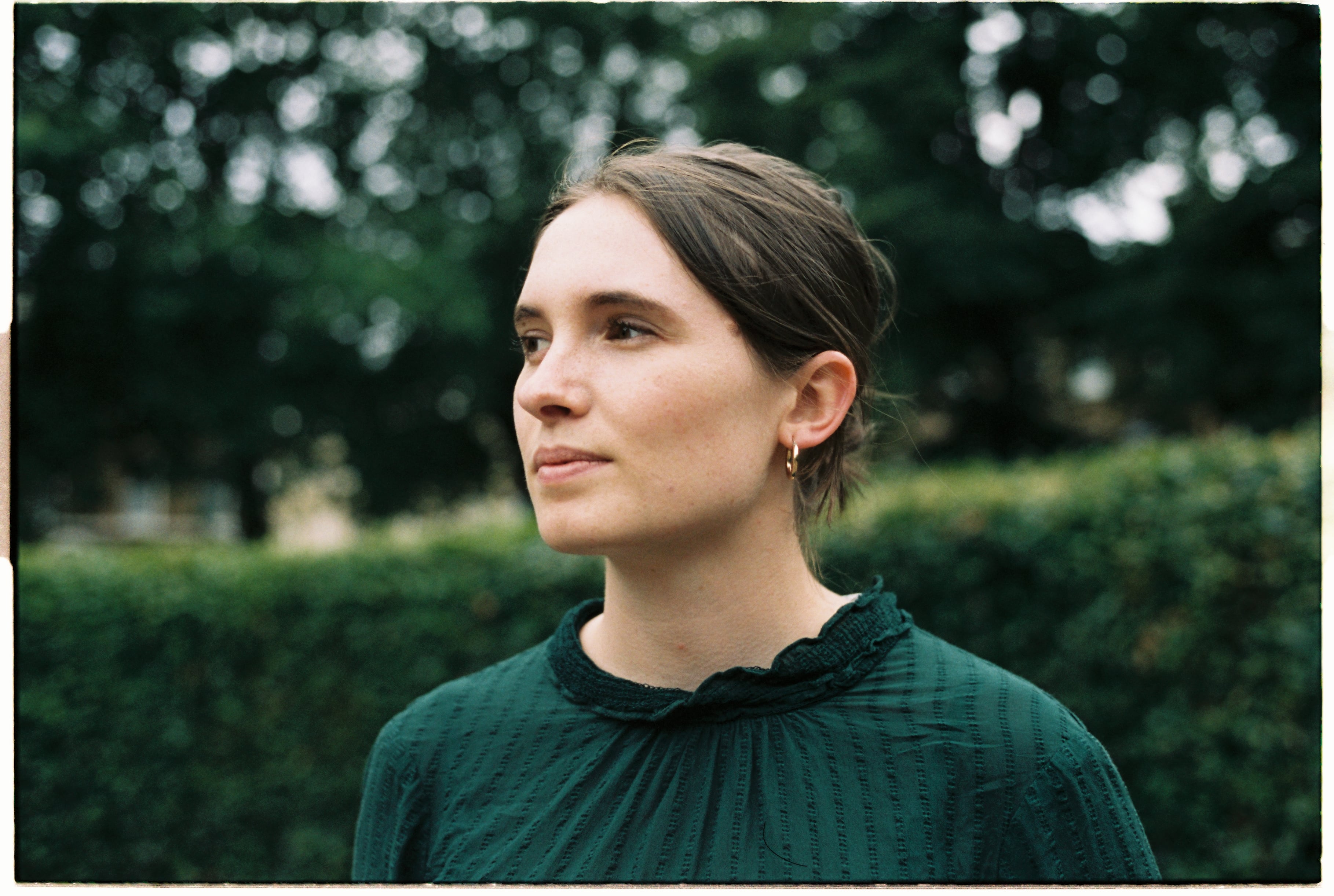
Tracy Stuckrath [00:00:06]:Hey everybody, and welcome to another episode of Eating at a Meeting. And I am so excited to be here with you today. It is Climate Week in New York and so I'm excited to bring introduce you to Anya Daughtery, who is the founder and managing director of FoodSteps. It is a food sustainability platform that provides data and insights for the food industry to accurately measure, reduce and report their environmental impact. And she's coming to us from England. I don't know where exactly you are in England. Okay. So welcome to the show.Anya Doherty [00:00:44]:Thank you so much. Yeah, true pleasure and honor to be here and really looking forward to talking about all things food and sustainability with you.Tracy Stuckrath [00:00:52]:Yeah, I am. One of the things that I was thinking about when I was writing my prepping for this is 2015. I went to the World's Fair in Milan and. And because it was all about food and the first exhibit that you walk in was all about food waste. And I mean I was. And that really kind of came home and change. I came home with that and really changed my perspective on that.Anya Doherty [00:01:21]:But you.Tracy Stuckrath [00:01:22]:And I'm not gonna. I don't know the. What year it was or whatever, but you were at Cambridge and you were doing research on sustainability and what. Let's see, you were the. It's the conducted research at the University of Cambridge on the environmental impact of food supply. It's the largest scientific study into the carbon labeling of food. Is that right?Anya Doherty [00:01:43]:Yeah, so I guess, yeah, a bit of background on that. So I always been very passionate about sustainability. That was what I knew I wanted to go into. But I actually started studying biochemistry because I was very interested in renewable fuels and energy. And I kind of took a random class in my second year, which was about, yeah, kind of systems ecology. And I had an amazing lecture by a professor who was setting up this research group on food and sustainability. And yeah, I mean, maybe that Milan moment for you just kind of sat down was like, oh, wow, this is a really significant problem. And at least at Cambridge at the time, it was kind of quite a nascent area of research.Anya Doherty [00:02:19]:So this was a professor kind of groups there, but really kind of setting up a new group to focus specifically on that problem. So, yeah, I ended up changing my course of studies and got really into that and then joined the research team when I graduated and spent an amazing kind of year with that early group forming some of the start of the research that we did. And yeah, as you mentioned, we did what was at the time the largest research study on the effects of carbon labeling food. So we put a bunch of carbon labels in various eating contexts and saw how they affected people's behavior. And the short answer to kind of cut to the chase is they do a bit, but not enough to really move the dial in terms of, yeah. Getting us towards a more sustainable food system as a whole. Not that surprising. I think we see similar things with nutrition labeling.Anya Doherty [00:03:10]:There have been calories on food for decades, but we've still seen issues around, yeah. Nutrition and health related foods. So yeah, long story short, that was very much my kind of introduction to the space. But while labeling isn't, I believe, the solution to solve this, it's maybe a piece of the puzzle. It really got me kind of fully involved in this area around measuring the impact of food and how we can actually have a real impact and reduce the average carbon emissions cost of nature water use. Yeah. Of the food that we eat.Tracy Stuckrath [00:03:42]:And that rolled into you starting foodsteps.Anya Doherty [00:03:46]:Exactly. So, yeah, I was very much kind of quite head in the data. I've always been a numbers person and absolutely loved kind of understanding for myself. It was fascinating. I mean, I was kind of reading a lot of this research around, you know, what's the impact of, I don't know, carrots versus beans versus beef, shrimp. You know, it's, you can kind of picture it. And I was getting really into the data and I kind of had this moment sort of thinking, well, where is this out in the world? Why? I don't know, why am I only just learning about this now? And do food companies know this? And as I was kind of going through that process, I realized that actually this research was, was quite new at the time. So it had been, I mean, the research had been going on for many decades, but it had sort of reached a point where there was a high enough concentration of it to start to draw out these really big themes where we could really for the first time say like definitively, you know, the impact of animal products is on average higher than the impact of plant based products.Anya Doherty [00:04:44]:And those kind of trends that yeah, maybe had seemed obvious before, but you do need a higher concentration of data to make these claims. So, yeah, long story short, I kind of realized that that data was becoming more, I guess, known in the academic sphere, but was still very kind of absent, I suppose, in the, you know, food companies. None of them knew this and yet they were all talking about their sustainability goals and targets and what else. Yeah, I had the chance to work with actually Cambridge University themselves first and their food. So I did a big impact assessment of everything. That they serve. And then I saw a few steps from that.Tracy Stuckrath [00:05:22]:That's so interesting. And, well, and actually a friend of mine, Natalie, posted on LinkedIn this morning or the other day, I need to go find this. And they did a. They calculated the carbon footprint of wine that was served at the event. And it was data crunching. Right. She's like, okay, we just put all of the wine in one category kind of thing and tell us what goes into calculating the carbon footprint of a food or a wine or, you know, how. How do you even figure that out?Anya Doherty [00:05:59]:It's a great question. So this kind of comes back to my point about there being needing to be like a high enough concentration of data over a period of time, because kind of the easiest thing to do and probably what your friend did would be, okay, let's say that they bought this wine was from, I don't know, France or South Africa. There will be published data in academic studies and also, yeah, scientific databases will basically be studies that people have done over many years looking at the impact of the carbon impact of French wine. So it's probably lots of people who have gone out and they'll have measured in vineyards in France how much. Yeah, fertilizer is used on those. What is the energy cost of moving it around, transporting it, bottling it, all of that. And then, yeah, you can kind of take that data and say, okay, well, I'm buying a wine from France, so this is probably what the impact of my wine is based on data points. Now, that works in general for lots of foods because there's quite a lot of data on this now around the world.Anya Doherty [00:07:01]:But what's really interesting is you can also do your own studies. So if you know exactly which vineyard this wine is being bought from in France, you can in theory, go and work with that farmer, producer and actually gather the data yourself from. Yeah. That vineyard. So you could measure, okay, on a cycle, how much fertilizer are they using, how many pesticides, what's the actual. But. And then you could build your own study. And at foodsets, we do both things.Anya Doherty [00:07:26]:So we kind of use a lot of the average data where it's, you know, it's cheaper, it's more cost effective, you can kind of get the answers quite quickly and then do a lot of that deeper dive data as well. Where we actually go back in the supply chain. We work with producers, farmers, transporters, and we're kind of gathering that data itself and building our own studies, which is fun as well.Tracy Stuckrath [00:07:50]:Yeah. Because it's not just because you just said the transporters. And, and it's even like it's coming from the farm and that. All those steps in between the farm to the plate.Anya Doherty [00:08:01]:Exactly.Tracy Stuckrath [00:08:02]:There's so much to think about.Anya Doherty [00:08:04]:Exactly. And for some products, honestly, it's not really possible because if you think about especially highly processed products, they might have, you know, 50 or 60 ingredients, all of which are coming from different places. They all go through unique processing steps and then they get reprocessed and repackaged and I mean you could do it, but it's not, it's not really possible. A lot of the cases where we are measuring that data ourselves at this stage tend to be simpler products. So things like a, you know, wheat or beef or beer or coffee, we've done studies on all of those items. And that is, you know, they're simple supply chains where you've maybe got two or three actors, it's the producer, they send it to a processor, they then send it to a distributor, maybe to a retailer. And yeah, those ones are really fun, especially where they can trace it back to the exact production location because yeah, we can then gather data from that supply chain. It takes a lot of time.Anya Doherty [00:09:02]:And yeah, at the moment it's not hugely scalable, but that is something we're working on as well.Tracy Stuckrath [00:09:09]:Well, in. And the fact, hugely processed foods. Right, because. And I, my, I try to limit my, you know, when I'm buying a prepackaged, highly processed food is like limited to nine ingredients or less. Right. Because then you know that there's fewer inputs to that. And, but again, I don't know. And then we were talking before the show, natural flavors, you know, who knows where all those come from.Tracy Stuckrath [00:09:34]:Right. But so, and it really helps then to think through that, using more Whole foods in serving our menu items and into measuring that carbon footprint. What was the biggest surprise have you had like in doing some of these with your, with your clients that you found.Anya Doherty [00:09:52]:Yeah, there are always surprises, I think, especially in food. Because I think. Well, I mean, firstly, at least when I started this, I had the impression that you could go back and find out where food comes from. When you realize, oh wow, like you really can't. Then, you know, we work with some really well known brands that, I don't know, say they're serving a spaghetti Bolognese, you would think they know what's in that Bolognese and they can't even tell you because they bought it from someone else who, you know, it's very strange.Tracy Stuckrath [00:10:24]:I think it wasn't made by grandma from scratch. Right.Anya Doherty [00:10:28]:Sadly, I think, you know, that would be very nice. I think we're, we're past that world now. But yeah, some of the big surprises have been, I guess, yeah, one that was really interesting. So we did this kind of deep dive back into a fish supply chain with a company and they were buying fish from Vietnam, which is quite common in the UK for some forms of farmed fish. And we went a step further and actually we're looking into the feed that was going into this, this fish supply chain because the fish, yeah, they get fed and we, yeah, you know, the meal included rice and soy, which were not very surprising. But then when we looked into the soy that was coming from a kind of undisclosed location in South America and we actually couldn't verify where that was coming from. And that represents quite a big deforestation risk in the supply chain for that fish. So, you know, this is a company that is very widely used in the UK From a consumer perspective.Anya Doherty [00:11:20]:I think most people would really not assume that the fish they were eating could be contributing to deforestation in South America, but are really the realities of the food system that we have built. And also the lack of transparency that I think most people would be very shocked to. Yeah. Learn about that. Probably wouldn't imagine that at all when they're sitting down for dinner.Tracy Stuckrath [00:11:45]:Well, that's so much to unpack, you know, I mean, because. Yeah, wow, that's a lot to think about. And going back to what you said at the beginning too about the labeling and that you, you all realize in your study that putting that information on the label really didn't impact people's choices. Right. It's, it's more of having. We could probably say that with a lot of things going on right now, just sitting down and having a conversation. Right. And learning that.Tracy Stuckrath [00:12:13]:Because you're not going to necessarily get that from a label. But how do we. And I'm going to jump into the conversation that we were having beforehand as before we went live. And because you do work, some of your clients are in food service and I would say mass produced food service, but large food service scaling large food service so you can have a bigger impact with them. I liked that analogy because I thought, you know, hey, X, Y, Z company has this many hotels, this many convention centers across the country and you know, they have to buy into that corporate buying program. But you said to me, you know, but it's actually easier to change because we can say, hey, cool corporate buying program. This is the butter to buy. Or this Is the beef to buy because it has a lower carbon footprint and then push that out to your.Anya Doherty [00:13:06]:Yeah, exactly. I think, I mean, this comes to the question of kind of how do we affect change across the system? And I think that, you know, in an ideal world we would all be kind of, you know, people who saw information and kind of made decisions that probably in the moment, yeah. Align with our truest values. That can be very hard when we're also faced with things like, you know, cost and other factors that really do impact people more. And so, yeah, what we were kind of discussing was like, how do you affect change in the system? And it's actually very hard to change consumer behavior on a, on a bigger scale. You need lots of interventions. A lot of the nudges, they do work, but they can be more kind of 5, 10, 15% range. So what we were kind of discussing was around, I guess, that B2B model, which is what we do at Foodstep.Anya Doherty [00:13:54]:So we work with a lot of large food companies. And while, you know, that has its challenges and limitations, I'm sure we could get to shortly. One of the benefits is that often you have a single decision maker in those businesses who's actually responsible for a huge, you know, kind of, if you like, of kind of effect. So if they change one thing, like change the way they've source the butter or decide to use less butter in a dish that might affect tens of millions or hundreds of millions of meals in one decision, trying to do that from a. Yeah. Kind of population level effect is really challenging. So yeah, I think it's about kind of thinking about where in the system you can make those changes. And ultimately we need it from lots of angles.Anya Doherty [00:14:45]:But that's one of the angles that we go for at Foodsteps is that B, to be working with food businesses, finding those key decision makers and hopefully having a yeah big effect. Because back to my previous example, like if we can decide or help to educate one person in a biz in a food business who's buying that fish from Vietnam, that that's a big risk from, you know, deforestation perspective. They can choose to make that change and affect all of the fish that that company buy and sell and serve to people. Yeah. And that's one way to, to make change in the system.Tracy Stuckrath [00:15:22]:Well, and, and then, and then I said too is like, hey, making that change, then you've got to communicate it down the whole path of, you know, when it gets to that plate. Right. Because there's so many decisions being made, especially in the events world, you know that buyer's buying it for. I'm just going to say all of Hyatt, right. And then. And how do you. The communication needs to be spread down saying hey, this is why we're buying this specific butter or this specific thing. All right, somebody just put on here, let's see what they have to say.Tracy Stuckrath [00:15:55]:So fascinating. I'm really interested to understand the push pull dynamics here if possible, whether businesses are proactively looking to improve their green credentials to enhance their brand or whether they must meet certain standards as enforced by XYZ policy body.Anya Doherty [00:16:09]:Both.Tracy Stuckrath [00:16:09]:Neither. Understanding environmental impact is such an important work, but it can be a high effect. So just wondering about prioritization in your customers minds.Anya Doherty [00:16:21]:This is such a great question. So my thoughts on this are that like with many things in the world, you'll see a big spread, you know, so there are some businesses who really are looking to do this proactively and that may be often it probably is from a selfish perspective to improve their own green credentials and their brand. And there's, you know, and that probably is the minority. Let's say it's kind of 5%, maybe 10% if we're being generous. The remainder are not going to do this work until there is regulation and there's a cost, a higher cost to them of not doing it. But I do think that, that 5 to 10% are extremely crucial in showing that there is a pathway to do this and ultimately influencing the policy that will then apply to the remaining 90 to 95% because policymakers and our experience of engaging with them are incredibly cautious. They will not put out regulation until they can see that there is traction within the business community and examples of how this can be achieved. So that 5 to 10% that are kind of putting their heads out and doing it first, they are the ones who are, yeah, a kind of, I think paving the way for what we really need which is regulation in the space because the vast majority will not do this until there's a higher cost of business without it.Tracy Stuckrath [00:17:44]:Totally. And I have the same feeling on food allergy labeling. Right. In understanding that and with a lot. And and I, I did link log on to LinkedIn so I did see that. That was Rosie. So Rosie, thank you so much for that question. And it really does, you know, with all of this I'm like do you do it for because it's good business or do you do it for because it's good for the environment or do you do it because, I mean I want you to do it for all of.Tracy Stuckrath [00:18:09]:For both of those reasons. But I also want you to. I don't really want to force regulation down on you, but that's kind of the only way it'll happen, right?Anya Doherty [00:18:17]:Yeah, exactly. I think, I think, yeah. From what I've seen, I mean, you have individuals definitely within businesses who are doing it for environmental reasons. I think that as much as we like to maybe think this is possible, I think businesses are structured in such a way that they act in their own interests, so they are doing it because they think it's good for their business. Yeah, we don't need to get into like a wider philosophical about that, but I guess the should be our expectation and I guess it's kind of how do we work with that to then, yeah, ultimately, I think, get to the place that we all want to get to, which is having good regulation here, because the whole space won't move until that happens.Tracy Stuckrath [00:19:00]:Right. And then how do you. I mean, I think in New York right now, because it's Climate Week, there's a variety of people from all across the globe, they're having these conversations, Right. How do we. How do you do that across nations? Right. And how do you do that within. Within one country and then first of all, and then across the nation or even a continent and then across the globe, you know, get everybody to think not the same way, but to see the. The greater good of that.Anya Doherty [00:19:33]:Yeah, that is a real challenge. It's definitely one that I think is quite an interesting question from the UK perspective now, because obviously we're no longer within the eu, and so from a policy perspective, there's been a real, I guess, kind of, yeah, push and pull between do we align to the eu, do we try and kind of do our own thing? Where does that lead us in relation to the trade deals and things that the government's trying to push forward? I think there have been some good channels, I think, here, you know, in terms of engaging with the eu, but also, I guess a recognition that the UK maybe wants to take its own path a bit. And in some ways that is, I don't necessarily see it as a bad thing, at least at this early stage. Like the way the UK is kind of forming some approaches to measuring the environmental impact of food are seeming quite different from the eu, but some of them, I do think could be better. And maybe there is an opportunity for, yeah, kind of co learning there. But I don't know if I've got the answer to how we sort of create.Tracy Stuckrath [00:20:28]:I don't think anybody has that answer.Anya Doherty [00:20:31]:Yeah, I would agree that it's, that would be a dream world where we really can come together and.Tracy Stuckrath [00:20:38]:Yeah, right. All right. And Andrea just piped in here. How do you see the conversation around reporting on nature risk, supporting the GHGE carbon agenda? And can you, and on from coming from me, can you please explain out what the GHGE carbon agenda is?Anya Doherty [00:20:55]:That's the greenhouse gas emissions. So I think just talking generally about greenhouse gas emissions. Yeah, to be honest, I'm less familiar on the reporting around nature risks, but it is something I'd like to learn more about. I do think that that seems to have been relatively effective more from a kind of financial institution perspective. And yeah, I would say in general this space should wholly be learning from itself. So yeah, maybe an area where I could. I don't know if we can get audience members to come in and yeah.Tracy Stuckrath [00:21:27]:If you, if you want to come in here, Andrea, let me know, just shoot me a message and I will send you the link if you want to join in here and talk about that. But one of the things that you, that I read about you and what I've heard you say a couple of times is that food systems is one of the biggest leave levers, levers for tackling climate change and the loss of nature, which kind of ties into Andrea's thing. Can you explain, you know, that and why you think this is overlooked by so many people or it's just getting its, you know, footing.Anya Doherty [00:22:04]:Yeah, great question. So I do think, I mean, just to kind of go back to the loss of nature point, personally I think this is, I don't know, we've got to beat the drum of this way louder than we are at the moment. I think people have started to get the food and climate link and also, yeah, climate has generally been higher up the agenda, at least from where I'm seeing things compared to the nature risk. But I think the sort of crash in wildlife that we have seen literally in my lifetime and my parents lifetime is so astounding and I feel like we have not in any way grasp that or the importance of food and that so just to kind of share like the things that have moved me in that. Yeah. Kind of side of things before I get onto the link with food. Yeah. I was reading this study which really just kind of resonated with my personal experience.Anya Doherty [00:22:55]:So in the UK, apparently between 2003 and 2024, there's been a 60% decline in the number of flying insects hitting windscreens Because. Which is really interesting because I was thinking that recently when I was driving, I was like, I remember there being way more insects these days.Tracy Stuckrath [00:23:13]:I had the same thoughts two days ago.Anya Doherty [00:23:16]:Yes. Okay. So I'm sure in the US it's got to be the same, but that is so astounding because a 60% decline is seriously concerning. And insects are absolutely the bedrock of, you know, our whole kind of. Yeah. Animal ecosystem. And yeah. On top of that, since 1970, I think there's been.Anya Doherty [00:23:39]:Yeah. About a 70% decline in just the total wildlife populations in the world, which is, again, just totally astounding. So I do just want to kind of put a plug out there that we talk about climate, but I really think we should be talking a lot more about. Yeah. The wildlife crash, loss of nature. This is of really, really important. And then. Yeah, to go back to the link with food.Anya Doherty [00:24:02]:I mean, food is the. It's one of the biggest drivers of habitat loss. 70 to 80% of habitat loss is due to. Yeah. Basically expansion of cropland. And that itself is a key. One of the top three drivers of. Yeah.Anya Doherty [00:24:16]:Biodiversity loss, food. You know, we've got all of our pesticides. We're dumping, like, tons of chemicals on the land all the time, which are literally toxic to life. So it. Why are we that surprised that it's killing life? And food is, you know, about a third of global greenhouse gas emissions. And the confluence of all of these things, like, we're losing habitat, we're pouring chemicals on the land that kill life, and we're changing the climate and all of those things together. Plus some others are totally. I don't know, they're just.Anya Doherty [00:24:49]:Yeah. Magnifying themselves and. Yeah. I think we should really see the food system as. Yeah. I guess the key contributor to that. But then also the area where we should focus our efforts on. Yeah.Anya Doherty [00:25:02]:Actually writing this problem. Okay.Tracy Stuckrath [00:25:05]:Yeah. I mean, and you don't think about it, you know, when you're. When you're clearing land and. And actually, where I live right now, they're clearing land to widen the ride in the. Widen the road and make it a highway. So we've got lots of deers and all these animals moving in. We've had them, but they're. I think they're more populated because they're losing their land where.Tracy Stuckrath [00:25:27]:The forests where they were. Right. Moving into the neighborhoods a lot. All right, so Andrea.Anya Doherty [00:25:32]:Yes, I really want to agree with. With Andrea here. So I absolutely love this point. I think. Yeah. Part of the backlash that we're seeing against climate. While I think we really, really need to fight that and make sure that we're always putting science at the heart of, you know, the discussions that we're having, I think that it is a really difficult thing to communicate. Right.Anya Doherty [00:25:51]:Because who intrinsically cared about carbon dioxide before they were told that it was impacting the climate and then could impact. Yeah. Your livelihood. You don't, I don't think instinctually we kind of as humans, you know, like, know that there's a value to carbon dioxide. That's something we've had to learn and you know, that's important. We should really work on educating ourselves and, and others and yeah. Focusing on science. But one of the real, I guess, kind of opportunities with the nature crisis is that I think we do feel intrinsically connected to nature.Anya Doherty [00:26:25]:People, you know, have their own direct experiences with that. It really tangibly impacts, you know, your day to day life. Like I remember seeing more insects, I remember there being more songbirds, like these types of things. And it's also, I think, much more emotive and can really connect to people's culture, their heritage, their. Yeah. Kind of sense of belonging in places. Andrea is definitely right that one of the real challenges is it's so hard to measure nature. Whereas yeah, greenhouse gas emissions have kind of the opposite problem.Anya Doherty [00:26:56]:But do you think that this is really a space where there's a lot more opportunity but also a really urgent need to. Yeah. Kind of bring this to life? Because we might be running out of time, like a 70% decline since 1970. To me, my brain goes, okay, well that can't be that long until 100% because. Right. Yeah, yeah, there's not that much time where. Yeah, so it's something definitely we're looking at working on more within foodsteps, this link to biodiversity and do we even call it biodiversity? Because does that kind of sound too, I don't know, dry, Right. Maybe, yeah.Anya Doherty [00:27:37]:Wildlife crash or nature crisis. I don't know. Thinking about words that we can use as well to try and bring this to life.Tracy Stuckrath [00:27:46]:Right? Well, yeah, because you again, you're trying to change consumers minds, businesses minds and consumers minds. But the people, the yes, we as consumers are buying a lot of the food, but the people who are making the food are buying all these products and they're the ones that are quote, unquote, doing the damage at the same time. Right. I want to read out this thing that Andrea said. I would love to see a menu which takes a nature agenda and reports on the impact on nature. In addition to the greenhouse gas emissions. Now that I know what that acronym is. I know the data is still a challenging, much more than the greenhouse gas emissions.Tracy Stuckrath [00:28:21]:But I would love to see someone trying. I love that idea and so I would love to see it from, you know, from you. That would be great as adding that into that.Anya Doherty [00:28:33]:Yeah, absolutely. So there is back to my. The original part of the discussion. There's the team who's still in Cambridge working on this. They have just started doing some really well actually they're quite far down the line doing some really wonderful research on how we can link directly food products to nature impact. So like we can, we have data on the carbon emissions of carrots and beans and beef and fat. They're just publishing papers on how we can do the equivalent for nature. So yeah, we're really looking forward to hopefully being able to bring that to life more in the.Anya Doherty [00:29:07]:Yeah. Sort of food industry in the same way that we've tried to do that with carbon initially.Tracy Stuckrath [00:29:12]:And, and she said well and without many species we won't produce food. Right.Anya Doherty [00:29:18]:Exactly.Tracy Stuckrath [00:29:18]:Yeah, yeah, yeah. And, and actually I saw somebody say the other day like do we really need bees? And, and I don't know if it was a joke because she just put stars around her really. But I'm like we do need bees, right? We need, we need all these insects.Anya Doherty [00:29:36]:Exactly. Yeah. And a lot of flying insects that are not bees are also really important pollinators. So yes, we need that I think. Yeah, we need the diversity but we also need the abundance. And I think the abundance is something I feel we've not really come to terms with. The fact that we've actually lost in a lot of cases over half the abundance of these populations. Like that's a really big deal.Anya Doherty [00:30:03]:Should really be reflecting on that.Tracy Stuckrath [00:30:07]:Well, and just tying back to that and saying that why I was thinking about this. I drove back and forth to Raleigh the other day which is a two hour drive and I noticed that there were dead bugs on my thing. But I remember driving to Florida probably 15 years ago and I posted something on Facebook and like all these insects killed themselves on my windshield. This is so annoying. Right? But then now it's like 1/10 of that.Anya Doherty [00:30:31]:No, it's really noticeable. I, I feel it in my own life. I remember when we used to drive to my grandparents house that you know, as a kid that was kind of something I would. It was just an entertainment thing. I have that thought myself. I was like this did that. Yeah. Has this changed or is that just my imagination? Then I looked it up and I was like, no, there's been a 60 decline in the UK, literally, and yeah, not even my full lifetime.Anya Doherty [00:30:56]:Yeah, very concerning. Very concerning.Tracy Stuckrath [00:30:58]:It is very concerning. So what, what are the key challenges? I think we've talked about it a little bit for companies to reduce their emissions today. I'm like, you know, and what can they do to drive that action? I mean, because getting the full, full length of where all the food comes from is. That's probably one of them, right?Anya Doherty [00:31:19]:Yeah. I think access to the data really is one of the key challenges and that is what we try to work with companies to solve. So I would even say taking a step back from kind of going all the way down the supply chain, like even having a food item by food item level understanding of what their impact might be on an average basis is still for companies. So currently, if you're a food company, you might be trying to understand the environmental impact of your food and you might even just be doing that at a very high level. So you might have, like put all of your meat items into one category, all of your dairy items into another category, all of your fish into another category. And that's okay because it gives you a very high level understanding. But, you know, you want to do that. Some of the few companies we work with have, you know, a hundred thousand different products that they sell.Anya Doherty [00:32:12]:So what we try and do is go to that level below and say, okay, we're going to tell you the impact of your beef versus your pork chops versus your salmon versus your pollock, you know, and kind of giving that level of detail. So that is kind of. Yeah, one of the challenges is just having access to the data at the right level to make decisions and even going a level deeper. We work with companies who, you know, manufacturing or selling really complex items that might have 15, 40, 50 ingredients in them. So we're even going a level deeper to say, okay, well, within this lasagna, within this sandwich, what are the impacts of the items within that? And can you then use that to kind of reformulate. Yeah, those, those items. So that's kind of challenge number one. And then obviously it gets more and more challenging the more you try and kind of go back in the, into the supply chain and get more data.Anya Doherty [00:33:04]:But I do think those challenges are quite solvable. They just need companies to work with the right data partner, etc. The second challenge that I really think exists, and I also feel like it's something that's not talked about enough, is kind of going Back to the point that someone made earlier in the questions. It's like it is currently more costly to try and do the sustainable thing as a food business than it is to do the unsustainable thing. If it was more cost effective to do the sustainable thing, we would not be here having this conversation. The biggest challenge is like, we need to put those cost barriers in place for ourselves. And that the only way to do that, I believe, is through regulation, because regulation is the thing that makes it more costly to not comply than it is to comply. It's as simple as that.Anya Doherty [00:33:57]:And I believe that until we have those cost barriers in place and it continues to be cheaper and easier to sell food that is unsustainable, we're just going to be flogging a dead horse trying to solve the problem that just the crux is their businesses, they're there to make a profit. We can debate, you know, the philosophy behind that. That is the system we have. Therefore it needs to be more expensive to sell food that is less sustainable. That's just the solution to the problem. But the problem is that that regulation, especially in today's climate, political climate, is really not kind of forthcoming. So I actually believe that food companies, it's in their interest to have a level playing field and to actually kind of, yeah. Push for this regulation that will make it the same cost to all companies to comply.Anya Doherty [00:34:45]:And so that's the work that I'm quite excited to start doing more of, is actually advocating with these food companies who are. Who we are working with, to show to the regulators and policymakers like this is possible. It's a long road, but I ultimately believe that that's the kind of. Yeah. Area that this work needs to be influencing.Tracy Stuckrath [00:35:06]:Well, and it reminds me of a study in a chapter of a book that I co authored on. It was a food service company that worked with one of their corporate clients in their company cafeteria. And the company was trying to reduce their health ins. Health insurance costs. Right. And they gave everybody pedometers. They, you know, pushed all of this thing, never talking to the food side, never talking to that company. And they finally went back to them and they ended up reducing the cost of the healthier food.Tracy Stuckrath [00:35:42]:And the food that was more sugarly, you know, was not as healthy for you, costs more. And they actually got to see the change in their health insurance costs like this, whatever they were statins or whatever that they were measuring, you know, and so it's kind of the same thing, right? Like, let's make what's better for the environment, what's better for us as humans, less expensive than the other? And there's a chef in the uk, I think he's in the uk, said that, you know, like, he's like, why don't we just say it's a carrot and the carrots that have the chemicals on it saying instead of changing, instead of saying this is the organic carrot, let's talk about this is a carrot and this is the unorganic carrot. Right. And flipping that conversation and somebody's like, the food manufacturers will never fly for that. But yeah, yeah, somebody put in here. So exciting. Never interesting and never thought about it like that. 50% better for British wildlife is more emotionally compelling than B grade carbon emissions, though.Tracy Stuckrath [00:36:42]:Much harder to achieve. And then are there other countries that you know of that are leading in food regulation that could be a model for the uk?Anya Doherty [00:36:51]:That is a great question. I don't feel there are those that are kind of majorly. I mean there's always interesting policies, I feel like that come out of places like New Zealand that are often more willing to kind of try different agricultural policies and things. I know when we left the EU there was some look at different models like that, I think. Yeah, I mean Denmark, for example, they've done more around a kind of standardized database on the environmental impact of food that I think is being looked at from a UK perspective. But I would say, yeah, generally kind of that. Yeah, some of the countries in the European Union, Denmark, Netherlands, France as well, they, yeah, they're at a kind of maybe like a couple of steps ahead of the uk but none that I feel if we sort of, yeah. Took them as a gold standard, we could, we could sort of majorly.Tracy Stuckrath [00:37:44]:Yeah, yeah, no, that's. And that was Rosie again. I pulled up LinkedIn to see the who. That was so. Thank you for that question again, Rosie, kind of going back to your data thing is a quote that I found you saying companies are drowning in data but starving for insights. Businesses can get overwhelmed by reporting requirements and so they tend to focus on compliance rather than using data to drive actual change. So that kind of looking at that regulation, that compliance thing as well, those two need to work together.Anya Doherty [00:38:17]:Yeah, exactly. I do think that in the absence of clear, like one of the big challenges in this space is that there is no standardization for how to measure the environmental impact of food. There's no standardization for how to report it and we see a ton of wasted time and effort from companies who are, yeah, really kind of drowning in like this sea of uncertainty. Around Are we calculating this right? Are we reporting it right. There's so much uncertainty and lack of direction on that that's unfortunately wasting a lot of time and means that people can't focus on the actual work itself which is the insights decarbonisation. So I feel like the regulation should be there to make it very clear and standardized and just take all those questions off the table about yeah how do we do that reporting and yeah that can then open up the kind of energy and space to actually focus on what matters which is using the data to drive the changes.Tracy Stuckrath [00:39:15]:Right. We have standardization around so many things like globally. Right.Anya Doherty [00:39:20]:Stop.Tracy Stuckrath [00:39:20]:Everybody knows what the stop sign means.Anya Doherty [00:39:22]:I think we will get there on carbon data again. It's just like it's disappointing to see the yeah kind of I guess political climate not be as accepting I think of this at the pace that it needs to go. But I do think that yeah it's probably going to reach a threshold at a certain point where it becomes completely. Probably at the point where it becomes totally more chaotic than it currently is where no one understand it anymore and then hopefully we will all align around better ways to do stuff. Right.Tracy Stuckrath [00:39:57]:Andrea just asked. I wonder whether countries which have a higher self sufficiency than the UK would be working on stronger standards but that that could be wrong.Anya Doherty [00:40:07]:Interesting. I guess kind of standards from what perspective? Like if we're talking about greenhouse gas emissions reporting and things like that. I think that is mostly being driven by how strongly countries are working on their net zero policy and I guess plans for different industries to align with that and that has tended to be the European countries. I. I don't know. Yeah. How much that correlates with self sufficiency. Totally like side point.Anya Doherty [00:40:37]:But you did say you like to do side points so.Tracy Stuckrath [00:40:40]:Yes I do.Anya Doherty [00:40:42]:More interested recently as well in kind of some of the pieces around. Yeah. Like food safety and storage. So how much food actually kind of storing in case of disasters and things and that's really interesting. There's a huge variation. I was learning that Switzerland have bought food for the whole country for a certain number of days. What I think Finland have got it for a crazy amount of time. I don't want to be quoted on this but maybe like over three months or something they have food for the entire country stored.Tracy Stuckrath [00:41:11]:Wow.Anya Doherty [00:41:13]:I don't know if we have any in the uk have to find out but it's quite interesting. So different countries. Yeah. Sort of food security question in very different directions it seems. Right.Tracy Stuckrath [00:41:25]:Well and food security is a Huge topic of conversation globally and. And how we can do that. And like that's a lot of canning. Right. Or however they're storing it.Anya Doherty [00:41:36]:Yeah, I don't know. I mean. Yeah, have to. Big, big grain stores, I think.Tracy Stuckrath [00:41:42]:Yeah. What's one message that you would like catering companies and things to understand about climate change and what they can do? Because. And I know you've worked with some and you know, what can we do as meeting professionals in the hospitality side to really think through our impact on climate change and the food that we're serving?Anya Doherty [00:42:07]:Yeah. Great question. I think so many answers to this. I do feel like one of the areas I've found most effective and really enjoyed working the most has been working with chefs and kind of some of the key decision makers who are actually crafting and innovating and getting the data into those people's hands is often kind of why you start to drive that innovation and actually see the solutions kind of coming up. I think it's one thing to all this analysis from a top down kind of business perspective. It's another thing integrating it into the way that food companies work. And I'm always really inspired by what we see coming out of those sessions and also what we're seeing in general, a lot of the really small disruptive brands. I think for me at the moment where I'm finding the most hope and kind of.Anya Doherty [00:42:55]:Yeah, I guess optimism for the future is kind of. Yeah, just really out there. Ideas that people have had and they've done that on their own back kind of using the data and things to guide their approaches. So yeah. Oh, yes, Andrea, all of my stats and kind of interest in this came from seeing a talk that Tim Lang did specifically on topic. So yes, it was very interesting. I'd recommend that to people. I think Tim published a report on food security and resilience.Anya Doherty [00:43:28]:Okay.Tracy Stuckrath [00:43:30]:And yes, it was released this year. Okay. Yeah, I'll go look that up myself. And Andrea also said because if there's more food production in the country, the greenhouse gas emissions contribution to total country greenhouse gas emissions might be bigger. So that might be more oppressed to find solutions solution wise. Because I was listening to Danny Nirenberg from Food Tanks conversations during Climate Week. And there's a chef, because you mentioned chefs Ramus Rasmus Monk, he's the founder and head chef at the Alchemist and Spora and the other day on he was talking with Kim Severson, I think it was Kim Severson from the New York Times about creating proteins out of CO2, I'm like, I have no idea even you know, I mean that's mindboggling. Right.Tracy Stuckrath [00:44:18]:But like thinking about how and, but I appreciated the fact that he's like yes, we could do this but we also need to make sure that it tastes good. Right. And that people are going to buy it. But we have to find out different solutions and how to feed everybody.Anya Doherty [00:44:34]:Yeah, yeah. As I was saying, I kind of, I'm finding a lot of optimism and excitement from those disruptors. I think there are some really, just really amazing, really small companies and we were talking companies with I don't know, a handful of people in them and we've, we've had the privilege of working with many of them like across beer. That's a lot lower impact because they're using renewable energy and using waste food within the beer production. Wheat growing more regeneratively. So a lot lower inputs on the system. That's been really interesting. Worked with a very small coffee company who were kind of really looking at their traceability and sourcing from regions with low or no deforestation even.Anya Doherty [00:45:18]:Yes. Some meat producers who are really trying to look at how they can source feed and kind of manure production processing these types of things. Yeah, I'm loving seeing where a lot of these kind of more and often I think they start, they do start small because they're you know, small teams who kind of got a new idea and I. But I think they are the ones who are really actually capturing the eyes in a lot of cases of the big companies because those companies are trying, you know, they are trying to solution scan and be like oh my God, we've got a major problem and none of our suppliers. Well, some of them are. But yeah, trying to see these novel techniques and things. So I'm finding a lot of inspiration and optimism from seeing those kind of solutions. And then the question is how quickly can they scale and do they still work at scale?Tracy Stuckrath [00:46:13]:So when does it become that this is second nature. Right. That it's, that's the what we do. Right. Versus having to put a label of this is organic. Right. And even going back to like way back when we started is like changing consumers perceptions. Like this is just this is how we eat because it's better for the environment versus putting all these labels on a variety of different things and trying to change consumers minds when it's just this is the right thing and this is how we should be eating.Anya Doherty [00:46:48]:Yeah, I think for me it does go back to the regulation point which is I just do not believe that we can have that type of system without regulation that has some guardrails on the type of food. You know, I think it maybe this is again, getting like, slightly philosophical, but, you know, when we think about the types of societies we want to live in, they are societies of, you know, freedom and choice. And I think that that is a very important bedrock of, you know, the way that we live. But we also need to recognize that our choices in terms of what we eat and the food we produce has an impact on everyone else because it's one planet that we're all living on. And whether we like it or not, what you choose to eat does impact me and it impacts the world that I live in as well. And yes, we need to find the right balance between. Yeah. Having that.Anya Doherty [00:47:39]:That choice, which is something we all kind of have fought for, but also recognizing that there has to be guardrails and limits on that because at the moment. Yeah. We're just. Yeah.Tracy Stuckrath [00:47:51]:Right.Anya Doherty [00:47:52]:Anyway, long story short, I don't think it will be second nature until we have got regulation that prevents us from doing what we're currently doing. I don't know how possible that is, that we end up in a world where we have that, but that's the world that I'm fighting for. So. Yeah. All right.Tracy Stuckrath [00:48:09]:And one more question before we get to the rap to some rapid fire questions that I have for you. But does it. And I'm going to talk generational or. And my friend David's going to kill me because I'm going to say, you know, let's talk generations and ages and things like that. But it's more about value. You know, he's, he pushes the value proposition.Anya Doherty [00:48:28]:Yeah.Tracy Stuckrath [00:48:28]:And is there a different value proposition from different generations to make keeping this from happening or.Anya Doherty [00:48:38]:And.Tracy Stuckrath [00:48:38]:And then who's pushing it?Anya Doherty [00:48:41]:Yeah, I think it's really. I love, you know, as soon as you said generation, like, one of the things that I really think back to is just how much our diets have changed in, you know, two generations. So my grandfather grew up on a tiny farm in rural Ireland and they, when I asked, you know, his, his brothers who are still alive about the food that they used to eat was like they grew everything in their garden. They had, they, you know, bought like their own flour just from, I don't know, the neighbors, they did all their own milling and all this type of. And then they would eat, you know, like an egg a week and then maybe they'd have. Yes. Of like kill a chicken or a lamb, like Every couple of months. And I just think from that life to two generations where I live in London and there's this like insane explosion of food and cuisines from like absolutely everywhere.Anya Doherty [00:49:34]:It's so hard to fathom, like how different. Yeah, that is.Tracy Stuckrath [00:49:37]:Yeah, true.Anya Doherty [00:49:38]:Yeah. I think in terms of generational sort of, I guess, preferences, I don't, I don't know. I think it is. Previously there was, you know, research that kind of showed younger people especially were more aligning to these kind of climate values and choosing to reduce, you know, their meat consumption, etc. I've seen a lot of that suggests it's actually maybe reversing. And at least in the UK there have been some studies showing kind of younger people, I guess, actually. Yeah. Increasing their meat consumption in many, in many instances.Anya Doherty [00:50:08]:Yeah. I don't know. What do you think? I don't know.Tracy Stuckrath [00:50:11]:I mean, I think there's people that are in both, you know, in across the board. I think it aligns more with, as David would probably correct me in just saying, it's values. Like, what do we see? I'm like, because you're talking to your uncles and your grandfathers, I'm like, their values are kind of in line with what you're pushing or not pushing, but what you're doing. Right. And so if we can find the value that every, the same values that we all have in what we want, maybe that can help, you know, quote unquote, push that agenda versus looking at it from, hey, these are the, you know, the 50 year olds, the 60 year olds versus the 20 year olds, you know.Anya Doherty [00:50:50]:Yeah, that's true. And I sort of think that in some ways, like we're trying to kind of define the future of food and be like, oh, eat this crazy new diet. That's climate, like, what is that going to be? And I'm like, actually my grandfather was eating that not that long ago and they all lived like really healthy lives. And yeah, so it's kind of maybe you're right, like finding that commonality, not trying to, you know, I'm all for the disruptors and innovators and that is kind of where I find a lot of hope. I also do think, do we really have to totally reinvent the wheel or.Tracy Stuckrath [00:51:25]:Right, yeah, exactly.Anya Doherty [00:51:26]:Yeah. Think about the fact that, yeah, probably not that long ago people lived. Well, My grandfather lived a very like healthy, long life and I'm pretty sure he would have eaten a lot more sustainably than I have. Yeah.Tracy Stuckrath [00:51:41]:All right, so Rosie put in here real quick. Earlier you Talked about the 5 to 10% who are proactively wanting to understand impact, not just because policy. Do you see any trends here? And what makes these companies want to be proactive? For example, they know their own customers priorities, prioritize sustainability. I'm wondering how we can get more businesses to act in advance of regulation.Anya Doherty [00:52:03]:Yeah, it's a great question. I do think that there are just some, again, kind of going back to that bell curve. There just will always be some companies who, because they see themselves as those kind of first actors, innovators, they're just naturally more inclined to be on the front foot of things. And then there are those that just. Their way of operating is being on the back of it. But I do think this is also driven by a cycle which we all have some role to play in, which is kind of consumer awareness and care. And, you know, our kind of values as society are the things that then shape our habits, which then influence businesses. And then once businesses do things, that is then what influences policy and, of course, people's voting and choices.Anya Doherty [00:52:47]:So it is all this kind of complex web. And I do think that where, you know, there are so many roles for different organizations and people within that web, I think it's just where do you kind of target your energy? So it's not to say that influencing consumers is. That's a fantastic thing. And there's amazing organizations out there doing that kind of education work, et cetera. There are people going at it from the policy lens. There are people going out from business lens. You need all of those lenses and approaches, and they. They ultimately do hopefully work in a virtuous circle.Anya Doherty [00:53:21]:But, yeah, in terms of those kind of 5 to 10% of companies, I don't know, it's something maybe I'll give a bit more thought. I think my experience is they just tend to be the companies who, if you look at, across loads of different areas, they're just. They see themselves as like, yeah, their brand value is. We're kind of always ahead of the curve, and we're just the first movers. I don't know if it's necessarily specific to sustainability or more just kind of how they. Yeah. Position themselves in that bigger spread. Yeah, I'll give it more thought because if I.Anya Doherty [00:53:55]:If I crack the answer to that and there's a way to get on board earlier, I will definitely be doing that.Tracy Stuckrath [00:54:02]:All right, so somebody else was listening to Chef talk. So Bill Kees, I hope I said that right. Um, the chef. The discussion with Chef Monk was fascinating. There's Also a restaurant in Hackney Wick Silo is one of the world's first zero waste restaurants. Using closed loop cooking and natural farming with locally sourced, unusual ingredients can. Should chefs like Rasmuss drive real change in how we eat compared to companies whose effect efforts are more focused on compliance?Anya Doherty [00:54:32]:Yeah, I think, I mean, given compliance at the moment is pretty limited. I do think that those, yeah, kind of going back to those innovators and disruptors like Chef Rasmus. I mean those are the people who are really kind of showing what's possible. And I think, yeah, they're the ones who are actually kind of changing what's on the plate in the real world. And ultimately, yeah, through that kind of virtuous circle, I do think that comes back to influencing policy because we can show what's possible and we can show that we can have a, yeah, functioning and thriving economic system that is. Is more sustainable. But we need the policymakers to see that and that requires, yeah, those early movers to show what's possible.Tracy Stuckrath [00:55:14]:Well, and my friend Sarah just got back from the James Beard Foundations Chefs for Policy Change and really like, it helped her like, see things differently and how she can, as chefs have impact on policy and regulation and things. So I'm really interested in seeing what comes of that from what she learned on that and. All right, one last thing from Andrea Bilgus. Systems change requires many different actors working synergetically. So the answer is yes, but they need support.Anya Doherty [00:55:46]:Yeah, yeah, I'd agree with that. So I think back to the kind of virtuous circle I was trying to paint. If you just attack it from one lens or one angle, it doesn't work. You do ultimately need all of those things happening in. Yeah. So I think, yeah, it's just about picking your lane. And we're really focused on helping food businesses accelerate their journey to sustainability. And that's one part of it.Anya Doherty [00:56:12]:But we, yeah, very much welcome the full circle.Tracy Stuckrath [00:56:15]:Yeah, we got lots of hearts over here on LinkedIn, flowing up in the air. Yay. Okay, so five quick, five rapid fire questions. What's one ingredient you'd love to see used more sustainably?Anya Doherty [00:56:30]:I would love to see more pulses on the menu. So I think pulses are kind of the wonder food. They're great for the soil, they're great for our health, very rich in protein, they're low impact. And at least in the uk, we actually have quite a good climate for growing them. So, yeah, I would love to see more pulses on the menu.Tracy Stuckrath [00:56:47]:Okay. If you could remove one sustainability buzzword. From the industry. What would it be?Anya Doherty [00:56:53]:I would and have always been trying to get rid of carbon neutral. I think it's such a miss. Such a misnomer that you can kind of have emissions and then just sort of magically take them out of the air and then have something which is totally. Yeah. No impact. So I'm ready to see that one go.Tracy Stuckrath [00:57:09]:Okay, perfect. What is your go to meal? When you want something comforting but climate friendly.Anya Doherty [00:57:16]:Yeah. So I have to be honest, I didn't know whether when I go for comfort, I kind of immediately think about climate friendly. Maybe I shouldn't say that, but I. Maybe it goes back to my pulses. I do feel like a good dal can be really comforting. They're creamy, they've got that homemade vibe. It can really sort of feel like food for the soul. And.Anya Doherty [00:57:36]:Yeah, very climate friendly and delicious.Tracy Stuckrath [00:57:39]:Very delicious. Yes. Actually, I think I might go get some Indian food for dinner. Who inspires you the most in sustainability or hospitality space right now?Anya Doherty [00:57:50]:So I think I'd have to give this one out. I've been sort of saying this for the last 20 minutes, but I do think those small producers and innovators, like, we've had such an amazing time working with small beer companies, wheat companies, coffee companies, they're really trying to show what's possible and do things differently. And I find really inspiring.Tracy Stuckrath [00:58:10]:Okay, fantastic. And like with food with you, I mean, you started small, right? You got this idea. Yes. And okay, my final question and the finish this sentence. Every meal should.Anya Doherty [00:58:25]:I think every meal should enable us to serve another meal in the future.Tracy Stuckrath [00:58:30]:Oh, I love that. Yeah, that's very cool. And. And whether it be leftovers or what.Anya Doherty [00:58:38]:Right, yeah, yeah, we're all for leftovers.Tracy Stuckrath [00:58:41]:That's exactly. Anya, thank you so much. I really appreciate this conversation. Let's. I have your website up here. You can find Anya on LinkedIn. Go to the LinkedIn.com and just look all look for all of that. And then the website for foodsteps is Foodsteps Earth.Tracy Stuckrath [00:59:03]:Is that right?Anya Doherty [00:59:03]:Yep, that is right. Yeah. Thank you so much, Tracy. It was really, really lovely to chat to you and thank you everyone for the very. Yeah, interesting classics.Tracy Stuckrath [00:59:11]:Yeah, totally. Andrea, Rosie and Bill Key. I think I said that right. So thank you for tuning in and we appreciate it. Until next time, everybody stay safe and eat well.Anya Doherty [00:59:24]:Thank you so much. Bye.