104: Food & Beverage Tourism

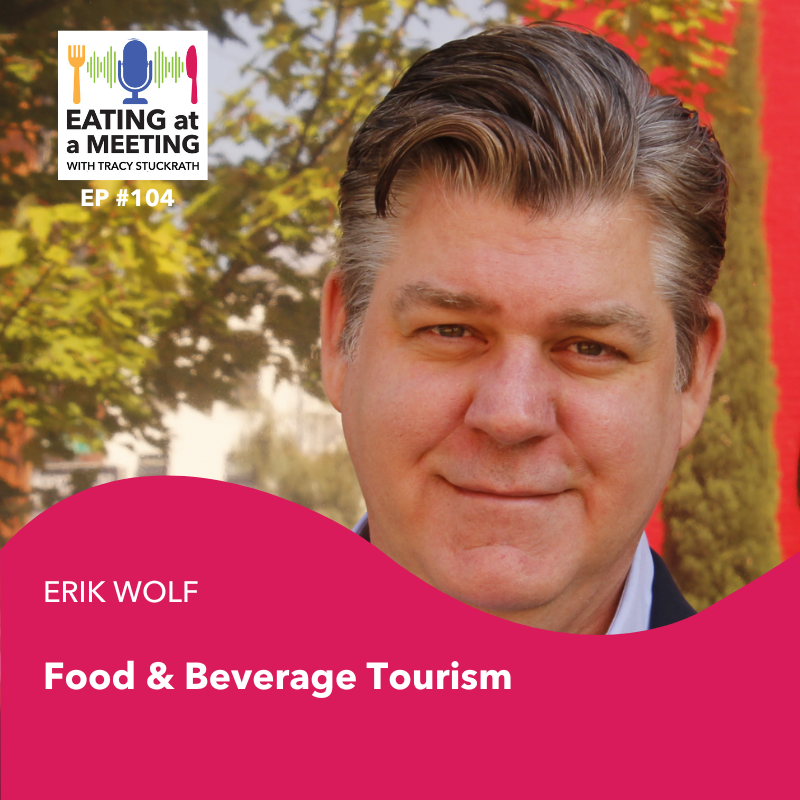
Curious about the power of food tourism? In this episode, I sat down with Erik Wolfe from the World Food Travel Association to explore why food is more than what’s on your plate—it’s culture, connection, and community. We covered how food and beverage experiences can elevate your events, encourage sustainability, and create authentic engagement for your guests. Whether you’re a meeting planner or a traveler, food is the key to unforgettable experiences and lasting impact. Check out the episode for tips to make your next meeting delicious and memorable!



Heard on the Episode
"Food tourism is the act of traveling for a taste of place in order to get a sense of place."
~ Erik Wolfe (00:03:35)
"People don't stop being vegetarian, vegan, gluten free when they're on vacation. It's something businesses are going to have to learn how to cater to." ~ Erik Wolfe (00:10:08)
"When you use food as communication...that's gastrodiplomacy."
~ Erik Wolfe (00:21:42)
Key Topics Discussed
Defining Food & Beverage Tourism
Meaning of food tourism and "taste of place"
The soul of a destination expressed through local food and drink
Trends & Shifts Post-Pandemic
Rediscovery of family food traditions and local cuisines
How culinary innovation and authenticity intersect in global travel
Plant-Based & Special Diets on the Rise
Plant-based cuisine’s place in traditional and modern menus
Events and venues adapting to dietary needs (allergies, vegan, gluten-free)
Designing Memorable Meetings & Incentives
Using unique local flavors and suppliers to surprise and delight attendees
The impact of food quality and storytelling on event reputation
Finding Authentic Food Abroad
Why food lovers skip TripAdvisor for inspiration
Power of social media, trusted voices, and research in food experiences
Sustainability & Food Waste
Responsibility of planners and venues
Upcoming guides for destinations and businesses on culinary sustainability and pandemic recovery
Gastrodiplomacy & Human Connection
How shared meals bridge gaps across languages and cultures
Food as a tool for negotiation and building relationships
Key Takeaways
Food tourism makes events memorable: Featuring local, authentic food turns attendees into ambassadors for your meeting or destination.
Culinary inclusivity matters: Accommodate plant-based diets, allergies, and preferences—guests don't leave those at home!
Quality outweighs quantity: Event food should reflect the culture and quality of the host destination, not just fill plates.
Sustainability is the future: Support local agriculture, manage food waste, and partner with small producers for a lasting positive impact.
Communication is key: Leverage food as a universal language—great meals create lasting connections.
Tips
Research local specialties: Go beyond hotel menus—engage local chefs and seek out dishes unique to the area.
Ask dietary questions early: Proactively plan for special diets to ensure all guests enjoy the experience.
Leverage word of mouth: Encourage attendees to share positive food experiences to boost your event’s reputation.
Engage small/local vendors: They offer authentic products and help support sustainable communities.
Label with care: Ensure menus are clear on allergens and dietary information to foster trust and safety.
Like what you heard? Subscribe to our newsletter for more episodes and insider content delivered right to your inbox!
Tracy Stuckrath [00:00:06]:
Welcome to the Eating at a Meeting podcast. I'm your host, Tracy Stuckraft, Dietary needs expert, Certified meetings Manager, Certified Food protection manager. I have searched the globe to find people and businesses who are creating safe, sustainable and inclusive food and beverage experiences for their employees, guests and communities. In each episode, you will find authentic conversations about how food and beverage impacts inclusion, sustainability, culture, community health and wellness. I know that sounds like a lot, but we're going to cover it all. Are you ready to feed engagement, nourish inclusion, and bolster your bottom line? If so, let's go. Hi everyone, it is Tracy Steckrath with Thrive Meetings and Events, the host of the Eating at a Meeting podcast, which is what you are listening to now. And if you're wondering where I am, I am actually in one of the storage units in the Hotel Contessa in San Antonio, Texas.
Tracy Stuckrath [00:01:08]:
I just arrived here to actually attend a food conference called Le Dome Escoffier four day Conference. And I got off a plane an hour ago and I'm here with Erik Wolf from the World Food Travel association and to talk about World what is food travel and what does that mean? So. And Erik is in Spain, so. Hi, Erik.
Erik Wolf [00:01:31]:
Hi, Tracy. Good to see you. I'm glad you made it to your, your live broadcast on time.
Tracy Stuckrath [00:01:37]:
I know it was, I'm like, oh my God. And it was like a nice easy ride in a lift to get here. So short ride as well. So. Yeah. And I kind of got kicked out of a meeting room and I'm like, where can I go? And the hotel put me in.
Erik Wolf [00:01:50]:
Well, for everyone listening this, the sound is actually better now. So we're not good.
Tracy Stuckrath [00:01:56]:
Okay, that's really good. And the fact that I have good wi fi is even better indeed. Okay, so Erik, you're the founder of the modern food tourism industry, the world's lead, which is the World Food Travel association and leading authority on food and beverage tourism. I love the fact that you published have work Pathfork, Will travel and are the author of Culinary Tourism the Hidden Harvest.
Erik Wolf [00:02:23]:
So.
Tracy Stuckrath [00:02:24]:
And you speak about food tourism on CNN and variety of other international BBC broadcasting associate broadcasting platforms. So tell us, what is food tourism? I know there's gastronomic tourism, et cetera. Is that all the same?
Erik Wolf [00:02:43]:
Well, it really depends on who you talk to and where you are in the world. So from our perspective, food and beverage tourism is synonymous with food tourism, which is synonymous with culinary tour tourism, which is synonymous with gastronomy tourism. However, depending on who you're talking to, people may disagree with you and some academics specifically may point out that food and beverage tourism is not the same as food tourism. We don't get that complicated. It just. It's awkward to say food and beverage tourism, it's way too long. And food tourism is just concise and everybody gets it. And you usually have beverages when you consume food as well.
Erik Wolf [00:03:21]:
So it just, it just makes sense.
Tracy Stuckrath [00:03:24]:
That makes total sense. And what is it? I mean, there's a nice definition of it that you guys defined on your website. Can you tell us about that?
Erik Wolf [00:03:35]:
Yeah, sure. We define food tourism as the act of traveling for a taste of place in order to get a sense of place. And for us, that really encapsulates what it's all about. Traveling for flavor. You want to get a taste of the destination and really getting to taste the terroir. And for us, terroir isn't just about wine, about the meat, it's about the bread, the cheese, the chocolate, whatever is made, grown or produced in that area. Everything has a terroir, and that's what it is. And if you ask other people, they're going to talk about room nights and customer spend and all of this stuff.
Erik Wolf [00:04:10]:
And you know what, whatever works for you. But we like to keep it simple here at the Association.
Tracy Stuckrath [00:04:16]:
And I love the fact that you get a sense of taste and. Because even when, of course, in not thinking about food and beverage, you want to get a taste of the city or the place that you're going, but the taste really adds to it because it is the flavor, the food and beverage of it.
Erik Wolf [00:04:33]:
Yeah, absolutely. It all comes down to the taste. I mean, taste is a very personal thing as well. And you know, you might have someone who really loves the hot and sour soup at this one restaurant, but you don't. And what's the reason for that? And it's because you have different psycho culinary profiles, which is a methodology that we came out with here at the association 10 years ago, I guess 11 years ago now. And it really explains how people have different expectations. And that's why you and your partner maybe go to a restaurant down the street and you loved it. Oh my gosh, it was the best food ever.
Erik Wolf [00:05:05]:
You know, best French, Japanese, Italian, insert cuisine here food ever. And you tell your best friend and they go, and they don't like it. And the reason why is because you had different psycho colony profiles or really different expectations.
Tracy Stuckrath [00:05:20]:
Psycho culinary profiles. That's an interesting term. I mean, because. Yeah, I mean, people like chicken parmesan and other people don't. And it's just, it's a variety of different things, so. But also with the city and the cuisine or why some people like Asian food and, you know, but others don't, etc. So I went on the line and I found out you do kind of a state of the industry for food and beverage tourism. And 2020 was a little bit of a woo.
Tracy Stuckrath [00:05:52]:
Let's throw it in there. So from 2019 to 2020 and 2021 and looking at 2022, which I'm assuming that you're working on now, you know, kind of what has. What has changed or what are you all seeing from your partners?
Erik Wolf [00:06:12]:
Well, we also like to focus on the positive here at the association. And so with all of this stress and crisis and anguish and all the bad things that have happened in the past two years, we want to look for the silver lining in the cloud and some of the fantastic legacies of the pandemic. The positive legacies of the pandemic, one has been that people are focusing more on their own culinary cultures. So what did we do during lockdown? We cook, cooked at home. We talked to our parents and grandparents and asked them about old family recipes. We borrowed old cookbooks and we practiced those recipes. And so it's really been a boon to help increase awareness of culinary cultures and people's appreciation for them. Just like we saw after the World Trade center bombings in 2001.
Erik Wolf [00:07:05]:
People cocooned and they went back to what was safe and comfortable. And that happened again to some extent with the pandemic, and people went back to what was safe and comfortable. And it's always about food and family.
Tracy Stuckrath [00:07:18]:
And do you think that. I mean, I can. That just makes me think of the mom and pop Italian restaurant in. Somewhere in Orvieto, Italy. Right. And who was using their family recipes? Probably. Do you think that a lot of restaurateurs will add those to their a little bit more or change them up a little bit, or do you think it'll just kind of focus on the flavors of that region?
Erik Wolf [00:07:46]:
Well, I think what you're seeing when people travel, there's. There's two things you can have the authentic food, which is is that that traditional recipe that you talked about? And I am about to sneeze, so I apologize for everyone. I'll meet myself when it happens. So you've got that authentic recipe that people would come for, and, you know, it's the old family recipe. You know, Nana made this kind of thing. But then you also have innovation in cuisine, and this could be fusion food or it could be modern renditions of more traditional dishes. I was in Portugal a couple of years ago, and I had what was called the traditional dish, and it was swimming in olive oil. It was just, I mean, I didn't know that olive oil is healthy, but the amount of olive oil was not healthy.
Erik Wolf [00:08:32]:
And I made a casual mark to my host. I said, you know, maybe we could look at doing a new version of the dish where we cut down on the olive oil. Well, that did not go over well. You know, it's, it's. You got, you got to cater to a modern diet. Right? I mean, appreciate the history of the dish, but. But times have changed as well, and. And I don't want to be able to ladle olive oil onto my food from the serving dish.
Erik Wolf [00:09:00]:
So anyway.
Tracy Stuckrath [00:09:02]:
Oh, my gosh, that reminds me of a story. I was skiing with my nieces and nephew, and we went to this little sandwich shop and I asked for steamed spinach, and oh, my God, it came down in olive oil. And I'm, I said, this is unedible. And my nephew's like, don't do that. You know, he got so mad at me for complaining about my dish, and I'm like, I can't eat that much olive oil. I mean, it was kind of gross.
Erik Wolf [00:09:27]:
Yeah, yeah.
Tracy Stuckrath [00:09:28]:
Yes. So since you work, you've traveled the world looking at this, this is what you do for a living. You work in a lot of diverse cultures around the world, and many of them are traditionally meat based. And knowing that goat is also the number one meat eaten around the world, how do you see the plant based movement meshing into those that we've actually seen blossom during this pandemic?
Erik Wolf [00:09:58]:
Well, and you had asked before what some of the trends were, and the idea of special diets and food allergies has only accelerated during the pandemic. People don't stop being vegetarian, vegan, gluten free when they're on vacation. And it's just something that businesses are going to have to learn how to cater to. There are many countries around the world that are heavily meat based. And even in some of these countries, I have asked the questions because I don't like to eat that much meat myself. And sometimes when I travel, when the intestines are brought out or the bowl balls or something, I get a little squeamish and then I start thinking about the animal and, you know, so I would rather have a plant based dish. But I think by asking the question in a meat based culture, it gets them thinking about change that needs to happen. But also there are plenty of traditional dishes that can be made in a vegetarian way.
Erik Wolf [00:10:59]:
So an example was, I think it's called keftides. It's a Greek dish that's normally made with meat, but then someone made it with carrots and. Okay, so it's not authentic authentic, but it was still delicious. And there's a woman that I travel with sometimes, we go to conferences and we, you know, we're usually invited out to dinner and we'll sit together. And she always orders vegetarian. And a couple times they've ordered regular, just off the menu. And everyone at the table always wants what she has because it always looks better. You know, I don't want the salmon roe in cream mixed up and I don't want the seafood product that no one can identify and I don't want the animal innards, you know, so give me those lovely roasted vegetables doused in olive oil and fresh thyme.
Erik Wolf [00:11:46]:
That looks really good to me. So I think that it is perhaps a little bit of a wake up call to some chefs and cooks around the world that not everyone is eating like that anymore. And I think as we start to look at the drain on the resources, like to produce beef, it requires something like a thousand liters of water for one pound of beef. You know, this isn't supportable anymore. And I'm not even sure that I want to eat meat grown in a lab. I think I'd just rather eat vegetables, right? Mushrooms or something else like a mushroom based product. So I think there was another man out of Ireland, John Mulcahu Mulcahy, who said that cuisines change every 80 years. And you said the food that you're eating today is not the food that your grandparents ate 100 years ago.
Erik Wolf [00:12:33]:
And I thought that was really interesting. So if we, you know, this, this whole vegetarian vegan movement has been really strong in the past maybe 10 to 15 years. Well, fast forward 100 years from now, maybe the majority of the food on planet earth will be vegetarian and meat will be a scarcity.
Tracy Stuckrath [00:12:51]:
Right, that's, that's really interesting because if you think about 100 years ago, that was World War I, I got my dates right. World War, you know, and World War II. I'm bad history buff, you know, and what were they eating then? Right? And lots of rationing foods and things like that. So. Which is kind of ironic as well.
Erik Wolf [00:13:12]:
Because we're, I mean, what happened to the chocolate mousses from the 1970s growing up? I remember, you know, we would go to a restaurant There would all be be chocolate mousse on the menu. And I love chocolate. You don't ever see that anymore, right?
Tracy Stuckrath [00:13:23]:
Yeah. And actually earlier this year, a guy found the menus, I think from the New York Hilton from like 50 years ago and was looking at the banquet menus that they were offering. And so I get him on to show those because it was really interesting to see what was in those banquet menus that meeting planners were having to choose from. So it definitely has changed from way back then. So how can meeting planners, based on what you do, how can meeting planners, incentive planners utilize the knowledge that you all have and food and beverage tourism to enhance their programs because they're taking people on, especially for incentive trips on these high end excursions, experiences to relish in getting a taste of that culture.
Erik Wolf [00:14:14]:
Yeah, well, I think it's important to keep in mind that everyone eats and drinks and food. Food is a universal experience. I mean, people just, people love food. And I always find it a bit disappointing when I go to a convention or a meeting and this standardized food service is served. I make a joke about the gratuitous trade show roll that is just this, this poor sad roll sat on a plate by itself, no butter or anything. And it's only served to you because they feel like you have to have a bread product with, with, you know, there has to be a carbohydrate with this dish. And, and it's just ridiculous. Like, why are you doing that? You know, no one wants to eat it really.
Erik Wolf [00:14:52]:
And people who are eating it probably shouldn't be eating it. It's just not good for you, you know, so let's do something more interesting with that. But I think that food, food can be the centerpiece of a meeting. I mean, think if you have a meeting of 300 people and they all go away as ambassadors for the destination saying, wow, we had a meeting in San Antonio and they focused on local foods, you know, so they did the whole Tex Mex thing, literally, Tex Mex, because it is Texas on the Mexico border and they actually featured some of the Texas wines from the FredErikksburg area nearby. And I got to tell you, I was blown away. I have never had conference food like that. That is what, that's the goal. That's what you want people to talk about and remember, or would you rather have people go home and say, how was the conference? Oh, there were some good talks.
Erik Wolf [00:15:40]:
Nothing about the food, you know, that's, that's not a success. The success is that word of mouth.
Tracy Stuckrath [00:15:46]:
Exactly. And food Inevitably is something that they talk about, whether it's bad or good. And you definitely want to make sure that it's the good aspect of it because that will hopefully their stomachs will bring them back. Right?
Erik Wolf [00:15:59]:
Exactly, exactly.
Tracy Stuckrath [00:16:00]:
So how do you, what are like I'm always searching for and trying to tell people, hey, find. When you're bringing events to a city and you don't have required food and beverage functions and people are allowed to go out on their own, you know, give them a list of the gluten free restaurants or the vegan restaurants or halal. But just in general, how do you find places to eat in a new city? You know, are you using tripit, are you using Rick Steves guidebook or how do you do it?
Erik Wolf [00:16:28]:
Well, I don't use TripAdvisor. I think that TripAdvisor is, it's what regular travelers use. You know, it serves their needs and it gives them ideas of where to go and what to do. But it's not what food lovers use. Food lovers get inspiration from a number of sources, one of which is Instagram. You know, food porn. We like looking at pretty pictures. Where is that from? Right? Or you know, that, that French toast that looks amazing.
Erik Wolf [00:16:53]:
Where, where was that picture taken? That's the first thing. The second thing is talking to our friends, family and colleagues. So people who go on a trip come back raving about a wonderful dish that piques our interest and then look at bloggers that we follow. So if you're a food lover, you're probably gonna have a couple bloggers, maybe, maybe 10 or 20 bloggers who you get their newsletters, you visit their websites, you get their posts. Maybe there's some RSS feeds, but you get that information in those ways. And then I think really in the past five years the influence of YouTube has been tremendous and we get some of our information from YouTube. There's a couple video bloggers, I can't say vlogger, it's not a word. So video bloggers that, that we really like.
Erik Wolf [00:17:36]:
One is a guy, Sunnyside. He's with the best ever food review show. The guy is absolutely hilarious and I love the way that he goes into, he gets into the food culture of the area and he, you know, some people are extremely superficial about the, their visit and it's more about them oohing and eyeing and making moaning noises and weird stuff. And no, he gets to know the people. You know, he interviews the people and he, if they, that language is an issue. He has a host who in the destination that speaks the local language and he really gets into it and it's really interesting. It's not a picture of someone walking around, oh, now we're going to have breakfast here. You know, not at all like that.
Erik Wolf [00:18:16]:
And I think the quality of his show and the production that they do is first rate. It's fantastic. I've watched other video blogger shows that are just like a couple, like a guy and a girl going around. We're in Istanbul right now. We're going to go into this kebab place. Okay, well, happy for you. Click.
Tracy Stuckrath [00:18:38]:
So I mean it's, it's trying to find that authenticity of even the travelers who are doing the reporting on the plane today. I found a show on television which I'd never heard of. Amazing hotels, Life beyond the lobby. And of course I didn't take a picture of their names, but one of them is a chef and one of them is a restaurant critic. And it was interesting to go behind because they each went in and worked these hotels. One would work in the kitchens and one would work in doing floral arrangement and things like that. But it's definitely, you know, a high end traveler that's looking for that. But, but finding those locations and finding those true authentic bloggers who do videos and Instagram as your influencers.
Tracy Stuckrath [00:19:27]:
Yeah, my friend Ali on, I think is one of those people. She travels with food allergies around the world so she teaches how to do that as well. But she's all about eating. So tell me, do you have any on that show? Just because it's in top of mind from an hour ago, what they were served to eat did not look kind of look like the innards that you were talking about earlier. Have you had any kind of experience where you tried the local food and you couldn't speak the their language and they couldn't speak English? How did it work out?
Erik Wolf [00:20:01]:
And yeah, yeah, Google.
Tracy Stuckrath [00:20:05]:
And it's not necessarily always the right thing.
Erik Wolf [00:20:07]:
Well, the thing is you may not necessarily have Internet access and you may be in a country where you can't download the dictionary like Nepal. Right. But I remember a meal I had, I was in South Korea in the town of Daegu, which is known as the restaurant city in Korea. And I met some colleagues, they took me out to dinner and we went to this, this Korean restaurant and their English was, was marginal at best. My Korean was non existent. So here we were in this restaurant and it was a couple words like here please, you know, and it was just not, you know, there's nothing to talk About. Right. But this is when you use food as communication.
Erik Wolf [00:20:48]:
So I remember that we had a lovely plum wine and it wasn't too much. You know, we weren't getting drunk or anything. But it was, it was just, it was very Korean, kind of quintessential Korean. And out came this dish, and it was seared ahi that was served with a side of toasted sesame oil with some toasted sesame seeds in it. And I had one bite of that and I was just on cloud nine. It was amazing. It was so tasty, so delicious, so full of flavor, so fresh. And they could obviously tell that I really liked it.
Erik Wolf [00:21:18]:
And so I think I ate a whole dish of that myself. And then they kept bringing it out and they were laughing, you know, and so we were, we were communicating because they saw like, you know, this fat AmErikan really likes our food. And it was funny. You know, we found a way to communicate. We. It was through hand language, sign language. But this is, this is using food and drink as communication. The gastro diplomacy is what it's called officially.
Erik Wolf [00:21:45]:
And it's the kind of thing where, you know, there's stories of. There was some UN type meeting where the. The leader of Belarus and the leader of Ukraine came together. And they weren't saying eye to eye, but then it was mealtime and this one bread was served. Well, it was the same on either side of the border, but this guy's grandmother made it slightly differently. Well, the two guys who were at loggerheads with each other, they started bonding over this bread. Right. And then all problems were erased.
Erik Wolf [00:22:14]:
They melted away and they became fast friends and the problems were resolved. That's gastrodiplomacy. I mean, there's also stories from World War I where the French and the German troops where, I guess, you know, the Allied and the. And the German troops stopped on Christmas Day and allowed each side to have its own Christmas celebration with Christmas food and everything in peace. And then they resumed the killing on the next day. But, you know, it was. That's like the tradition thing. So there's lots of examples of this that.
Erik Wolf [00:22:44]:
The use of food and drink as communication. And I'm not talking about things like the royal Korean meal where they put all these. Lots of dishes out on the. That's the royal ceremony. And it doesn't have to be the kind of food that you'd be served at an embassy of any of these countries. It is just the good, wholesome, authentic, traditional food served in a way that they're proud of.
Tracy Stuckrath [00:23:11]:
Yeah. And it's trying to find those dive. Dive local places versus off the, you know, off the beaten path, not in the, you know, tourism central.
Erik Wolf [00:23:21]:
Yeah.
Tracy Stuckrath [00:23:22]:
So that you're getting that authentic thing.
Erik Wolf [00:23:24]:
Yeah. Usually when, when you travel and there's the menu that's available in four languages, that's a pretty good sign that you don't want to eat there.
Tracy Stuckrath [00:23:33]:
Very, very true. And then there's hamburgers and french fries right at the top of the list. Yes, right. Yes, exactly, exactly. So, Erik, I know we're going to wrap this up within the 30 minutes, so I wanted to give you a little bit of time. I noticed, or and you told me too, you all are putting out two new guides, one on sustainability and one on food service recovery. Can you tell us a little bit about both of those and what you found out from them?
Erik Wolf [00:24:03]:
Sure, yeah. So for the food service one, it's 10 tips for food and drink businesses as they emerge from the pandemic. And it's just some, some ideas to help businesses to recover and some things that they maybe wouldn't have thought of necessarily before. So things like reminding them about food, food waste and the, and the packaging waste that, that they could be producing to be, you know, a lot of times supply chains were cut during the pandemic and they had to find alternate sources, including sources that were local. Well, keep those supply chains going, you know, continue to use those local suppliers so that, that kind of thing. So we've tried to, we've surveyed the industry and tried to figure out that the 10 best tips that other food service professionals around the world wanted to share with the industry. And then for the sustainability guide, it's 10 steps to develop a sustainable culinary destination. So it's for tourism offices and governments to help them to turn their destination into a culinary destination.
Erik Wolf [00:25:11]:
And it's not just, you know, oh, you should recycle, you know. Well, yes, you should recycle. But there's a lot more to it than that, the sustainability. There's that there's been a sea change in how destinations are managed. So before we used to call them destination marketing organizations and it was all about marketing. It was all about quantity. You know, heads and beds, how, you know, growth, you know that. What are this year's numbers? You know, how many more spend did we have? Customers, arrivals, you know, more, more, more, more is always better.
Erik Wolf [00:25:41]:
And now we're looking at quality instead of quantity and it's. And we're looking at destination management rather than marketing. So it's a quality of life issue where you're looking at the quality of life of the residents. You know, if we reduce the number of motor coaches that are allowed to park here, if we change the hours, the seasons that people can access the beach or whatever it is, or if we say that no more than X number of cruise ships can dock in our port each year, then you start talking about improving the quality of life for the residents as well. And so we've taken that from a food and beverage tourism perspective and said, well, look, if you want to become a sustainable culinary destination, then you should consider these tips. And they can download both of them from our member community.
Tracy Stuckrath [00:26:30]:
Okay, that's awesome. One of the. I was reading the guide the State of the industry from 2021, and Vancouver was in there. The gentleman from Vancouver, Royce Chuan. Yes, yes. And his piece was really good. And it kind of touched on a lot of that because. And I lived in Vancouver working for the Olympics in 2009 and 10, and it's a very walkable city.
Tracy Stuckrath [00:26:56]:
But, you know, and I. The way the convention center was designed was to preserve. Because it's built over the water to preserve the water culture underneath. But it really is making sure that the residents who are the ones who own the businesses that are serving the tourists, also glean from all of this as well. Not just the tourists. Yeah, yeah.
Erik Wolf [00:27:20]:
Vancouver. The Vancouver has an interesting challenge in that it's a very small central area that's surrounded by water on both sides. And then there's more land that continues. But then they also have this. This major obstacle called the US border about 10 miles south of the city. So Vancouver can't grow anymore. And then they also have this. This, the harbor and the mountains on the other side.
Erik Wolf [00:27:44]:
So it can't grow in that direction either. So it's kind of stuck. So when you have a finite amount of land like that, what do you do with it? And I always lamented the fact that they were converting a lot of the blueberry fields into residential home areas, because Vancouver, British Columbia, has some of the best blueberries in the world. They're just. They're just. Oh, my gosh, they're amazing. But when you start putting up these McMansions, right? And, you know, blueberries and a moss. It's all McMansions now.
Erik Wolf [00:28:10]:
Well, why. Why are we doing that? Why are we sacrificing the world's best quality blueberry so that we can put more bodies here, Right?
Tracy Stuckrath [00:28:21]:
Yep. Yeah. And it's something that we have to definitely learn to balance out. And. Which takes me to my Friend Judith, who I interviewed last week, and she's just. She and her husband are landless farmers that actually just secured land which has been procured, and it's on a conservation. It will never be turned into anything but a farm.
Erik Wolf [00:28:45]:
Okay.
Tracy Stuckrath [00:28:45]:
So. And that's a grant that received. And so thinking about preserving that, because having that agriculture actually helps our Earth as well, sustainability wise.
Erik Wolf [00:28:55]:
Well, Royce is a very smart guy. And that was. That was a fantastic interview. I highly recommend. Again, if anyone wants to download that report, it's available in our member community, which is members.worldfoodtravel.org you just sign up for free. Go to the publications tab and you'll see all of our reports there, including our Taste of Place reports.
Tracy Stuckrath [00:29:17]:
Awesome. Okay, so one final question, maybe two. If you could have anyone over for dinner, who would you have and where would you want to go eat? And they could be alive or dead.
Erik Wolf [00:29:30]:
Oh, my gosh, that's an amazing question. Wow. People. People that I, you know, gosh, I. There's a lot of people I'd like to invite over. I'd like to have dinner with Whoopi Goldberg. And I actually saw her at a restaurant when I lived in New York. She was across the restaurant dining room.
Erik Wolf [00:29:53]:
And I said to my friends, I said, I think that's Whoopi Goldberg. And they were busy with the menu. And then Whoopi saw me looking at her, and she just kind of nodded at me. And it was. She was so diplomatic how she did it. She just. She acknowledged me, but no one made a big deal of it. I didn't race over for an autograph or anything like that, but I thought she was so cool how she did that.
Erik Wolf [00:30:17]:
And, you know, like, someone like Helen Mirren, I think she is so awesome. I would just love to have dinner with her or, you know, someone kind of classic, like Sean Connery, you know, I mean, he could probably talk your ear off for hours about his life and everything and where to have dinner. I think I would probably ask them to choose. You know, take me to your favorite place, because I always love experiencing food through other people's eyes. You know, why ask me what I love and take me to a place that I'm going to look that you know, I'm going to love. Take me to a place that you love and introduce me to something new.
Tracy Stuckrath [00:30:54]:
I love that. That's really great idea. And Nancy just said, it's okay if you pick your grandma that you wanted to take to dinner, but. And actually, that's very funny, Nancy. Because today is actually take your parents to lunch today. So I should have actually asked you that question. Where would you take your parents to lunch?
Erik Wolf [00:31:11]:
But, well, if I had to take my parents to lunch and they were still alive and I had the means, I would probably fly them to San Sebastian, Spain, and we would go pinchos hopping. Have you been to San Sebastian?
Tracy Stuckrath [00:31:27]:
No, I've never been to Spain.
Erik Wolf [00:31:29]:
Okay, so pinchos are. That's what tapas are called in the Basque country. But in the Basque country, tapas that they do are an art form. So the pintxos are, you know, they're this tall. They're made with really high quality ingredients. They're substantial. So you can have three or four pintxos, and that's dinner. That's enough.
Erik Wolf [00:31:49]:
Not expensive. Wonderful food, wonderful camaraderie, and you can walk from place to place. You can enjoy a red wine. You can have the local chocolat, which is a very slightly effervescent white wine. Also, the cider, the hard cider from Basque country is wonderful. But just to walk around the town and enjoy the history and the culture and the. The Basque people, they're really a fascinating area. That's.
Tracy Stuckrath [00:32:14]:
So I'm definitely gonna have to come visit you in Spain. Okay. Brenda Anderson just posted Sean Connery. He started as a milkman in Edinburgh, Scotland, which is. Glad you posted that, because my story of Sean Connery is that I saw him in Nobu in, oh, where is the one and only club? And the Atlantis in the Bahamas. I saw him in Nobu in the Atlantis Hotel. So. Okay, everyone, we are on a time crunch on here, so we're not going to talk as long as we kind.
Erik Wolf [00:32:47]:
Of sometimes could do one more question. Tracy, you want to do one more question? Yeah.
Tracy Stuckrath [00:32:52]:
So my normal question is, what is your favorite food and beverage to eat and drink?
Erik Wolf [00:32:58]:
Oh, okay. Well, that's not real hard.
Tracy Stuckrath [00:33:01]:
Well, I hope it's not real hard.
Erik Wolf [00:33:02]:
You know, it is hard because I have. Well, if I had to pick a cuisine, it would be Italian, but I love Mexican food. I love Thai food, but again, I'm talking more of the traditional, authentic versions of these. And I love Levant cuisine, and I experienced Levant cuisine when I was in Jordan a few years ago. That's Middle Eastern.
Tracy Stuckrath [00:33:27]:
Okay.
Erik Wolf [00:33:28]:
But it's like Jordan, Syria, Lebanon, that part of the Middle east. And I experienced that cuisine. We were in Jordan a few years ago doing a project there, and the project stakeholders took us out to dinner, and every meal was just. Blew my mind. The quality of the Food, the quality of the meat, the quality of the vegetable, everything was just outstanding. And that's really where I got to understand what Levant cuisine was. You know, you can have hummus, but the hummus you get in the States is not the same. Right.
Erik Wolf [00:34:04]:
And the meat we were having was halal meat, which I had not had before. And I. Something about the flavor was different. I don't, I don't know what it was, but. And then similarly, I was just in Istanbul in June of this year and I had some amazing food there as well. So that part of the world, I think is a fascinating. And Iran. I'd love to go to Iran for the food, definitely.
Tracy Stuckrath [00:34:28]:
Oh, Brenda Anderson, thank you very much for looking that up. Monica Galetti and Giles Corin, I appreciate that. So actually on that note, what you just said, Erik. So the World World Fair is happening in Dubai. I think it started October 1st and it runs through March. And there's a whole bunch of stuff being done on food. So maybe you and I can just meet there and I'll just do.
Erik Wolf [00:34:55]:
Here's an interesting side note. On Dubai, of all the airport lounges I've been in in the world, the one in Dubai had the most amazing food spread.
Tracy Stuckrath [00:35:06]:
Really?
Erik Wolf [00:35:08]:
Wow.
Tracy Stuckrath [00:35:11]:
I interviewed a woman last year or earlier, it was last year. And she's the first certified kosher. She's Jewish, but she's kosher caterer in Dubai. And so she's teaching all of the hotels and chefs there how to do it because they're getting influx of kosher of Jewish people into the region because of the opening of the borders. So it's really, really interesting. So it would be really nice to experience all the different food options there.
Erik Wolf [00:35:40]:
That whole part of the world, it has some undiscovered. I mean, there's so much potential there. I also do work with the Saudi Arabia Ministry of Culture. Culture, the Culinary Arts Commission. And I'm starting to learn about some of the things that the kingdom is known for, like coffee. Did you know about that in Saudi Arabia? The I, I might get this backwards, but the. If you go from the south to the north, the coffee gets stronger as you go north. So the coffee in the south is very light, almost like tea.
Erik Wolf [00:36:10]:
And then you go to the north part of it. And you know, who knew this, right? And I, they've been presenting these different dishes, like what's going to be the national dish of Saudi Arabia? And all these things that Westerners have no idea about. And you know, you talk about people who have been to France And Spain and Italy a thousand times and are looking for the new and different. Well, the new and different is going to be these countries that people have just started hearing about or that have just opened their borders or that have finally achieved peace. Like, you know, there hasn't been a war for 20 years. You know, those are the types of places I think that are going to be the most interesting food. Like Georgia, the Republic of Georgia. Let's go there and have some of that 7,000 year old wine history and that old Georgian pizza.
Erik Wolf [00:36:53]:
You know, let's have it with. And that, I mean, that you couldn't go to Georgia 30 years ago. Right. But now you can.
Tracy Stuckrath [00:36:59]:
Right, right. And I think that's to be one of the things people are wanting to get out of their houses and hopefully we can. But we also need to travel respectfully at the same time as we're doing this, because as we were talking, we don't want to bombard cities as much as we did in the past. So.
Erik Wolf [00:37:17]:
And that will help distribute travelers as well. So if everyone is not racing to get to New York, San Francisco, London, Paris, Orlando, and people are saying, well, no, we're gonna go to, I'm gonna go to Raleigh, I'm gonna go to Savannah, I'm gonna go to Chattanooga. These are all AmErikan smaller towns people for.
Tracy Stuckrath [00:37:35]:
Right.
Erik Wolf [00:37:36]:
But you know, we're gonna, we're gonna go further afield. We're gonna go into the deep South. Right. Mobile, Alabama, and get off the beaten path. And I think that you can always get to New York, but do something different. Have some different stories and different photos to share.
Tracy Stuckrath [00:37:53]:
Exactly. And Christina just said, love new and different so much to discover. You were so right, Christina. And I think we just need to travel and eat well and eat safely. Of course, if you've got food allergies and other dietary needs. But I think you can do that, you know, successfully if you, if you do it proactively. Right.
Erik Wolf [00:38:13]:
So actively and successfully and I think respectfully as well.
Tracy Stuckrath [00:38:17]:
Right, Exactly.
Erik Wolf [00:38:18]:
Oh, add sustainability.
Tracy Stuckrath [00:38:20]:
Sustainability, yes, exactly. Oh, Erik, thank you so much. I really appreciate you being on the show with me today. Everybody, Erik Wolf with the World Food Travel Association. Check it out. I put his Instagram handle there and link there and the website link and you become members and you can come become ambassadors as well.
Erik Wolf [00:38:43]:
We have an ambassador program. In fact, Brenda, who's in the chat right now, she is our ambassador in Scotland.
Tracy Stuckrath [00:38:48]:
Oh, awesome. And Brenda, we need to talk because I did go to Edinburgh for my, My niece was in the fringe festival. A couple of years ago, and it was so fun.
Erik Wolf [00:38:58]:
I've been to that festival. That festival is fun. Yes, it is.
Tracy Stuckrath [00:39:01]:
It is very, very fun. All right, Louis. I'm looking to do a project on food waste, and through the papers I read and discovered how much food waste affects the environment. Yes, sir, it does. How much do you think food waste and the growing concern for food security will affect future trends?
Erik Wolf [00:39:18]:
Well, I think if you look at some of the data put out by the U.N. they have things like, you know, 30% of between 30 and 40% of the food in North AmErika and Europe that the food that is produced is wasted. So that's just, you know, imagine for every two trucks that that deliver food, you know, two thirds of one truck is just going straight to the dump. That's just mind boggling. And In Asia, it's 40 to 45%, which is also mind. Wow. I know, I know. And I think that maybe food has been too available or too cheap.
Erik Wolf [00:39:55]:
One of the things that people are saying is coming out of the pandemic is this idea of scarcity that suppliers have caught on that they can charge more, and now that they can, they're going to keep supply low in order to keep prices high.
Tracy Stuckrath [00:40:10]:
That's just mind boggling.
Erik Wolf [00:40:12]:
Well, it may solve the obesity problem.
Tracy Stuckrath [00:40:16]:
But it doesn't solve, you know, the scarcity of those injuries. And actually was reading an article on the way here, I texted it to my friend Jim Spellows about kitchens or no fridges, neighborhood fridges that are just being put out in neighborhoods and being managed by different neighborhood people, just people who need the food. And I'm going to post that story here, too, is on the counter, community fridges. And I just to help curb hunger, because all these people are still hungry and they can't afford that higher priced food.
Erik Wolf [00:40:52]:
So, yeah, and, you know, we make a flippant joke about it, but it is a very real issue, not just in the developing world, but also in the United States. I mean, there are plenty of hungry people. And I continue to be amazed that there are laws in place that venues cannot donate leftover food, or there's certain rules, like if they can donate anything but meat, because meat could spoil. I think there needs to be some flexibility. So have people sign a waiver. Right. You know, you've heard about dumpster divers.
Tracy Stuckrath [00:41:23]:
Yep.
Erik Wolf [00:41:24]:
You know, it's. It's a thing. I mean, or the food that grocery stores dispose of because it's either close to the expiration date or the expiration date has just passed. I, I can't believe, you know, going to Europe, they, they're much different on the way they do expiration dates. In the States, you're basically trained that that expiration date, that that something transforms at 12:01am on the expiration date day and that food is no long. Right. And in Europe, it's not like that. You know, in Europe they give you a much longer Runway of time, but in Europe, when they put the date on something, that's.
Erik Wolf [00:42:01]:
That's it. Yeah. I mean, you might get one more day out of it, but that's pretty much the date. But in the States you don't have that. And there is, it's just, it's the mindset a paradigm shift needs to take place because of the food waste and gosh. And. Oh, that we could do a whole new show on that.
Tracy Stuckrath [00:42:19]:
Yeah. And then I also read something about somebody's coming up with a refrigerator that's going to tell you what food is going bad in your fridge and you need to eat it and come up with recipes on how to use it and things like that. Probably Google or somebody or you could.
Erik Wolf [00:42:31]:
Simply pay attention to what's in your fridge and.
Tracy Stuckrath [00:42:34]:
Well, that is true. That's just too hard, Erik. Too, too hard. But. And Louis, you need to check out in France, I think it is the law now that all grocery stores, they cannot dump their food, they actually have to donate it. So I definitely think it is moving in. I think hotels and convention centers, etcetera, Especially in restaurants, we're going to start trying to put more towards food banks, etc. But we have to worry about, you know, also get over the stigmatism that I'm going to get sued if I give them and they get sick.
Erik Wolf [00:43:07]:
Yeah.
Tracy Stuckrath [00:43:07]:
So the bill, the Bill Emerson Good Samaritan act actually protects you on that. So reach out to both of us and I'm sure we can both help you some more. But thank you everybody for being here today. Erik, thank you from Spain. I am in San Antonio in the Hotel Contessa. I have to thank the staff who put me in this closet. So I had WI Fi and just so you know, my computer is sitting on two high boy tables flipped overside each other. So I've got legs up here and legs down here and hey, what the heck.
Erik Wolf [00:43:40]:
The sacrifices you make, Tracy, to be a showbiz professional.
Tracy Stuckrath [00:43:44]:
Exactly. Oops. So much fun. So until next time, everybody check out the association. And until next time, stay safe and eat well. I appreciate you being here.
Erik Wolf [00:43:55]:
Thanks, Tracy. Bye everyone. It was a pleasure. Lots of fun today.
Tracy Stuckrath [00:44:00]:
Thanks for listening to the Eating at a Meeting podcast where every meal makes matters. I'm Tracy Stuckrath, your food and beverage inclusion expert. Call me and let's get started right now on creating safe and inclusive food and beverage experiences for your customers, your employees, and your communities. Share the podcast with your friends and colleagues at our Eating at a Meeting Facebook page and on all podcast platforms. To learn more about me and receive valuable information, go to tracystuckrath.com and if you'd like more information on how to feed engagement, nourish inclusion, and bolster your bottom line, then visit Eating at a Meeting dot.

Founder & Executive Director; Worldwide Ambassador, World Food Travel Association
Erik Wolf is recognized as the founder of the modern food tourism industry and the World Food Travel Association. He is a highly-sought speaker, thought leader, strategist and consultant, in the US and abroad, on food and drink tourism issues, and is considered the go-to resource on food and beverage tourism for a wide variety of media outlets that include CNN, the BBC, the Wall Street Journal, Newsweek, NBC, Forbes, Click by Booking.com, PeterGreenberg.com, Huffington Post, the Australian Broadcasting Corporation and many more. He advises leading global brands such as World Travel Market, Absolut, American Express, Disney, Marriott and Royal Caribbean, and organizations such as UNESCO and UNWTO. His articles, research and books have been translated into dozens of languages.