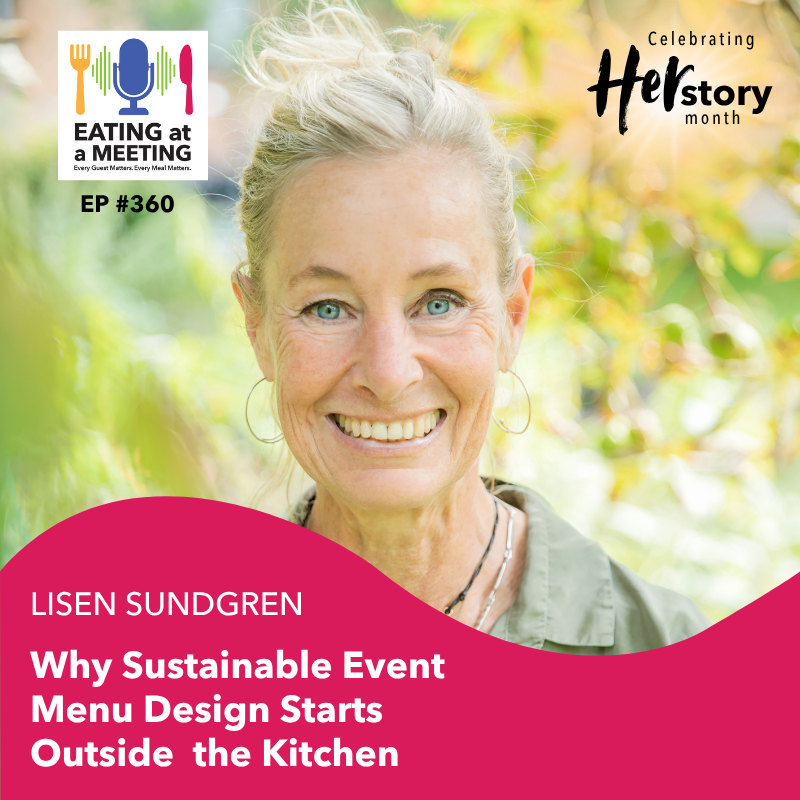
Why Sustainable Event Menu Design Starts Outside the Kitchen
What if the most interesting ingredient at your next event was already growing just outside the venue?
I've been thinking about this lately — and then Lotta Giesenfeld Boman introduced me to Lisen Sundgren, and honestly, she made it impossible to think about anything else.
Lisen is my guest this week on Eating at a Meeting Podcast LIVE — and she is the perfect person to kick off Women's HERstory Month as our very first honoree.
She is a Swedish herbalist, forager, and author based in Stockholm, but joining me from Nepal. She has spent more than 30 years teaching chefs, curious eaters, and anyone who will listen about wild edible plants — the ones that have shaped human diets forever and that most of us walk past every single day without a second glance.
She has foraged for some of Stockholm's most celebrated restaurants and worked with Sigtunahöjden Hotel & Conference to weave local wild plants right into their menus. Not as a gimmick. As a genuine expression of place.
And that is exactly what so many of us are chasing when we plan events, right? A menu that actually means something. Food that tells guests where they are.
Lisen also leads foraging walks and forest baths as part of conferences and retreats. Fun!
There is real responsibility here, too. Safe identification, sustainable harvesting, knowing what you are serving and why — Lisen takes all of that seriously, and we are going to talk about it.
I promise this one will change how you look at the landscape around your next venue. 🌿


Heard on the Episode
"Without plants on this planet, right, we would not have the biosphere that is, you know, that creates oxygen and, you know, an atmosphere we can live."
~Lisen Sundgren 08:09
"We need bitter and sour and pungent...We need to eat bitters every day for our digestion to work properly and our livers to be happy and healthy."
~Lisen Sundgren 11:06
"There is this concept called plant blindness...we don't see the plants that are around us and we can’t identify them, and we don't recognize them as beings..."
~Lisen Sundgren 09:34
"Start with one plant. You don't have to know 200 plants. Learn one plant. Start with dandelion."
~Lisen Sundgren50:38
Key Topics Discussed
The Real Start of Sustainable Menu Design
-
Why wild plants and foraging matter to event menus
-
Sourcing from local foragers, not just farmers
-
Bringing producers and experts into chef conversations
Foraging for Events
-
How top chefs collaborate with foragers for flavor and story
-
Urban vs. rural foraging for kitchens and conferences
-
Balancing sustainability and abundance in wild harvesting
Food Safety & Legalities
-
Edibility, guest safety, and why “plant ID” is non-negotiable
-
Navigating laws and permissions for foraged ingredients
Education & Guest Engagement
-
Breaking “plant blindness”: teaching teams and diners what’s on their plate
-
Demystifying “weeds” and edible flowers for a more inclusive experience
Skill, Seasonality & Menu Planning
-
How to build a pantry that’s wild, seasonal, and practical
-
Timing, knowledge, and the craft of responsible foraging
Key Takeaways
-
Sustainable menus start with sourcing: Connecting directly with foragers and wild food experts brings local flavor, nutrition, and unique stories to the table.
-
Education is power: Teaching culinary teams and guests to recognize and appreciate foraged foods deepens both sustainability and event experience.
-
Responsible foraging is a must: Knowing what (and when) to harvest, avoiding over-picking, and respecting the environment ensures long-term abundance for people and pollinators.
-
Add just one wild ingredient: You don’t need to rewire your entire menu—one new (safe, seasonal) wild plant can elevate a dish and spark conversation.
-
Urban foraging is viable: Great wild foods are closer than you think, even in city parks—if you know where, when, and how to look safely.
Tips
-
Bring in Local Foragers: Ask your venue or culinary team about local herbalists or foragers—start conversations before you start menu planning.
-
Taste, Teach, Repeat: Host kitchen tastings of wild ingredients so chefs, planners, and staff can experience the flavors and stories.
-
Safety First: Only use foraged foods you can positively identify—and never harvest from sprayed or contaminated areas.
-
Embrace Seasonality: Build menus around what’s truly in season and consider preserving wild flavors in oils, vinegars, or pickles for year-round use.
-
Educate Your Guests: Highlight wild and foraged ingredients on menus and buffet signage, and consider short tableside stories or cards for unfamiliar items.
-
Start Small: Pick one wild plant (like dandelion) to introduce into salads, sides, or even drinks.
Like what you heard? Subscribe to our newsletter for more episodes and insider content delivered right to your inbox!
Tracy Stuckrath [00:00:00]:
Foreign. Hey, everyone, and welcome to another episode of Eating at a Meeting. I am Tracy Stuckrath, and this is the sixth year that every March I have done something that is one of my favorite things to do, and that's celebrating women who are making herstery, as the little logo here says in food and beverage. Women who are growing, producing, sourcing, cooking, shaping a variety of different things in food that ends up on our event menus and our conference buffets. And this is my sixth year in doing it, like I said, and I am excited to actually design this. This year's honorees around the United nations designation of 2026 being the international year of the woman farmer. And when I learned that, I knew immediately that I had to do this this year. So I've done some searching globally because today's first guest is from Sweden.
Tracy Stuckrath [00:01:03]:
And I am excited to make these women visible. A lot of the honorees actually were nominated by women or people in food and beverage. I reached out to people that I know that run conference centers and convention centers and hotels and asked them who they utilize that are female farmers, ranchers, foragers. And so that is who I selected, actually. So I'm excited to bring you to my first guest here. And I'm gonna. This is my first time switching over here. Here we go.
Tracy Stuckrath [00:01:37]:
Lizzen Sudgren. She is with Life by Lizn. And I'm hoping. I'm saying that right. It's Lizn.
Lisen Sundgren [00:01:44]:
Very good.
Tracy Stuckrath [00:01:45]:
And she is from Sweden. But right now, I'm so excited to say this that she's in Kathmandu, Nepal.
Lisen Sundgren [00:01:54]:
Yeah.
Tracy Stuckrath [00:01:55]:
So it's so strange. It is so strange. But I'm so excited about it. So Lizzen is a Swedish herbalist, forager, and author who's based in Stockholm. And she has spent more than 30 years teaching chefs, curious eaters, and anyone who will listen about wild, edible. Wild. First of all, edible plants, the ones that have shaped human diets forever and that the most of us walk past every single day without a second glance. And she was nominated by my friend Lotta Bowman, and I cannot say her convention conference center's name.
Tracy Stuckrath [00:02:29]:
So do you know how to say the conference center's name?
Lisen Sundgren [00:02:32]:
Stick to Nahidam.
Tracy Stuckrath [00:02:33]:
Okay, there is.
Lisen Sundgren [00:02:35]:
There you go.
Tracy Stuckrath [00:02:37]:
Thank you.
Lisen Sundgren [00:02:38]:
Beautiful place, by the way. Yeah, yeah.
Tracy Stuckrath [00:02:40]:
Oh, I have no doubt. I have no doubt. So welcome to the show and. And thank you for allowing me to honor you.
Lisen Sundgren [00:02:49]:
I. I am so super grateful and excited to be here. This is such a. Yeah. An amazing thing. You're doing well.
Tracy Stuckrath [00:02:59]:
Thank you. I appreciate that. I. I It's been a lot of fun. And it started. I have no idea what.
Lisen Sundgren [00:03:05]:
I just.
Tracy Stuckrath [00:03:05]:
I lost all my notes. So it. This is my sixth year in doing this, so I'm so excited to be able to let everybody know about all these fabulous women who are doing great things, including yourself. So.
Lisen Sundgren [00:03:18]:
So thank you.
Tracy Stuckrath [00:03:20]:
My. Most people. And. And I know in my form that I said, you know, as a farmer, and you're like, I'm not a farmer. You're a forager. So. But I still think that's kind of the same. They bring the same aspects.
Tracy Stuckrath [00:03:30]:
You're. You're finding these products and. And I want to say nurturing them. So what took you on this path of becoming an herbalist and a forager? Can you take us back to that moment and tell us how plants became your calling?
Lisen Sundgren [00:03:47]:
Yeah, well, it's. It's a long story. I'll try to make it short, but okay. So I was young. I lived in New York. I studied acting because that was my dream to become an actress. And I lived in London and Paris, and I was super, super ambitious. Worked really, really hard.
Lisen Sundgren [00:04:05]:
I was doing well. But I got burnt out before the concept burnt out, even existed. Um, I had a sort of a nervous breakdown. And so I went back to Sweden. And the only thing I wanted, I mean, everything was just, you know, I. I was just not in a very good place. So the only thing that I could see very clearly was that I wanted to have my hands in the soil and my eyes overlooking the ocean. And the doctors couldn't do anything because in those times, there was no treatment for that.
Lisen Sundgren [00:04:38]:
So. So I went to a clinic where they only work with natural healing and plants. And after two weeks, when I was starting to get a little more curious about the world around me, it was the plants that were calling. I got curious about the plants that the doctors were using to heal me. And so I asked the doctor, can you tell me a little bit about these plants? And he was really smart, because what he understood was that when a person who's completely shut down suddenly starts becoming curious about the world around her, that's a sign of health and vitality coming up.
Tracy Stuckrath [00:05:17]:
That's awesome.
Lisen Sundgren [00:05:18]:
Instead of. Yeah. So instead of mansplaining, you know, he could easily just have, you know, explain things to me. He said, well, let's go to the library. I think the librarian has a few books for you. So he. We went there. She had a pile of books about herbs.
Lisen Sundgren [00:05:36]:
And I just read them, like. Yeah. Zoomed through them, and it just Went in like crazy, you know, and then I started getting. Asking about, well, I see these herbs outside in the herbal garden. Can I pick them? And he was like, yeah, yeah, yeah, go ahead. And so I went out and I said, I want to try these herbs. Can I make some tea? And I said, yeah, yeah, you go ahead. And so it was as if the plants were really calling me back to life.
Lisen Sundgren [00:06:02]:
I mean, literally calling me back to life. And then I started working after that at a biodynamic farm called Rosendal's Garden. And if you ever go to Stockholm, I suggest you go there. It's a biodynamic farm in the middle of the city. Well, in a national park. And as an intern and the thing that caught my attention the most out of all the work that we did, working outdoors all day, having a regular rhythm with, you know, know, meals and work, which was really good for me, it was the plants that. That really caught my attention and that caught my focus. And from there I went on, you know, to learn how to make healing bombs and salves with herbs and that.
Lisen Sundgren [00:06:42]:
Then I got obsessed with that, started selling my sales, and eventually started a skincare brand. And then eventually, yeah, so went studying and went back to New York to study some more and. And then finally came back to Sweden. Yeah. Long story, but, yeah, well, that's.
Tracy Stuckrath [00:07:01]:
That is so cool. So it was really. Go ahead.
Lisen Sundgren [00:07:06]:
Yeah. So it was really the plants choosing me. And I hear that from a lot of plant people, right. That it's like, it's. It's. It's not like you wake up one day and say, hmm, I'm going to work with plants, especially wild plants, and start foraging restaurants. No. Is.
Lisen Sundgren [00:07:21]:
This is a calling they call you.
Tracy Stuckrath [00:07:25]:
So. Okay. And my friend Lori, who used to live in Alabama, now lives in Detroit, but she. She got her Foraging for mushrooms her certification for that. Yeah. Because that's Can. Well, I'm assuming both can be quite dangerous, you know, for picking the wrong thing, but knowing what to, you know, what to do. So, you know, and most of us walk by those plants every single day without a second thought.
Tracy Stuckrath [00:07:51]:
So what is the first thing that you. Us to understand, to know about what's growing right under our feet, and that. That got you so intrigued. I mean, I find that fascinating.
Lisen Sundgren [00:08:02]:
Yeah. Yeah. Well, first of all, we are because of plants.
Tracy Stuckrath [00:08:07]:
Okay.
Lisen Sundgren [00:08:09]:
Without plants on this planet, Right. We would not have the biosphere that is, you know, that creates oxygen and, you know, an atmosphere we can live. But also the. The. I think the first thing that caught Me was that, wow, this is food, this is medicine, and it tastes good. And just going out and finding the plants is like. It makes you feel good. You know, it.
Lisen Sundgren [00:08:31]:
It makes you. Puts you in the moment, because you cannot. If you walk out and look for plants, you can't have your mind full of work and business and. And all goings on. So you have to be really focused on what's on the ground. And then you find the patch of what you're looking for and you get this dopamine kick. And.
Tracy Stuckrath [00:08:50]:
Ah.
Lisen Sundgren [00:08:50]:
Y.
Tracy Stuckrath [00:08:51]:
You kick it, pick it.
Lisen Sundgren [00:08:51]:
And then suddenly you start hearing the birds and you feel the sun on your back and you're completely, completely in the moment, just with the plants. And it's just. It's something that. When I discovered that, I felt like this is something that I want everybody to experience. Yeah.
Tracy Stuckrath [00:09:10]:
And I'm going to make a joke, but it's like, it's more than food. Yeah. Yeah. Well, no, and that's. That's all that. And we see animals eat all that stuff all the time. Right. But I was going to make a.
Tracy Stuckrath [00:09:24]:
Make a. Might kind of make light of it, but it's like Julia Roberts and. And Richard Gere and Pretty Woman's like, it's more than just popping a squat and putting the feet in this. In the grass, you know?
Lisen Sundgren [00:09:34]:
Yeah, yeah, yeah, yeah. And also, you know, there is this concept called plant blindness. I don't know if you've heard about it, but it's the concept that we don't see the plants that are around us and we can't identify them, and we don't recognize them as beings, and we put them below humans and other animals as lesser beings, when in fact, they're not. They're really smart beings, you know, they're intelligent, they're sensitive, they're sentient beings, you know, so it's just really fascinating. And just look at a plant like dandelion. What do people do with dandelion? We blow.
Tracy Stuckrath [00:10:17]:
Well, the ones with the puffy tops. We blow them off.
Lisen Sundgren [00:10:19]:
Yeah, we blow them off. But you also cut the lawn because you want to get rid of the dandelion. Right? That's what most people do. Yeah.
Tracy Stuckrath [00:10:27]:
So.
Lisen Sundgren [00:10:27]:
And dandelion, first of all, is great, really important food for pollinators, but it's amazing food for us. Oh, yeah. I mean, dandelion leaf is like. If you go to a farmer's market in, say, Paris, even when I was living in New York, I would go to the farmer's market and literally buy dandelion leaves because they're so full of minerals and they're. And we need to eat more bitters. You know, in the west, we're so used to, you know, our. We're so used to. We want everything to be sweet or salt, but we have.
Lisen Sundgren [00:11:06]:
We need bitter and sour and pungent. We, you know, we need all the five flavors, and we need to eat bitters every day for our digestion to work properly and our livers to be happy and healthy. So dandelion is like, it's free food. It's delicious. Once you get used to the bitter taste, which is just an acquired taste, eventually you start craving it and it's abundant and. Yeah, yeah, it's. It thrives where humans are. So obviously it's like, hi, here we are.
Lisen Sundgren [00:11:47]:
Use me. And. Yeah, so. So you can really use them for salads or like, if you go to Greece, you get something called horta, which is. Means like green leaves. But it's a dish with you. First you. You boil the.
Lisen Sundgren [00:12:04]:
The leaves and then you stir fry them in olive oil, garlic, and lemon. And that's like a green side dish. You know, like, you, like, you would use kale or spinach and you get that in restaurant.
Tracy Stuckrath [00:12:17]:
Yeah, I mean, but they're so tiny. I'm like, don't they, like, just shrivel up?
Lisen Sundgren [00:12:22]:
No, no, actual leaves, they can actually be. If they grow in the shade, they can be quite big.
Tracy Stuckrath [00:12:28]:
Oh, wow.
Lisen Sundgren [00:12:28]:
So in the beginning, early season, you know, they look like. There's like serrated leaves. And if they grow in the shade or later in the season, they grow. Grow quite, quite big. So if you, you know, people say, oh, it's so time consuming to forage, but if you forage for yourself, you know, you go out for a walk, pick, you know, maybe 10 dandelion leaves, maybe some chickweed, maybe some pigweed, I don't know, bring it home and you rinse it and you have a salad. Takes 10 minutes.
Tracy Stuckrath [00:13:02]:
Okay. Now, I'm not complicated based on where I am. I'm like, I'm scared of who's gonna. Who's got pesticides on their lawn to kill those dandelions. So I'm not gonna.
Lisen Sundgren [00:13:10]:
Exactly. Exactly.
Tracy Stuckrath [00:13:12]:
Yeah.
Lisen Sundgren [00:13:12]:
So you be had to be mindful of. That's one of the things I have to think about when you, when you pick wild plant or edible plants. We don't want. Want them to be sprayed with anything. Right, right, right. So, yeah, So I just want people to understand, you know, and the root has been used for. For decades as a Medicine to treat liver digestion. Prob.
Lisen Sundgren [00:13:35]:
Digestive problems in liver. And the leaves are also, if you use them as a tea, they're. What do you call it? Makes a pee diuretic.
Tracy Stuckrath [00:13:45]:
Oh, okay.
Lisen Sundgren [00:13:48]:
Yeah. So, I mean, these are. And you can take the buds and stir fry them, and you have a really nice stir fry. You can put that in an omelette, really delicious. And you can make jam or syrup from flowers. So, I mean, it's food, it's medicine, and it's nutritious, and they do good where they grow, you know, because the roots bring down oxygen in the ground, you know, so it's just in the soil. It works the soil. So they're good.
Tracy Stuckrath [00:14:16]:
You know, that's so interesting. I would never have thought to eat the dandelion in my yard.
Lisen Sundgren [00:14:23]:
I know.
Tracy Stuckrath [00:14:24]:
Yeah.
Lisen Sundgren [00:14:25]:
And this is what I love about what I do, is just showing that the very obvious things that we have around us that people take for granted and don't even see, it's like, ah, it's a treasure.
Tracy Stuckrath [00:14:37]:
Well, and. And my next question is jumping to restaurants because you forged some of Sweden's most acclaimed forged for some of Sweden's most acclaimed restaurants. And I know you do that for Lada's conference Center as well. But what. What does that collaboration look like from forest to kitchen? But. And, and I. I lost my original idea. But yeah, answer that question.
Tracy Stuckrath [00:15:00]:
Maybe it'll come back to me.
Lisen Sundgren [00:15:02]:
Well, it's usually I get a list of what they want and how much.
Tracy Stuckrath [00:15:07]:
Okay, okay.
Lisen Sundgren [00:15:08]:
Sometimes they're like, next week, can we have such and such? You know, sometimes do you give them
Tracy Stuckrath [00:15:16]:
a list of what you can. Can forage?
Lisen Sundgren [00:15:18]:
Oh, yeah, yeah, yeah, yeah, yeah. Okay. Absolutely.
Tracy Stuckrath [00:15:20]:
All right.
Lisen Sundgren [00:15:21]:
So I let them know what's in season. Yeah. Okay. And some of the. Some of them were really not knowledgeable, some weren't. So the ones who weren't, I would let them know, okay, this is the season. Maybe I'd bring in some samples so they could taste it if it was new to them. And.
Lisen Sundgren [00:15:37]:
And then from what was in season. And I love seasonable season. You know, cooking in season is what we also do, and it's when the food tastes the best and such. So. And then they choose from that. And I would forage, you know, a certain amount, and often they wouldn't need so much because it's quite, you know, it's not like they won't make a whole dish from it. But. But yeah, so.
Lisen Sundgren [00:16:02]:
And then I would go on my bike and bring my plastic bags and Go out and forage and. And enjoy myself and then take my bike back to the restaurant. And, you know, I'm like a bag lady. I, you know, it's like, here's the bags filled with greens. And I love watching chefs exploring, you know, opening, tasting, exploring the flavor. You know, I watch their. Their mind reeling, you know, going, okay, what can I do with this? But blah, blah, okay, this is really good season now, you know? Yeah. And then I come back and eat it.
Lisen Sundgren [00:16:38]:
And it's just what is brought me so much joy was how, you know, I bringing these weeds and then go and eat there and see what they make from it. You know, it's like the plants that people just walk by, take for granted or even worse, dig out or, you know, weed.
Tracy Stuckrath [00:16:57]:
Right.
Lisen Sundgren [00:16:58]:
Throw it out. That they just make the most amazing food from it.
Tracy Stuckrath [00:17:05]:
Wow. Well, okay, so you said weed, which makes. Takes me back to 1998. And in LA, and we were at the, I don't know, fancy hotel. I was planning an event, and my boss had told me, he's like, I don't want any weeds on my salad. On the salad plate, Tracy. Because it was like when. When wild greens were starting to come in.
Lisen Sundgren [00:17:25]:
Right.
Tracy Stuckrath [00:17:25]:
Like, people were starting to experiment that and put that on plates way back, 26. Oh my God, 28 years ago. And he's like, I don't want any of that. He's like, can I just have some iceberg lettuce right. On a plate? But they do have, like you just said, they have so much more nutritional value, especially over iceberg lettuce. Yeah, but what I just reminded me of the question that I was originally going to say. I'm like, as a chef, you can't put something on a plate that is not actually edible. Right.
Tracy Stuckrath [00:17:54]:
Like, you can't put a flower that is non edible. So if you do see a flower on your plate, like a dandelion or whatever, that means you can't eat it.
Lisen Sundgren [00:18:05]:
Yeah, yeah, yeah. And a lot of people are like, can you really eat this? And often on my. On my foraging walks, people ask, but can. How safe are wild plants? I'm like, well, it's the food we've been eating since the beginning of time. You know, we couldn't go to the supermarket. So it's. It's really exciting to see when the guests, you know, get the plate and it's like, it's, I don't know, gout weed or chickweed pesto or they get some rose petals. Oh, that sounds.
Lisen Sundgren [00:18:41]:
Yeah.
Tracy Stuckrath [00:18:42]:
Or like, so you can eat rose petals, too.
Lisen Sundgren [00:18:45]:
Oh, yeah, yeah, yeah, yeah, yeah. I take them because they're like the little white at the bottom of the leaf. You know, they're heart shaped like this. If you cut off the white, the white part is a little too bitter for most people. So I take them and then I cut them really fine and blend them into salads. Or if you make like. Yeah, yeah, it's.
Tracy Stuckrath [00:19:09]:
I have to come to Sweden and hang out.
Lisen Sundgren [00:19:13]:
Yes, I. I wanted to. And I wanted to come over for dinner or actually before dinner so that we go foraging. And it's interesting because I live in the city, I live in Stockholm, but I live near the big national park, the Royal national park, actually. And that's where I forage. And people say, oh, you have to live in the country. But actually I'm an urban forager. I live in the city.
Lisen Sundgren [00:19:37]:
And you have. As long as you're like 50 or 100 meters away from. From a road and in a park where they don't spray, you're fine. You know, you rinse everything. Some of it you're going to cook anyway, so it's safe. Yeah.
Tracy Stuckrath [00:19:52]:
Okay.
Lisen Sundgren [00:19:53]:
So.
Tracy Stuckrath [00:19:54]:
Oh, this is so fascinating. I'm so excited about this. All right, so working with Lada and her chefs at the conference center to incorporate these wild plants into their menus. What does that process? I mean, you just kind of described it. Like you said, you love watching them, like, taste it and smell it and. And feel it too, as well. Right. What has the g.
Tracy Stuckrath [00:20:19]:
What does that process look like? And a little bit more. And then what does the guest experience or response been to that? I mean, like, can I really eat that or do they explain that to them?
Lisen Sundgren [00:20:31]:
They explain it. Yeah. So the process. I was invited to Siktuna Hedan by Lokta and her colleague Liana a number of years ago, and. Oh, yes. And so I came to the kitchen and we decided to have a full day with the chefs or the whole kitchen staff, actually, also the service people. And so I would start explaining about foraging, what to think about. Like, we, we talked about, for example, sustainable harvesting.
Lisen Sundgren [00:21:04]:
It's like if you find a patch of something, don't take the whole patch, you know, Okay, a little bit. A little here, a little there. And. And you don't dig up roots. Well, you can if you own the. If you own the ground, you know, but on the land. And you're careful with trees not to break branches, stuff like that. So I would have a little talk and then we'd go out outside.
Lisen Sundgren [00:21:27]:
Siktar Nahidden because they have this beautiful green area and we didn't go far at all. And I would show them the plants that are in season. So we would do this in two different seasons. Seasons, I think the first time. And they would. I would let them taste and explore. And I encourage them to taste and not immediately go, this is good, this is bad. But really give it time.
Lisen Sundgren [00:21:53]:
And it's like, okay, this is a little bitter. But if I add vinegar or oil or salt or sugar, you know, and then we pick a whole bunch, I'd send them out and pick what they need. And then we had workshops in the afternoon and I let them cook whatever they wanted. Just start with the flavor of the plant and then they cooked anything they wanted. And we've been doing this for five or six years now. And every year it's just. They create the most amazing food and beverage. They've also been making cocktails and.
Lisen Sundgren [00:22:28]:
Yeah. And non alcoholic drinks. Yeah. And last year, because we realized that they don't have time to go out two hours every day to forage, obviously, because they work in a restaurant kitchen, you know. So we decide. I suggested they build like pantry to have make oils and vinegars and. Oh, that's a good idea. Yeah.
Lisen Sundgren [00:22:54]:
And dried herbs and so that they could add something wild every day, but without having to go forage every day. And that's working really well. And to make pickles or ferments and stuff like that. So that's been working really well.
Tracy Stuckrath [00:23:09]:
Yeah, that would be really interesting to add those because I love like getting pickled garlic or whatever. But to add one of those flavors of those herbs into it. Yeah, that would be pretty cool. Yeah. Because I actually decided I don't like plain pickled garlic. I like it with some flavor to it.
Lisen Sundgren [00:23:27]:
Yes, exactly. We can have like pickled spruce buds, for example, to add that to, you know, you don't have to have a whole wild meal, but just to add a touch. Imagine you have serve game, say, I don't know, boar or something, and then to add a little bit of pine, then you have the forest there. You know, a touch of the forest.
Tracy Stuckrath [00:23:50]:
All right, so now that you just made me, I don't know why this just popped into my brain, but I went to a. A cocktail class at Slow Food Terra Madre, the solange. It was back in 2018 in Turin and they were actually doing that. They were talking about foraging and putting that into cocktails. I need to go back and look at that. Yeah.
Lisen Sundgren [00:24:12]:
Yeah, you do. You should. Because because it was. I haven't.
Tracy Stuckrath [00:24:15]:
Yeah.
Lisen Sundgren [00:24:16]:
Yeah. She wrote two books about cocktails, Wild cocktails. Really?
Tracy Stuckrath [00:24:21]:
Yeah.
Lisen Sundgren [00:24:22]:
It's a big thing. Yeah.
Tracy Stuckrath [00:24:23]:
Oh, I would love to meet her, too.
Lisen Sundgren [00:24:25]:
Yeah, you should. You should. Yeah. But come to Sweden.
Tracy Stuckrath [00:24:29]:
I. I definitely need to. For sure. Yes.
Lisen Sundgren [00:24:33]:
Yeah.
Tracy Stuckrath [00:24:34]:
Okay. So foraging has. Is it growing. I'm assuming it's growing enormously in popularity. What excites you about that, but what also concerns you?
Lisen Sundgren [00:24:47]:
Yeah, well, I'm excited because it means more and more people are getting. Becoming aware of what's around us and nature and eating more natural foods and getting interested in herbs. So that's good. What concerns me is sustainable harvesting, being mindful, because, you know, the plants aren't there for us. We. They. In a way they are because we can eat them and. And that's how it should be, but they also.
Lisen Sundgren [00:25:23]:
We can't just go out and grab everything, you know, like we've done with everything else in all natural resources, you know, because if you take everything in a patch, it's not going to come back next year. And also there are other animals and insects that are dependent on these plants. So, you know, so that. There is that. And I've also. Because it's becoming. You know, when I started out 30 years ago, there were not many foragers, so. And.
Lisen Sundgren [00:25:54]:
And now, you know, for a while it was kind of trendy. But, like, with the mushrooms, you have to have knowledge about what's poisonous and what's a little bit poisonous, what's a lot very poisonous. And also what. There's a skill to it also the craft is knowing, like, when is the best time to take the pine spruce? When is the best time to take the pigweed? Like, when is it as. Or the gout weed or the nettle? I see. I've seen, like, people harvesting and just taking gout weed, for example, when they're way too old and, you know, thready, they're not tasty at all. You have to know, when are the dandelion leaves at their best, for example?
Tracy Stuckrath [00:26:43]:
Okay.
Lisen Sundgren [00:26:44]:
So that. That's the skill and experience, you know. Right.
Tracy Stuckrath [00:26:48]:
Well. And you said nettles and stinging nettles, do not touch them with a bare hand. Let me just tell you that, because I did that. But my friend Steven Satterfield in Atlanta used to buy them from my friend Lori, and he would put them in the Vitamix with oil or whatever, cook, cook them and put them in the Vitamix and he made pasta with it. And, like, that was amazing. Yeah, it's Delicious. Yeah. Don't touch them with your bare hand first.
Lisen Sundgren [00:27:16]:
Yeah. And if you do, it's not dangerous, it will burn. Well, I can do long talk about that. But. But that's. It actually increases circulation and it's kind of fun. But it's like a superfood. Nettles.
Lisen Sundgren [00:27:30]:
It's the most nutritious wild plant you can imagine. It's got all the vitamins you need, it's got minerals, it's got, it's got proteins, it's got. I mean, it's just, it's a superfood and you can eat it. Nettles are. And you can find. It's so interesting because I'm in Kathmandu, right. In Nepal. And I've seen this in India too.
Lisen Sundgren [00:27:54]:
They have nettles here, but they're much taller and they have much more aggressive needles. But what I. And they eat them. I made, I ate Nepali nettle soup the other day. It was delicious. And I see them here. We're in Boda. It's an area which is kind of Tibetan area, sort of old town kind of style.
Lisen Sundgren [00:28:18]:
And I see women in the street with selling. They have piles of nettles that they're selling everywhere. Yeah. So that's my new business idea. I'm going to go home and sell metals in the street. No, no. But yes. And, and they use it for soup.
Lisen Sundgren [00:28:38]:
And, and it really is, it's such. And. And that's another thing about some of these plants that I want to encourage people to use is like nettles, dandelions, chickweed. I mentioned these before. Lambs, quarters. They're so abundant. They're so abundant.
Tracy Stuckrath [00:29:00]:
It reminds me of two things. I mean, like going into an apothecary. There's a really cool apothecary in Colorado, Denver, Colorado. And I. All those words that you just said are up on the wall, you know, as dried things to put in your teas. Yeah.
Lisen Sundgren [00:29:15]:
Yes, yes.
Tracy Stuckrath [00:29:16]:
Yeah, I can see all those. Yeah. Yeah.
Lisen Sundgren [00:29:21]:
So. And I love that when I travel because Nepal, I've been to Nepal before, but it's still, you know, I'm still a stranger here and everything is, you know, it takes time to get to know a country. Right. So when I meet plants that I know, like I did today as I was walking up to a monastery and I was like, oh, there's Galen Soga. Oh, there's chickweed. You know, it's like meeting a friend you haven't seen in a long time. It's like, yeah, I feel safe.
Tracy Stuckrath [00:29:48]:
So.
Lisen Sundgren [00:29:48]:
Yeah.
Tracy Stuckrath [00:29:50]:
All right. So Karen sterling on. On LinkedIn just said flowers in salad is the best. Nasturia.
Lisen Sundgren [00:29:57]:
Yes.
Tracy Stuckrath [00:29:58]:
Is that right?
Lisen Sundgren [00:29:59]:
That Nestor. Nasturtiums. Yeah, they're. Yeah, they grow them here, too. It's a plant that we grow and it's. It's. It's. It doesn't grow in the wild, but it's really easy to grow and it's quite spicy.
Lisen Sundgren [00:30:11]:
It's quite tangy. It's very lovely using plants. And another thing about flowers and food is it makes you happy, makes you smile. Right, Right.
Tracy Stuckrath [00:30:21]:
Yeah.
Lisen Sundgren [00:30:21]:
So happiness is good.
Tracy Stuckrath [00:30:22]:
And.
Lisen Sundgren [00:30:22]:
Yeah.
Tracy Stuckrath [00:30:23]:
So, okay, what about fern? Because I have had fern, and when I was in the Philippines. Yeah, they actually grew fern. That was their farm. That's what they did. Oh, wow.
Lisen Sundgren [00:30:34]:
Ferns you should be a little careful with because some of them are cancerogenic. Um, so you have to know exactly which ones. So I don't use them. It's not something I teach or have in my walks because they can be hard to differentiate. But, yeah, they're delicious when you get the right ones. Well, it's not like you can eat it once. Yeah.
Tracy Stuckrath [00:30:55]:
When you're like, here's your meal and it's ferns. But that was. That's a whole nother.
Lisen Sundgren [00:30:59]:
Yeah. It's a little sip, right? Yeah, yeah, yeah, yeah. But it's fun.
Tracy Stuckrath [00:31:04]:
Okay, so you teach sustainable foraging practices. So for a meeting planner or hospitality person, if you're going to a conference center for the first time and trying to get this into a chef's things, how can we. How can we incorporate that into our events? And what do we need to know first about safety? Is there legality around it? I mean, you're in Sweden. What is. Do you know any. Are there any laws and.
Lisen Sundgren [00:31:30]:
Well, you can pretty much. We have something called alemanzretten. So Sweden is unique in that way. It means all men's right to access. So it means that we can forage as long as we don't dig up roots or break branches. We can forage pretty much anywhere. But that's different in every country. So you have to check that for your own country.
Lisen Sundgren [00:31:53]:
But if you have your own land, of course you can. Or if you have a farm. This is one thing that I'm really interested in is having farmers use their weeds to sell. I mean, they grow there. They're there anyway. Yeah. So you might as well make money from. Make a profit.
Lisen Sundgren [00:32:10]:
Right, Right.
Tracy Stuckrath [00:32:12]:
Yeah.
Lisen Sundgren [00:32:13]:
Yeah. And so I think. Yeah, it's knowing identification. Know your plants. Really, really know your plants. I've heard horror Stories. Not that anybody's gotten poisoned, but I heard about a chef, this is years ago, and he had found a white flower that he thought tasted like oyster, and he wanted to serve it with oyster. I heard the story secondhand, so I didn't meet him.
Lisen Sundgren [00:32:39]:
But it was a white animal. It's a little spring flower. It's not toxic so that you die, you know, but it can make you nauseated. You should absolutely not serve it in a restaurant, you know. So he was just like, yeah, I found this cool flower. I'm gonna. You know, it's like you had to really know your plans.
Tracy Stuckrath [00:33:02]:
Right.
Lisen Sundgren [00:33:04]:
I'm really adamant about that. What they look like, identify them and know when they're in season. And. Yeah, be mindful.
Tracy Stuckrath [00:33:13]:
So did he nauseate a bunch of his customers?
Lisen Sundgren [00:33:16]:
I think he didn't use it eventually.
Tracy Stuckrath [00:33:19]:
Okay.
Lisen Sundgren [00:33:20]:
So.
Tracy Stuckrath [00:33:20]:
So it was maybe a. Nauseating himself too much.
Lisen Sundgren [00:33:23]:
I. So he learned the hard way, which is what we do.
Tracy Stuckrath [00:33:27]:
Right? Yeah.
Lisen Sundgren [00:33:28]:
Um, but, yeah, so there is identification and. Yeah. And knowing where. Where to forage. So. And knowing, you know, that. That it's not sprayed or that there's too many dog walkers, perhaps.
Tracy Stuckrath [00:33:44]:
Right.
Lisen Sundgren [00:33:44]:
You know?
Tracy Stuckrath [00:33:44]:
Yeah, That's a different kind of spray.
Lisen Sundgren [00:33:46]:
That's a different kind of spray. And learning how to cook them, because that. There is a technique. Like, there was this one plant that has kind of peppery. At Siktunaheden, we've got. We find there's this one plant. I can't remember the English name now, but it tastes a bit like. Like mustard.
Tracy Stuckrath [00:34:06]:
Okay.
Lisen Sundgren [00:34:06]:
It's in the cabbage family, and the leaves are really tasty. And then this one chef, she was going to make like, a pesto from them, and it got really slimy, you know?
Tracy Stuckrath [00:34:19]:
Okay.
Lisen Sundgren [00:34:21]:
I don't know. I've used that. Let that. That leaf for so many times, and the flowers and the seeds, but I never used it in a Pestus. I didn't know that. So. So that's how you learn, right? No, you try it and then didn't work. So you don't try it again, you know?
Tracy Stuckrath [00:34:38]:
Right, yeah. Or use it in a different way. Exactly.
Lisen Sundgren [00:34:41]:
Using a different way. Yeah. She actually found a creative way to use it eventually, so. Yeah.
Tracy Stuckrath [00:34:46]:
Okay, cool. So how can you share a moment? I mean, going back 30 years probably, but share a moment when you realized what you were truly making an impact in. In this foraging and helping chefs and chefs realize the use of this.
Lisen Sundgren [00:35:04]:
I think this. A very proud moment was one of my books. I've written eight books on herbs and for herbs, four of them about foraging. So there's one called Villa Bookset, which means wild grown. And it was translated into Polish. And I was like, whoa, Poland, that's cool. And the publisher invited me to Poland to a literature festival. And I thought, who's going to come listen to me talk about nettle? And I, we had this interview, this open talk on, on a stage outdoors and the lawn was just filled with people and I was like, oh my God.
Lisen Sundgren [00:35:52]:
And we had, we had made plans for a foraging walk afterwards and they were like whole crowd following me. And we had also planned in connection with this for me to host a wild dinner at a restaurant. So I had discussed with the chefs beforehand. He was quite used to foraging. So, you know, we had created a menu and he wanted me to make all the drinks, to make non alcoholic drinks, beverages with each dish. And I'm not a chef, you know, I just make up as I go along, you know. So I was like, okay, I'm gonna make this. But it was, it was a lot of fun.
Lisen Sundgren [00:36:32]:
And so we served these, this food and the beverages that I'd made from these foraged plants. And I think that was really big aha moment for me. Another one was when I really, this was in 2012, I think, and foraging was not a thing, but I had been to California, I had studied in the States, I've been doing this since the 90s. And I was like, foraging is going to be huge. I knew it. And my publisher at the time, I made three books with them. They said, no, no, no, this is, it's too small of a niche, it's not going to work, it's not going to fly. And three times, me and my photographer and my chef friend, we were writing the book together.
Lisen Sundgren [00:37:17]:
We show them photos, recipes, they were like, no, no, no, no, no. So we went to another publishing house, Bonifakta, that I'm with now. And they were like, thank you for coming to us. Yes, we believe in this book. And they housed it. And it's. Yeah, it's still selling.
Tracy Stuckrath [00:37:32]:
That's so cool.
Lisen Sundgren [00:37:33]:
Yeah, it's very cool. And that was a big moment for me. That was a big breakthrough.
Tracy Stuckrath [00:37:38]:
And, and it's like finding your place, like they were the right publisher for you versus, you know, I mean, you. I think we all have to find our place in the world and, and that's awesome. So what kind of piggybacking on that? What is your greatest joy from what you do?
Lisen Sundgren [00:37:57]:
It's seeing that aha moment when people have Never tried fresh plant. Wild plants, ideally, if they're a bit skeptical, and they try it and like, oh, my God. Oh, my God. Like, there. There's this plant called pineapple weed, which is a great beginner's herb. It tastes like pineapple. And they taste it, and it's sweet and yummy, and they go, oh, my God. Seeing that, you know, when that happens, it's just, I.
Lisen Sundgren [00:38:29]:
I love. I. I really thrive on that.
Tracy Stuckrath [00:38:33]:
As you should, because, like, you're educating, and then when somebody is like a teacher and you. Your kid finally gets it right or understands.
Lisen Sundgren [00:38:41]:
Yeah, exactly. Exactly. Yeah. And there's that thing. Why. Why I think this knowledge is so important. It's not just for food, it's not just for nutrition, but also because if we become aware and get to know the plants around us and understand how precious they are and how our lives depend on them and how they're actually food, we become more conscious to preserve them, to make sure that they're around. We start understanding biodiversity.
Lisen Sundgren [00:39:09]:
You know, how can you understand biodiversity if you don't understand that there are many plants around you and your life depends upon them, you know?
Tracy Stuckrath [00:39:16]:
Right. So, yeah, I mean, and that kind of goes into the regenerative agriculture thing, you know, movement that's happening. And, like, we need. We need these wee weeds, we need these plants, we need the manure, you know, variety of different things. And I was chatting with a chef, or not a chef, but a farmer the other day who is moving towards getting that organic certification and. And what the process is to do all of that. And. And he realizes he's.
Tracy Stuckrath [00:39:46]:
He's 31, and he's really understanding what's on the land that he has, and it's really fun to watch him. So, yeah, on that note, you know, kind of like meeting planners, chefs, hotelier, event organizers, you know, the. There's time and skill that comes into this and knowledge that goes into, you know, responsibly sourcing with ingredients. And what would you like them to understand and know about that?
Lisen Sundgren [00:40:17]:
Well, I. I want them to understand that there is a skill and experience because, like, when you've done this for a long time, you know where to look for what, for example, you know, and like I said before, you know, when. When is the best time to pick something. And it takes time. You know, it really takes time. It takes time to grow things, too. In. In fact, of course, it takes longer to get a carrot because you have to grow it for months, whereas in adults, you can just go out and grab.
Lisen Sundgren [00:40:51]:
So you Know, it's all relative, but it takes time and skill and experience, and we should not take the plants for granted. So I think that's a really important thing to think about.
Tracy Stuckrath [00:41:09]:
Yeah, Yeah.
Lisen Sundgren [00:41:10]:
I think every meal should, like, I'm not suggesting that people go out and cook only with wild plants because it's too time consuming and there's no need but to add something wild to every meal. I think it does something really important to us because most of the food today that we eat, you know, it's. Yeah. You know, not all about the food industry and how sad it is. I don't even want to go there. But to get a plant to eat, a plant that grows where it wants to grow under circumstances, where it thrives, that has been exposed to rain and sunshine and moon and stars and sun and, you know, growing on its own terms, developing its own flavors, because the flavors often have a purpose for its immune system and defense against predators and stuff. I mean, that must be so much better for us than eating something that's been. Hasn't even grown in soil filled with fertilizers in a greenhouse.
Lisen Sundgren [00:42:18]:
It has never seen the sun or touched the rain. You know, what does that do with us? We are worried. Right. I'd rather be a little wild, then.
Tracy Stuckrath [00:42:30]:
Yeah, we all need to be a little wild. Yes.
Lisen Sundgren [00:42:34]:
Yeah, exactly. That's what I'm proposing. And independent and have integrity, you know?
Tracy Stuckrath [00:42:41]:
Yeah. Okay. So in doing this. All right, so it's women's herstory month. You know, what is important to you as a woman in the food and beverage industry in this foraging field as well?
Lisen Sundgren [00:42:55]:
Well, I. I mean, I've never had a problem as a woman, but I have seen men kind of make a bigger deal of themselves. I ask that we all be more humble, and I guess it's the same in, like, in Sweden. Since we too. Since me too. Me too. There has been a huge movement among women chefs that's really taking. It's really kicking off and creating sisterhoods and affecting actually, men in the industry to behave differently.
Tracy Stuckrath [00:43:41]:
Of course.
Lisen Sundgren [00:43:41]:
I mean, I work on my own, so I don't really have a problem. But I think in general, we just need to be. Because I'm a woman, I'm no lesser forager or because I wear lipstick, you know, I'm not. Not a lesser forager. You don't have to be, like, really cool and have tattoos and live in the forest to be a forager and be really knowledgeable, you know, because there is a little bit of that attitude. I find okay. You have to look. You have to look deeper.
Tracy Stuckrath [00:44:11]:
Yeah, no, I like that. And it's. And you're not this hippie person. You're. You're a very educated, knowledgeable person who's built this business and. And understands what she's selling. Yeah, yeah.
Lisen Sundgren [00:44:22]:
And also, you know, it was often, if you look at the hunter. Gatherers. Yeah, gather, hunter. It was often the women that did the gathering of plants, whereas the men did the hunting. So it is really a female. I'm not saying mention forage. I don't. I know some amazing male herbalist foragers.
Lisen Sundgren [00:44:43]:
So it's not. I'm not really, you know, making. There shouldn't be a division is what I'm saying. Right. You know? Yeah, but it is. Traditionally, it was the women that did the. The gathering. So we should be proud of that tradition, but share it, you know, Everybody's welcome.
Tracy Stuckrath [00:45:00]:
Yeah, yeah. No, I love that. Now, what has been one piece. What's the best career advice that you've ever been given?
Lisen Sundgren [00:45:08]:
Oh, wow. I. I can't even think of one. But I would say walk your talk because. Yeah, because a lot of people talk, but they don't walk.
Tracy Stuckrath [00:45:23]:
No, that's so true. Okay.
Lisen Sundgren [00:45:27]:
Yeah, I'll stick with that.
Tracy Stuckrath [00:45:29]:
What's the best thing that you've ever cooked with something you foraged yourself?
Lisen Sundgren [00:45:33]:
Oh, you know what? I. I gave that question a lot of thought, but I. I keep coming back to nettle soup. I mean, I love my nettle soup. Yeah. It's very basic. It's very simple. I mean, I've.
Lisen Sundgren [00:45:46]:
I made a lot of dishes. I. I mean, I have recipes in every book. But that is one thing that I really, really love and can eat over and over again.
Tracy Stuckrath [00:45:57]:
Okay, we'll have to try some. Yeah, yeah.
Lisen Sundgren [00:46:00]:
Well, you're. You're coming to Sweden, so.
Tracy Stuckrath [00:46:01]:
I am. Exactly. Yes.
Lisen Sundgren [00:46:03]:
Yeah.
Tracy Stuckrath [00:46:03]:
Yeah. Okay, so what is something that you've learned from words of wisdom that you. From a woman in your life? Your mother, your grandmother, your aunts, Lada?
Lisen Sundgren [00:46:15]:
Well, one woman that really has made a huge impact on my herbal life is a herbalist teacher. Phenomenal person, Rosemary Gladstar. She's an American herbalist. And I came across her in the 90s when I was living in New York and studied herbalism. And it was when I studied with her and another woman that I realized that this is not just herbalism, is not just about treating disease, but about. It's a lifestyle.
Tracy Stuckrath [00:46:48]:
Okay.
Lisen Sundgren [00:46:49]:
You know, and she really taught me to, you know, listen to the plants. And she says so many things. I can't think of one thing right now, but to. And to. Now we're close friends and I'm going to visit her in the States this summer and she's been to Sweden. Nice. But she's a role model.
Tracy Stuckrath [00:47:10]:
Yeah, yeah, no, that's fantastic. How do you. Based on your work, how do you want to be remembered?
Lisen Sundgren [00:47:19]:
Oh, my gosh, I want to be remembered by. Oh, she's the one who taught me to eat wild food, you know? Yeah, yeah. Because I'm all about, you know, I always do nature, forest. I'm also not nature and forest therapy guide. So I'm all about taking people out into nature, learning how to benefit, get the health benefits, which is also another benefit you get from foraging. So if I can encourage people to. To eat wild foods and, and more seasonal and. Yeah, then that's.
Lisen Sundgren [00:47:53]:
That's good enough. Yeah, yeah.
Tracy Stuckrath [00:47:55]:
No, I love that. Okay, I'm going to put up your contact. This has been so enlightening. I'm so excited about this. And we all need to be a little bit more wild. And I love. And I love that. Yes.
Tracy Stuckrath [00:48:06]:
All right, so here is your website and your Instagram handle. How can a chef get in touch with you? I mean, and do you work with them outside of Sweden or just in Sweden?
Lisen Sundgren [00:48:19]:
Sure, I did it. I did a thing once in South Africa with a chef. Oh, my gosh, his name escapes me at this moment, but we did a wild dinner at a vineyard at a wine producer's place, for example, so. So, yeah, you know, if you pay, I'll come. But I.
Tracy Stuckrath [00:48:44]:
But, Right, exactly.
Lisen Sundgren [00:48:46]:
But. But it needs to be in the northern hemisphere because I, I couldn't go guide a walk here in Nepal, for example, because now I'm just. I'm only just learning about the plants here. I have to. It has to be a place where I really know the plants and have a relationship with them. So North America works, Europe works. I've got. I get.
Lisen Sundgren [00:49:08]:
Last year I taught a workshop in Italy, for example, so. And that worked. I was a bit nervous before, but, yeah, it worked out.
Tracy Stuckrath [00:49:16]:
Yeah. Well. And I love the walks in the forest. Bathing, which is another. Just sitting in the forest and among the plants.
Lisen Sundgren [00:49:27]:
Yeah. Among wild things and the trees and just receive that. Yes, it's beautiful.
Tracy Stuckrath [00:49:33]:
You need to meet Cheryl, I don't know what her last name is, but that wrote the book Wild. Right. When she climbed. When she hiked from the California Trail. It's a movie that Reese Witherspoon was in, but.
Lisen Sundgren [00:49:47]:
Oh, oh, oh, oh, yeah, yeah, yeah.
Tracy Stuckrath [00:49:52]:
Just because it's called wild. So. Yeah.
Lisen Sundgren [00:49:54]:
Yeah. Wow. Well, there it is.
Tracy Stuckrath [00:49:59]:
I am so. Yeah, sight. Go ahead.
Lisen Sundgren [00:50:02]:
No, I was going to say yes to get in touch with me Instagram. My. My email is life by listenlifebylisten.com or you find it on my website also. Yeah. Or LinkedIn.
Tracy Stuckrath [00:50:14]:
Well, I. Or LinkedIn. Yes. I love having talked to you about. And I never actually said the title of the show, but why Sustainable event menu design starts outside the kitchen. And you've done a really good job of explaining, explaining that and under and putting that thought process into our meeting event plan or food and beverage brain. So I appreciate that.
Lisen Sundgren [00:50:38]:
And also, I just want to add, if it's scary, start with one plant. You don't have to know 200 plants to get started. Learn one plant. Start with dandelion. This one. Say that.
Tracy Stuckrath [00:50:49]:
Okay. Yeah, that's easy. We all know what that looks like. Yeah, exactly. Yeah. Yeah. So thank you for being my first honoree for Women's Herstory Month this year. And.
Tracy Stuckrath [00:51:00]:
And I appreciate everything that you do, and I can't come wait to come to Sweden and eat your nettle soup.
Lisen Sundgren [00:51:07]:
Can't wait to have you over. Thanks.
Tracy Stuckrath [00:51:10]:
Thank you so much. Thank you. All right, everyone, stay tuned. I have quite a few other women this month to honor for Herstory Month. All female farmers or ranchers or foragers to introduce you to, and I'm excited to. To let you know who they are and. And how they feed us. So until then, stay safe and eat well.
Tracy Stuckrath [00:51:34]:
Thanks.
Lisen Sundgren [00:51:35]:
Thank you. Bye.
Tracy Stuckrath [00:51:37]:
Thanks for listening to the Eating at a Meeting podcast where every meal matters. I'm Tracy Stuckrath, your food and beverage inclusion expert. Call me and let's get started right now on creating safe and inclusive food and beverage experiences for your customers, your employees, and your communities. Share the podcast with your friends and colleagues at our Eating at a Meeting Facebook page and on all podcast platforms. To learn more about me and receive valuable information, go to tracystuckrath.com and if you'd like more information on how to feed, engagement, nourishment, inclusion, and bolster your bottom line, then visit Eating at a meeting dot. Com.
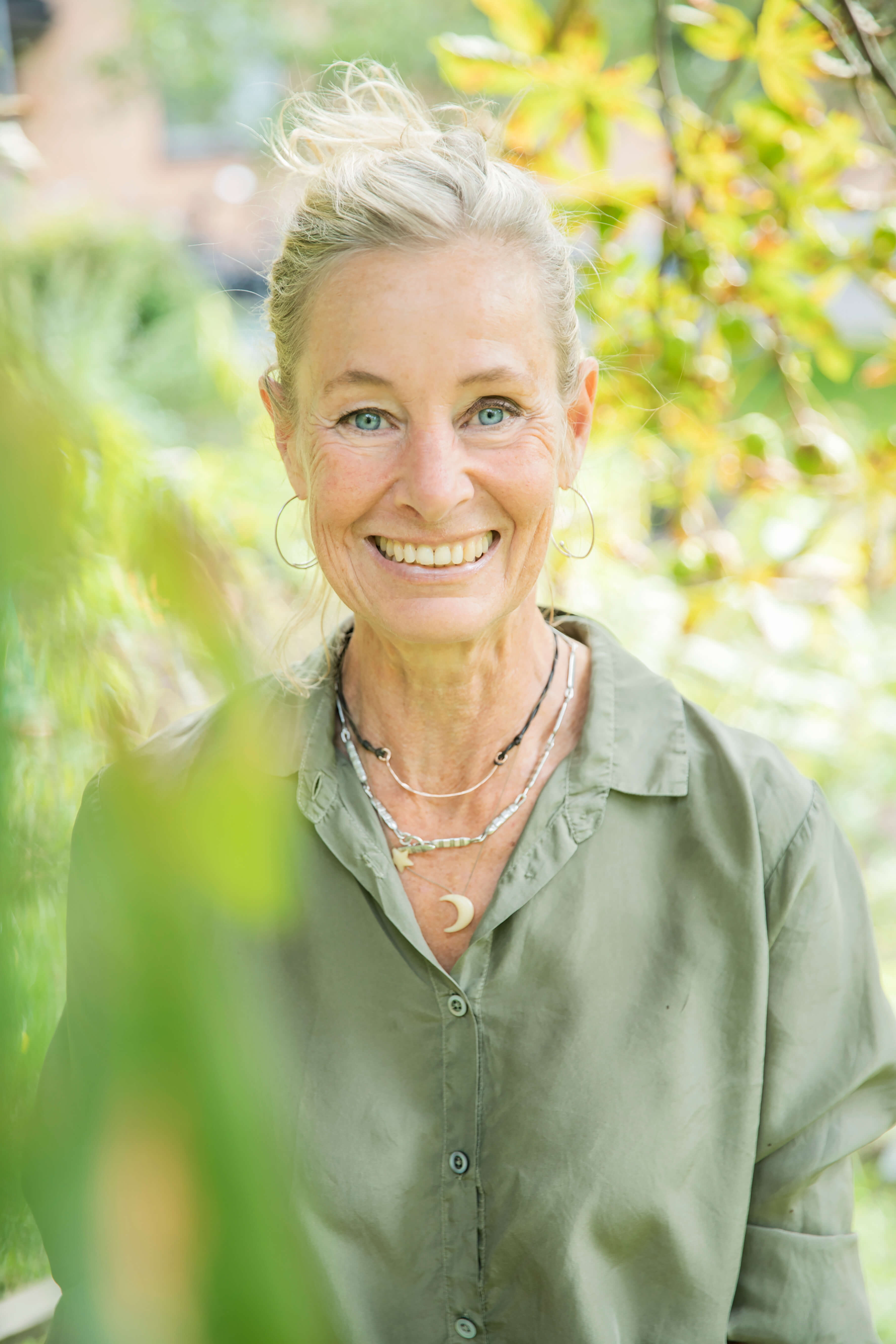
Swedish herbalist, forager, and author
Lisen Sundgren’s journey into the world of natural healing began during a personal health crisis, when she sought help at a clinic that focused exclusively on plant-based therapies. As she slowly began to recover, her curiosity was rekindled by the very plants that were supporting her healing. Eager to learn more, Lisen asked her doctor about the medicinal herbs they were using. Recognizing her growing curiosity as a sign of returning vitality, he encouraged her questions. This pivotal moment marked the beginning of Lisen's lifelong passion for plants and their healing potential.