Fishing for Heritage: How Two Sisters Keep Tradition Alive

What does it really mean to source "Pacific salmon"?
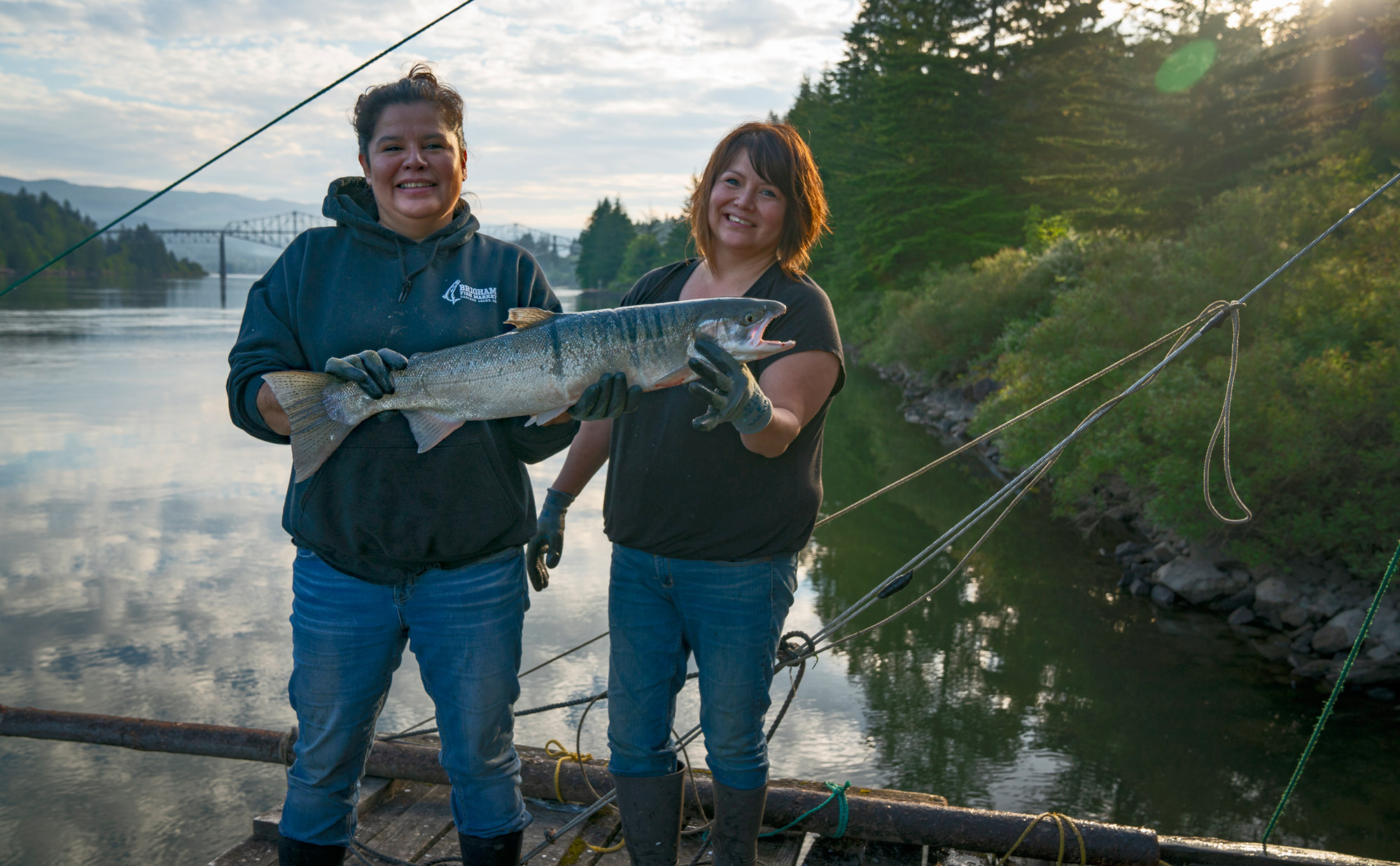
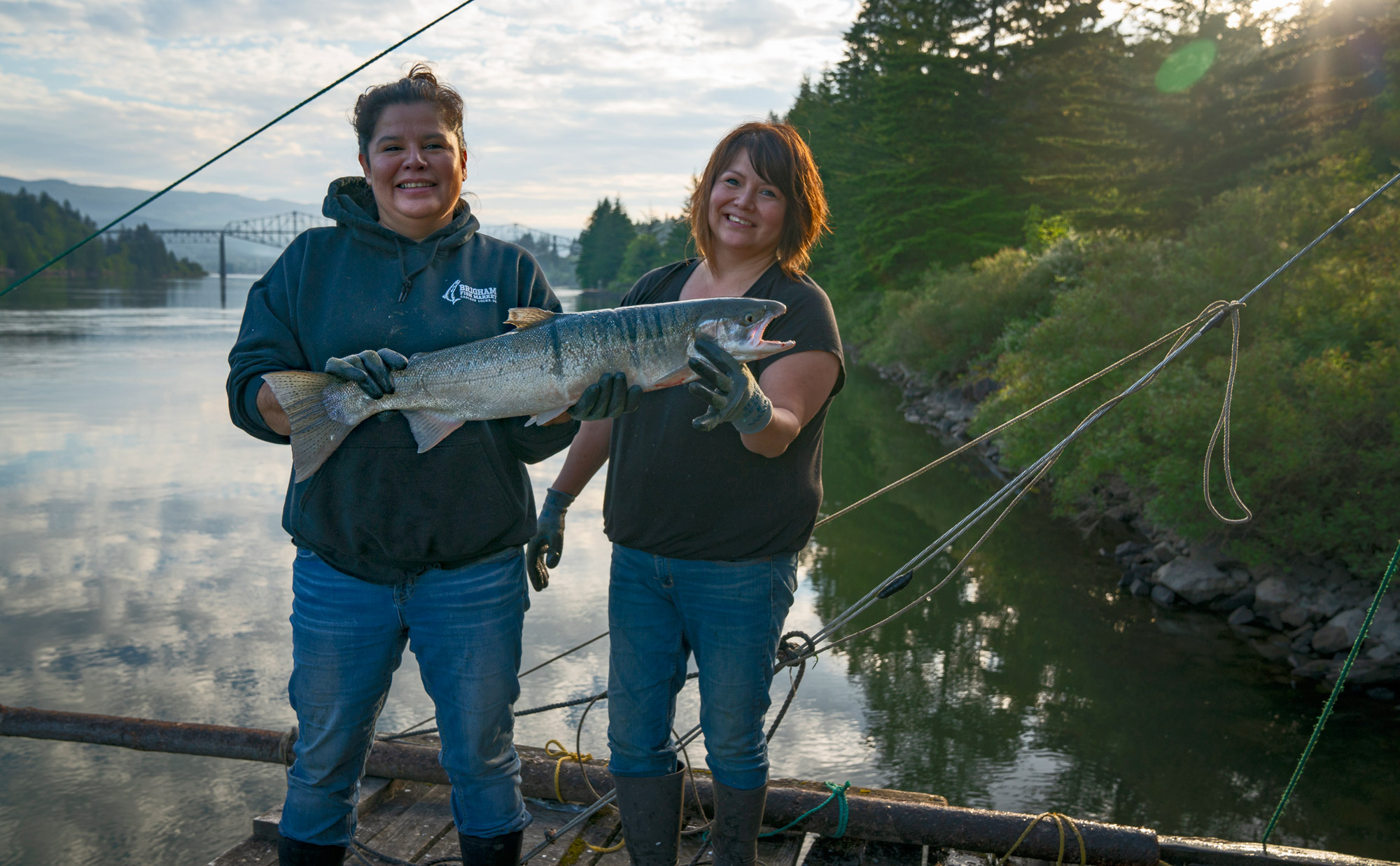
Kim Brigham-Campbell and Terrie Brigham are sisters, members of the Confederated Tribes of the Umatilla Indian Reservation, and co-owners of Brigham Fish Market—a Native-owned, family-run business on the banks of the Columbia River in Cascade Locks, Oregon. Since 2014, they've been catching wild Columbia River salmon, sturgeon, and steelhead from the same tribal fishing platforms their family has used for generations, then smoking, filleting, and cooking it into the chowders, fish-and-chips, and barbecue-ready fillets that define destination dining in the Pacific Northwest.
Their work is at the intersection of Indigenous food sovereignty, sustainable fisheries, and a food tourism economy that doesn't always name the people behind the fish.
In this episode, Kim and Terrie talk about what treaty fishing rights look like in practice, how event planners and caterers can source seafood that honors Indigenous producers, and what it means to be women of the working waterfront in 2026.
If you've ever put salmon on a banquet menu, this conversation will change how you think about where it came from—and who deserves credit for getting it there.


Like what you heard? Subscribe to our newsletter for more episodes and insider content delivered right to your inbox!
Tracy Stuckrath [00:00:06]:
Hey, everybody, and welcome to another episode of Eating at a Meeting. I am in my office this week or today, I should say, and tomorrow. So I'm excited to be here with you. And we are heading to the banks of the Columbia river to meet these two wonderful women who quite literally feed the Pacific Northwest sisters. Kim Brigham Campbell on your right, I think on your left, I don't know how the camera's looking. And Terry Brigham, who are members of the Confederated Tribes of the Umatilla and they co own the Brigham Fish Market in Cascadia Locks, Oregon, which is a native owned family run market where wild salmon, steelhead and sturgeon move straight from tribal fishing platforms into fresh fillets, smoked fish, chowder, fish and chips for locals, travelers and events. And if you've ever served Pacific salmon at a reception or sent attendees to eat along the gorge, women like Kim and Terry are the ones behind those plates. And today we're going to talk about honoring treaty based fishing traditions, how their market connects to tourism and events, and what planners and caterers can do to source seafood in ways that respect both the people and the river it comes from.
Tracy Stuckrath [00:01:23]:
So let's dive into that river, which I'm sure is very, very cold. Hello.
Terry Brigham [00:01:28]:
Hello.
Tracy Stuckrath [00:01:30]:
Terry and Kim, welcome to the show.
Terry Brigham [00:01:33]:
Thank you, thank you.
Tracy Stuckrath [00:01:34]:
And I am and also need to note on here that it is women's herstory month. And so I'm honoring them as female farmers, female producers, fisher Women under the UN's Year of the Female Farmer. So thank you for feeding us and everyone that you do and for being here today. So I want to jump right into that. I did say the, the, the river is cold, but just before we got on the show, we were talking about, you know, where they fish, how they fish or how you fish and, and where you got them. And I want to start with that picture that's right above your head, Terry,
Terry Brigham [00:02:14]:
and that, that is.
Tracy Stuckrath [00:02:16]:
Tell us about that picture. Huh?
Terry Brigham [00:02:20]:
That's an old picture of Celilo Falls, our grandfather. They just, it's platform scaffolds and you go out there with a net and usually in Celilo Falls, they would tie themselves on because once if you fell in, it was, it was not, not a great outcome. Not, not a great outcome all the time. Yeah.
Kim Brigham Campbell [00:02:45]:
So the, the, the Celila Falls is what, before the dams were built. So that was like back in the, before the 50s.
Terry Brigham [00:02:52]:
Before the 50s, yeah. Oh, wow.
Tracy Stuckrath [00:02:54]:
Okay.
Terry Brigham [00:02:55]:
Yeah, yeah, okay. And so we had scaffolds along the river, not Click Attack probably has white Water above, you know, scaffolds like that. But we have several scaffolds along the river that we fish off and. And we do tire kids off. It don't drop. They fall in. They got something to hang on to.
Tracy Stuckrath [00:03:18]:
Okay. Yeah, that's like falling out of a. Probably worse than falling out of a whitewater raft right in going down the river. So when I first reach out to you, Kim, you know, I said, you know, our friend, our chef friend, Jeff Summer said, you need to talk to Kim. And honoring you. And you're like, I run the market, and Terry does the fishing. And so. And this market's been around since 2000.
Tracy Stuckrath [00:03:47]:
The Brigham fish market has been around since 2014, so 12 years now. But it's rooted in your family's relationship with the river across. As you said just before we started. Four generations. Can you share, each of you share what that relationship felt like growing up and what made you decide the time was right to open a market and. And. And fish and feed the people around you?
Kim Brigham Campbell [00:04:15]:
I think growing up fishing was. Well, it was a must, actually. Our parents both fished, and they had a men's boat that they did. And then my mom ran our boat, which was consisted of. I have three sisters, Terry and my older sister Charlie, and then our aunt. So there was five of us on that boat that we. And it was called the Crabette. But anyway, we fished that, and that just helped, like, you know, I didn't care for it back then.
Kim Brigham Campbell [00:04:48]:
I mean, I did like the money because it helped, like, pay for my first car and, you know, school clothes and things like that. But it wasn't until older that I started to appreciate it. We opened in. In 2014 because the port of Cascade Locks came to my family because we are a trusted source here in the locks, and they wanted a brick and mortar building. It wasn't something that I, like, dreamed of doing or anything. I was actually just being a hairdresser at that time, you know, and fishing was kind of a side thing, but me and my husband moved forward and started looking into plans to do it. And it just, you know, was an opportunity that we couldn't pass. So that's.
Kim Brigham Campbell [00:05:34]:
That's pretty much why we opened.
Tracy Stuckrath [00:05:37]:
I mean, so you've been fishing with your mother, your aunts, your grandmother as well, or just.
Kim Brigham Campbell [00:05:44]:
No, not grandmother. No. No.
Tracy Stuckrath [00:05:46]:
Okay.
Kim Brigham Campbell [00:05:46]:
But, yeah.
Tracy Stuckrath [00:05:47]:
Wow. Okay.
Kim Brigham Campbell [00:05:48]:
We were little.
Terry Brigham [00:05:49]:
Yeah.
Kim Brigham Campbell [00:05:50]:
Yeah.
Terry Brigham [00:05:50]:
We probably got on the scaffold. We're about 8 years old. Wow. Been doing it since. I take more of the commercial side and the. The Boat.
Tracy Stuckrath [00:06:01]:
Okay.
Terry Brigham [00:06:01]:
I mean we did have that when we were younger and Kim gets a little seasick.
Kim Brigham Campbell [00:06:09]:
I'm a land girl.
Tracy Stuckrath [00:06:10]:
Okay.
Terry Brigham [00:06:12]:
Not that that is any easier by any stretch, but yeah, it gets a little rough out there. And, and so I, we did, you know, same thing growing up when we extra money for school clothes and fuel and whatever teenagers wanted to spend their money on.
Tracy Stuckrath [00:06:29]:
Right.
Terry Brigham [00:06:31]:
And I enjoyed it. But you know, I left for a few years as well, or I left for a few years and went to Seattle area, was in the casino business for about 20 years or something like that, and then came back and just started fishing with my dad again. And, and then when they decided to open up the market, you know, we just started filling the market with, with products and like she said, you know, our, it was, our name was a trusted name that we took care of our fish and, and took very good care of our fish.
Tracy Stuckrath [00:07:12]:
Okay.
Terry Brigham [00:07:12]:
So.
Tracy Stuckrath [00:07:13]:
And there was one word that I said in that description of that, you know, the. Where did it go? The. Oh my gosh, I lost my word. But it's tribal land where you're, you're able to fish. And so talk to us about that. And you said it was before we started. You said it was between two dams. So how much distance is that? Hours.
Tracy Stuckrath [00:07:38]:
We can talk Hours wise, Terry versus Miles. But you know, so it's, it's native owned and run and, and talk about how you protect that land that you're fishing.
Terry Brigham [00:07:52]:
So to, to be clear, the river is. There's no, it's not tribally owned.
Tracy Stuckrath [00:07:57]:
Okay.
Terry Brigham [00:07:58]:
The river is from Bonneville Dam to McNary Dam. The Columbia river is where tribal, only tribal fishermen can commercial fish.
Tracy Stuckrath [00:08:07]:
Okay.
Terry Brigham [00:08:07]:
There's definitely a sports fishery. You know, sportsmen can fish there hook and line. But below the dam, Bonville is where non natives can commercial fish.
Tracy Stuckrath [00:08:19]:
Okay.
Terry Brigham [00:08:19]:
So between McNary which is, you know, couple hour drive, about a. What are we, 175 miles up to the dam of, of where we can, we can fish off of. And that would include science, scaffold fishing, hook and line, dip netting, long lining and gill net. Gill netting. And so depending on the season will kind of depend on what, what's being done for that particular fish.
Tracy Stuckrath [00:08:55]:
And so there's different fish at different times of the year?
Terry Brigham [00:08:59]:
Yes, correct.
Kim Brigham Campbell [00:08:59]:
Yeah.
Terry Brigham [00:09:00]:
Yes. We have like the spring run spring salmon and it's been over a decade since we've been able to commercial fish spring salmon. But I do fish for it to feed to fish for the tribe and the tribe has a quota and each of the four tribes. There's four tribes that have the rights to fish on this river and it's ours. Umatilla, Nez Perce, Yakima and Horm Springs.
Tracy Stuckrath [00:09:29]:
Okay.
Terry Brigham [00:09:29]:
And they're all, they're all confederated. So there's several different tribes for each. Each one. And we each get a quota to feed our people that get stored at a tribal freezer for namings, for celebrations, first foods deaths. And we, they save that throughout the year for all those events.
Kim Brigham Campbell [00:09:56]:
So yeah. So when the spring salmon first comes back, that's like, it's a. To the tribes first, you know, so. So there's ceremony fishing, then there's subsistence and then typically if there's enough fish, then it's a commercial. But we don't always get that.
Tracy Stuckrath [00:10:12]:
And, and what's, I'm going to be naive. What's the cause of not enough fish, you know, to be able to, to commercially fish? Or is that a.
Terry Brigham [00:10:24]:
So many. Yeah, the water's getting warmer and okay, you know, they, they, they go out in the ocean and, and the, the, what they call it, the red blob was there for a few years of the warm stuff and you know, that's there and then sea lions. Like she said, below the dam there used to be just a couple hundreds. Hundreds.
Tracy Stuckrath [00:10:48]:
Oh wow.
Terry Brigham [00:10:49]:
Yeah. And if the water flow is not enough to bring the fish up, then they just stay because there's a creek right below the dam. So they stay in the cooler water and it's just like a buffet for the sea lions. So even though there's an estimate of what there is, then, then they have to get through all that and then they have to get through the dams and then they have to, you know, so there's so many things that have caused a decline. What has saved the runs and like brought back the summer runs was hatcheries.
Kim Brigham Campbell [00:11:24]:
Okay.
Terry Brigham [00:11:25]:
Then hatchery fish, you know. Yeah. They're created there, you know, for lack of a better word, and released. And they do the same, same swim as the wild caught wild fish do when coming from the stream. So even though they're hatchery fish, they're still natural. They're not like the franken fish that are color infected and
Kim Brigham Campbell [00:11:53]:
I think they
Terry Brigham [00:11:53]:
call them Atlantic salmon or. Okay, yes.
Tracy Stuckrath [00:11:57]:
Well, Atlantic salmon. Wouldn't Atlantic salmon be on my side of the country?
Terry Brigham [00:12:01]:
Yes, yes.
Tracy Stuckrath [00:12:02]:
Okay. And not your, you're the Pacific side.
Terry Brigham [00:12:08]:
Anything that's color injected. Yeah. Stay away from that.
Tracy Stuckrath [00:12:13]:
And how do you know that?
Terry Brigham [00:12:14]:
How can you tell you?
Tracy Stuckrath [00:12:17]:
Oh, they have to tell you.
Terry Brigham [00:12:18]:
Okay. Maybe not now. You know, considering they have all kinds of crazy.
Kim Brigham Campbell [00:12:23]:
And like, in Hood river county, like, you go to Safeway and it will say, like, on their little things like Atlantic salmon, and it will say color. Color. Yeah, yeah, yeah.
Tracy Stuckrath [00:12:34]:
Okay. I will now be looking for those words on every label. Wow. Okay. Yeah, I actually got some salmon yesterday, so I have to go look at that label for sure. So. Okay, so walk us through. I mean, you've talked a little bit about that, but walk us through what a day of fishing actually looks like.
Tracy Stuckrath [00:12:56]:
You're working in the tribal platforms, in the scaffolds. What does it feel like to be out there? And how does it connect you to your grandparents, your parents experiences? And then I actually want to get back to what all the different types of fishing that you were. That you mentioned, the different netting and things like that line and things.
Terry Brigham [00:13:23]:
For. For me. Oh. Like we said, we've both been scaffold fishing since we were little, and, you know, the fish run best in the morning, in the evening when it's getting cooler. So we get up in the morning and we go check our hoops if we had them in, or we just go down there and throw them in and stay down there and fish all day. And it's. When we were younger, you know, we'd bring our stereos and. And have change for people that are buying right off the scaffold and.
Terry Brigham [00:13:57]:
And just spend the whole day down there, you know, laughing or fighting, whichever day, whichever it entailed for that day. As far as commercial fishing, you know, I get. Get up pretty early in the morning, go get my boat. My crew usually meets me, or I pick them up, whichever, launch my boat and. And run the gear, and that's my happy place. You know, I. I enjoy it, you know, see the sunrise and.
Tracy Stuckrath [00:14:33]:
And
Terry Brigham [00:14:35]:
it's just. I don't know, I. I guess I just feel connected there.
Kim Brigham Campbell [00:14:39]:
Yeah.
Terry Brigham [00:14:39]:
And, you know, my dad is. I fish with my dad for. I don't last. 17, 18 years now. Yeah.
Kim Brigham Campbell [00:14:47]:
And he's 80.
Terry Brigham [00:14:47]:
He's 80. And he's still. Yeah, he's still on the boat, still bossing me around. But it. I enjoy it. You know, those are memories that, you know, not everybody can do this. Not everybody wants to do it, you know, but I get to. I get to do it with my family and teach my kids.
Terry Brigham [00:15:08]:
And my middle daughter, she's a she. She gets seasick, too. But my son enjoys it, and my nephews and, you know, it's. It's every emotion all tied into one Little boat.
Tracy Stuckrath [00:15:26]:
Oh, sure.
Terry Brigham [00:15:27]:
Yeah. And it depends on the day, you know, you're happy and having a good time or you know, you're working your butt off to, to get it done, get it and get it quick and get back in safely. You know, I've been out in weather where it's negative 9 and 105 depending on the season and what I'm fishing for.
Tracy Stuckrath [00:15:52]:
Okay.
Terry Brigham [00:15:53]:
So that's. And then we drive, you know, depending on what season, we drive it back for clean. We clean it and drive it back and my brother in law takes care of the fling and my and sister mostly because I'm doing the fishing. And then we bring it to the market and fillet and get into the case as quick as we can.
Tracy Stuckrath [00:16:14]:
So Kim, so talk us through that. So once. Now are you cleaning it when you're on site before you bring it back to the market or are you cleaning it once you get it to the market?
Terry Brigham [00:16:24]:
I'm my crew, my dad and I, we usually clean it. We have a area where we clean it and then put it on ice immediately.
Tracy Stuckrath [00:16:33]:
Okay.
Terry Brigham [00:16:34]:
So that. Yeah, so they're already on ice once they even get. They're clean and on ice once they get to the market.
Tracy Stuckrath [00:16:40]:
Okay. And that's a whole fish though, cleaned. Yes, yes. And then Kim, your, your team takes
Kim Brigham Campbell [00:16:47]:
over from there, correct? Me and my husband do all the filleting and we just decide. We do smoking here on site. We do the filleting. So then what else with it?
Terry Brigham [00:17:03]:
We scrape. He scrapes the backbones and we use that for salmon patties. Salmon patties. And then we. So we save the heads. Some people like to boil them for
Kim Brigham Campbell [00:17:15]:
broth and all that.
Terry Brigham [00:17:16]:
Yeah. Okay.
Tracy Stuckrath [00:17:17]:
For broth I get. Okay. Eating. No thanks.
Terry Brigham [00:17:20]:
I do have one customer, she's Seattle area and she comes down and buys a 100 at a time because she just, she's like, I just love to eat them. And she's. My local market has too small. See, they're. They're too small. I need the bigger fish. Wow.
Tracy Stuckrath [00:17:38]:
Okay.
Terry Brigham [00:17:39]:
Yeah. So most of every of the fish is, is taken care of and processed at some in some way other than. And the guts, they just get thrown back in the river to feed the sturgeon.
Tracy Stuckrath [00:17:53]:
Okay. All right. So I want to, I want to. I. Well, I'm going to come back to one question that I have, but so I want to go back to the market aspect. So. And. And the seasonality of this too.
Tracy Stuckrath [00:18:06]:
So your menu is. Is very deeply seasonal based because you just talked about how Fishing like that. So how do you. And. And yesterday I was talking about. With a farmer who grows vegetables, like, you shouldn't be eating asparagus in December because it's a. It's a March spring vegetable. So how do you educate your consumers, your customers that are coming into the market who aren't thinking about seasonality and helping them understand the changes and why that it matters to be eating the fish at certain times of the year?
Kim Brigham Campbell [00:18:40]:
For us, it doesn't really. It's either, like, fresh or previously frozen because, like, when we have commercial seasons, we.
Terry Brigham [00:18:48]:
We.
Kim Brigham Campbell [00:18:48]:
We have a really big freezer, so we are able to fillet and vacuum seal and throw them in the freezer and then just go back to them and bring it, like to the case or again, smoke it or, you know, do some. Whatever we're doing in the kitchen with it. So most of our customers just mainly know when it's fresh. And so some people will come by a whole dish and we'll fillet it and vacuum seal and send it home for them. So they just put it in their freezer. But we don't have to. I mean, not a ton of waste. You know, we just hope we get from season to season and still have fish.
Kim Brigham Campbell [00:19:24]:
So I don't have to be a chicken stock or, you know.
Terry Brigham [00:19:27]:
Chicken.
Tracy Stuckrath [00:19:28]:
Yeah.
Kim Brigham Campbell [00:19:29]:
Selling sandwiches or something because I have no fish.
Terry Brigham [00:19:31]:
We do have to tell a few people because they think that, you know, being tribal, that we get to fish whenever we want. And that is.
Kim Brigham Campbell [00:19:38]:
Yeah, that's true.
Terry Brigham [00:19:39]:
Definitely not the case. You know, they're like, well, where's the fresh fish? Well, it's not in season right now. So, you know, we have to tell them what season, educate them on what seasons that are coming up when we're going to have them. And handed out thousands of businesses, car business cards, mostly Kim's.
Kim Brigham Campbell [00:19:59]:
Well, and also, we don't always get a season, too. So some of it is, you know, and we have. Then we have to source it somewhere else, you know, out of Alaska, down from the, down to the coast and things like that. So it's not always just what we're catching, but it would be local. Still no farm raised ever?
Terry Brigham [00:20:17]:
No. Yeah.
Tracy Stuckrath [00:20:17]:
Okay.
Terry Brigham [00:20:18]:
That's your favorite. Yeah, Yeah.
Tracy Stuckrath [00:20:21]:
I mean, because that's. I mean, if you, if you have a slow season, I'm like. And it is. And I was talking to. Listening to a podcast of another friend of mine who's a farmer and saying, because she only does chickens a certain time of year, right. And so she has to go Find partners like you just mentioned, so that she can feed them all, you know, sell the chicken all year long. Because you want to remain top of mind because that's your business, correct?
Terry Brigham [00:20:48]:
Yes.
Kim Brigham Campbell [00:20:49]:
Yeah. Mostly we're able just to keep it within the family because. Right. Because we have a big family, you know, my sister and my son and uncles, and then we do have a couple of the other natives that we do source too, that keep us. And each year is getting bigger, so we're having to, you know, get creative with where we're, when we're getting in and how much we are able to save.
Terry Brigham [00:21:16]:
And we're very picky as well, you know, because we know how to take care of our fish. And, and, and we're giving. We're feeding other people with that, so we're prioritize that and, and make sure that their fish is taken care of as well.
Tracy Stuckrath [00:21:33]:
And explain to me what you mean by taking care of your fish.
Terry Brigham [00:21:37]:
Having it on ice, you know, bleeding them.
Kim Brigham Campbell [00:21:41]:
Bleeding them?
Terry Brigham [00:21:41]:
Yes. Bleeding them is important. And, and just, you know, making sure that we inspect them as before we buy them.
Tracy Stuckrath [00:21:50]:
Okay.
Kim Brigham Campbell [00:21:53]:
So, yeah, when the fish are caught, if you're. They like sit in a nets too long, then they're either mushy or they're, you know, not, not great quality. Or if there's. The fishermen don't. Don't. You don't bleed them. The blood sits in the meat and so it's not as good or firm.
Tracy Stuckrath [00:22:06]:
So.
Kim Brigham Campbell [00:22:07]:
And you can tell that or how long they're sitting on it before they want to sell it to us. So it just, you know, we only accept the quality for sure.
Tracy Stuckrath [00:22:17]:
So is that. Are those things, those things that you just described, is that what makes fish smell fishy or taste fishy? You know, and. Because a lot of like, fresh fish doesn't necessarily taste fishy. Is that right?
Terry Brigham [00:22:29]:
Correct. Correct.
Kim Brigham Campbell [00:22:30]:
And it's also season because like our spring season, like the fish is, you know, it's first from back from the ocean, so to the river, it's the best fish. Sometimes there's only people and it's expensive, and that's sometimes all people will eat. Like right now, I went to the mouth of the Columbia and bought some, and they're about $200 per fish. So. So we're selling it here in the market for $45 a pound, which is expensive, but it's really, you know, it's the spring fish and it's good.
Tracy Stuckrath [00:23:03]:
And, and how. Okay, my one question. How big is a fish? I mean, like, when you're. When you're catching one. Because I'm like, you also told me that you're not catching one at a time. You're catching a whole bunch. And so please tell me what a whole bunch is. And poundage wise or length or spring
Terry Brigham [00:23:24]:
salmon are about 12 to 15. Yeah. 12 to 15 pounds. They're the smaller of the salmon that, you know, the kings at home. And then our summer summers get bigger and they're about 25. Yeah. The biggest one we caught on our. Yeah.
Terry Brigham [00:23:42]:
£55. And that was a June hog. And those are gone pretty much that, that strain of the fishes. And if you, if you research Columbia river salmon, you know, and you'll. Or Columbia river fish in general, they have pictures of, you know, salmon that are 85 pounds and. Wow. Sturgeon that are over 12ft long and, and.
Kim Brigham Campbell [00:24:07]:
But they're not no more.
Terry Brigham [00:24:09]:
Not anymore. No. And then the, the, some or the fall fish get about. I, I think the. About 40 pounds.
Tracy Stuckrath [00:24:18]:
Okay.
Terry Brigham [00:24:18]:
You know, and it ranges, you know, so you're getting a 15 or 10 to 40 pound fish in the fall. Sockeye salmon are about five pounds. Yeah, yeah. Five to eight whole. And then shatter. Those are the ones we can catch, you know, about 10 fish in a, in a net and they're a couple pounds each.
Tracy Stuckrath [00:24:40]:
Okay. So out of a, out of a £40 or. I mean, when you're filleting it, how many is that? Just two fillets. Is that, I mean, or. Because like. All right, I'm going to say when I go to the grocery store and I buy my fish, I'm buying it in a, a square piece that's like 4x4. I mean, how many is that? How many of those are you getting from one fish?
Kim Brigham Campbell [00:25:04]:
About five.
Terry Brigham [00:25:05]:
About 5pm yeah.
Kim Brigham Campbell [00:25:06]:
Okay, so. Or per side or for one, one whole fish, you'd get 10.
Tracy Stuckrath [00:25:10]:
Okay. Okay.
Kim Brigham Campbell [00:25:12]:
So each fillet you would get about five, I would say.
Terry Brigham [00:25:14]:
And that's for spring. And then obviously the summer and fall will be more 7 or 14 for total.
Tracy Stuckrath [00:25:23]:
Okay.
Kim Brigham Campbell [00:25:23]:
And back to your, like more fishy. Like it's either like lack of care or like I was going to say the fall fish because they have been in the river the longest. That's when you start getting a little bit of the, at the fishier smell, I feel like also. And then Al, that's when the prices go down too, you know. Right now, the spring, like I said, the spring is about 21 lb. 21 a pound. And then in the fall, you're down to $8 a pound different fish.
Tracy Stuckrath [00:25:54]:
I say that again. What was that last part?
Terry Brigham [00:25:56]:
It's a just different.
Kim Brigham Campbell [00:25:57]:
Different quality of fish, you know, because
Terry Brigham [00:26:01]:
the oils of the fish. Yeah. And how long. It's how long? Because the fall fish, like I said, I drive 175 miles to go to where I'm fishing.
Tracy Stuckrath [00:26:10]:
So they've traveled 175 miles plus from
Terry Brigham [00:26:14]:
the coast to Bonville. So they've come in from. To the Columbia.
Tracy Stuckrath [00:26:18]:
They're.
Terry Brigham [00:26:20]:
Yeah, they're worn out.
Kim Brigham Campbell [00:26:22]:
They're worn out.
Terry Brigham [00:26:23]:
Yes, they have. They're bigger, but they have less oilers in them. And you know, the starts to get. They're just a warmer water and that's when you have to. You have to get them in ice as fast as you possibly can and bleed them. And if you're ever going to get a whole fish, the eyes are the eyes and the gills are the telltale sign. If the eyes are cloudy and the gills are white, that's sitting there too long. You want the gills to be red and eyes clear.
Tracy Stuckrath [00:26:55]:
The gills need to be red, you said.
Terry Brigham [00:26:58]:
Yes.
Tracy Stuckrath [00:26:58]:
Okay. Okay. I'm. Now I'm gonna go to the fisher's market. I'm really like, this is so intriguing. So I mean, you've become a destination. Your. The fish market has become a destination for gorge visitors.
Tracy Stuckrath [00:27:15]:
And I mean, you were featured in Travel Oregon and recommended in tourism Food. Tourism guides. How do you, you know, how do you think about your role in telling the story of tribal fishing and indigenous food sovereignty to people who just came in for some fish and chips?
Kim Brigham Campbell [00:27:40]:
Well, depending on how busy. Yeah. So I visit with the customers quite a bit, you know, and just see where they're from and then show them the pictures on the wall, which is an easy conversation just to say, this is my family. We've been fishing for generations. And then just kind of go through that. That. I caught this fish this morning and I filleted it and this is, you know, coming to you and. And then also just talk about how it's our native like first foods.
Kim Brigham Campbell [00:28:10]:
It's one of our, you know, important to. To us and the tribes and people are usually really
Terry Brigham [00:28:20]:
accepting and open to it.
Kim Brigham Campbell [00:28:22]:
Yeah.
Terry Brigham [00:28:22]:
And you know, we respect what, what we do and what it takes to get it to the case and get it in. Into the market. And I think that reflects in what we're telling people about what, what we do and how we do it. And that's, you know, something our parents taught us and, and Leo, the first foods is something that they have celebration for at at back on the reservation where they have a long house and they would, they have a feast and, and celebrate the first salmon coming back and, and then the other, the berries and the roots and you know, so it's, it's a, it's ingrained in us, I guess.
Tracy Stuckrath [00:29:06]:
And you're continuing to ingrain that into your kids?
Terry Brigham [00:29:11]:
Yes, absolutely.
Tracy Stuckrath [00:29:14]:
And are, how old are they now?
Terry Brigham [00:29:18]:
I have, my oldest daughter is 32.
Tracy Stuckrath [00:29:21]:
Oh, okay.
Terry Brigham [00:29:21]:
My middle daughter is 19 and my son is, he'll be 16 next month.
Tracy Stuckrath [00:29:28]:
Okay.
Terry Brigham [00:29:29]:
I have a little bit of a range.
Kim Brigham Campbell [00:29:30]:
I was like, mine are 25 and 27, so they're a little closer together.
Terry Brigham [00:29:35]:
A little bit of range there.
Tracy Stuckrath [00:29:38]:
And I mean, and so that's interesting. And the 16 year old to the 30 year old, you know, is there. Do they see difference, do you see different perspectives from them in how you run the business and, and, and the, and being part of the tribe?
Terry Brigham [00:29:57]:
Yes. And you know, thankfully all my kids are close to each other and they enjoy fishing, you know, going scaffold fishing and, and spending, you know, hunting and, and, and doing things together. And but they, all of them have the, you know, understanding of, of how important it is for First Foods and how important it is to respect the salmon and respect the, the, the animal that we're hunting, whether it's deer, elk or bear on occasion. And so yes, they, they, I would say that they see kind of the same. But you know, obviously the 32 year old's gonna understand it a little bit more than the 16 year old, but he'll get there.
Tracy Stuckrath [00:30:45]:
And Kim, what about your kids in their 20s?
Kim Brigham Campbell [00:30:49]:
My son is still part of the. He fishes materia, my dad, so he's doing commercial fishing with them and loves it actually. He is doing construction also, but he would prefer to be on the river and keep doing, you know, fishing for the family and, and taking care of mom. And my daughter, she, she is, works here with us. She's one of the managers. And so yeah, we just want to pass this on to them to show them, you know, run the market. You know, we're not getting any younger and it's hard work. So yeah, put on to all of them and so that they understand and respect it is what, you know, what our gift is to them.
Tracy Stuckrath [00:31:35]:
I love that. Now as indigenous women who are running a seafood business, what have you had any barriers to, have you had to navigate any barriers, whether it's in regulation, business lending, perception, being taken seriously as owners and producers?
Terry Brigham [00:31:56]:
I would say back when we were younger and Even when I started fishing with my dad, it was, you know, women aren't supposed to be fishing or they're, you know, just an older misogynistic view. But as we've gotten older, we see and have seen more and more women and young girls out there learning and, and wanting to do what we do, you know, so it's. For me, there wasn't, I don't know, not much for, for commercial fishing. We also, we always had our buyers, people that we've been going to for decades. My dad first, you know, my parents first, and then, and then they're still in the business or their kids are still in the business, so they're were second generation working with each other. So.
Tracy Stuckrath [00:32:51]:
That's awesome.
Terry Brigham [00:32:53]:
Yeah, it's pretty cool. You know, like my dad, when they were fishing younger, you know, they had sugar porn in their gas tanks and bullet holes in their bolts and, you know, they. Police officers tying their nets and dragging them up on shore. You know, fish wars. You know, they, they had the real, the real barriers and the real. They, they paved the way or not paid. They made a road to, to help the rest of us, you know, all tribal people on the river to have the opportunity. And, you know, and it's, it's hard work.
Terry Brigham [00:33:33]:
We have all struggled. And the, you know, they say the first two years you're good for a business, but I would say at least five.
Kim Brigham Campbell [00:33:42]:
Just like 10. Yeah.
Terry Brigham [00:33:43]:
And we're 12. We're like, okay.
Kim Brigham Campbell [00:33:47]:
I feel like we learned everything the hard way, I guess. Like we did, you know, it wasn't. We knew fish and we knew our product and, and the community, but business was secondary.
Terry Brigham [00:34:02]:
Yeah.
Kim Brigham Campbell [00:34:02]:
And so we just keep them.
Terry Brigham [00:34:04]:
That was trial by fire.
Kim Brigham Campbell [00:34:05]:
Yeah, for sure.
Tracy Stuckrath [00:34:06]:
Yeah. So what. Okay, I'm, I'm going to go back to the tribal aspect of this as well. But for, for the, for event planners, for, for Jeff, Chef Jeff, who works at, he actually works on, at a hotel which is on a reservation. Right. You know.
Terry Brigham [00:34:24]:
Correct.
Tracy Stuckrath [00:34:27]:
What can you help us understand what the rights mean, look like on water and why they matter to the food system?
Terry Brigham [00:34:37]:
So each, each season is allocated? I don't want to say allocated, but yeah. Oregon, Washington core engineers and Oregon, Washington core engineers, all the tribe and all the tribes that go into a meeting and look at the numbers for the expected return of each season. So spring, summer, fall.
Tracy Stuckrath [00:35:06]:
So number of fish.
Terry Brigham [00:35:08]:
Number of fish.
Tracy Stuckrath [00:35:08]:
Okay.
Terry Brigham [00:35:09]:
And it's always a guesstimate because we don't know until they hit Bonneville Dam and that's when they can start counting them because there's nothing to count them from the mouth of the Columbia until then. And so then they decide each season that we have. And sometimes it's week by week, other times it's two weeks. And then they reassess the numbers that have been reported to them and then decide if we can fish more because, you know, lower river non. Non tribal fisheries get 50% of the run of. Of the allocated run and then tribal gets the other 50. But there's also an escapement which is I think 20%. And the escapement is so that they keep coming back.
Terry Brigham [00:35:54]:
We can't, you know, nobody wants to catch the last fish. Right. So. So the seasons are allocated by that.
Kim Brigham Campbell [00:36:01]:
And sometimes there isn't season. Sometimes it would be hard for me to like consistently like give to Chef Jeff. Like, you know, if he was constantly supply or, you know, ready for my supply, it depending on the numbers, it wouldn't always be there. So it is kind of hard, you know, and they always say we're going to have a record season, but then we get there. It's not true.
Terry Brigham [00:36:22]:
Record low. It's record low. It's a record. I mean, summer salmon was gone for 20 some odd years before it was rebuild patcheries, stuff like that, you know, so we didn't fish. And I remember when we were young, well, thankfully I had a job. So, you know, and that's what other people had to do is like, you know, and that's summer. So we'd have a spring and a fall, but summer non existence for or
Kim Brigham Campbell [00:36:50]:
our freezers were built full because you. We could, you know, because then the are subsistence for us. You know, we would can and dry and so yeah, we ate well.
Terry Brigham [00:37:02]:
Yeah, still do.
Kim Brigham Campbell [00:37:04]:
Yeah.
Terry Brigham [00:37:05]:
Like I was going to say, there was a time where we. Our fall season was five days.
Tracy Stuckrath [00:37:13]:
Wow.
Terry Brigham [00:37:13]:
Because they. There were f. You know, there were other factors. There were fish wheels that would just nothing would get past those. And so that about decimated the runs. And then Oregon, Washington, the tribes and core started all finally working together, really working together because they were just going to be gone if they didn't. And you know, that's also the other important thing that we try to teach our kids is that, you know, they're. You have to leave some for it to come back.
Terry Brigham [00:37:47]:
And we look at that, you know, tribal people look at that for the next seven generations. Not just wow. So they try to make the decisions that are going to help sustain it and. And have it still be here. But you know, the warmer rivers and the sea lions and all that. You know, those are. Those are new things that we have to adjust to and. And, yeah.
Terry Brigham [00:38:11]:
Know, another barrier.
Tracy Stuckrath [00:38:13]:
Yeah. I mean, and. And thinking through. And. And just thinking through the food system, you know, with what we're going through. Right. You know, just what we see in the news and lots of changes and things, but thinking through the food system for seven more generations, I'm like, that's great. Great, Great, great, great, great grandkids or.
Tracy Stuckrath [00:38:31]:
I don't even know if I got all the greats in there.
Terry Brigham [00:38:33]:
Right, right.
Tracy Stuckrath [00:38:35]:
I mean, that's. That's what we should all be doing, like thinking through our farms and our farmland and our rivers and our oceans.
Terry Brigham [00:38:46]:
Yeah. Well, that's what the treaties were for. You know, our treaty. You know, obviously we got put on the reservation, but our ancestors fought and demanded. We weren't given anything.
Tracy Stuckrath [00:39:04]:
We.
Terry Brigham [00:39:04]:
They fought and demanded that we re. Remained or we. Was it. I can't think of the word right now. But we kept our rights. We kept our rights. Hunt to fish, to gather roots and berries in our usual and custom places. So when they signed that treaty in 1855, they were thinking of the next seven generations so that we were able to.
Terry Brigham [00:39:28]:
To. To still do what we do.
Tracy Stuckrath [00:39:32]:
And. Okay, I want to. And I want to jump back because you. You both said first food. So explain that in that context. Your first. Right. That's.
Tracy Stuckrath [00:39:45]:
Did I say that right?
Terry Brigham [00:39:47]:
Yes. It's the first salmon that comes back.
Tracy Stuckrath [00:39:52]:
Okay.
Terry Brigham [00:39:53]:
I do the ceremonial subsistence. My dad has done the ceremony of subsistence since the 70s for the tribe. And the first fish that we pull out of the river, we put a little rope in it. And. And the tribe comes because we're two and a half hours away from our reservation.
Tracy Stuckrath [00:40:13]:
Okay.
Terry Brigham [00:40:13]:
So the fisheries department comes down and picks up the fish and brings it back to the tribe where they have of first foods. Return of the salmon celebration.
Kim Brigham Campbell [00:40:26]:
Yeah.
Terry Brigham [00:40:27]:
Ceremony with. In the long house, where all the people come together and. And sing and pray and. And respect that, you know, our salmon has returned.
Kim Brigham Campbell [00:40:37]:
Yeah.
Terry Brigham [00:40:37]:
And give thanks. Yes. And that happens with. We have celery feast. We have huckleberry feast. We have root feast, you know, and that's. That's the. What creator is given us to help sustain our bodies and sustain our lives.
Terry Brigham [00:40:51]:
And that's what first shoes are.
Tracy Stuckrath [00:40:54]:
And. And you fought for. Though the treaty, fought for those rights to continue that.
Terry Brigham [00:40:59]:
Yes.
Kim Brigham Campbell [00:41:00]:
Right.
Terry Brigham [00:41:00]:
Yes. Because, I mean, people are like, oh, you were given. No, no, we weren't. We weren't given anything. Well, they. Our people Fought for what we have. And to keep what? Yeah, yeah. To keep.
Terry Brigham [00:41:12]:
Keep a little bit of something. What we were doing. And that's. And that was the first foods were extremely important or are extremely important. That's why it's in the treaty.
Tracy Stuckrath [00:41:23]:
Wow, that's a lot to. To carry a lot to.
Kim Brigham Campbell [00:41:29]:
To.
Tracy Stuckrath [00:41:31]:
To push forward and to remember, you know, all of those things wrapped into one. And that's amazing that you're, you're carrying that on. You know, from. I'm gonna cry now. You know, carrying that on. Sorry. To your kids and then to your grandkids, you know, and your nieces and your nephews and all of that.
Kim Brigham Campbell [00:41:54]:
I mean, that's an honor for sure, you know. Yeah.
Tracy Stuckrath [00:41:59]:
Okay, now I'm gonna cry. Now I'm gonna stop. Okay. So this is the UN's International Year of the Woman Farmer, you know, put. And it's putting a spotlight on women, acr women across all the food production, you know, farming, fishing, foraging, etc, you know, what does that mean to be a woman of the working waterfront right now? I mean, you said you've. Terry, you said there's some girls, women that are coming into it. So what does it mean to. For you two doing this and going forward to continue on that tradition?
Terry Brigham [00:42:40]:
It's. I, for me, in the very beginning, I just, I thought that everybody fished. I thought everybody hunted. You know, I, I thought that, you know, as I got older, I obviously realized that that was not the case.
Kim Brigham Campbell [00:42:57]:
Yeah. Our dad has three girls.
Terry Brigham [00:42:59]:
Three girls. Yeah. So. Yeah. Yeah. So I, you know, getting to do this with my family and, you know, my nephew, her son, and, and mine. And my dad is a. As a.
Terry Brigham [00:43:17]:
I don't, As a female, as a woman or I don't really get treated too much different. And I think that was the goal. You know, I can. May not lift as much, but I'll get it somehow, some way. I'll figure out a way. But to. To hand that down or to teach somebody else is, you know, it's for lack. Well, it's an honor.
Terry Brigham [00:43:42]:
I guess it's an honor because
Kim Brigham Campbell [00:43:45]:
we
Terry Brigham [00:43:46]:
were always taught that you teach anybody that wants to learn, and so that's. That you're passing it down and, you know, and you'll know who does and does not want to learn. But, you know, if they're seeking out help, you know, you. You teach people so that it's. It's a knowledge that's passed down to the next generation or generation after that. And, you know, you get to look back and, And Say I was a part of it.
Kim Brigham Campbell [00:44:11]:
Now we have, like, schools and people reaching out because, like, I mean, for me, I don't really feel like. Like looking at it, you don't realize, like, the impact that you have or. Or how people are looking up to you. Because for me, I'm like, it's. I'm just doing what we do. But now that we have people and
Terry Brigham [00:44:31]:
kids and school, I was pointed out too, you know, I was like, yeah, we're just doing what we do. So.
Kim Brigham Campbell [00:44:38]:
But now. Now you start seeing the impact that you have are just. Or when other tribal members are reaching out to get their foot in the door, to start their own business, to do value added to our food and to, you know, start where we started many, you know, 12 years ago. It's been really like, again, an honor or I guess a nice pat on the back.
Terry Brigham [00:45:05]:
Definitely a learning experience, you know, because we didn't realize, I don't think, or at least I didn't, you know, what impacts we would have on other people for sure.
Tracy Stuckrath [00:45:18]:
So for a meeting planner, what can we, as meeting professionals, if we're coming to your area or any. Any other area that's on tribal land, you know, how can we support the indigenous food businesses like yours and tell those stories to our attendees? And I'm gonna. I went to University of Maryland on a tour a couple years ago, and they built their new cafeteria for the students on tribal land, and they partnered with the tribe and to bring in that food into the cafeteria. So I know they do. They do. One of the. One of the sections in the grocery in the. In the cafeteria is all about the indigenous food and what they're serving.
Tracy Stuckrath [00:46:06]:
But up on the walls, they've got all of these images and stories of the tribe that. Because they did not want to exclude that because it's an important part of where the building, you know, of the building. So how can we, as meeting professionals, support you and other indigenous food businesses?
Kim Brigham Campbell [00:46:27]:
Well, I wish we were near the tribe, but we're, you know, we're two and a half. Two and a half hours away from the tribe.
Tracy Stuckrath [00:46:35]:
So,
Kim Brigham Campbell [00:46:38]:
you know, there's not a lot that we do for our tribe. You know, the tribe didn't help with, like, our funding or any of the stuff being native and woman owned. It wasn't. They would help us if we. We stayed on the tribe and was able to do that. So we didn't get that support, but we do, you know, back before the. All of this funding was cut, I don't know. It Was the last year.
Kim Brigham Campbell [00:47:09]:
Last year we were part of the distribution to the tribal members. Like the. The tribe was getting smoked fish and our smoked salmon dip that we make here in house and then some of our fresh fish, and we were, like, able to give that out to some of our tribal members there. But other than, um. And I think a lot of the business, like, inner tribe and all of the other ones, anytime that there's a meeting near us, we get their support for sure. And they. If they have a little catering event, they reach out to us, and we do quite a bit of that with them.
Terry Brigham [00:47:48]:
Yeah. So, I mean, I think the. That's what, you know, small businesses, you know, you have to. You have to do a little research and look in the area, because I know there's a. A tribally owned coffee shop in Portland.
Tracy Stuckrath [00:48:02]:
Okay.
Terry Brigham [00:48:02]:
And. And. And we. I don't know, we. We do advertise it, and I'm sure everybody else says that you're driving owned and. And it's, you know, they're starting to get. Get their foot in the. In the door, get their, you know, taking steps to.
Terry Brigham [00:48:21]:
To be more mainstream. But, like, It's. It's been 12 years and, you know, last three years is probably when we were able to And. And got the attention to do any sort of catering and, And. And getting the businesses from inner tribe and tr.
Kim Brigham Campbell [00:48:41]:
Travel organ's been amazing. Like, they reach out for everything. So. Okay, she's gonna go get the power.
Tracy Stuckrath [00:48:51]:
Okay. Yeah, we don't want the camera to run out. Okay. No, that's. That's. I love the fact that Travel Oregon is helping support and promote, you know, the tribal businesses to help bring that attention to you and your bit and to the area, because it is. It's a big part of Oregon. And yes, they would be remiss if they didn't, you know.
Tracy Stuckrath [00:49:16]:
Yeah. It would be a missed opportunity. How. What. I know we're waiting for her to get her cord, but what advice have you gotten from your. From your mother, your aunt, your grandmothers about being a woman in the food business or just the best advice you've gotten from them in general, not about being in the food business, but
Terry Brigham [00:49:42]:
it's in the bathroom.
Kim Brigham Campbell [00:49:43]:
Oh, sorry, Sorry. Well, our mom is actually chairman of our tribe right now. She is? Yeah. So she. And she has been all our lives, like, worked for the tribe. I remember her working for my grandpa. Grandpa. And she would travel with him and every.
Kim Brigham Campbell [00:50:05]:
That. So she's a great example of somebody that is just a strong. And. And I Don't know.
Terry Brigham [00:50:15]:
A force to be reckoned with. She really is.
Kim Brigham Campbell [00:50:20]:
Can't think of the advice that she gave us.
Terry Brigham [00:50:22]:
But it's.
Kim Brigham Campbell [00:50:23]:
I think it's just by example, you know, she's taught us.
Terry Brigham [00:50:26]:
Yeah. By example.
Kim Brigham Campbell [00:50:27]:
To work hard.
Terry Brigham [00:50:29]:
And I. Yeah. Work hard. And. And if you get a.
Kim Brigham Campbell [00:50:35]:
A.
Terry Brigham [00:50:35]:
No, Keep trying. Find a different way. You know, persevere or, you know, don't. I don't know, don't fade into the background. Stand out.
Tracy Stuckrath [00:50:49]:
Okay, I like that. I like that. Okay, so let's do some rapid fire questions real quick. No, no, no. All right. Chinook coho or steelhead? Did I say all right?
Terry Brigham [00:51:05]:
Yep.
Kim Brigham Campbell [00:51:06]:
Chinook is. They're spring. Oh, well, yeah. Yeah. They're spring, summer and fall.
Terry Brigham [00:51:12]:
Which one we like better?
Tracy Stuckrath [00:51:13]:
Yeah, Pick one and tell me why.
Terry Brigham [00:51:16]:
Oh, oh, Spring salmon. They are more oilier. They're a brighter. They're. And they come in the cold water, you know, so they're. They sustain a better flavor and. But along that, it's either spring salmon or sakai sockeye salmon.
Tracy Stuckrath [00:51:36]:
Okay.
Terry Brigham [00:51:37]:
And there's just.
Tracy Stuckrath [00:51:39]:
Who knew there were so many kinds?
Kim Brigham Campbell [00:51:41]:
Yeah, yeah, yeah, yeah.
Tracy Stuckrath [00:51:44]:
Okay. What's the best way to eat salmon after a long day on the river?
Kim Brigham Campbell [00:51:49]:
We usually bake it in the tin foil. Salt and pepper. Simple. We don't. We would. When we eat out somewhere and they're like.
Terry Brigham [00:51:58]:
They drown it.
Kim Brigham Campbell [00:51:59]:
They drowned it in mayonnaise or sauce or something. You know, we're like, no, just salt, pepper.
Terry Brigham [00:52:04]:
Yeah.
Tracy Stuckrath [00:52:04]:
So no. No. Olive oil. Olive oil as well, or.
Terry Brigham [00:52:07]:
No, my husband does. You know, it was. It was pretty good, but, you know, the scent. Simpler the better. I mean, I had a friend who cooked his grandpa a really nice. He's a chef and. And he had a piece of fish and, I don't know, slathered mayonnaise or something on it like that. He gave it to his grandpa and he looked at it, grabbed his knife and scraped everything off of it.
Terry Brigham [00:52:31]:
He says, I want to taste the fish. Yes.
Tracy Stuckrath [00:52:35]:
Yeah, for sure. Okay. What's one thing tourists always get wrong about fresh fish
Kim Brigham Campbell [00:52:45]:
that we can get at any time? Yeah. Yes.
Terry Brigham [00:52:48]:
Anytime we want.
Tracy Stuckrath [00:52:49]:
Yes.
Terry Brigham [00:52:49]:
Just go catch one.
Tracy Stuckrath [00:52:51]:
Yeah. Okay. Well. And we were talking about that new show, the Madison, you know, and I think the opening scene with Kurt Russell and Matthew Fox is like, Kurt Russell wasn't getting any fish. Right. I'm like, yeah.
Kim Brigham Campbell [00:53:06]:
And that's why they call it. Not catching is always what we're.
Terry Brigham [00:53:09]:
We say, fishing, not catching.
Tracy Stuckrath [00:53:12]:
Oh, I love that. That's so true.
Kim Brigham Campbell [00:53:16]:
Yeah.
Tracy Stuckrath [00:53:16]:
Oh my gosh, that's so perfect. Okay, what has been your greatest obstacle or your biggest obstacle and your greatest joy from what you do?
Kim Brigham Campbell [00:53:31]:
Gosh, yeah. Knowing all the rules, knowing everything. It's like, it just feels like there's always something but,
Terry Brigham [00:53:40]:
and that's, you know, there's always something to learn. You know that my, my greatest joy is just being on the river and, and it's, you know, sometimes it's flat calm and comfortable and, and other times it's 35 mile an hour winds and you know, you're hanging on just to wow and trying to keep dry. But obstacle is, you know, not really the, you know, not always knowing what our fishing season is going to be and, and how long it's going to be and how much time we have to, to get our products and get. And fill our own freezers.
Kim Brigham Campbell [00:54:14]:
So yeah, mine is definitely. Well, the business has succeeded for 12 years. We have some really great customers, repeat customers and like huge support from, from lots of people. And then, and when I get to read all the reviews and how we affect people, people and the, and they always are saying how great we are and nice and all of the, the good comments. That's something I always look forward to.
Terry Brigham [00:54:44]:
Yeah, we've had customers that come here since we were 12. Really? That's awesome.
Tracy Stuckrath [00:54:52]:
Yeah, that is really cool. Okay, to finish it out. What? Finish the sentence. Every meal should
Kim Brigham Campbell [00:55:04]:
be shared with family. Yeah. Tastes good, taste good.
Tracy Stuckrath [00:55:09]:
Okay, awesome. Well, and they should taste good. It should be shared with family and with people that you love around the table. So how does everybody get in touch with you? How do they find the Brigham Fish Market?
Terry Brigham [00:55:25]:
We have Facebook, we have Instagram. We have a website, brigandfish.com. it's probably the best one.
Tracy Stuckrath [00:55:32]:
Okay.
Terry Brigham [00:55:34]:
Or email is on there.
Tracy Stuckrath [00:55:36]:
Okay. All right. Brigham Fish. B R I G h a m f I-S-H.com yes.
Terry Brigham [00:55:45]:
Correct.
Kim Brigham Campbell [00:55:45]:
Yep.
Tracy Stuckrath [00:55:46]:
Okay, perfect. Well, thank you, ladies. I'm so honored that you allowed me to honor you as women making herstory and in, you know, as a female fisherman, fisherwoman, farmers farm, hers, feeding us. So thank you so much for spending time with me today and for my listeners to learn about you.
Kim Brigham Campbell [00:56:09]:
Thank you. Thank you.
Terry Brigham [00:56:10]:
Yes, definitely appreciate it.
Kim Brigham Campbell [00:56:11]:
Sorry we made you cry.
Tracy Stuckrath [00:56:13]:
No, that's okay. That's a good thing. That's a good thing. You touched my heart, so I appreciate, appreciate that and that's all I can ask for. So everybody, there's one more farmer that I am honoring tomorrow, same time, 12 o'.
Terry Brigham [00:56:28]:
Clock.
Tracy Stuckrath [00:56:29]:
So join us tomorrow, and that will round out the the month of Women's Herstory Month. But please give Terry and Kim some business in in at the Brigham Fish Market. So until then, stay safe and eat well.
Terry Brigham [00:56:44]:
Thanks, everybody.
Kim Brigham Campbell [00:56:45]:
Everybody, thank you. Thank you.
Terry Brigham [00:56:46]:
Thank you.