353: Turning Surplus Prepared Food From Events Into Safe, Shared Meals
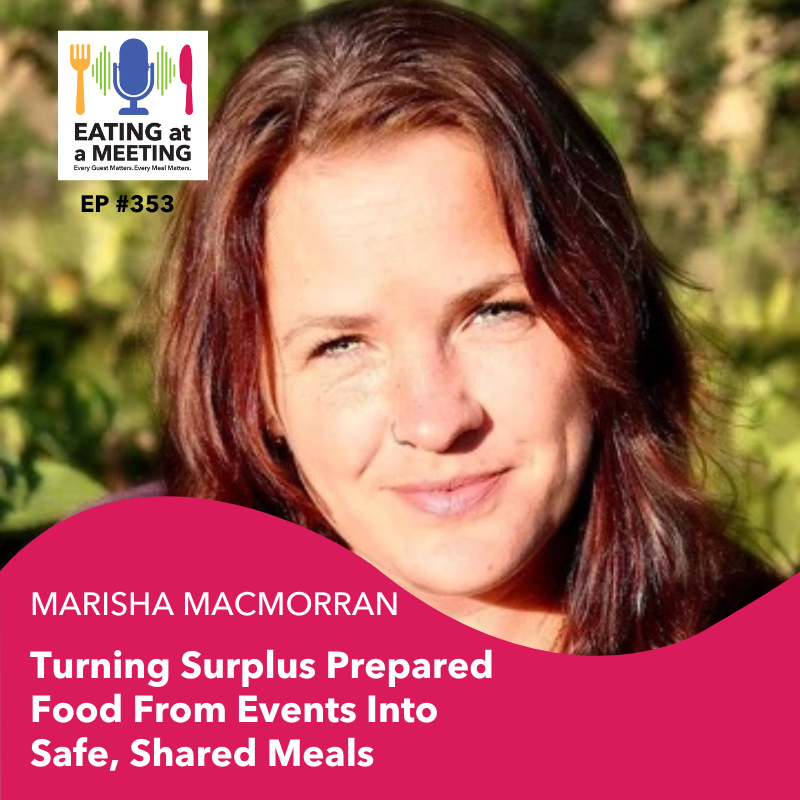
Last year, Les Dames NC selected Food Connection as one of three beneficiaries of our annual holiday cookie sale—and this conversation is exactly why.
This is the third interview in my series spotlighting organizations that are feeding our communities with food that already exists… including food coming straight from events, catering kitchens, and conference centers.
I’m sitting down with Marisha MacMorran, Executive Director of Food Connection, an Asheville-based nonprofit that rescues surplus prepared food and redistributes it to neighbors across Western North Carolina. This isn’t about scraps or leftovers—it’s about smoked brisket, roasted vegetables, crab cakes, veggie couscous… food that was cooked with care and deserves a second purpose.
Food Connection connects those with too much food to those without enough—keeping hundreds of tons of fresh food out of landfills while delivering hundreds of thousands of heat-and-serve meals with dignity and choice.
If you’ve ever wondered what should happen to food after an event—or how your F&B decisions can support the communities we host meetings in—this is a conversation you’ll want to be part of.
Because feeding people is about more than food. It’s about connection, dignity, and showing up for one another.
What questions do you have about rescuing surplus food from events?


Heard on the Episode
"Food insecurity does not look like one thing. You really can, on the outside, appear to be well off, and the reality is you're struggling to make ends meet."
~Marisha MacMorran [12:26]
"If you're a human being, you need to eat, and we are all equally deserving of a delicious, nutritious, prepared meal."
~Marisha MacMorran [24:09]
"My wish is that food donation of surplus food becomes just as common as recycling."
~Marisha MacMorran [48:54]
Key Topics Discussed
Food Rescue Logistics
Tracking food origins, dates, and distribution.
Refrigerated trailer drop-offs and agency partnerships.
Safety & Legal Protection
ServSafe certification and meticulous recordkeeping.
Bill Emerson Good Samaritan Food Donation Act explained.
Dignity & Choice
Offering menu options and respecting cultural needs.
Ensuring meals are wanted, not wasted.
Community Impact
Mobile meals in rural areas and support after disasters.
Volunteers and donor partners—relationships matter.
Environmental Benefits
Food waste reduction, animal feed, and composting.
Key Takeaways
Food insecurity affects diverse populations, not just those in visible poverty.
Tracking and labeling food is crucial to both safety and transparency.
Legal protections exist to ease donor concerns—education is powerful.
Dignity and choice in meal distribution promotes community and prevents waste.
No donation is too small; every rescued meal serves a real need.
Strong relationships drive consistent food donations and effective community reach.
Tips
Have a surplus food plan before your event—even late-night logistics can be handled.
Remove barriers for donors: provide containers, labeling tools, and clear instructions.
Educate partners about liability protections and tax incentives.
Listen to the community; adapt meals to preferences and cultural needs.
Build relationships—seeing the impact firsthand motivates lasting partnerships.
Like what you heard? Subscribe to our newsletter for more episodes and insider content delivered right to your inbox!
Tracy Stuckrath [00:00:07]:
Hey everyone, and welcome to another episode of Eating at a Meeting. Marisha McMorran, she is the executive director of The Food Connection in Asheville, North Carolina. She has been part of The Food Connection, um, since the very beginning as a volunteer, and in 2021, she became the executive director. Food Connection rescues surplus prepared food from events, restaurants, and institutions and redistributes it to neighbors across Western North Carolina. And I became connected with her through Les Dames de Escoffier North Carolina. I'm the president of the North Carolina chapter. And last year we did our second annual cookie holiday cookie sale. And Food Connection was one of the three organizations that we provided a $1,200, just over $1,200 cash donation to them to feed the communities in Western North Carolina that were impacted from Hurricane Helene.
Tracy Stuckrath [00:01:06]:
I said that right, right? So Marisha, I'm so excited to meet you face to face over Zoom and to chat with you about the work that you do. And as you know, this is the third episode of, you know, having these conversations of Feeding Our Communities. And I'm really excited to talk to you because you actually take the food from events and repurpose it. And so I'm excited to have everybody understand what you do and to learn from you. So welcome to the show.
Marisha MacMorran [00:01:39]:
Thank you so much, Tracy. I'm really happy to be here today.
Tracy Stuckrath [00:01:43]:
So tell— I briefly just said what Food Connection is, so, but from your words, from a volunteer to the executive director, you know, can you walk us through what happens to surplus food after an event ends and what Food Connection how Food Connection is part of that?
Marisha MacMorran [00:01:59]:
Yeah, absolutely. So Food Connection partners, like you said, Tracy, with catering companies, event centers, institutions, universities, hospitals to rescue and redistribute surplus food. A lot of our food comes from events, from weddings, corporate events, holiday parties, and there is not a one-size-fits-all approach to food rescue. So we do our— we understand that it is easier to throw a pan of food in the garbage than it is to wrap it, label it, hold it at safe temperatures, and arrange the logistics to have that food be rescued and redistributed. So we work really hard to understand the capacity and the ability of our food donor partners, especially at events which end late at night sometimes. A lot of our catering partners are offsite, so they might not have a walk-in cooler to put that food in. So specific to events, food rescue can look many different ways. If the event is happening in a place that is offsite in a venue that doesn't have proper storage, and we know ahead of time, we can arrange a staff person or a volunteer to rescue that food at the end of the event.
Marisha MacMorran [00:03:15]:
Food Connection has become really innovative to increase our efficiency and also ease of donations for our partners. And we have central in Asheville a refrigerated trailer with a number lock on the outside of it. So some of our event partners and catering partners do a self-delivery where they can come at 10 o'clock at night and they can put the food in there. We've got a clipboard that they can communicate exactly what they donated, and then it's ready for us to distribute the next day.
Tracy Stuckrath [00:03:46]:
And that's awesome.
Marisha MacMorran [00:03:48]:
Yeah, it's been, it's been really great. Again, anytime that we can take a step to reduce, to keep our, you know, our overhead and our staff hours low, we're able to do that. So That's the two main ways that we rescue food from events. When it's possible, especially if it's a wedding that's going until 10, 11 o'clock at night, when it's possible, we ask the caterer or the venue to hold the food, to chill it and hold the food until the next day and we can come and get it.
Tracy Stuckrath [00:04:19]:
Okay. And like the people that are putting it in those, in that refrigerated cooler that you have, are they putting it in their own containers? And do they get the, I mean, I'm just, this is a logistics thing. Do they get those containers back? What happens to that? Yeah.
Marisha MacMorran [00:04:34]:
Yeah. So most of our food donor partners provide the recyclable aluminum disposable pans, and we do have some food donor partners that we provide for them if it's cost prohibitive. Again, however we can remove barriers and make it really easy for our food donor partners to do that. And then we also ask, require our food donor partners to label the food so that we know where it came from. The date it was prepared and what it is. And then Food Connection tracks every pan that comes through with all of that information so that we're able to know where it got served, where it came from, when it was prepared, so that we can maintain the highest level of food safety standards.
Tracy Stuckrath [00:05:18]:
Yeah, because I think a lot of— and I've said this multiple times on other episodes— is like one of the problems that event planners run into is that venues or caterers are like, well, we can't donate it because we're going to get sued. But I think that helps, you know, by able to track that information, you're helping if something does happen. But as far as I know, nothing has ever really, you know, nothing's been reported that it happened from donated food, that that's part of that whole tracking and transparency.
Marisha MacMorran [00:05:47]:
Yeah, absolutely. And, you know, we maintain all of our program staff as ServSafe certified. And again, food safety is the top priority always because we care about the communities we serve first and foremost. But above and beyond that, we would never want to be in a position where we jeopardize ourself or any other organization's ability to rescue surplus food and get it safely to the community.
Tracy Stuckrath [00:06:12]:
No, and I think that's super important. And one of the things, I mean, we have it, we don't want it to go into the landfill, and we want to be able to feed our, you know, our community and our neighbors. So I appreciate the fact that you are focused on making it easy as possible to make it happen, because I think that's one of the barriers that we see is that, well, because it does take time, it does take transportation, it does take, hey, I'm going to, you know, what am I going to do with this leftover food? And you're like, okay, we'll just store it. We'll come and get it. Let us know. What is the timing of that? I mean, we, a lot of times we say when we're signing contracts with venues that we want to put that information in the contract before we sign it saying, hey, this is what we want to make sure that any surplus food that we have is going to a local community partner. You know, when are you finding out, what is your ideal timing to find out that you're going to be picking up this food?
Marisha MacMorran [00:07:11]:
Again, we're adaptable. We got a call last night from an event that said, we've got a bunch of food. We said, we'll be there in the morning, you know, so we're ready for those last minute calls and to make that happen. We also, with our institutional partners, primarily like universities and hospitals who are providing, you know, food for hundreds to thousands of people every day in a buffet, those kind of relationships are really great because we can plan to come Monday, Wednesday, and Friday and pick up that food. So again, it is, you know, a lot about relationship building, communication, logistic coordination. This year in 2025, we have had 100 food donor partners. Some of them have donated once or twice. Some of them, like our local Mission Hospital, we are there 4 days a week picking up food and everything in between.
Marisha MacMorran [00:07:59]:
So there is no donation too small if it means that it's going to create a positive, you know, nutritious experience and meal for a community member.
Tracy Stuckrath [00:08:10]:
Okay. I'm just going to be a smarty pants here, but you apparently you don't turn your, your do not disturb on when you go to bed because you got a phone call at 10 or 11 o'clock at night from a donor.
Marisha MacMorran [00:08:20]:
Well, we have, you can find out our website if you're interested in donating food or becoming involved. We have a food connection hotline and we take turns monitoring that. So it's not one person responsible. All the time.
Tracy Stuckrath [00:08:35]:
Okay, good. Okay, so now I want to go back to the, to the beginning of this. I'm like, you've been involved with Food Connection since the beginning as a volunteer. And actually, before we started, you said that you were one of the first— your— the company that you worked with was one of the first donors to Food Connection. So can you talk about that?
Marisha MacMorran [00:08:56]:
It's one of my favorite stories to tell. I have— I grew up in a family restaurant. I've been working in and out of food and beverage my entire life. And In 2015, I was the operations manager of a catering company and event venue that did, you know, large-scale events, you know, all over the region. And Flory Payette, Food Connections founder, called one day and she asked what we did with our surplus food. And I said that we, you know, always sent it home with staff, but sometimes there was still extra. And she asked if we would be interested in donating it to feed the community. And I said, oh no, we can't do that because of liability.
Marisha MacMorran [00:09:32]:
If somebody were to get sick, it could jeopardize the business. And Flory educated me in that moment, and she explained to me about the Bill Emerson Good Samaritan Food Donation Act, which provides federal liability protection to businesses donating surplus food to a nonprofit and to the community. And I was sold in that moment. In all of my experience in food and beverage, I had no idea. So we did come on as the second food donor partner. I fell in love with Flory, fell in love with the mission, and did everything that I could right from day one to help to help grow the organization and support food rescue.
Tracy Stuckrath [00:10:06]:
Okay, so that really just answers that whole thing. I'm like, you were one of those people that says, no, we can't do this, and now you're the executive director of the organization that is helping do that. That's so awesome.
Marisha MacMorran [00:10:19]:
Yeah, and that is really one of the biggest, um, that's the biggest barrier, and that's almost always the first objection that we hear when talking to a new food donor partner. So we're always prepared for that education piece, and For our food donor partners, you know, we talk to them about the liability protection, set their mind at ease for that. We also talk to them about the tax incentive because businesses can value the, the value of the food that they donate, and that's a tax write-off. There is a huge environmental impact that I'm happy to talk more about.
Tracy Stuckrath [00:10:49]:
Yeah.
Marisha MacMorran [00:10:49]:
And then there is the end result that we're feeding our community members that might not have enough to eat. So if, if there's a food donor partner and they've got to care about one of those things, the money, the people, or the environment. So there's usually a way to bring them on board and show them how valuable this work is, again, for the people, for the planet.
Tracy Stuckrath [00:11:13]:
Well, and before we started, you were also talking about, I'm going to say, the type of people who are food insecure. And I mean, when we helped you, it was because of Hurricane Helene, right? And I mean, people lost their their houses and their jobs. And, and, but you see a variety of different people. Can you talk through that? And what, what is— I mean, what are the reasons that people visit you?
Marisha MacMorran [00:11:44]:
That's a really great question. I think it's really important for people to understand that food insecurity does not look like one thing. Oftentimes when people think of food insecurity, they think of our unhoused neighbors or, you know, individuals and families that are living in extreme poverty. And yes, food insecurity does, does exist there. And also especially, you know, look at Atlanta, look at Asheville where there's such a high cost of living that once you're paying high rent costs and increased grocery, you know, prices, and especially if you're taking care of children, that it can be really hard to make ends meet for folks. And what we've learned over time is that you really can, on the outside, appear to be well off, and the reality is you're struggling to make ends meet. And in our region alone, nearly 30% of people identified as food insecure don't qualify for food assistance. So we are also talking Yeah, we're talking about working families.
Marisha MacMorran [00:12:54]:
We're also talking about seniors living on fixed income. And beyond that, it is not always a financial barrier. We see a lot of seniors who come to our distributions who are, you know, navigating health challenges. They may have arthritis and not be able to cook a nutritious meal. So there are a lot of different reasons that people come to us and For our very unique model, so the food that we receive, two things happen to it. Some of it goes in large hotel pans directly to our agency partners who feed the community. So they would heat and serve. So our shelters, faith-based communities that have welcome tables and open tables.
Marisha MacMorran [00:13:38]:
And then Food Connection is very innovative in our mobile meals program where we take huge volumes of food and repackage that food into individual heat and serve meals that we distribute through a free food truck experience. So what that might look like for folks coming to the truck is we have a menu of choices. You may get flank steak from Omni Grove Park Inn with gourmet macaroni and cheese from Pack's Tavern downtown and local fresh roasted green beans from UNCA and get to, to enjoy this gourmet food that Asheville is known for. And When folks come to that distribution, especially our senior neighbors, it's more than just a meal. It's community. For a lot of them, it's the time of the week that they get to go and see their friends and hang out and talk to our staff and our volunteers. And, you know, we really believe that food builds community.
Tracy Stuckrath [00:14:34]:
It really does.
Marisha MacMorran [00:14:35]:
Every day.
Tracy Stuckrath [00:14:36]:
And does that mobile truck work every day or is it just a couple of days a week?
Marisha MacMorran [00:14:41]:
We have a really complex schedule. We are out 6 days a week. So one of our biggest programs is our Beyond the Bus Pass Line program, which does exactly how it sounds, is that we go on, go beyond the city limits into some of our rural communities where it may be a food desert. There's not a lot of resources and folks don't have access to the food that they need. So that is open to the public, you know, come one, come all, no questions asked. And we do that in several areas around Asheville. We also have a youth and families program where we partner with affordable afterschool programs and early childhood learning centers to meet parents and caregivers right where they are picking up their kids after school so they can grab meals for that night and take them home to their neighbors if, if there's a need there. We have an elder program where we take meals, individual meals, to senior living centers and get them directly to our senior neighbors.
Marisha MacMorran [00:15:38]:
We also partner with behavioral mental at mental health and substance use recovery centers to support folks in recovery, making sure that they have access to prepared nutritious food. And then we have a really robust community connector program which leverages the manpower and the knowledge and the heart of our community members, that they'll come to us and get 30 meals or 50 meals, and they will take them way out into rural areas.
Tracy Stuckrath [00:16:07]:
Oh, wow.
Marisha MacMorran [00:16:08]:
The mobile home community parks and take them that final mile where they know their neighbors are in need and get them to places that we wouldn't be able to reach on our own.
Tracy Stuckrath [00:16:19]:
That's amazing. I mean, and because it's not, it's, and you, and I think, okay, we're, I think I saw a statistic like North Carolina is very rural, right? I mean, we have our pockets of Charlotte and Asheville and Raleigh and I guess you could say New Bern and Wilmington, right? But in between that, I mean, when I drive between here and Raleigh, it's amazing the tiny little towns that are there, you know, in between there. And it's very rural. And I, there's some statistic that it was comparing us to Texas. Like we have, we're more, we have more rural space than Texas does, which is kind of mind-blowing. I, I, that's, I'll have to find the stat and look it up, but it, um, you don't think about that. It's not just in cities, right? It's not just, you know, oh, that part of town, right? It's, it's other people outside of where you are. And it actually could be your neighbor right next door who's a senior.
Tracy Stuckrath [00:17:18]:
And I actually, I remember my neighbor in Atlanta, his wife died and I don't think he ever really cooked for himself. And so I would share, you know, excess food that I had to make sure he was eating because he was a skinny thing. Skinny, you know, old man who took care of me. Right. And I wanted to make sure I took care of him. But, okay, I want to go back to the logistics of this, right? Because what you just described, that's a lot. I mean, you have a lot of different programs going on. And so it's not as simple as, hey, here's a bag lunch, leftover bag meal that we have from our event, and we're not just boxing it up.
Tracy Stuckrath [00:18:02]:
What does it really take to safely and responsibly rescue that prepared food? What are your teams doing when they go to that refrigerated truck and/or go to that catering company?
Marisha MacMorran [00:18:16]:
Yeah, the logistics are a really big part of what we do. So from the time a food donation is made, whether a staff person or a volunteer picks it up or the donor drops it off at our trailer, everything gets logged. Tracking, like I said, the, where the food came from, who prepared it, the date that it was prepared. And then if it enters our mobile meals program, then we also track the date that it was packed into a meal and the date that it was distributed so that we can make sure that that's happening, you know, within a safe timeframe. And we even get, give a cushion, you know, for that to make sure. And then the food that goes to our agencies is a little bit easier to track because it's a pan of macaroni and cheese from Mission Hospital and it went to the Salvation Army. So we also track all of the meals to their final destination for the mobile meals. So for all of those subprograms that I just talked about, we track how many meals we give out at each one of them, where that food came from.
Marisha MacMorran [00:19:17]:
And that is pretty time-consuming and also very important because if somebody were to ever get sick or think that they got sick from a meal received from Food Connection, we could trace that all the way back to where it came from and we could show, um, very clearly how, you know, the chain of how it was held, how it was moved, how it was handled, how it was packed, and then how it was distributed.
Tracy Stuckrath [00:19:41]:
Well, and I think, and I want people to realize too that, you know, noting the time that was made, I mean, that's really food safety practices 101 when you take ServeSafe, right? Noting when it was, when you're putting it in the refrigerator, when it was made and the date and who it was done by and, and tracking all of that. And so I love the fact that you've got that next step too of when, you your, you know, where it goes in and, you know, who's it being donated to. I'm curious, do you, do you track allergens in that at all?
Marisha MacMorran [00:20:12]:
We, we don't track allergens. We have a label that goes on all the individual meals that has an enjoy-by date, and then it has that disclaimer that we can't guarantee that if there were, you know, peanuts or dairy or anything like that. We have fun little stamps that we put on the meals. So we have a chicken if it's a chicken dish, a cow if it's a beef dish, you know, vegetarian. So We do mark those. I will say that in regard to food safety, I think this is really important too, is if we look at the USDA kind of hierarchy of what to do with food to reduce food waste, reduction at the source, we try to make, you know, we try not to prepare more than we need, but we know that's impossible at events because your clients wouldn't be happy if you ran out of food. And then the next thing is feed people. So that's where Food Connection comes in.
Marisha MacMorran [00:21:00]:
But when in doubt, Food Connection does not throw it out. Food Connection first checks to see if it's viable for our, our farm friends. So we've got chickens and we have hog farmers who come and get that food that might not make a great meal, or it might just be too close to, you know, the best by date that we feel safe, you know, donating, right, consuming it or donating it to people. So we do share that with our farmers. We have one farmer who then brings eggs from the chickens back to us, and we're able to also hand those out on our truck, which is amazing full circle sustainability. And then we also have a compost program. So when it is really not even, it's too questionable, or yesterday it was a pan of shredded lettuce that was just a little bit too brown even to want to feed to our chicken friends. So that went into the compost, which is a very minimal percentage of the work that we do, but we are not afraid to feed an animal.
Marisha MacMorran [00:22:01]:
And yeah, just to make sure that we're maintaining the highest level of food safety.
Tracy Stuckrath [00:22:06]:
Well, and that— I love that it's people, animals, and then compost, which then can be turned in and given to— what do you do with the compost?
Marisha MacMorran [00:22:19]:
It ends up going to a large compost facility here in Asheville, Danny's Dumpster, and then I buy it back as topsoil compost blend for my garden in the spring.
Tracy Stuckrath [00:22:33]:
Nice. Okay, so that, I mean, it's totally full circle then, you know, really. So you're making sure that it gets to the people and then the animals and then the gardens. So, um, what one of the things that we, you said to me earlier, um, or that I read, I can't remember which one it was, but it was choice and dignity, um, often come up in option up often in how you talk about food. And I think you said this before we started, was that— now I'm going to mutilate what you said, but it's everybody should get fed, right? And so why does choice and dignity come into this? And especially when people are feeding, experiencing food insecurity, and I think it might even come into play with the people you mentioned who had never experienced food insecurity until Helene hit, right? Can you talk about that a little bit?
Marisha MacMorran [00:23:35]:
Yeah. At Food Connection, we call it Big D. That's dignity. And dignity is at the forefront of our work every day. So in any human service-based organization, one of the first things that you learn is it's really important to not make assumptions about communities or individuals that you don't have a shared lived experience with. So that is number one. The dignity piece is, like you had said as well, everybody needs a meal. Sometimes we're asked, how do you know that everybody that comes to you really needs a meal? And I answer, it's really simple.
Marisha MacMorran [00:24:09]:
If you're a human being, you need to eat, and we are all equally deserving of a delicious, nutritious, prepared meal. We so strongly believe that access to food is a human right. So that's where the dignity piece begins. And then the, the choice, the menu of choices. You also can't assume that everybody, just because you don't have enough to eat, doesn't mean you want to eat veal. Some people feel really strongly about that, or they don't want to eat meat at all. Another piece of the logistics, which comes in right in line with the dignity piece as well, is we take so much time and care to understand the needs of the communities that we're serving. So both the communities that are receiving individual meals and then also our agency partners.
Marisha MacMorran [00:24:55]:
And, you know, we have one community that we serve after— it really came up after Thanksgiving last year. They said, you know what, our community does not like gravy. It's not an ethnic, you know, it's not ethnically appropriate. It's not something that we have a taste for. We don't send them anything with gravy anymore. So, and also, you know, when we're feeding, you know, taking food to the children's home, we like to introduce different varieties. And we do see where we get feedback from parents that say, my child loved the salmon dish, and I had no idea that they, that they would even eat fish. On the other hand, we also make sure that we have grilled chicken, macaroni and cheese, broccoli and green beans that are more, you know, child-friendly foods.
Marisha MacMorran [00:25:37]:
We never want to show up, whether it's an agency or, or a community, and hand somebody a meal that they're going to take home and throw away because they don't like it or because it's not culturally appropriate or not something that they have a taste for. That would just, you know, it should— it would have been better for it to go in the garbage to begin with than to go through all of the logistics and energy to rescue it. So we really take a lot of care to make sure that we're listening and collecting regular feedback and hearing the stories from the community. One of our our senior, our elder program, our senior centers, based on the feedback, we found out they really liked fruit, which we don't get a ton of, but we, you know, that stuck with us and we care. So anytime that we are able to, we package up, you know, fresh fruit or cut up fruit and send it along with their meals.
Tracy Stuckrath [00:26:26]:
Oh, that's awesome. Well, and that story reminds me of an organization here in New Bern that I was talking to last year too, and they were doing boxes kind of like a farmer's box, you know, once a week or whatever, and people could come pick it up. There was a large group of Muslims and there was pork in there all the time. And so same thing, they were sent, they were throwing it away. And so they were trying to have to rethink how they would repackage and just understanding the communities that they're serving because you don't want it to go to waste, go into the trash can once it gets there because you just didn't listen.
Marisha MacMorran [00:27:02]:
Yeah, absolutely. That is so important.
Tracy Stuckrath [00:27:08]:
And everybody doesn't like macaroni and cheese and everybody doesn't, like you said, veal, or it's a very good example of it. And so how can you— it goes back to that dignity that you said, right? And really thinking through who you're feeding.
Marisha MacMorran [00:27:25]:
Absolutely. And listening to the community. I mean, that is the key to that. And because we care. Because we truly genuinely care.
Tracy Stuckrath [00:27:37]:
So, um, go back to, um, okay, so you, you worked as you were a caterer and you were the second donor to partner with this. What makes a good partner? I mean, once you've educated them that, hey, you, you can do this and you're not going to get sued, what really, um, what makes a food donor partnership successful and how can planners as well as our catering partners or our hotel partners really understand and work with you or other companies like you?
Marisha MacMorran [00:28:07]:
Yeah, what makes a good— first of all, it's just, it's willingness. It's education. It starts with education and then it's willingness to take that little bit of extra time and again, making sure that everything is labeled properly. You know, the communication supports the logistics. What we've found with some of our food donor partners too is if we can get them into the field to distribute meals to the community and see that impact, they're sold for, they're sold for life. I— it is sometimes it takes a long time, especially with corporate hotels. And, you know, when you're talking about, you know, large, you know, food and beverage like Compass and Sodexo and Chartwells. And sometimes it takes a long time from the first conversation until we rescue that first pan of food.
Marisha MacMorran [00:28:55]:
Sometimes it can take months. We've, we've had partnerships that have taken years to get to that point. Point, and you've got an MOU, and it's got the corporate ladder, and the chef may want to do it, but the, you know, management is hesitant. But what we found is that once that donation starts to happen, especially when they see the testimonials or come out and see our work in the field, we have very, very, very few donor partners that lapse and stop donating food. So, so once that relationship is formed it 98% of the time continues long term.
Tracy Stuckrath [00:29:33]:
That's amazing. And, and I now I'm going to talk to my— I'm— my presidency of La Dames ends on the 31st. And so I'm gonna talk to my new president and say, the incoming president, say, hey, let's go to Asheville and do this, right? And be— participate in that. Um, and it reminded me too of like last week, I was chatting with, um, Director of Environment Sustainability and then Environmental at Javits Center. And she said it's amazing how everybody in the— this huge convention center, the staff are all engaged in the making sure that the donations happen. And they also have an acre farm on the rooftop. But so they're donating food from the farm, but they're donating food leftover from events. But it takes everybody in that property to be on board.
Tracy Stuckrath [00:30:26]:
And, and so I think, like you just said, it's like once they get into it, they feel the love and the need.
Marisha MacMorran [00:30:35]:
And, and what we know is that chef— our chef partners, they work so hard. I've never met a chef that works a 9, you know, works 9 to 5, or that works 40 hours a week. And they, they, they create delicious this cuisine that they share. I mean, that's their, like, mission in life, right, is to cook and to feed people. And so I don't believe— I've never met a chef who wants to throw their labor of love in the trash. They want to share that with the community and get the food out there. And I think that's, you know, that's across the board. I've never met a chef that says, you know what, I just, I don't care.
Marisha MacMorran [00:31:19]:
I'm fine to throw away all of the hours of prep and everything. And so I think that's— I would like to, if I could, speak to the environmental impact a little bit too, because I think that a lot of people don't realize how detrimental food waste is for our environment. So it's estimated that about 40% of all food produced in the United States ends up in the landfill, which is about 148 billion pounds of surplus food in the course of a year. Food waste is the largest single material in landfills, and food rotting in the landfill releases methane gas, which is far more potent of a greenhouse gas than CO2. So, you know, really important for the environment for us not to throw food in the trash. And then we look at, you know, if you have a beef, especially ground beef is one of the most resource-intensive foods to produce. So you think I just threw away, you know, a pound of ground beef. For every pound of ground beef, that is 1,800 gallons of water.
Marisha MacMorran [00:32:30]:
That's just the water resource. And then when you look at what it took to raise it, to feed it, to process it, to transport it, to prepare it, I think that the amount of energy that that takes when you throw it in the landfill, then you're throwing it in the landfill, you're wasting so much more than just 1 pound of beef. And I think that's really important perspective to understand that we're doing so much more than just feeding people, not just feeding people. That is core value first.
Tracy Stuckrath [00:33:03]:
Well, and it goes back to your three-tiered thing as well, like the people, the animals, the compost, which then goes back into the gardens of community. And eating your own food is so much— is so enjoyable as well, you know, making, growing your own food. What I can hear in all of this is that you've got the relationships with the restaurants and the hospitals, etc., and then you have the relationships with the people that you're feeding. You know, can you how is that relationship building logistics— what am I trying to say? Why relationship building is just as important as the logistics. I mean, and you said, because like, hey, once we get them in here and they deliver the food, you know, you haven't lost that relationship then, but it's from both sides, like from one end to the other, it's the relationship as important.
Marisha MacMorran [00:34:04]:
Yeah, absolutely. Well, without building the relationships and taking time to get to know our food donor partners and our recipient partners, we could just make a lot of missteps, right? We would be— if we didn't have the relationships, we would have to make assumptions, and that is such a dangerous thing to do in any type of work, right? So that's how, that's how we can best adapt to our food donor partners. If we didn't have those relationships, then we would not serve them, we would not have a 98% retention rate if we didn't nurture those relationships. If we didn't nurture the relationships that we have with our recipient partners, they wouldn't come back to get food if we weren't serving it with dignity and taking, you know, the time to understand, you know, their needs and relationships. And then also community relationships too, because food connection, it takes a lot more than the food donor partners, staff, and then recipient partners. We have a vast network of volunteers. Volunteers pack meals, volunteers pick up food for us, volunteers help distribute the food to the community. We have volunteers too on our board of directors and our finance committee and our fundraising committee that help us with events, that table at community events to raise awareness.
Marisha MacMorran [00:35:22]:
Nurturing relationships with our financial donors. This, this does not happen for free, right? The, the, the staff expense and the logistics and our, you know, facilities and our, just our growing fleet of vehicles to carry out this work is a really large expense. So maintaining the relationship with our financial donors, our volunteers, and our community partners is also important.
Tracy Stuckrath [00:35:46]:
I'm glad that you said that because it is more than just, hey, here's a leftover box lunch from this meal, like, go feed somebody with it, right? It your fleet of trucks, it's the gas, the price of gasoline, you know, it's the cost of containers, etc. So I'm so glad that you mentioned that because it's, it is a lot more than just, hey, here's a meal, take it and feed somebody. And, and LaDame's was, LaDame's North Carolina was a, we donated $1,250. And to be honest with you, we didn't think that was very much, right? We're like, this is what we've got. But from the emails that we got from all 3 of the organizations, that was a nice piece of— that was a nice amount of money for you to get. Can you talk about how $1,250 can support work, help you?
Marisha MacMorran [00:36:39]:
Yeah, absolutely. That is such a meaningful gift. Every financial gift matters. And the time that that came, I believe that it was January of 2025. So we were still very much in acute short-term. Recovery from Helene. Before Helene hit, Food Connection was distributing about 1,100 individual meals a week, in addition to another, you know, 1,500 meals that went to our agency partners. In the weeks after Helene, that number increased to 12,000 meals in one week.
Tracy Stuckrath [00:37:17]:
Wow.
Marisha MacMorran [00:37:18]:
So So without that donation, along with the other donations, we would not have been able to meet that moment and increase— I don't even know what percentage that is, like a billion percent increase from where we were to what we did. Because in the aftermath of Helene, our region, we had communities without power and without water for weeks, some of them months. And this is where we saw so many individuals who had never had to stand in line for a meal. And that's where the dignity piece really shines and food access and equity is you have somebody, you know, who has been struggling for years to make ends meet and who is a regular, you know, recipient of meals right next to the person who has never— who might have driven their Mercedes to the food line, who has never asked for a meal or had to seek support like that. And they're just talking to each other. Because people, you know, you break bread, you talk about food, it brings community together, and that's a really beautiful thing. Now, so that gift, I just want to say, to be clear, so that gift, you know, came at a time where Food Connection needed that extra, you know, funding and that extra fuel to be able to meet the needs of the community, and we are so incredibly grateful. And with every financial gift, we feel the heart behind it, and, you know, Food Connection In, you know, the big scheme of things, we're, we're still a small organization.
Marisha MacMorran [00:38:46]:
So to receive funding from organizations like yours outside of the area that care, I mean, that, that impact for our morale and knowing that we are not alone and that we were receiving that support from across the state and across the country, what is, I mean, it, it's what kept us going when in, in the most trying times. That we have faced as an organization and for all of us as individuals as we watched our, you know, communities just get washed away.
Tracy Stuckrath [00:39:16]:
Literally, yeah. And I know that they're still impacted now. I mean, it's still— it's just a year that that happened. And I know it's going to take a long time for the area to continue to rebuild and people to get back up on their feet across the board. Okay, so now we're both going to I don't have a tissue. Okay, so I want to talk about the size of Asheville because it's not the size of Atlanta, it's not Las Vegas. And, you know, so you don't have the Georgia World Congress Center, you know, donating a large quantity of things. But it does sound— I'm like, you've got 100 partners right now this year.
Tracy Stuckrath [00:40:03]:
I mean, even in that small market, $1,250, $1,250, $1,250, yes, whatever that, however I say that, you know, is a big thing. But even, you know, from Posana or Curate or, you know, the restaurants that I know off the top of my head in Asheville, I'm like, you can still feed a lot of people in that small market. It based on the size of events that you have? Because they're not going to be the size of, you know, an event at the Georgia World Congress Center.
Marisha MacMorran [00:40:34]:
Yeah, I'm so happy that you asked that question. So I want to speak about two things here. For one, Food Connection is right now celebrating 1 million meals served in 11 years, which is such an incredible milestone for us. A quarter of a million, 200, almost 250,000 of those meals have been done in the last 12 months. So wow, that, that is 250,000 meals that we got to share with our neighbors, that we had the privilege to share with our neighbors. So it's big for our region, it's big for us. Every meal matters. Without the other part of that that I wanted to say, um, we are working on a partnership with Mission Hospital's McDowell campus.
Marisha MacMorran [00:41:20]:
McDowell County is a very rural very low population county near Buncombe County, which is— Asheville is in. And in our rural pockets, that's where we see more food insecurity, food deserts, you know, low-income communities. And we'll start to rescue that food and it'll go to the community. And that operation in McDowell County may never grow beyond a couple of hundred meals a week, week. And that's okay, too. That's more than okay, because that's still a couple hundred meals a week that were not being served to the community before the food rescue started.
Tracy Stuckrath [00:41:58]:
Right.
Marisha MacMorran [00:41:58]:
So, so, so size matters, and it doesn't. Every— there's opportunity. There's food ending up in the landfill that we know across the country every day. And so for all the listeners out there, I want to say we are so enthusiastic and eager to share our model. And if you are interested, if you see an opportunity in your community, whether it's a small conference center or a catering company or a hospital, or you're in a larger area that doesn't have food rescue yet, please reach out to us. We will, we will help you to get food rescue started in your community.
Tracy Stuckrath [00:42:35]:
Oh, that's awesome because it is hard. And there's a story that I don't even remember what magazine I don't know what city it was in, but it was a couple of years ago. And this planner, and I don't know what city either, like went to the convention center and they're like, well, no, we don't do that. And she went out and found a food connection, right? Partner for them. And then since then, that convention center has worked with that partner now because of that relationship. And so it's, and maybe it's the people in the venue that don't have the time to get out there. Maybe it is that planner that's making that relationship or just me knowing that this can happen. In and how I can help support that.
Tracy Stuckrath [00:43:14]:
And I'm sure that you're not rescuing everything that you possibly could, even in the Asheville, Western North Carolina area. I mean, if everybody could do that, what would that mean for both the community and the environment?
Marisha MacMorran [00:43:28]:
You know, when we look around today, there we see so much scarcity. We see folks that don't have enough food. They don't— folks that don't have housing. We see so much scarcity in food connection. Truly believes that wherever we see scarcity, there is abundance. 148 billion pounds of food being thrown away every year, that is enough to feed, to feed all of our neighbors. We could, as a country, we could end or very drastically reduce food insecurity across the country if we banded together and made sure that no food ended up in the landfill. And, you know, I have been on mission for 11 years with Food Connection, and I've always believed very passionately about our work.
Marisha MacMorran [00:44:13]:
And I will say that it has never, ever, ever been more important to make sure that no nutritious prepared food ends up in the landfill when our neighbors don't have enough to eat. We look at our food banks that have growing food lines, federal funding cuts. There is so much strain on our feeding organizations, especially the ones that are having to purchase food and cook food and make food and, and, you know, go through all of these, you know, different channels to get food to our neighbors. And And it's just so important to make sure that we're not throwing food away right now. More important than I think it's ever been.
Tracy Stuckrath [00:44:49]:
Yeah. Thank you for that. It's— we need to figure it out. And I know from our events, you know, events that we do across the country and globally even, you know, the amount of food that we make, as you mentioned at the very beginning, because we don't want to— we don't want people to run out of food, right? Have an empty chafing dish at an event, but we need to make sure that we're using it wisely and partnering with organizations like Food Connection. Okay, I have a couple of rapid-fire questions for you. You ready?
Marisha MacMorran [00:45:19]:
Okay.
Tracy Stuckrath [00:45:19]:
Okay. What's the— and some of these might actually not be rapid-fire answers, but the most common misconception about food donation?
Marisha MacMorran [00:45:30]:
That it's a liability and you're— and you can't safely do it.
Tracy Stuckrath [00:45:33]:
Okay. Thank you for saying that. One word that describes what food rescue really means to you.
Marisha MacMorran [00:45:40]:
To you? Oh, that would— if I say one word, it means community. If I had to pick one word, it is community.
Tracy Stuckrath [00:45:50]:
Okay. What's one moment that reminded you why this work matters?
Marisha MacMorran [00:45:56]:
I am reminded every single day. I am reminded every meal that we hand out. I wish we had more time for some stories about the community impact Can I tell a really just very quick story?
Tracy Stuckrath [00:46:08]:
Yeah.
Marisha MacMorran [00:46:09]:
So one of our community connector partners, we work with some caseworkers from DSS, the Department of Social Services, who are caseworkers working with some of our most vulnerable children that are living in situations where they're in kinship placement or foster care. They're living in houses with domestic violence and substance use. Nobody wants to see a DSS worker show up at their door. The parents who are being investigated don't want to, don't want to have that knock at the door. The children who've been living, you know, through these difficult circumstances, they know what that knock could mean for them. And when the DSS worker shows up with steak and fried chicken and macaroni and cheese and potatoes and green beans and yogurt cups or fresh fruit, we make sure we try to add cookies and do a little extra for our, our DSS caseworkers. That transforms that experience for everyone in that household because that DSS worker showing up is now not seen just as an authority coming to judge you. They're seen as a partner coming to support you.
Marisha MacMorran [00:47:19]:
And that is why our work matters so much.
Tracy Stuckrath [00:47:23]:
Oh, twice in one show. That's just, that's amazing because that is their job. I mean, their job is to support you and it does come, I'm sure it comes off as, you know, hey, this is not the good person to be at the door, but that is actually what their whole goal is, is to be supportive and find the right homes for people. So I love that. Thank you for giving them a new tool, right? And to do their job better. Um, okay, so one thing every kitchen should do before loadout—.
Marisha MacMorran [00:47:58]:
To donate food.
Tracy Stuckrath [00:48:00]:
Or— yeah, I guess.
Marisha MacMorran [00:48:02]:
Yeah, yeah. Um, before loadout, wrap that food up. Wrap it, label it, make that phone call before you even get to the loadout. Have a plan for your surplus food so you can make sure that it doesn't have to go in the landfill after that event.
Tracy Stuckrath [00:48:17]:
And I like that you said that because you actually need to have a plan before you actually— you need to have a plan going into your event versus trying to figure it out on the back end.
Marisha MacMorran [00:48:27]:
Correct. Yeah. It makes it easier for all parties involved when there's a plan, especially if it's an event that ends late at night or it's on a holiday or a Sunday afternoon.
Tracy Stuckrath [00:48:36]:
Right. Okay. Yeah. You make sure you have that plan in place well before the event starts. Okay. Two more. Your hope for, for the future of surplus food from events.
Marisha MacMorran [00:48:47]:
I hope that that food donation, surplus food donation becomes as common practice as recycling is. You know, there was a time where only the hippies had the blue bins outside of their house and did that. And now it is, you know, the social standard for us to recycle. And my wish is that food donation of surplus food becomes just as common as recycling.
Tracy Stuckrath [00:49:12]:
I love that. Okay, so, and my last question is I want you to finish this sentence, and then I want you to tell how everybody— how to get in touch with you. To finish this sentence: every meal should.
Marisha MacMorran [00:49:25]:
Be served with dignity.
Tracy Stuckrath [00:49:27]:
Okay, thank you so much for sharing your time with us and providing and feeding your community. I'm so glad that Ladams was able to find you and connect with you and support, but also to have this conversation. And I'm so glad that you're so willing to share your model with other organizations on how you do the work to make sure that we're feeding the community. So Marsha, how can people get in touch with you?
Marisha MacMorran [00:49:54]:
You can visit our website, food-connection.org. And if anything that I have said today or that Tracy and I have talked about inspires you, please reach out. We're always looking for folks to share their work, their wealth, and their wisdom. So if you wanna be a volunteer and get involved and work with us, please reach out. If you wanna give a financial donation, like we said, earlier. That's what keeps our, you know, our mission moving forward. And if you've got wisdom, if you heard me and said she said something that wasn't quite right, I'm passionate about what I do. I try my hardest, but we don't know everything about everything.
Marisha MacMorran [00:50:30]:
So if there's a way that you can support us by sharing information or sharing your own experience, please reach out and, you know, we would love to have a conversation.
Tracy Stuckrath [00:50:39]:
That's awesome. It's food-connection.org.
Marisha MacMorran [00:50:44]:
Yes, Tracy.
Tracy Stuckrath [00:50:45]:
Okay, awesome. Marisha, thank you so much for joining us, joining me on the show. And we got one huge big heart from somebody. Thank you so much for tuning in and giving us that heart emoji. As I said at the very beginning of the show, this is the last episode of the year of 2025. I'm gonna take a couple weeks off and then I will be back on January, I believe it's 7th. We'll figure that out. The first Wednesday of January after the new year.
Tracy Stuckrath [00:51:16]:
So until then, stay safe and eat well, and I look forward to seeing you in 2026. Happy holidays, everybody. Marsha, stay on for just a second. Thanks, everybody.
Marisha MacMorran [00:51:26]:
Thanks, Tracy.
Tracy Stuckrath [00:51:27]:
Thank you. Thanks for listening to the Eating at a Meeting podcast, where every meal matters. I'm Tracy Stuckrath, your food and beverage inclusion Expert. Call me and let's get started right now on creating safe and inclusive food and beverage experiences for your customers, your employees, and your communities. Share the podcast with your friends and colleagues at our Eating at a Meeting Facebook page and on all podcast platforms. To learn more about me and receive valuable information, go to tracystuckrath.com. And if you'd like more information on how to feed engagement, nourish inclusion, and bolster your bottom line, then visit eatingatameeting.com.
Executive Director, Food Connection
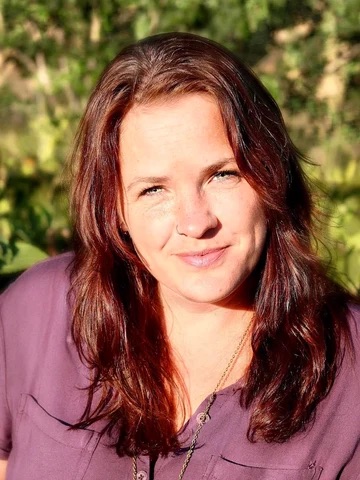
Marisha MacMorran is the Executive Director of Food Connection in Asheville, where she has been dedicated to serving the Western North Carolina community since the organization’s inception 11 years ago. First involved as a food donor partner and longtime volunteer, she stepped into the Executive Director role in 2021. Born with a passion for service, Marisha is deeply connected to the mountains and the neighbors who call them home. When she’s not leading Food Connection’s mission, she enjoys time with her fiancé, her son, and her bonus son—often at basketball games, mountain bike races or on the river fishing together.