221: From Celiac Diagnosis to Gourmet Excellence: Chef Sarah Thompson

If you thought going gluten-free meant missing out on bold flavors, think again. Executive Chef Sarah Thompson proves that authentic coastal Mexican cuisine not only excites the palate—it also welcomes every guest, regardless of dietary needs. From celiac diagnosis at 17 to running one of Las Vegas' most vibrant kitchens, she shares how a commitment to inclusivity, ingredient integrity, and flavor can elevate both casual nights out and high-profile events. Whether you plan group dinners or just dream about masa and mole, this episode offers a masterclass in operational excellence and guest care.
Sarah is a two-time James Beard Award - Best Chef SW nominee.


Heard on the Episode
“When I started working in Mexican kitchens, I realized I can eat everything... it was an eye opening experience, and I dove right in.”
~ Sarah Thompson 02:20
"Inclusivity is the core value at Casa Playa... we all have different experiences, and we have a very open dialogue in our kitchen.”
~ Sarah Thompson 14:23
“We only use masa from corn. We have a huge MASA program... the only thing on our dessert menu is churros that has gluten and we have a completely separate fryer.”
~ Sarah Thompson 11:13
"We have allergy charts all over the kitchen... and we have to accommodate all of them the same way."
~ Sarah Thompson 10:10
Key Topics Discussed
Celiac Disease & Culinary Journey
-
How Sarah Thompson's diagnosis shaped her commitment to safe, inclusive dining
-
Journey from home-cooked meals to Michelin-star kitchens
Authentic Mexican, Naturally Gluten-Free
-
Regional cuisines: why corn masa reigns in dishes from Oaxaca and Mexico City
-
Adapting classic sauces and tortillas without gluten
Safeguarding Every Guest
-
Operational processes for food allergies: charts, communication, and cross-training
-
Handling unexpected dietary needs at events and group dinners
Inclusivity & Teamwork
-
Building a culture of creativity and respect in multicultural kitchens
-
Ensuring both guests and staff feel supported, regardless of background or dietary needs
Sourcing & Seasonality
-
Sourcing heirloom corn from Oaxaca; prioritizing fresh, local produce when possible
-
Working with diverse farmers, even in the desert climate of Las Vegas
Special Events & Hospitality
-
Hosting the James Beard Foundation dinner and managing large-scale group events
-
Private dining, buyouts, and accommodating meetings or festivals
Key Takeaways
-
Flavor Without Compromise: Mexican cuisine, especially with Oaxaca and Mexico City influences, is naturally gluten-free due to its reliance on corn and local produce.
-
Inclusivity at the Core: Proactively addressing diverse employee and guest needs creates a culture where everyone feels welcome and supported.
-
Rigorous Allergy Protocols: Clear communication, dedicated equipment, and robust training keep guests safe—from celiac guests to those with unexpected allergies.
-
Empowering Culinary Teams: Openness to creativity and cultural input elevates both the food and the working environment.
-
Smart Sourcing: Investment in quality, seasonal ingredients (even when costs fluctuate) ensures bold flavors without sacrificing safety or integrity.
Tips
-
Research Regional Styles: For authentic gluten-free dining, explore cuisines rooted in corn like those of Oaxaca and Mexico City.
-
Invest in Training: Educate staff on allergens and cross-contamination; maintain updated allergy charts and clear communication protocols.
-
Be Ready for Surprises: Always expect last-minute dietary requests at group events—have a plan and stay flexible.
-
Prioritize Ingredients: Source the freshest seasonal produce and specialty items to maintain vibrant flavor, even if it costs more.
-
Brag About Inclusivity: Don’t hide your safe kitchen—let guests know about your gluten-free options and protocols, both online and in-person.
Like what you heard? Subscribe to our newsletter for more episodes and insider content delivered right to your inbox!
Tracy Stuckrath [00:00:00]:
Hey, everybody. Oh, there we go. Hey, everyone. Welcome to another episode of eating at a meeting. This is a special episode on Thursday, and I'm so excited, to bring to you, this lovely lady behind next to me here, chef Sarah Thompson. She is the executive chef of, Casa Playa, which is in the Wynn Hotel in Las Vegas. And, she is one of the top nation's top Mexican chefs, and I'm excited to have you here, Sarah. Welcome.
Sarah Thompson [00:00:31]:
Thank you for having me. I'm really excited to be here as well.
Tracy Stuckrath [00:00:35]:
And one of the reasons that, we picked this date and this month was because well, one, it's food food safety awareness month, But another reason too is that you have celiac disease, and I really wanted to tie those 2 things together, and and talk to you about what that means. But I wanna get into kind of what your experience is in general, you know, at the basis of that. So can you share about a little bit about your journey, as a chef and what inspired you to become a chef?
Sarah Thompson [00:01:05]:
I I've always known I've wanted to be a chef. I was Super interested in food growing up, and food was super important to my family every day. We would have home cooked meals. We would sit around the table and enjoy a meal together, which I think is where all of this started. And, you know, it catapult it, like, kind of, you know, progressed and, you know, we invited more people. We would cook for more people. I would make Food, bring it to all my friends at school, and, like, it would just be a a huge thing, and I I love doing it. So I knew I wanted to be a chef.
Sarah Thompson [00:01:35]:
I'm gonna go to culinary school. It was the only thing I wanted to do. And then when I was 17, a senior in high school, I get diagnosed with celiac disease, and it just was like, woah. Like, I still wanted to go down this path. I knew that I wanted to be a chef, and I was kind of ready to, you know, Take any, like, jump over all of these hurdles, even though there's a lot of restrictions around my diet, and I'm so glad that I did. And then, you know, from there, I started working at Michelin star restaurants in New York and then Cosme, which is a Mexican restaurant. And that kind of brought me to Casa Playa at the Wynn. But Mexican food really opened up my eyes to a a whole new world of flavors and, you know, masa, Which is the base of Mexican cuisine.
Sarah Thompson [00:02:20]:
And when I started working in Mexican kitchens, I realized I can eat everything. I was like, I could because everything is made from corn, And they use just the ingredients that they have in front of them. Like, they're using the chilies. They're using vegetables. They're using all of these beautiful ingredients, and it's all just naturally gluten free. So it, was an eye opening experience, and I I dove right in.
Tracy Stuckrath [00:02:43]:
That's awesome. And and then you think about it too. I mean but some of the sauces, Like, there's a Hispanic rest or Mexican restaurant in my town, not to the level of your restaurant, I'm sure. But in some of their sauces, they use flour. So how do you what have you switched? And I think it was, like, the some of the top the what do I eat all the time? Quesadillas. Like, some of those sauces have gluten in them.
Sarah Thompson [00:03:07]:
A lot of quesadillas are also made with flour tortillas because they're a little bit more, you know, pliable. So a lot of Mexican cuisine is really regional. Like, if you think about the US, like, you know, New Orleans is gonna be a lot different than, like, Chicago. Like, there's a lot of different Styles of food, in the US, and it's the same in Mexico. So regionality is really important. So when you're, I cook Food that's more of a style of, like, Mexico City and Oaxaca. And they're they're using corn because that's what they have that's what they have access to. But once you get a little bit further north, Like, Texas and, like, the that type of border, there's a lot more flour and stuff like that.
Sarah Thompson [00:03:47]:
So that's why you see a lot more flour tortillas and, like, Tex Mex style Mexican food.
Tracy Stuckrath [00:03:51]:
Okay.
Sarah Thompson [00:03:51]:
So if you're eating a lot of Mexican food, like, a haka style Mexican food, that's when you're gonna start seeing all of the corn and stuff like that. So I think that just having that knowledge and understanding what the, like, what the concept of the like, I know Mexican restaurant is a really Broad turn, but, you know, understanding, like, what the style of the restaurant is is gonna be really helpful.
Tracy Stuckrath [00:04:14]:
Okay. And I I think I said quesadilla, and I meant enchiladas. Right? Like, enchilada sauce, sometimes it has a lot of, they put flour in it. I don't know why, but I don't Those questions come up to me all the time. I'm like, why do you do that? Right? Use something else. So in the style of cooking, did you have to alter Any of those, you know, learning that that technique of Mexican, did you have to change anything to make it No. Gluten free? No. Like, the
Sarah Thompson [00:04:44]:
this way that I like to cook food is because it's really embrace the ingredients that you have in front of you. There's so much flavor in chilies. There's so much flavor in beans and so many flavors in all of the vegetables that we're using. So I just like to really showcase Those and get all that flavor out of them between, like, toasting and charring and, like, frying and all of those methods And just get all of the flavor out of those ingredients, and it is really bold and bow bold and powerful flavors.
Tracy Stuckrath [00:05:18]:
Well, that's good. Now, and and all and all the different types of chilies out there. Right? Like Like, the different spice levels as well, but also just the different flavors.
Sarah Thompson [00:05:29]:
Yeah.
Tracy Stuckrath [00:05:30]:
Is there a special one that you like to use pepper wise?
Sarah Thompson [00:05:34]:
So the most common one that we use is called a guajillo. It's a dried chili, and it has a nice sweetness to it, but it's the base of a lot of our, like, marinades, like, al pastor and stuff like that. But my personal favorite is is chili called pasilla nije or pasilla oaxaca. It's, There's pasilla nigra chilies are everywhere. You'll see them in, like, moles and everything like that, but this is from a really specific area in Oaxaca. And they dried them in the Done, and they get this really nice smoky flavor that's super unique, and it's unlike anything I've ever had before. So if you guys ever Ever see, it looks like mix or, definitely give it a try. It's a super unique flavor.
Tracy Stuckrath [00:06:14]:
Awesome. Now, I wanna jump back real quick, and then we're I wanna jump into the Celia Kitchen thing too. But Tuesday night, You just 2 nights ago, you were actually the host of the friends of James Beard benefit. Yes. So tell us a little bit about that. How did you get selected, and what did you cook?
Sarah Thompson [00:06:32]:
So it was an honor being, being able to collaborate with the James Beard Foundation. As a young professional growing up in New York. It was kind of always something that you worked for. Like, I wanna have a dinner at the James Beard house. Like, I wanna be at that level where I get invited. And Because of the pandemic, they no longer have those you know, we no longer do the stuff at the James Beard house, but they do these friends of James Beard, where they go around and chefs are able to actually cook at their own restaurants and collaborate with the James Beard Foundation, and all of the proceeds Benefit the James Beard Foundation to the next generation of, you know, next great American chefs, which is really amazing. But it was It was an honor to be able to be a part of it. I was super proud of my team.
Sarah Thompson [00:07:18]:
We're really able to showcase what we are able to do at Casa Playa, and It was wonderful. We started the night with, a lounge event with a big seafood display showcasing all of our ceviches. We made a taqueria with hand pressed tortillas made Order with cochinita pavil and mushroom barbacoa and all the garnishes, and then it was followed by a 4 horse meal. We did our summer squash tamale, our lobster al pastor. We did this beautiful rosy snapper alla brasa, which is just grilled with mole amarillo, and then we finished it with, plum dessert with a Queso Fresco sent me Fredo and a Masa Strutzel that was absolutely out of this world, and it was all paired with, cocktails from our master Marina Mercer Marini, and it was it was out of this world.
Tracy Stuckrath [00:08:02]:
That's awesome. Sounds delicious.
Sarah Thompson [00:08:05]:
And you guys send it all in 1 breath.
Tracy Stuckrath [00:08:09]:
I need to come try all of that. It sounds so good. And, Okay. So you have these 60 people, and it it's a big group dinner. Right? It's not Yeah. And so it was one one, chef's menu. Right? Yep. How did you manage did anybody have dietary needs in there?
Sarah Thompson [00:08:27]:
Unexpectedly, we had Some shellfish allergies and 3 vegetarians, which I did not see coming, especially because the menu is posted online. But, you know, we're a restaurant, so, of course, we wanted everyone to have an amazing experience. So, you know, we ran, we scrambled, and we made sure everyone had a great experience with the other offerings that we're able to accommodate.
Tracy Stuckrath [00:08:49]:
And okay. So that's kind of frustrating they didn't let you know in advance. Right?
Sarah Thompson [00:08:53]:
Yeah. It happens. It happens all the time.
Tracy Stuckrath [00:08:56]:
Yeah.
Sarah Thompson [00:08:57]:
We work in many restaurants, so, you know, you kinda you see a lot like, a lot of stuff gets thrown at you and, you know, it's just like, okay. We're gonna we're gonna make this happen.
Tracy Stuckrath [00:09:06]:
Well and, actually, I don't know. This just popped into my head, but do you watch the show the bear?
Sarah Thompson [00:09:11]:
I watched the 1st season. I have not watched the 2nd season.
Tracy Stuckrath [00:09:14]:
Okay. Well, I'm not gonna give too much away, but there is this there is a, episode where a cousin, if you remember him Yeah. He goes in. He's been he's sent to a restaurant to learn how to expedite and all of that. And 1 night, the lady the woman behind the the expediter, I guess, She's like, okay. Table 5, you know, shellfish allergy, vegetarian. I mean and the the way that she managed it was mind boggling amazing. And and just to go to show, like, how they managed all those dietary needs, in 1 night, right, at a Michelin Star because they were trying I think they were trying to get their Michelin star rating.
Tracy Stuckrath [00:09:51]:
So, so does that hap I mean, that's how it happens in the back of the house too. Do you have an expediter?
Sarah Thompson [00:09:56]:
I mean, we We have actually have 2 expediters. Mhmm. So we'll do 455100 covers a night. So it's, we have 1 person expediting to the cold side, like all of our Jays and Salas and 1 person next to the hotline and really organizing the flow of service, but we have a whole system in place to make sure, You know, all allergies that you know, we have allergy charts all over the kitchen, so servers know and it's just like the There's what? Nine allergies that are there's, like, you know, peanuts, peanuts, dairy, gluten, soy, sesame. I forget the other 2 eggs, I think it is, are the ones that we have to recognize, but we get all kinds of allergies, and we have to accommodate all of them the same way. And some are a little bit easier to accommodate than others. Like, sometimes people come in with a capsaicin allergy, and I'm like, that one's really tough in a Mexican restaurant. But, you know, there's always we always make we always make sure that people have a wonderful experience.
Tracy Stuckrath [00:10:53]:
And for everybody to know, kept saying is peppers. Yeah. Yes. She was just talking about all those wonderful peppers she cooks with. Okay. So you said you got diagnosed with when you were 17 with celiac disease. Yep. So and and what I've read is that the kitchen is free of gluten.
Tracy Stuckrath [00:11:10]:
You cook with your it's completely gluten free.
Sarah Thompson [00:11:13]:
Right. So our savory menu, there's 1 item on our savory menu that has gluten, and it's on the menu out of spite. It wasn't supposed to go on the menu, And I made it as a special one day, and everyone loved it, so I had to leave it on. But the ingredient that's in there is Maggie's, which is a condiment. But we don't cook with gluten, otherwise. We only use Masa from corn. We have a huge mix civilization. We cook all of our corn in house.
Sarah Thompson [00:11:37]:
We have a huge, I would say a MASA program. I'm sorry. So all of our corn, we fly in from Oaxaca. We cook it all in house. We don't use any flour tortillas. And then the only thing on our dessert menu is churros that has gluten it's kind of some Mexican restaurant. We wanna make sure we have churros. And we have a completely separate fryer to fry them in, so there's no cross contamination in any of our savory food or chips or anything like that, because I I like eating chips.
Sarah Thompson [00:12:04]:
I don't wanna be worried about it. I don't eat
Tracy Stuckrath [00:12:06]:
a lot of chips. I'm sure you do. Do you ever get tired of eating chips and guacamole?
Sarah Thompson [00:12:14]:
Never. It's been. I've been cooking Mexican food for a little bit more than 7 years and still Every day. Quesadillas. Guacamole.
Tracy Stuckrath [00:12:23]:
Okay. Oh my gosh. So such good food. Now, And when I noticed it online because I don't see that it's post nothing says on you know, that everything's gluten free on your menu or online. Is that purposeful?
Sarah Thompson [00:12:37]:
Well, we're a Mexican restaurant, and that's what we wanted to be showcased as because, you know, we're coastal Mexican and, You know, that's what the concept of the restaurant is, and that's what we're really pushing to, you know, be recognized as. And it's just kind of like a pleasant Surprise and pleasant treat that everything happens to be gluten free.
Tracy Stuckrath [00:12:58]:
That's awesome. And your servers, front of the house and the back of the house work together in communicating all of that.
Sarah Thompson [00:13:03]:
Yes. All the servers know. So it's funny when people come in and they're like, we have celiac, and, like, they'll tell the server, like, I am like, all of these things. And the server's like, The chef has celiac. And, like, they're like, really? Like, just like, oh, yeah. You can have everything.
Tracy Stuckrath [00:13:17]:
Everything but the churros. Exactly. Yeah.
Sarah Thompson [00:13:19]:
Like, I tried leches. We are Our choco taco, we make it with, the cut for cup flour, everything.
Tracy Stuckrath [00:13:24]:
Mhmm. Oh, awesome. Yeah. That's fantastic. And just a churro, story. Years ago, I taught a kid's cooking camp in Atlanta, and I did all of my classes Top 9 allergen free. And I was replacing the we were using gluten free flour, but I was replacing the eggs with, aquafaba.
Sarah Thompson [00:13:46]:
Okay.
Tracy Stuckrath [00:13:47]:
And I ended up having 2 kids allergic to chickpeas. Really? Yes. And no kids allergic to eggs, so we just Did the swap back in. Right? I'm like, okay. That's an easy so interesting. Is it?
Sarah Thompson [00:13:58]:
Yeah. I don't think I've actually we get a lot of a lot of allergies Just because we we do a lot of volume, and I don't think I've ever seen a chickpea allergy. So this is a cool thing. Yeah. I was like, oh my gosh.
Tracy Stuckrath [00:14:10]:
And we thankfully hadn't put opened anything up, so it was an easy fix. But, yeah, I was, like, blown away. But, It's like you you flying you do what you need to do. Right? Exactly. Yeah. Okay. So one of the things that I read or, about you is that Inclusivity is the core value at Casa Playa. Wonderful.
Tracy Stuckrath [00:14:32]:
How how do you do that with your staff And then with your guests.
Sarah Thompson [00:14:39]:
Well, especially with my team, there's a lot of diversity in the kitchen. Like, every every kitchen I've ever worked in has been incredibly diverse. But for me, like, I I love being surrounded by different cultures and people from all over the world, because, you know, we all have different experiences. And I feel like and we have a very open dialogue in our kitchen, and I want all of my cooks to be pushed to be creative in whatever way they feel comfortable being creative. And and I will like, learning from our peers is how we we grow. So I it's actually really fun because, you know, I'll be making birria, and then I'll have 2 cooks that are from Jalisco, which is where birria originated.
Tracy Stuckrath [00:15:21]:
What what is birria? What? What is birria?
Sarah Thompson [00:15:24]:
Birria is, is a you use traditionally made with either beef or goat. It's a braised It's a braised meat with, you know, lots of different spices. It's usually jalapeno, chili based, and stuff like that, but, you know, quesadilla tacos are really popular right now. But I started making it, and they're like, well, this is how we make it in Jalisco. And, like, they would they're like, we can't tell you the recipe, but, like, here are all the ingredients. We'll make it. And then they make it, like, oh my god. This is phenomenal.
Sarah Thompson [00:15:51]:
I need to take all of these flavors and put it into this dish because and it's just like an open dialogue, but, you know, On a given night, we'll have people like I was like, my management team, like, you know, we have, I guess, you know, we have a cook from Mexico. We have a cook from Korea. We have a Cooked from the Philippines, and we all have really different experiences. So when we talk about developing the menu, like, they all have different inputs because they have all different very different backgrounds and it's really valuable and it's what makes Casa Playa so unique.
Tracy Stuckrath [00:16:20]:
I love the fact that you've got people from Korea in the kitchen and mix and it just And you're combining all of that. That's that's so fascinating.
Sarah Thompson [00:16:28]:
Well, a lot of the, like, if you look at a lot of, you know, Mexican cuisine and flavors, there's a lot of, overlap with especially, like, Southeast Asian cuisine. Like, you'll see a lot of Thai influence in Mexican food and even a lot of Japanese, influence as well in different ways. But, there's a huge Korean population in Mexico as well, so you'll see a lot of these flavors kind of overlap, and they really complement each other really well.
Tracy Stuckrath [00:16:52]:
Oh, that's so cool. Would never have thought about that. So, yeah, it's, and I love the fact that it's, you know, it's a melting pot, basically. Right. Yeah. Very cool. Now I posted, a video yesterday, based on some Experiences that I had that I was being served by someone who doesn't speak English. And and I said in my video, I'm a 100% okay with hire for hiring individuals, but we need to give them the tools to do their job successfully.
Tracy Stuckrath [00:17:21]:
So if they're communicating to me as the server and they can't speak English and answer my questions, I feel like the the management team has failed them because they haven't given them the tools to do their job. How do you What tools do you give your your front of house and back of house staff to to make them successful in creating that inclusive experience?
Sarah Thompson [00:17:42]:
I mean, I always tell people, like, I'll give you all of the tools that you need. You just need to come to me with, like, the good attitude and willing to work. Like, if you need you know, sometimes it actually is, like, a physical tool. Like, sometimes I need to get more strainers and more, like, you know, kitchen knives because that's what they need. But otherwise, it's just communication. Like, communicating effectively with your team makes such a huge difference, and it has a Great Impact, making sure the front of house has the information about the menu, communicate what the expectations and the goals are, making sure they have the support that they need from each other, the right amount of people too. I mean, that's a huge one. If you're understaffed, Which is something that all restaurants see.
Sarah Thompson [00:18:23]:
And sometimes, like I said, the moment you're fully sapped, something happens. It's like you're gonna open for more days or, like, someone leaves. But, you know, you Like, we work really hard in the kitchen, and everyone around us works really hard. So, you know, as a leader, you wanna make sure that everyone has the resources they need and, You know, are being supported in whatever way they need to be.
Tracy Stuckrath [00:18:45]:
And and I'm sure in the back of the house, I mean, there's a wide variety of people. I mean, you said Korean and Hispanic, and they speak do they speak English as well as their native tongue? Or
Sarah Thompson [00:18:56]:
almost everyone speaks English. There's a few people who only speak Spanish, but, my I I speak a little bit of Spanish, and my like, other people in my management team are are Completely bilingual. So we're able to communicate effectively. And when we do pre shifts with especially the morning team who have more people who, speak only Spanish, we'll do pre shift in Both English and Spanish, so they
Tracy Stuckrath [00:19:17]:
know. Okay. Awesome. Fantastic. We we you were talking about getting your corn, And I can't I never say it right. O o Osaka. Osaka.
Sarah Thompson [00:19:28]:
It's a the x is a what.
Tracy Stuckrath [00:19:30]:
A what. Okay. And but you also talk about seasonality and fresh and seasonal sourcing. So but you're in Las Vegas.
Sarah Thompson [00:19:40]:
No. It's still 90 degrees here every day. Someone was asking me about a fall menu, and I'm like, I'm still getting the best tomatoes I've ever had, and it's Almost October. I'm like, I'm not gonna take them off if they're delicious.
Tracy Stuckrath [00:19:53]:
Right.
Sarah Thompson [00:19:55]:
A seasonality to me is super important, and it definitely, Like, obviously, using Mexican ingredients is extremely important. But when you look at Mexican cuisine, I don't know if you've, like, traveled at all throughout Mexico, but it's super regional. So when you're in Oaxaca or you're in Ensenada or you're in Tulum, like, you're using the ingredients that are around you. Like, You're not importing stuff to Tulum from Oaxaca. That doesn't make any sense. You're using that coast. You're using those tropical flavors. When you're Oaxaca, you're gonna be using the heirloom corn.
Sarah Thompson [00:20:27]:
You're gonna be drinking that mezcal because, like, that's what you have. So we wanted to really embrace that at Casa Playa. And like you said, we're in Las Vegas. So we don't necessarily have a ton of local farms. We actually are able to get mushrooms locally, which is amazing. We use this really amazing farm called Desert Moon which is only 10 minutes away from where I work is is really, really beautiful, but we work with, a purveyor that travels The, 50 different farms in California, Arizona, and Nevada sourcing the best, you know, farm ingredients. And even though California California is only an hour away from us. So we have access to a lot.
Sarah Thompson [00:21:01]:
Like, even though it's not local, like, the green market is local to New York, and I'm sure that you have something similar in Atlanta. Like, Mhmm. Like, we are able to get a lot of really beautiful ingredients, and we definitely base our menu off of what ingredients we're a lot we're able to get through the season, because it's super important that we just focus on our what is around us.
Tracy Stuckrath [00:21:23]:
Oh, that's fantastic. And and they're looking for the quality that you want, in those farms and those farmers. And are they this is a random question. Are they large industrial farms? Are they Smaller farm,
Sarah Thompson [00:21:35]:
mixed fruit, small. Definitely smaller farms that you know, some of them only produce, like, 1 or 2 ingredients. So, like, We'll get our Harry's Berries from Ojai, and, like, all they make is strawberries. I was like, once that season is done, like, with strawberries actually berries had a pretty rough season this year because of all of that aggressive Weather that came this this way, but Mhmm. You know, others will produce more things, but we use I think it's, like, 7 or 8 rotating farms that we really seek out to get our ingredients that are really beautiful. And we spend we spend a lot of money on produce in our restaurant, and I'm actually really Proud of that because a lot of places in Vegas are more like meat and seafood focus. And even though there's a huge focus on seafood at our restaurant, there should be a focus on all of the ingredients because they're all important.
Tracy Stuckrath [00:22:20]:
I like that. That's really important because it is and it it's important to incorporate it across the board. Alright. And you said 1 word in there. You spent you spent a lot of money on your ingredients. Yes. Can we talk about price right now?
Sarah Thompson [00:22:36]:
Please. Yeah.
Tracy Stuckrath [00:22:38]:
The price of crab. The price of crab?
Sarah Thompson [00:22:41]:
Oh, I mean, it was it's just a joke. I always was I I for the during the pandemic, The, I'm sorry. Crab wasn't being fished, especially Alaskan king crab because it's so dangerous. So what we were doing is just buying out all and usually, people will they'll get, frozen on the ship. So we'll get, like, frozen King crab. That's just how most people get it. But because it it was so dangerous, they couldn't send people out. And because they could, in theory, send someone out, someone gets COVID, and they could They could all die because there's no like, they got above for months.
Sarah Thompson [00:23:15]:
So we were just buying all of the king crab stock, and it went from about $600 to a case So $1,200 in a case just overnight. And it was just like Wow. Can't change your pricing on the menu because not a lot of people are coming to the restaurants because there's COVID, but we're also just kind of giving it to people at cost. And I was like, oh, no. But that's an extreme example. I know that we talked about the price of Coffee earlier, which you said has gotten insane.
Tracy Stuckrath [00:23:42]:
Yes. Yeah. I mean, the the price that we're being meeting planners are being charged for, yes, in a group in a group setting. But how I mean, I mean, so you're not passing on those charges, or you or or have you slowly built up to pass on some of the charges In in the menu or how do you do that?
Sarah Thompson [00:24:00]:
We we well, we we're always looking at cost. We're always looking about getting the right product for the right price. And, you know, when we put together our menu and cost some things out, you know, we always kinda, like, cost it out for the most extreme. Like, you know, my Kampachi could cost 8.99 a pound or 12.99 a pound. Like, I'm always gonna plan on getting it for that higher price just in case. And sometimes we'll be getting a product in, and then The price will drastically change, and we have to go through a whole approval process. It's not like I can just, like, this change, I'm offering the price. It's like, you know, it has to make sense in the dynamic of the menu.
Sarah Thompson [00:24:35]:
And sometimes you just kinda have to, you know, accommodate like, accept the fact that, you know, some things aren't gonna be in that Right margin, but at at the same time, buy guacamole. I make a good amount of money on guacamole. So I was like, I can have a few other things. There's, like you know, you have that balance. It was like, you have a few lower cost items and a few higher cost items, and, you know, you kinda find that balance. Like, that's what restaurants are about.
Tracy Stuckrath [00:24:59]:
Yeah. And I I was reading some articles over the last couple of months, and then it's like, They want people to come in, so they can't raise the prices
Sarah Thompson [00:25:07]:
Yeah.
Tracy Stuckrath [00:25:07]:
Be, like, too much because then people won't come in.
Sarah Thompson [00:25:10]:
And out of a Yeah. You know,
Tracy Stuckrath [00:25:14]:
The market.
Sarah Thompson [00:25:16]:
Right. You know, working in a casino too is it is you know, you do have a little Little bit more leeway in how you can price things.
Tracy Stuckrath [00:25:24]:
Right. So okay. So you're based in the Wynn Hotel. Yeah. And So you get their buying power. Is that I would assume.
Sarah Thompson [00:25:33]:
Fascinating.
Tracy Stuckrath [00:25:34]:
Yeah.
Sarah Thompson [00:25:35]:
I I I wish I knew more about it because I we have people we have people hired just to help us find the right products. And this just isn't for food. It's for everything. It's like They source out the most like, the best cost toilet paper for the quality that they need and stuff like that. Because, like, all of these amenities, like, they go through more toilet paper than like, they have it posted in the warehouse how many rolls of toilet paper they go through in a year. And I remember seeing that, and my jaw just Dropped. And I was like but also there's, you know, over 2,000 hotel rooms and then bathrooms all over the casino floor and in every single restaurant and in every single club and pool, and I'm like, I guess this makes sense.
Tracy Stuckrath [00:26:14]:
Yeah. That's crazy, to think about the but it is. It's And and then it's not and then it's Encore as well. Right? Not just
Sarah Thompson [00:26:22]:
Yeah. It's both of them. Yeah.
Tracy Stuckrath [00:26:23]:
Yeah. Yeah. Okay. So being in, I I'm interested in knowing too. Your kitchen is inside the Wynn, and you're, we'll say, predominantly gluten free in your kitchen. How does that work with the rest of the kitchens in the hotel? I mean, you're completely separate from them. Is
Sarah Thompson [00:26:43]:
that right? So there the Wynn has a a lot of resources, which is amazing, and we can source a lot of things, from different kitchens. Like, we have production kitchens, like, like a Danish shop that will produce all of the Danishes that we serve in the Hotel that you'll find in, like, the in room dining in our cafes and same with, like, a pastry shop. I'm really fortunate to have, my own pastry program at my restaurant. There's 3 3 of the restaurants have their own pastry program, but the pastry shop will do, you know, the desserts for a lot of the other restaurants. So because we like, I was really Passionate and adamant about having this pastry program because, I have a very talented pastry team, but, also, I wanted to make sure that, you know, I can accommodate My own dietary restriction. I was like, I wanna know that I can eat this chres lachees. I wanna know that I can eat this choco taco. And my pastry chef also, is gluten free.
Sarah Thompson [00:27:34]:
She's gluten free and seat she just needs seats as well, and she has, soy allergy. So she can't even have chocolate. So she is Oh, wow. For all of these dietary needs as well, and she always takes into consideration her dietary restrictions as well. And it's really amazing working with her because she has such a She has such a huge knowledge of, ingredients and what goes into them. It has a huge impact on our program there. But when it comes to I guess, it was a question of putting together the menu or just
Tracy Stuckrath [00:28:06]:
Or just the kitchen being in the wind. I mean, it's It's fine. It you answered that. Yeah.
Sarah Thompson [00:28:11]:
But, we we produce everything at Casa Playa. We'll outsource a few things for, like, our brunch. We do, you know, we do get some danishes for brunch that aren't produced in our kitchen, and we'll get, like, stocks and stuff, from another kitchen. But, you know, We have a lot of resources, at our fingertips. And, you know, we have a lot of real really talented cooks, and I wanna make sure that, you know, All of their hard work is being showcased.
Tracy Stuckrath [00:28:37]:
That's awesome. And and I and going back to how you said that you work with all of them no matter where they're from to incorporate that Melting pot literally in that. So are they have you experienced any unique challenges, I mean, from your get go, you know, as a chef, after you were diagnosed with celiac. You know, going through the challenges, and the rewards of running Completely, you know, the gluten free kitchen, but even working in those other kitchens, what were your challenges?
Sarah Thompson [00:29:07]:
I I honestly so when I found out that I had celiac, I was Ashamed. I was like, oh my god. How can I be a chef that has celiac? Like, this is so restricting because, you know, that was A long time ago. It was, like, 17 years ago. And I was like, you couldn't go to a grocery store and get gluten free pasta. Like, you couldn't, Like, look at a label and have it say, this is gluten free because nobody knew what it was. Like and I wasn't informed enough to realize that there are so many just naturally gluten free ingredients. Like, every single vegetable, every single piece of fruit, Every single piece of meat is gluten free.
Sarah Thompson [00:29:44]:
Like and like, just that alone is so much food. And For me, going to culinary school and working at different restaurants and being informed, at all different levels of Just like what goes into making these things? What goes in what ingredients goes into them? What method goes into them? Like, where could this cross contamination happen? And seeing like like, seeing with my own eyes and having those experiences, it was, like was super informative, and I was able to grow and learn a lot. And I don't feel restricted at all anymore. And which is great. And part of it is because I do run my own restaurant, but at the same time, like, I have the Education, and I've had experiences and, like, I'm also very confident in myself with the disease. Before, I had, like, a a lot of shame around it. But now I'm just like, yeah. Like, this is just what it is.
Sarah Thompson [00:30:35]:
Like, this is Right. Life. Like, this It's it's whether or not. Like Right.
Tracy Stuckrath [00:30:42]:
So how do you eat out, and where do you eat out? Especially in Vegas, where do you eat out?
Sarah Thompson [00:30:47]:
I really like because there's a local Steakhouse called Cleaver. It's kind of like a restaurant hangout. There's 2 of them. It's our go to. Obsessed with it. But there's also a few sushi restaurants that I've learned, have a will easily accommodate gluten restrictions, but that took a little bit more trial and error to find those places. But I'll like, I have a you know, I usually, like I said, I'll stick to, like, the steakhouse or, like, things that I know that I And eat, because, you know, obviously, like, I don't have to really worry too much at some of these places. And just knowing the chefs And, like, being able to ask them, like, hey.
Sarah Thompson [00:31:25]:
Can I have this? And they're, like, yes or no. That really helps. And, you know, all restaurants and casinos are going to be able to accommodate Gluten free or any sort of dietary restrictions. We have so many resources at our fingertips. So every time I go out to eat at the Wynn, I'm like, I know I'm gonna be fine, which is great.
Tracy Stuckrath [00:31:41]:
Okay. Great. Well and that reminds me because I mentioned it to you before we went on air is when I first started doing this, Oh my gosh. 2003. So 13 year no. 2009. 13 years ago. Whatever my math is there.
Tracy Stuckrath [00:31:56]:
It was about the time that Steve Wynn in this is a story I always use. He got divorced. He he started dating someone else, and then he realized he couldn't. He went on a vegan diet, and he couldn't eat in his own restaurants or in the co in the in the banquet kitchen. And so he tasked them the, you know, everybody in the kitchen to come up with items so that he could actually eat in his own property. And I'm assuming that has, You know, kept stayed with the hotel the whole time.
Sarah Thompson [00:32:25]:
Yeah. So when I first started at the Wynn, like, a little more than 3 years ago, we all had vegan menus, and we'd be required to have, you know, 5 appetizers, 5 entrees, and a dessert. Like, those are just the general parameters, and we could interpret it however we wanted. And as long as it matched the style of restaurant that we have, and that has kind of evolved, to a living well menu. There's a huge focus on wellness at the hotel right now, And, you know, making sure that, you know, even though there's a lot because I feel like a lot of things in Las Vegas might not have the reputation of living well, There is a huge focus on wellness here, you know, and just making sure that you're living, you know, a healthy lifestyle. So our menus now, we'll have all of those vegan offerings still, but we also have, you You know, our lighter fares or things that might be lowering calories or prepared with less fats and stuff like that, so to accommodate all types of dietary restrictions.
Tracy Stuckrath [00:33:17]:
That's awesome. And, well, and I will be there in 2 week 2 weeks, 3 weeks, 1 or more for IMAX. So I will I'm definitely good.
Sarah Thompson [00:33:25]:
Yes. 16th, I think it starts. Right?
Tracy Stuckrath [00:33:27]:
Yep. 16th. So I will make sure that, I come what days are you are you open 7 days a week?
Sarah Thompson [00:33:33]:
We're open Wednesday through Sunday. So we're closed on Monday and Tuesday.
Tracy Stuckrath [00:33:37]:
Okay. So I can eat there Sunday night and Wednesday night. Oh, and Thursday. Okay. Perfect. I don't think I'm gonna come all 3 days, but I will come.
Sarah Thompson [00:33:45]:
I I own this.
Tracy Stuckrath [00:33:47]:
And, actually, before the show, you said you're gonna be And, MGM booth at IMAX.
Sarah Thompson [00:33:53]:
We're gonna be
Tracy Stuckrath [00:33:53]:
Or not MGM. Sorry. The Wynn booth.
Sarah Thompson [00:33:56]:
Yeah. Yeah. There's a Wynn booth. It's Wynn booth at Mandalay Bay. That's. Right?
Tracy Stuckrath [00:34:01]:
Yes. It's at. Yes.
Sarah Thompson [00:34:04]:
Yeah. And we're gonna, you know, showcase some of the stuff that we're offering at our brunch.
Tracy Stuckrath [00:34:08]:
Okay. Awesome.
Sarah Thompson [00:34:09]:
Yeah.
Tracy Stuckrath [00:34:09]:
And okay. So on that note, because this is a convention of meeting professionals Mhmm. Do you do a large, And you just did the James Beard dinner for 60 people. Do you typically do group, events?
Sarah Thompson [00:34:21]:
I do whatever they sign me up for. So we actually did a huge pop up at Life is Beautiful, which is a music, show. It's a concert. It's a music festival. I'm not a big music festival kind of person. I went to a music festival when I was 21, and I hated it. And I told myself I would never go to another one again. And then, My boss had different plans for me.
Sarah Thompson [00:34:43]:
So that was, 1,300 people in one day, and then we're actually doing Las Vegas food and wine next week at the and we're gonna be serving 2,000 people. So, when we first opened Castle Playa, I kinda got we got signed up do a lot of stuff like that to, like, promote Castle Playa. You know, it's a lot. But now that we're 2 years in, we're pretty established and, like, we have a really You know, we have a good momentum going. Doing stuff like this has grown to be a little bit more fun than stressful, which is good. There's always a little bit of stress. But You know?
Tracy Stuckrath [00:35:12]:
Always. Yeah.
Sarah Thompson [00:35:12]:
I think that we're able to represent the restaurant really well, and we have a lot more resources now than we did 2 years ago. So I'm super excited about it.
Tracy Stuckrath [00:35:20]:
And a meeting planner could buy out the restaurant for a group?
Sarah Thompson [00:35:22]:
Yes. Absolutely. We do buyouts all the time. And we also do, like, smaller smaller buyouts too. So we have The restaurant, I wouldn't say, is divided because it's 1 big room, but there's 2 bar areas, and 1 bar area, can accommodate, like, a party of 70. So if you didn't wanna buy a restaurant and you had a like, not even, like, a smaller group. This is still a pretty good sized group. You could do that.
Sarah Thompson [00:35:43]:
And we also have 2 PDRs. Each can accommodate 20 people, or you can Okay. They There's a wall that divides them. You can get rid of the wall, and we can do 40 people in the room as well. Okay. So
Tracy Stuckrath [00:35:52]:
there are
Sarah Thompson [00:35:52]:
a lot of options.
Tracy Stuckrath [00:35:54]:
Okay. Awesome. And PDR is private dining room for those people who didn't catch that. No. That's okay. I no. That's awesome. I love the different options that you have in there.
Tracy Stuckrath [00:36:04]:
And, Oh, it's it's so fun. I'm I'm excited to come and meet you, at IMAX. So you in. Yeah. And come eat your food, while I'm there. Now one of the things that I read, about you, and and it was because of this James Beard thing, it was in the off the strip Publication
Sarah Thompson [00:36:25]:
or. Yeah. Yeah. It's great.
Tracy Stuckrath [00:36:27]:
And he said it says that the James Beard Foundation has realized that you are handedly one of the Preeminent Mexican chefs in the country. How does that feel?
Sarah Thompson [00:36:39]:
That feels amazing. It's such a compliment, and it was So nice to read those words. David's been to the restaurant. The person who wrote the article, I think, 2 or 3 times now, and he also I met him. We did this huge Opus 1 dinner called under the stars where we got a big I don't know if you know Francis Mollman. He's a Argentinian chef that Mhmm. Over an open fire. We've built out this huge grill, and we cooked all of our food.
Sarah Thompson [00:37:05]:
We literally started cooking at 9 o'clock in the morning for a 6 Dinner, getting a whole animals, big prawns, all of these things. It was magical. And it was a really great way to showcase our food, and I feel like that Really was the jumping off point, and things have just kinda catapulted from there, and it was really nice to read that.
Tracy Stuckrath [00:37:24]:
That's awesome. And in just tying back in because you've worked at Michelin Star restaurants, do you have a goal of making Casa Playa Michelin Star?
Sarah Thompson [00:37:32]:
I would Love that. I mean, I don't like, Las Vegas, isn't recognized on the Michelin, map right now. Michelin Stars is not. It was Went till about 2007 or 2008. I think that when the this happened with the housing bubble, they a lot of stuff kinda, like, took it away. But I hope that one day now that Michelin's kinda coming back to all these different markets, it's in Denver, it's in Florida, it recognizes all of California, not just San Francisco. I'm hoping that, you know, Las Vegas is on my radar in the future because that would be incredible.
Tracy Stuckrath [00:38:03]:
Yeah. That would be, really impressive to have there, and to have under your belt. And so on that note too, what have you learned from working in Michelin Star restaurants in New York and such that you bring to Casa Playa?
Sarah Thompson [00:38:16]:
I mean, it's a a standard of, you know, ingredients, a standard of, you know, professionalism, and just like a style of service. In doing that, I worked at Marea, which is an Italian restaurant, but they're also just, like, doing 2 Michelin star level At the volume that we're doing is not not small. A lot of those Michelin Star restaurants that are at that level are doing, you know, Twenty covers. Thirty covers. Well, Mariah was doing 600 covers. So learning to do quality, work With that amount of volume and how to go about doing it, was very informative.
Tracy Stuckrath [00:38:55]:
Now okay. And I'm just Pulling this up, it's going back to my head in the bear, and then we'll we'll, how do you Gadara?
Sarah Thompson [00:39:04]:
Do you know Gadara. Yeah.
Tracy Stuckrath [00:39:05]:
Yeah. And his hospitality, book. That's one of was that one of his restaurants too or no?
Sarah Thompson [00:39:12]:
It was in, Eleven Madison Park. Okay. Yeah. In the nomad.
Tracy Stuckrath [00:39:16]:
Okay. How does that his his whole thought process on hospitality come to you at, Casa Playa.
Sarah Thompson [00:39:24]:
I mean, like, we wouldn't be a restaurant if it wasn't for hospitality. I think that even though, like, people think of food first or this first and this This and the other, but it's the whole idea of hospitality is what we're doing at the restaurant. It's like, you know, whether it's creating a super unique experience for someone Remembering that they, you know, came in and they really liked this wine. So, like, we'll have this wine chilled because we know that they're gonna wanna order it instead of having to wait for it to be chilled or, You know, knowing that, you know, this person has this dietary restriction, and they really like this dish. This isn't on the menu anymore, but, like, let's make this happen for them tonight. Like, It's not just, like, giving it's about giving that experience to everyone, and it starts with you know? It's it's from Everyone is like your servers, the person busing the tables and filling the waters, the bartender's making the drink. It's, you know, the person making your guacamole or your ceviche, and the person The like, organizing the flow of service, the dessert, like, every single fit. Like, every person who eats at a restaurant Has 10 people plus making that experience for them, and they might not see those 10 people doing it Mhmm.
Sarah Thompson [00:40:31]:
But there is. Like, there's, you know, people making sure the kitchen is clean. There's people, you know, restocking plates so, like, they can get all the food out as fast as possible. And all of those things are crucial to make run. And also, you know, crucial to the whole experience that you're getting at that table. And, you know, you might not see it, but it's all happening behind the scenes.
Tracy Stuckrath [00:40:51]:
Right. Yeah. Because the 1 person they see is the server. Right? And maybe if you're cooking the chef, if they're cooking in that open kitchen or something like that. But, yeah, that's I love that. And even the the people who are washing the dishes. Right? Yeah.
Sarah Thompson [00:41:04]:
It's all super important.
Tracy Stuckrath [00:41:05]:
Yeah. Very cool. The okay. So to to The question that I ask everybody, is what does a safe, sustainable, and inclusive dining experience mean to you? And coming at it from a chef and coming at it from somebody with celiac disease
Sarah Thompson [00:41:23]:
or,
Tracy Stuckrath [00:41:25]:
none of those.
Sarah Thompson [00:41:27]:
I think I I feel like I'm thinking about it from more of, like, a a work perspective, like, a a professional perspective, like, You know, sustainable and inclusive. You know, you think of your ingredients and the people that you are working with. You know, we kind of touched on a lot of this, like, Sustainably sourced ingredients and, you know, you know, taking all that effort to make sure you're getting those right ingredients and making sure they aren't processed in a way that you don't Support and then and inclusivity is we touched on this, the, you know, having making sure that every person that you are working with has all the tools whether it's menu knowledge or literally a knife. Like, you know, you wanna make sure people are in a safe work environment. People are ready to, you know, excel and push themselves, but also they feel like they're being supported in all of the ways that they need to be.
Tracy Stuckrath [00:42:18]:
That's awesome. Okay. So and then I'm just gonna tie that question back to safety for food safety awareness month. And and Celiac, what Advice do you have for other chefs who want to make make their kitchen safer for individuals with different dietary restrictions?
Sarah Thompson [00:42:37]:
I think that just having a good knowledge of ingredients and what goes into them and the cooking process that you're you're doing, you're using is It's huge. Like, once I started learning more about, you know, ingredients and feeling comfortable with the ingredients that we're working with and feeling comfortable with the each style of Cooking that we're using, whether it's, you know, even, like, braising or frying or hand searing, just, like, being aware of all of these things and how you can Adjust in what you can do differently to accommodate all of these little things. And just like, you know, you said, the knowledge is everything. You know, getting your hands on stuff. Like, I'm very hands on. Like, I don't do well, like, reading a book. Like, I want my hands on these ingredients. I wanna see where they came from, but, like, Sometimes, like, that's that's me.
Sarah Thompson [00:43:22]:
But, you know, there's a lot of resources out there to get that knowledge.
Tracy Stuckrath [00:43:26]:
Okay. Awesome. Well, Was there anybody anything you wanna share with anybody on last thought?
Sarah Thompson [00:43:31]:
I mean, I no. I think that we're good. It was so great Talking to you. Thank you so much for having me on, and I look forward to meeting you in a few weeks.
Tracy Stuckrath [00:43:39]:
I know. I'm so excited. So every oh, and let's see. You can reach Sarah on her Instagram, which is at Sarah c Thompson, and and then at Casa Playa, which is in the Wynn Hotel on the Las Vegas Strip. And, man you said, Wednesday through Sunday.
Sarah Thompson [00:43:58]:
Yep. And we're open for brunch on the weekends.
Tracy Stuckrath [00:44:00]:
Oh, okay. Awesome. And is it lunch And dinner on
Sarah Thompson [00:44:04]:
Oh, dinner only on Wednesday, through Friday, and then brunch and dinner on the weekends on Friday Saturday and Sunday.
Tracy Stuckrath [00:44:12]:
Okay. Fantastic. Alright. Thank you so much, Sarah. I appreciate a great way to end food safety awareness month. I really appreciate your time and your expertise. So, everybody, if you've got go eat Sarah's food, and go eat Sarah's food especially if you have if you can't have gluten, or allergies because you're gonna be delighted. And
Sarah Thompson [00:44:32]:
If you like food, you'll like my food.
Tracy Stuckrath [00:44:34]:
Right. Exactly. Exactly. Alright. So until next time, which is next Wednesday, 12 o'clock EST. Stay safe and eat well, and everybody have a fantastic weekend. Thanks.
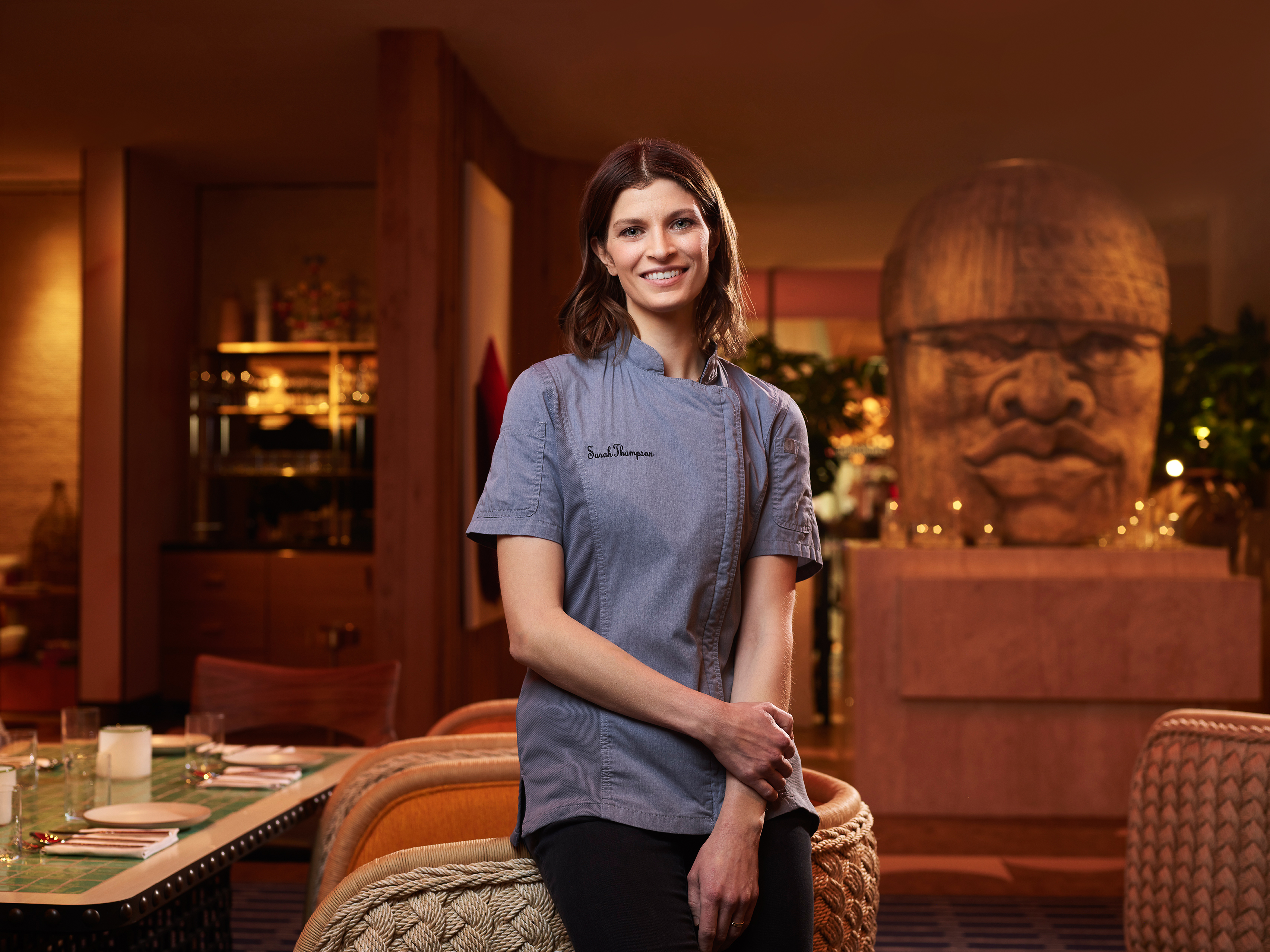
Executive Chef, Casa Playa
Executive Chef Sarah Thompson helms the kitchen at Casa Playa at Encore Las Vegas, where she presents a stunning menu of coastal Mexican cuisine. Named a 2025 James Beard Foundation Award semifinalist for Best Chef: Southwest, Chef Thompson has also collaborated with world-renowned chefs - including activities that took place at Wynn during The World's 50 Best 2024 celebrations in Las Vegas. She also hosted “Feast for a Good Cause” in partnership with Friends of James Beard Foundation and has collaborated with chefs such as Angie Mar and Elena Reygadas, The World’s Best Female Chef 2023 (Rosetta, Mexico City). Chef Thompson takes great pride in cultivating a kitchen at Casa Playa that employs more than 50% women.
Prior to helming Casa Playa in 2021, Chef Thompson was the Chef de Cuisine at Elio in 2019. Her move to Las Vegas followed success as the Executive Sous Chef at New York’s lauded Cosme restaurant, where she was recruited by Chef Daniela Soto-Innes. There she trained and worked alongside some of the best Mexican chefs in the world, and was further exposed to the nuances and complexities of Mexican cuisine that resulted in a lasting curiosity and passion.
Following graduation from the Culinary Institute of America, and prior to working at Cosme, Chef Thompson served as Line Cook at Michelin-starred Marea; Sous Chef at Wylie Dufresne’s Alder; and Corporate Sous Chef with Andrew Carmellini’s NoHo Hospitality Group.